As a chemistry major, you will gain the expertise needed to enter the workforce as a chemist or enroll in medical, graduate or professional school.

Bachelor of Science in Chemistry

Step inside the chemistry labs at UMass Lowell.

If you enjoy solving problems and understanding how matter works, the B.S. in Chemistry at UMass Lowell helps you turn curiosity into real-world skills. 

  • Study key areas like organic, analytical, physical, inorganic and polymer chemistry, as well as biochemistry. 
  • Build strong laboratory, research and data analysis skills through lab courses and faculty-mentored research.  
  • Customize your path with options such as biochemistry, forensic science, teaching or sustainability.

Internship and research opportunities connect you with industry experience. You'll graduate ready for careers in science, healthcare and technology, or for graduate and professional programs like medical, dental or law school.

Accredited by the American Chemical Society (ACS). 

What Can You Do with a Degree in Chemistry?

Graduates of UMass Lowell's chemistry program are prepared to pursue jobs in such fields as:

  • Applied and basic research
  • Quality control
  • Health care
  • Product analysis
  • Materials
  • Cosmetics
  • Forensics 
  • Pharmaceuticals
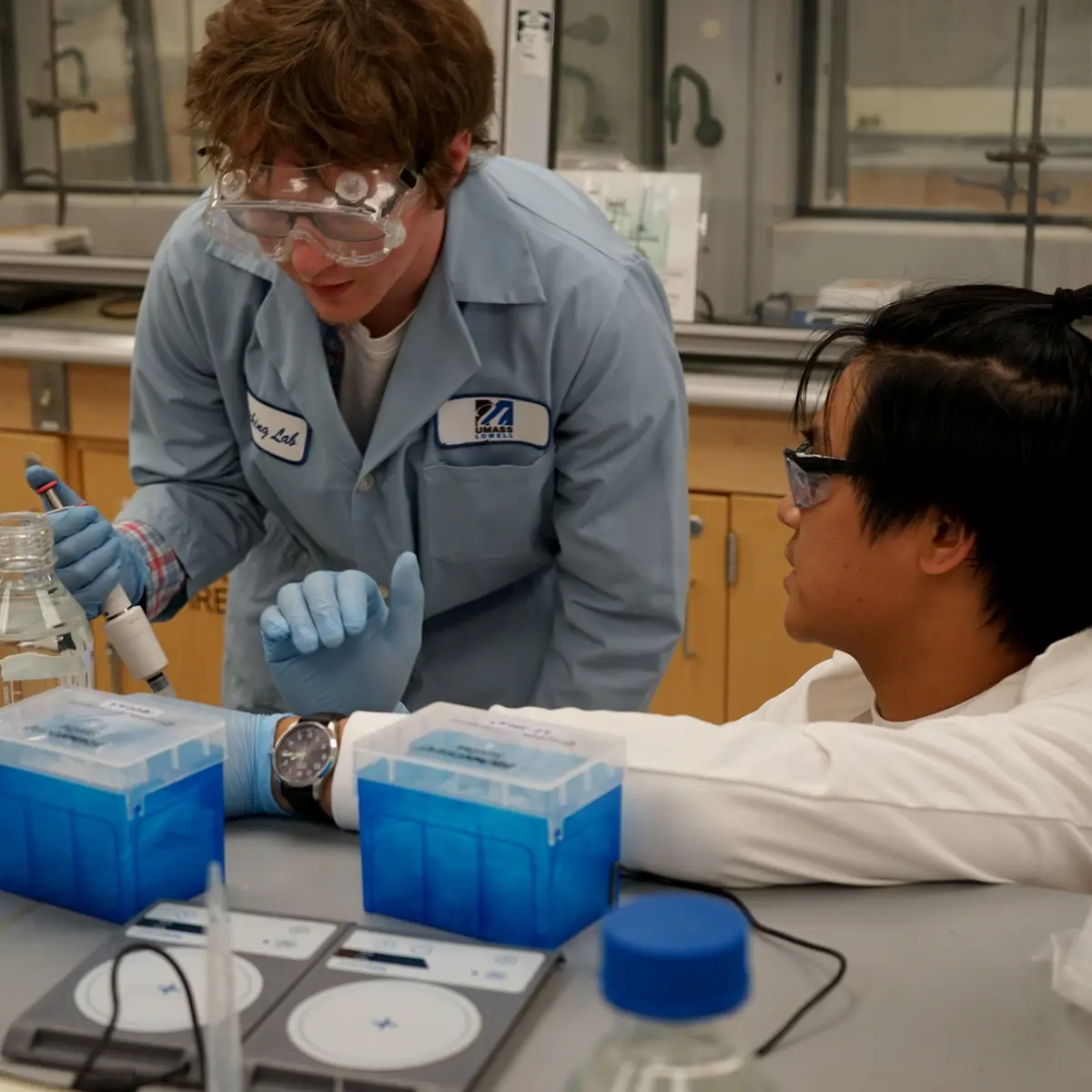
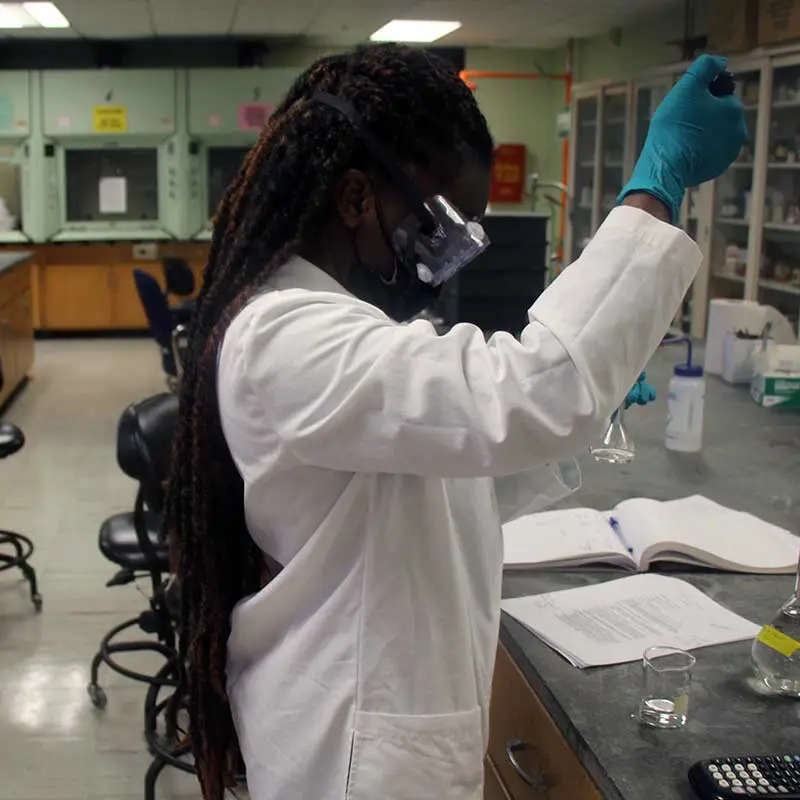
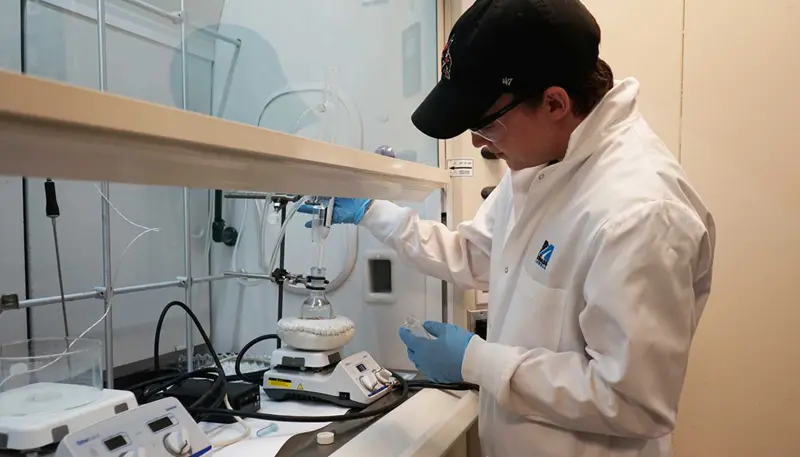
Chemistry student in lab coat works with equipment in a UMass Lowell lab

Career Placements

  • Boston University
  • Columbia University
  • E Ink
  • Environmental Protection Agency
  • Massachusetts General Hospital
  • Massachusetts Institute of Technology
  • Pfizer
  • Tufts University
  • U.S. Army Natick Soldier Systems Center

Graduate School

Many of our students go on to graduate study in chemistry, dentistry, medicine, patent law and teaching at top universities across the U.S. 

Hear from Our Students

UMass Lowell student Stephanie Ceballos stands outside the Royal Palace in Madrid during a study abroad trip.
Stephanie Ceballos '25
Biochemistry

Whether studying abroad or conducting research, Stephanie Ceballos is making the most out of her UMass Lowell experience.

Joining a club is a good way to feel part of the UMass Lowell community.
Student working in a UMass Lowell laboratory
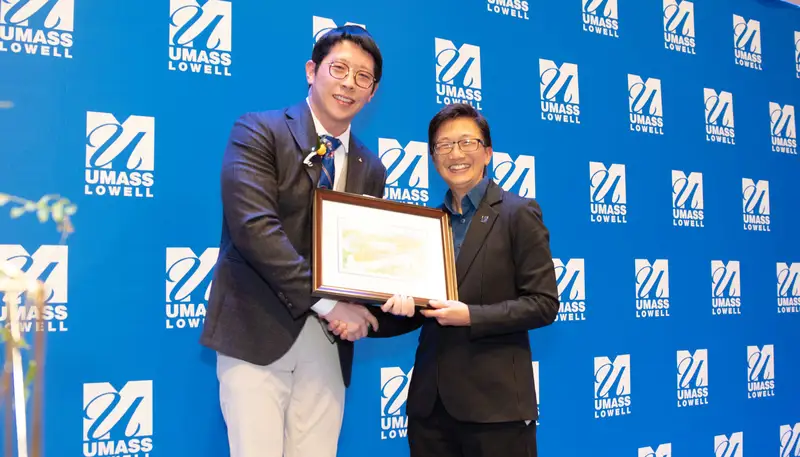
Noah Mason '23
Chemistry

An introduction to research helped Noah Mason find his passion.

I feel really at home in the department.
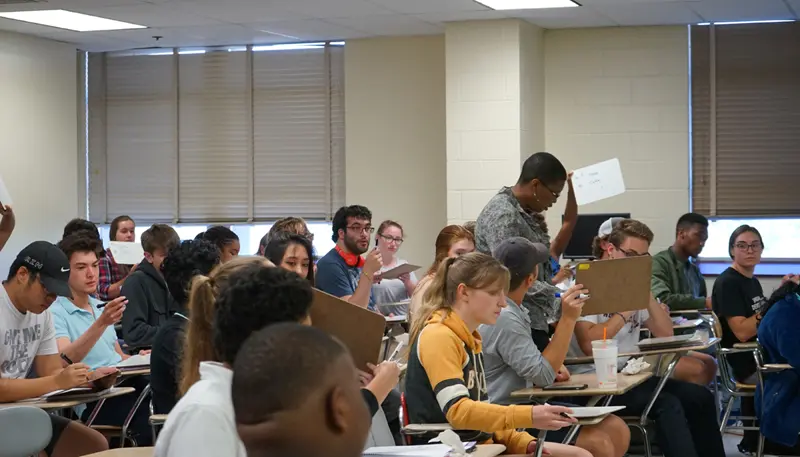
UMass Lowell organic chemistry professor Khalilah Reddie in a classroom full of her students
Khalilah Reddie
Chemistry

Khalilah Reddie has an enthusiasm for teaching that has raised student success rates in Organic Chemistry.

I lead by example, because I work really hard for my students. It makes them want to work hard for themselves.

Year-by-Year Course Plan

Check out our degree pathways, which offer sample plans for completing your degree in four years.

For students who entered fall 2023 and beyond.

Freshman Year

Fall Semester

Course NumberCourse NameCredits
Total15
ENGL.1010 /
HONR.1100
College Writing I /
First Year Seminar in Honors: Text in the City (CW)
3
CHEM.1050Intro to the Discipline of Chemistry1
CHEM.1210Chemistry I13
CHEM.1230LChemistry I Lab1
MATH.1310Calculus I (MATH)4
xxxx.xxxxSocial Sciences Perspective (SS)23

Spring Semester

Course NumberCourse NameCredits
ENGL.1020College Writing II (CW)3
CHEM.1220Chemistry II13
CHEM.1240LChemistry II Lab1
MATH.1320Calculus II4
xxxx.xxxxArts and Humanities Perspective (AH)23
Total14

Sophomore Year

Fall Semester

Course NumberCourse NameCredits
CHEM.2210Organic Chemistry I3
CHEM.2270LOrganic Chemistry Lab IA2
PHYS.1410Physics I (SCL)3
PHYS.1410LPhysics I Lab (SCL)1
MATH.2310Calculus III4
Total13

Spring Semester

Course NumberCourse NameCredits
CHEM.2220Organic Chemistry IIA3
CHEM.2280LOrganic Chemistry Lab IIA2
CHEM.2600Information Retrieval (IL)2
PHYS.1440Physics II (SCL)3
PHYS.1440LPhysics II Lab (SCL)1
MATH.2340Differential Equations3
xxxx.xxxxSocial Sciences Perspective (SS)23
Total17

Junior Year

Fall Semester

Course NumberCourse NameCredits
CHEM.3130Analytical Chemistry I3
CHEM.3150LAnalytical Chemistry I Lab2
CHEM.3440Physical Chemistry I (QL)3
CHEM.3460LPhysical Chemistry Lab I (CTPS)2
xxxx.xxxxSocial Sciences Perspective (SS)23
xxxx.xxxxFree Elective53
Total16

Spring Semester

Course NumberCourse NameCredits
CHEM.3140Analytical Chemistry II3
CHEM.3160LAnalytical Chemistry II Lab2
CHEM.3450Physical Chemistry II3
CHEM.3500LPhysical Bioinorganic Lab2
CHEM.3600Responsible Chemist (SRE), (WOC)3
xxxx.xxxxFree Elective53
Total16

Senior Year

Fall Semester

Course NumberCourse NameCredits
Total14-15
CHEM.4070 /
CHEM.3/4xxx
Undergraduate Thesis /
Chemistry Elective3
3-4
CHEM.4430Advanced Inorganic Chemistry3
CHEM.4450LAdvanced Inorganic Lab2
CHEM.4500Introduction To Biochemistry3
xxxx.xxxxFree Elective53

Spring Semester

Course NumberCourse NameCredits
Total14-15
CHEM.4080 /
CHEM.3/4xxx
Undergraduate Thesis II /
Chemistry Elective3
3
CHEM.4030Introductory Polymer Science I43
xxxx.xxxxArts and Humanities Perspective (AH)23
xxxx.xxxxFree Elective52-3

Total Minimum Credits = 120.

1Chemistry majors must earn a grade of C- or higher in CHEM.1210 Chemistry I and CHEM.1220 Chemistry II.

  • Chemistry majors will not be allowed to proceed to CHEM.1220 without first earning a C- in CHEM.1210
  • Chemistry majors will not be allowed to proceed to CHEM.2210 without first earning a C- in CHEM.1220.

2The Arts and Humanities (AH) and Social Sciences (SS) perspectives are subsets of the Breadth of Knowledge (BOK) requirements in the Core Curriculum. No more than two BOK courses can be taken with the same four-letter prefix.

The Core Curriculum also includes seven Essential Learning Outcomes (ELOs). The Diversity and Cultural Awareness (DCA) ELO is satisfied outside the major requirements. See the DCA course listing for a full list of classes that fulfill these requirements. The Class Search tool can be used to identify AH and SS courses that simultaneously satisfy the DCA or SRE requirement.

The Core Curriculum courses may be taken in any sequence. Refer to the Core Curriculum policy for further details. You should meet with your college-based professional advisor and/or faculty advisor to determine how best to satisfy the Core Curriculum requirements.

3Chemistry majors in the General option must satisfy either one of the following two options:

  • Complete CHEM.4070 and CHEM.4080
  • Complete two 3000/4000-level CHEM electives with at least one of the two having a lab component

In addition, it’s recommended that at least one of the two courses in either option satisfy the Applied and Integrative Learning (AIL) ELO requirement. CHEM.4070 currently has the AIL designation as well as the following chemistry electives:

4CHEM.4030 Introductory Polymer Science I will be required of all majors entering as first-year students or students transferring into the major in Fall 2017 or after.

5Free electives can be satisfied by any UML course xxxx.1010 or above, with the following exceptions:

  • Students only need to complete enough free elective credits to reach 120 total credits.
  • Courses with the MATH prefix must be above the level of Calculus I.
  • NO MORE than 60 credits of CHEM coursework may be applied towards the minimum 120 credits requirement to graduate.

Current UMass Lowell students should use their Advisement Report in SIS. If you need assistance, please contact your advisor.

Restriction on off-campus study:

Be advised that any course taken at another institution must be formally approved prior to enrollment. See the catalog policy for details.

Breadth of Knowledge (BOK) Glossary

  • SS - Social Sciences Perspective - 9 credits
  • AH - Arts and Humanities Perspective - 9 credits
  • SCL - Sciences with Lab Perspective - 6-8 credits
  • STEM - Science, Technology, Engineering and Math Perspective - 3 credits
  • CW - College Writing I and II - 6 credits
  • MATH - Math Perspective - 3 credits

Read more about the Breadth of Knowledge requirements.

Essential Learning Outcomes (ELO) Glossary

  • AIL - Applied and Integrative Learning
  • CTPS - Critical Thinking and Problem Solving
  • DCA - Diversity and Cultural Awareness
  • IL - Information Literacy
  • QL - Quantitative Literacy
  • SRE - Social Responsibility and Ethics
  • WOC - Written and Oral Communication

Read more about the Essential Learning Outcomes.

For students who entered fall 2020 and beyond.

Freshman Year

Fall Semester

Course NumberCourse NameCredits
Total16
ENGL.1010 /
HONR.1100
College Writing I /
First Year Seminar in Honors: Text in the City (CW)
3
CHEM.1050Intro to the Discipline of Chemistry1
CHEM.1210Chemistry I13
CHEM.1230LChemistry I Lab1
MATH.1310Calculus I (MATH)4
BIOL.1110Principles of Biology (STEM)23
BIOL.1170LExperimental Biology21

Spring Semester

Course NumberCourse NameCredits
ENGL.1020College Writing II (CW)3
CHEM.1220Chemistry II13
CHEM.1240LChemistry II Lab1
MATH.1320Calculus II4
xxxx.xxxxArts and Humanities Perspective (AH)43
Total14

Sophomore Year

Fall Semester

Course NumberCourse NameCredits
Total16
CHEM.2210Organic Chemistry I3
CHEM.2270LOrganic Chemistry Lab IA2
PHYS.1410Physics I (SCL)3
PHYS.1410LPhysics I Lab (SCL)1
MATH.2310Calculus III4
BIOL.2200Principles of Cellular Biology3

Spring Semester

Course NumberCourse NameCredits
Total14
CHEM.2220Organic Chemistry IIA3
CHEM.2280LOrganic Chemistry Lab IIA2
CHEM.2600Information Retrieval (IL)2
PHYS.1440Physics II (SCL)3
PHYS.1440LPhysics II Lab (SCL)1
MATH.2340Differential Equations3

Junior Year

Fall Semester

Course NumberCourse NameCredits
CHEM.3130Analytical Chemistry I3
CHEM.3150LAnalytical Chemistry I Lab2
CHEM.3440Physical Chemistry I3
CHEM.3460LPhysical Chemistry Lab I (CTPS)2
xxxx.xxxxSocial Sciences Perspective (SS)43
xxxx.xxxxArts and Humanities Perspective (AH)3
Total16

Spring Semester

Course NumberCourse NameCredits
CHEM.3140Analytical Chemistry II3
CHEM.3160LAnalytical Chemistry II Lab2
CHEM.3450Physical Chemistry II3
CHEM.3500LPhysical Bioinorganic Lab2
CHEM.3600Responsible Chemist (SRE), (WOC)3
MATH.2830Introduction to Statistics3
Total16

Senior Year

Fall Semester

Course NumberCourse NameCredits
Total15
CHEM.4430Advanced Inorganic Chemistry3
CHEM.4500Introduction To Biochemistry3
CHEM.xxxxChemistry Elective3
xxxx.xxxxSocial Sciences Perspective (SS)3
xxxx.xxxxArts and Humanities Perspective (AH)3

Spring Semester

Course NumberCourse NameCredits
Total14
CHEM.4030Introductory Polymer Science I3
CHEM.4510Biochemistry II3
CHEM.4550LLaboratory in Modern Biochemistry and Biophysics2
BIOL.xxxxMolecular Elective33
xxxx.xxxxSocial Sciences Perspective (SS)3

Total Minimum Credits = 121.

1Chemistry majors must earn a grade of C- or higher in CHEM.1210 Chemistry I and CHEM.1220 Chemistry II.

  • Chemistry majors will not be allowed to proceed to CHEM.1220 without first earning a C- in CHEM.1210
  • Chemistry majors will not be allowed to proceed to CHEM.2210 without first earning a C- in CHEM.1220.

2It is recommended that students complete BIOL.1110 / BIOL.1170L. However, BIOL.2100 Biology for Engineers and BIOL.2020L Biology for Engineers Laboratory will also satisfy this requirement.

3Can be fulfilled by either: BIOL.2350 Genetics, BIOL.2370 Problems Genetics, BIOL.3010 Microbiology, BIOL.3050 Introduction to Bioinformatics.

4DCA recommended/DCA met outside major

No more than two Breadth of Knowledge (BOK) courses can be taken with the same prefix. The Core Curriculum courses may be taken in any sequence. Refer to the Core Curriculum policy for further details. You should meet with your faculty advisor to determine how you will meet the Core Curriculum requirements.

Current UMass Lowell students should use their Advisement Report in SIS. If you need assistance, please contact your advisor.

Restriction on off-campus study:

Be advised that any course taken at another institution must be formally approved prior to enrollment. See the catalog policy for details.

Breadth of Knowledge (BOK) Glossary

  • SS - Social Sciences Perspective - 9 credits
  • AH - Arts and Humanities Perspective - 9 credits
  • SCL - Sciences with Lab Perspective - 6-8 credits
  • STEM - Science, Technology, Engineering and Math Perspective - 3 credits
  • CW - College Writing I and II - 6 credits
  • MATH - Math Perspective - 3 credits

Read more about the Breadth of Knowledge requirements.

Essential Learning Outcomes (ELO) Glossary

  • AIL - Applied and Integrative Learning
  • CTPS - Critical Thinking and Problem Solving
  • DCA - Diversity and Cultural Awareness
  • IL - Information Literacy
  • QL - Quantitative Literacy
  • SRE - Social Responsibility and Ethics
  • WOC - Written and Oral Communication

Read more about the Essential Learning Outcomes.

For students who entered fall 2020 and beyond.

Freshman Year

Fall Semester

Course NumberCourse NameCredits
Total15
ENGL.1010 /
HONR.1100
College Writing I /
First Year Seminar in Honors: Text in the City (CW)
3
CHEM.1050Introduction to the Discipline of Chemistry1
CHEM.1210Chemistry I23
CHEM.1230LChemistry I Lab1
MATH.1310Calculus I (MATH)4
xxxx.xxxxSocial Sciences Perspective (SS)3

Spring Semester

Course NumberCourse NameCredits
ENGL.1020College Writing II (CW)3
CHEM.1220Chemistry II23
CHEM.1240LChemistry II Lab1
MATH.1320Calculus II4
CRIM.1010Criminal Justice System (SS), (DCA)3
Total14

Sophomore Year

Fall Semester

Course NumberCourse NameCredits
CHEM.2210Organic Chemistry I3
CHEM.2270LOrganic Chemistry Lab IA2
PHYS.1410Physics I (SCL)3
PHYS.1410LPhysics I Lab (SCL)1
MATH.2310Calculus III4
CRIM.2430Criminalistics I3
Total16

Spring Semester

Course NumberCourse NameCredits
CHEM.2220Organic Chemistry IIA3
CHEM.2280LOrganic Chemistry Lab IIA2
CHEM.2600Information Retrieval (IL)2
PHYS.1440Physics II (SCL)3
PHYS.1440LPhysics II Lab (SCL)1
MATH.2340Differential Equations3
CRIM.2440Criminalistics II3
Total17

Junior Year

Fall Semester

Course NumberCourse NameCredits
Total14
CHEM.3130Analytical Chemistry I3
CHEM.3150LAnalytical Chemistry I Lab2
CHEM.3030Forensic Science I3
CHEM.3050LForensic Science I Lab (AIL)1
CHEM.3440Physical Chemistry I (QL)3
CHEM.3460LPhysical Chemistry I Lab (CTPS)2

Spring Semester

Course NumberCourse NameCredits
Total15
CHEM.3140Analytical Chemistry II3
CHEM.3160LAnalytical Chemistry II Lab2
CHEM.3040Forensic Science II3
CHEM.3060LForensic Science II Lab1
CHEM.3450Physical Chemistry II3
CHEM.3600Responsible Chemist (SRE), (WOC)3

Senior Year

Fall Semester

Course NumberCourse NameCredits
Total16
CHEM.4430Advanced Inorganic Chemistry3
CHEM.4500Introduction To Biochemistry3
BIOL.1110Principles of Biology I3
BIOL.1170LExperimental Biology I1
xxxx.xxxxArts and Humanities Perspective (AH)3

Spring Semester

Course NumberCourse NameCredits
Total15
MATH.2830Introduction to Statistics3
CHEM.4030Introductory Polymer Science I13
CHEM.xxxxChemistry Elective3
xxxx.xxxxSocial Sciences Perspective (SS)3
xxxx.xxxxArts and Humanities Perspective (AH)3

Total Minimum Credits = 122.

1CHEM.4030 Introductory Polymer Science I will be required of all majors entering as first-year students or transferring into the major effective fall, 2017.

2Chemistry majors must earn a grade of C- or higher in CHEM.1210 Chemistry I and CHEM.1220 Chemistry II.

  • Chemistry majors will not be allowed to proceed to CHEM.1220 without first earning a C- in CHEM.1210
  • Chemistry majors will not be allowed to proceed to CHEM.2210 without first earning a C- in CHEM.1220

No more than two Breadth of Knowledge (BOK) courses can be taken with the same prefix. The Core Curriculum courses may be taken in any sequence. Refer to the Core Curriculum policy for further details. You should meet with your faculty advisor to determine how you will meet the Core Curriculum requirements.

Current UMass Lowell students should use their Advisement Report in SIS. If you need assistance, please contact your adviser.

Restriction on off-campus study:

Be advised that any course taken at another institution must be formally approved prior to enrollment. See the catalog policy for details.
Breadth of Knowledge (BOK) Glossary

  • SS - Social Sciences Perspective - 9 credits
  • AH - Arts and Humanities Perspective - 9 credits
  • SCL - Sciences with Lab Perspective - 6-8 credits
  • STEM - Science, Technology, Engineering and Math Perspective - 3 credits
  • CW - College Writing I and II - 6 credits
  • MATH - Math Perspective - 3 credits

Read more about the Breadth of Knowledge requirements.

Essential Learning Outcomes (ELO) Glossary

  • AIL - Applied and Integrative Learning
  • CTPS - Critical Thinking and Problem Solving
  • DCA - Diversity and Cultural Awareness
  • IL - Information Literacy
  • QL - Quantitative Literacy
  • SRE - Social Responsibility and Ethics
  • WOC - Written and Oral Communication

Read more about the Essential Learning Outcomes.

For students who entered fall 2024 and beyond.

Freshman Year

Fall Semester

Course NumberCourse NameCredits
Total15
ENGL.1010 /
HONR.1100
College Writing I /
First Year Seminar in Honors: Text in the City (CW)
3
CHEM.1050Introduction to the Discipline of Chemistry1
CHEM.1210Chemistry I3
CHEM.1230LChemistry I Laboratory 1
MATH.1310Calculus I (MATH)4
UTCH.1030Exploring Teaching and Learning in STEM (SS)13

Spring Semester

Course NumberCourse NameCredits
Total17
ENGL.1020College Writing II (CW)3
CHEM.1220Chemistry II 3
CHEM.1240LChemistry II Laboratory1
MATH.1320Calculus II4
UTCH.3020Research Methods (SS)13
xxxx.xxxxArts and Humanities Perspective (AH)13

Sophomore Year

Fall Semester

Course NumberCourse NameCredits
Total16
CHEM.2210Organic Chemistry I3
CHEM.2270LOrganic Chemistry Laboratory IA2
PHYS.1410Physics I (SCL)3
PHYS.1410LPhysics I Lab1
MATH.2310Calculus III4
UTCH.2040Perspectives on Mathematics and Science (AH)13

Spring Semester

Course NumberCourse NameCredits
Total17
CHEM.2220Organic Chemistry IIA3
CHEM.2280LOrganic Chemistry Laboratory IIA2
CHEM.2600Information Retrieval (IL)2
PHYS.1440Physics II (SCL)3
PHYS.1440LPhysics II Lab1
UTCH.2010Knowing and Learning in Math and Science3
xxxx.xxxxArts and Humanities Perspective (AH)13

Junior Year

Fall Semester

Course NumberCourse NameCredits
Total16-19
CHEM.3440Physical Chemistry I (QL)3
CHEM.3460LPhysical Chemistry Laboratory I (CTPS)2
CHEM.3xxxAnalytical/Forensic Elective w/Lab24-5
UTCH.2020Interactions and Equity3
xxxx.xxxxFree Elective43
xxxx.xxxx Free Elective4/5 0-3

Spring Semester

Course NumberCourse NameCredits
Total16
CHEM.3600The Responsible Chemist (SRE), (WOC)3
CHEM.3xxxAnalytical/Forensic Elective w/Lab24-5
CHEM.xxxxChemistry Elective3
UTCH.3010Project-Based Instruction3
xxxx.xxxxSocial Sciences Perspective (SS)13

Senior Year

Fall Semester

Course NumberCourse NameCredits
Total13-14
UTCH.4410Teaching Emergent Bilingual Students3
CHEM.xxxxChemistry Elective3
xxxx.xxxxSTEM Elective33-4
xxxx.xxxxFree Elective43
xxxx.xxxxFree Elective4/60-3

Spring Semester

Course NumberCourse NameCredits
Total6
UTCH.4010Practicum76

Total Minimum Credits = 120.

1The Arts and Humanities (AH) and Social Sciences (SS) perspectives are subsets of the Breadth of Knowledge (BOK) requirements in the Core Curriculum. No more than two BOK courses can be taken with the same four-letter prefix.

The Core Curriculum also includes seven Essential Learning Outcomes (ELOs). The Diversity and Cultural Awareness (DCA) ELO is satisfied outside the major requirements. See the DCA course listing for a full list of classes that fulfill these requirements. The Class Search tool can be used to identify AH and SS courses that simultaneously satisfy the DCA or SRE requirement.

The Core Curriculum courses may be taken in any sequence. Refer to the Core Curriculum policy for further details. You should meet with your college-based professional advisor and/or faculty advisor to determine how best to satisfy the Core Curriculum requirements.

2Analytical/Forensic Electives:

Chemistry majors in the STEM Teaching option must complete all four courses (I and II with labs) of either Analytical Chemistry or Forensic Science.

3STEM Elective - Any 2000-level or higher science, technology, engineering, or math course will satisfy this requirement. This prepares students for teaching assignments outside their primary field. A lower-level biology or additional physics course would be suitable, but the exact course should be chosen in consultation with your chemistry advisor.

4Free electives can be satisfied by any UML course xxxx.1010 or above, with the following exceptions:

  • No more than 60 credits of CHEM coursework may be applied towards the minimum 120 credits requirement to graduate.
  • Courses with the MATH prefix must be at or above the level of MATH.1225 Precalculus Mathematics I in order to count towards the minimum 120 credits required to graduate.

5Students who complete the Forensic Chemistry sequence should plan to take 6 credits of free electives in the fall semester of their junior year.

6Students only need to complete enough free electives credits to reach 120 total credits. Students who take the Analytical Chemistry sequence during the junior year will need to complete 2 fewer free elective credits.

7Student who complete all the required UTCH courses will satisfy the requirements for the UTeach minor.

Current UMass Lowell students should use their Advisement Report in SIS. If you need assistance, please contact your advisor.

Restriction on off-campus study:

Be advised that any course taken at another institution must be formally approved prior to enrollment. See the catalog policy for details.
Breadth of Knowledge (BOK) Glossary

  • SS - Social Sciences Perspective - 9 credits
  • AH - Arts and Humanities Perspective - 9 credits
  • SCL - Sciences with Lab Perspective - 6-8 credits
  • STEM - Science, Technology, Engineering and Math Perspective - 3 credits
  • CW - College Writing I and II - 6 credits
  • MATH - Math Perspective - 3 credits

Read more about the Breadth of Knowledge requirements.

Essential Learning Outcomes (ELO) Glossary

  • AIL - Applied and Integrative Learning
  • CTPS - Critical Thinking and Problem Solving
  • DCA - Diversity and Cultural Awareness
  • IL - Information Literacy
  • QL - Quantitative Literacy
  • SRE - Social Responsibility and Ethics
  • WOC - Written and Oral Communication

Read more about the Essential Learning Outcomes.

For students who entered fall 2024 and beyond.

Freshman Year

Fall Semester

Course NumberCourse NameCredits
Total15
ENGL.1010 /
HONR.1100
College Writing I /
First Year Seminar in Honors: Text in the City (CW)
3
ENVI.1200Principles of Environmental Science3
CHEM.1050Introduction to the Discipline of Chemistry1
CHEM.1210Chemistry I3
CHEM.1230LChemistry I Laboratory1
MATH.1310Calculus I (MATH)4

Spring Semester

Course NumberCourse NameCredits
ENGL.1020College Writing II (CW)3
CHEM.1220Chemistry II 3
CHEM.1240LChemistry II Laboratory1
MATH.1320Calculus II4
xxxx.xxxxArts and Humanities Perspective (AH)13
Total14

Sophomore Year

Fall Semester

Course NumberCourse NameCredits
Total16
CHEM.2210Organic Chemistry I3
CHEM.2270LOrganic Chemistry Laboratory IA2
PHYS.1410Physics I (SCL)3
PHYS.1410LPhysics I Lab1
MATH.2310Calculus III4
xxxx.2xxxSustainability Elective - 2000 level23

Spring Semester

Course NumberCourse NameCredits
Total14
CHEM.2220Organic Chemistry IIA3
CHEM.2280LOrganic Chemistry Laboratory IIA2
CHEM.2600Information Retrieval (IL)2
PHYS.1440Physics II (SCL)3
PHYS.1440LPhysics II Lab1
MATH.2340Differential Equations3

Junior Year

Fall Semester

Course NumberCourse NameCredits
CHEM.3130Analytical Chemistry I3
CHEM.3150LAnalytical Chemistry Laboratory I2
CHEM.3440Physical Chemistry I (QL)3
CHEM.3460LPhysical Chemistry Laboratory I (CTPS)2
xxxx.xxxxSocial Sciences Perspective (SS)13
xxxx.xxxxArts and Humanities Perspective (AH)1 3
Total16

Spring Semester

Course NumberCourse NameCredits
CHEM.3140Analytical Chemistry II3
CHEM.3160LAnalytical Chemistry Laboratory II2
CHEM.3450Physical Chemistry II3
CHEM.3500LPhysical Bioinorganic Laboratory2
CHEM.3600The Responsible Chemist (SRE), (WOC)3
xxxx.xxxxArts and Humanities Perspective (AH)13
Total16

Senior Year

Fall Semester

Course NumberCourse NameCredits
Total14
CHEM.4430Advanced Inorganic Chemistry3
CHEM.4450LAdvanced Inorganic Lab2
CHEM.4500Introduction to Biochemistry3
PLAS.2010Polymer Materials I3
xxxx.xxxxSocial Sciences Perspective (SS)13

Spring Semester

Course NumberCourse NameCredits
Total15
CHEM.4190Sustainable and Green Chemistry (AIL)3
xxxx.3/4xxxSustainability Elective - 3000/4000 level23
xxxx.xxxxSocial Sciences Perspective (SS)13
xxxx.xxxxFree Elective33

Total Minimum Credits = 120.

1The Arts and Humanities (AH) and Social Sciences (SS) perspectives are subsets of the Breadth of Knowledge (BOK) requirements in the Core Curriculum. No more than two BOK courses can be taken with the same four-letter prefix.

The Core Curriculum also includes seven Essential Learning Outcomes (ELOs). The Diversity and Cultural Awareness (DCA) ELO is satisfied outside the major requirements. See the DCA course listing for a full list of classes that fulfill these requirements. The Class Search tool can be used to identify AH and SS courses that simultaneously satisfy the DCA or SRE requirement.

The Core Curriculum courses may be taken in any sequence. Refer to the Core Curriculum policy for further details. You should meet with your college-based professional advisor and/or faculty advisor to determine how best to satisfy the Core Curriculum requirements.

2Sustainability Electives:

  • 2000 level:
    • BIOL.2400 Evolution, Ecology and Conservation
    • ENVE.2010 Environmental Engineering Chemistry 
    • ENVI.2020 Earth Systems: Atmosphere and Oceans
    • ENVI.2050 Earth Systems: Biosphere and Global Change
    • POLI.1750 Introduction to Environmental Politics
    • POLI.2001 Comparative Environmental Politics
    • PUBH.2080 Principles of Environmental Health Science
  • 3000/4000 level:

All prerequisites for either elective must be satisfied in order to take the course. Additional elective courses may be approved and added to the list by the department curriculum committee. Individual exceptions may be approved for a specific student in consultation with the student’s advisor and approval of the department.

3Free electives can be satisfied by any UML course xxxx.1010 or above, with the following exceptions:

  • Courses with the MATH prefix must be above the level of Calculus I.
  • No more than 60 credits of CHEM coursework may be applied towards the minimum 120 credits requirement to graduate.

Current UMass Lowell students should use their Advisement Report in SIS. If you need assistance, please contact your advisor.

Restriction on off-campus study:

Be advised that any course taken at another institution must be formally approved prior to enrollment. See the catalog policy for details.
Breadth of Knowledge (BOK) Glossary

  • SS - Social Sciences Perspective - 9 credits
  • AH - Arts and Humanities Perspective - 9 credits
  • SCL - Sciences with Lab Perspective - 6-8 credits
  • STEM - Science, Technology, Engineering and Math Perspective - 3 credits
  • CW - College Writing I and II - 6 credits
  • MATH - Math Perspective - 3 credits

Read more about the Breadth of Knowledge requirements.

Essential Learning Outcomes (ELO) Glossary

  • AIL - Applied and Integrative Learning
  • CTPS - Critical Thinking and Problem Solving
  • DCA - Diversity and Cultural Awareness
  • IL - Information Literacy
  • QL - Quantitative Literacy
  • SRE - Social Responsibility and Ethics
  • WOC - Written and Oral Communication

Read more about the Essential Learning Outcomes.

Why Study Chemistry at UMass Lowell?

Two Chemistry students using a pipette in a UMass Lowell lab.

Research Opportunities

Conduct research with our expert faculty. Many students have presented their results at conferences and/or published papers in scientific journals. Research areas include:

  • Polymer synthesis
  • Organic electronics
  • Biofunctional surfaces
  • Chemical and biological sensors
  • Protein chemistry
  • Nanotechnology
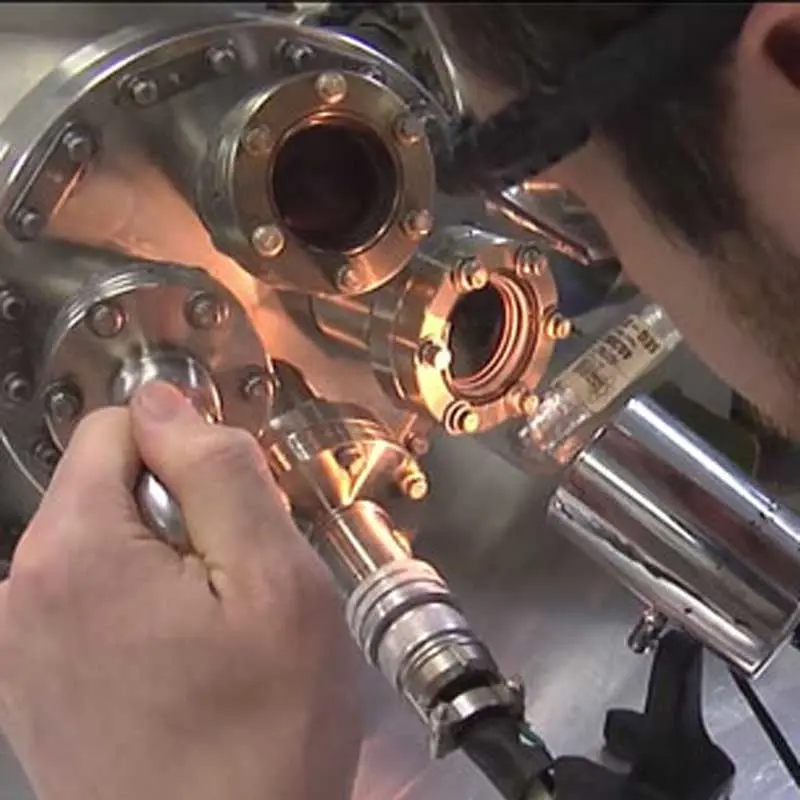
An undergrad chemistry student using a microscope device to look at chemicals in a lab.

Advanced Facilities

Access our top-level facilities, particularly a Teaching Instrumentation Laboratory equipped with state-of-the-art instruments, including:

  • NMR
  • FTIR
  • Optical and materials characterization instruments
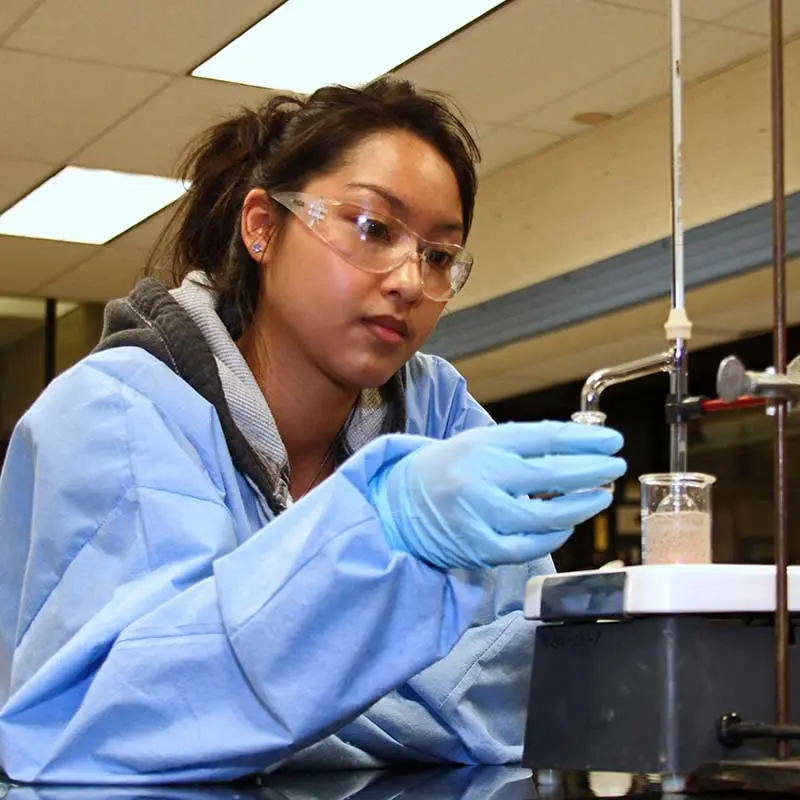
Chemistry student heating liquid in a UMass Lowell lab

Student Organizations

Put your learning into practice by joining student-run clubs and organizations, including:

  • American Chemical Society 
  • Organic Chemistry Club
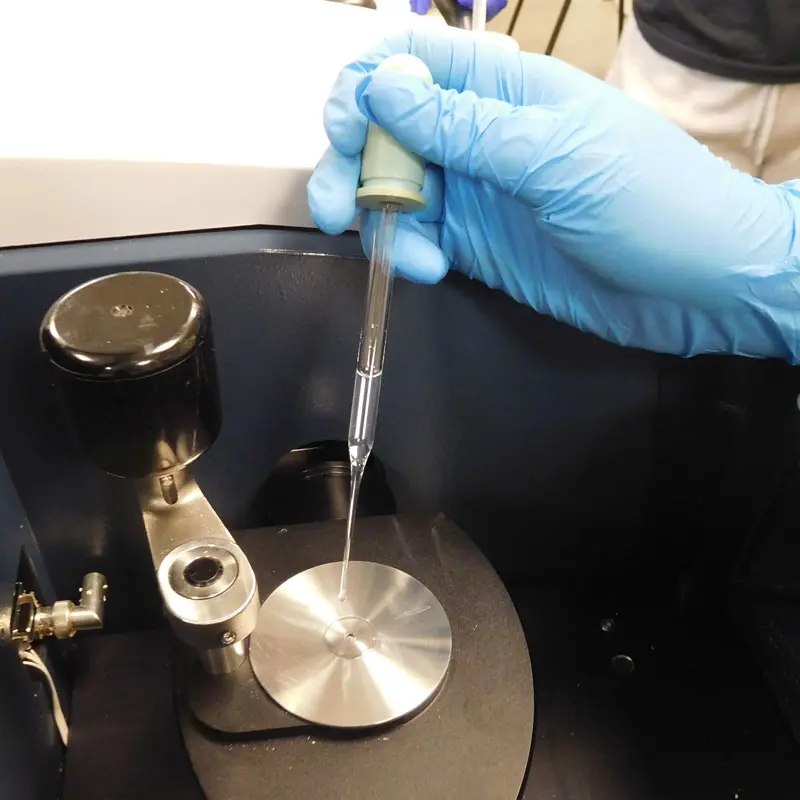
A gloved hand dispenses liquid through a pipette in a UMass Lowell chemistry lab.

Career Connected Experience: The UMass Lowell Guarantee

Every first-time, first-year UMass Lowell student will have the opportunity to pursue at least one Career Connected Experience (internships, co-ops, clinical placements, service learning, study abroad and more) during their undergraduate career — earning pay, credits or both before they graduate.

Past internships include:

  • Raytheon Technologies
  • Thermo Fisher Scientific
  • U.S. Army Natick Soldier Systems Center

Visit UMass Lowell

Launch virtual tour

Visit campus, meet our people and picture yourself here. Find in-person and virtual tours and events.

Still Exploring Majors?

We've got 120+ programs. Browse our Program Finder to find the one that's right for you.

View All Programs