With research that’s exploratory and practical, UMass Lowell faculty and students translate discoveries into powerful solutions. Our researchers work across disciplines and partner with industry, startups, and communities to create new knowledge and drive advancements that greatly benefit society. Through the Lowell Innovation Network Corridor (LINC), UMass Lowell expands research collaborations, creates hands-on learning opportunities for our students, and drives economic transformation in the region.

UMass Lowell is now listed as a Carnegie Research 1 (R1) university, a prestigious designation used to identify the nation’s top research institutions.

Student peers through a microscope in a UMass Lowell laboratory
UMass Lowell biology major Annie Cary, of Beverly, Massachusetts, is shown here working in Associate Professor Natalie Steinel's laboratory.

UMass Lowell is now listed as a Carnegie Research 1 (R1) university, a prestigious designation used to identify the nation’s top research institutions. Only 7% of four-year universities are designated R1.

The classification, announced today (Feb. 13) by the Carnegie Foundation for Teaching and the American Council on Education, requires two criteria: an institution must spend at least $50 million on research and development and award at least 70 research doctorates on average in a single year.

UMass Lowell surpassed these requirements with research expenditures exceeding $120 million and nearly 150 doctoral degrees awarded, most of which are research doctorates.

“Research 1 status reflects UMass Lowell's unwavering commitment to research excellence and innovation, a milestone achieved through the hard work and dedication of our faculty, staff and students,” said UMass Lowell Chancellor Julie Chen. “This recognition underscores the significant research advancements happening at UMass Lowell and our commitment to creating new knowledge, driving innovation and inspiring discoveries that serve not only our areas of interest but our community and the Commonwealth of Massachusetts.”

The university has pursued research growth through projects with defense, commercial and other academic partners.

A researcher adjusts a robot arm at a laboratory testing table as another researcher observes
UMass Lowell 's New England Robotics Validation and Experimentation (NERVE) Center is a robotics testing, research, and training facility that evaluates robotic capabilities, human performance, and human-robot interaction. Here, NERVE Center Assistant Director Adam Norton, left, and Robotics Engineer Brian Flynn test the UR5 robot manipulator to be sure it can grasp household objects.

The campus hosts 13 research centers, which have achieved international distinction and are notable for an interdisciplinary approach, including the Rist Institute for Sustainability and Energy; the New England Robotics Validation and Experimentation Center; the Lowell Center for Space Science and Technology; and the Raytheon-UMass Lowell Research Institute.

In addition, UMass Lowell hosts collaborative efforts such as the Massachusetts Medical Device Development Center (M2D2), a life sciences incubator and accelerator created in collaboration with the UMass Chan Medical School, and the HEROES partnership with the U.S. Army DEVCOM SC focused on innovations that enhance the capabilities and experience of military members.

UMass Lowell is consistently looking to create new opportunities for research and collaboration through industry partnerships. Currently, the university is working with the City of Lowell to dramatically scale up these partnerships through the Lowell Innovation Network Corridor (LINC), a public-private development set to transform the city’s economic future.

“The R1 classification is a tremendous boost for our plans for LINC, which will be a vibrant live-work-learn-play district that is a nexus of research activity in eastern Massachusetts,” said Anne Maglia, UMass Lowell vice chancellor for research, innovation and economic development. “We’ve already attached prestigious partners — including Draper, Mass General Brigham, Home Base and SAIC — who are co-locating on our campus in order to be closer to our research activity and our talented students.”

In July 2023, UMass Lowell announced the creation of a new School of Graduate Studies to align existing programs with the university’s research enterprise, leading to further collaboration and innovation.

"R1 status creates unparalleled career-connected opportunities by providing students with hands-on research experiences, industry collaborations and access to top-tier faculty,” Chen said. “With cutting-edge resources and strong industry partnerships, students gain the skills, mentorship and real-world connections needed to excel in their chosen careers."

Research Strengths

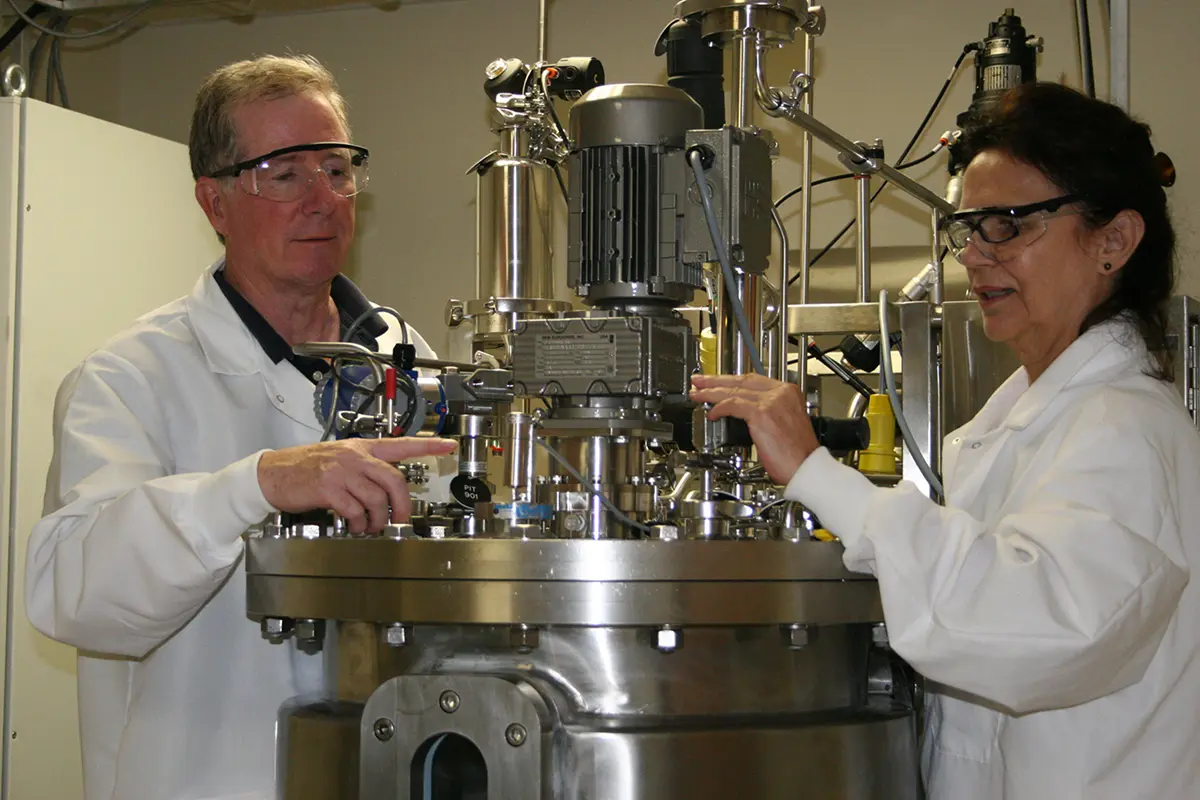
Assoc. Prof. Carl Lawton and a researcher use the bioreactor at the Massachusetts Biomanufacturing Center at UMass Lowell Image by Joson Images

Biotech, Life Sciences

Discovering ways to use the biological processes, organisms or systems to manufacture products to improve the quality of life. Learn more about Biotech, Life Sciences.

Up close picture of a Solar Lens

Energy

Our researchers are working with industry partners to achieve clean and sustainable energy. Learn more about Energy Research.

Wheeled robot picking up a plant.

Robotics

Our robotics research explores how technology can be used to improve life on Earth and beyond. Learn more about Robotics.

water repellent on fabric

Flexible Electronics & Smart Textiles

Developing innovative flexible electronics and smart textiles that solve problems across industries. Learn more about Flexible Electronics & Smart Textiles.

Stock image: Female Government Employee Works in a Monitoring Room. In The Background Supervisor Holds Briefing. Possibly Government Agency Conducts Investigation.

Cybersecurity

UMass Lowell’s education, workforce development, and R&D in cybersecurity leverages faculty expertise across disciplines. Learn more about Cybersecurity.

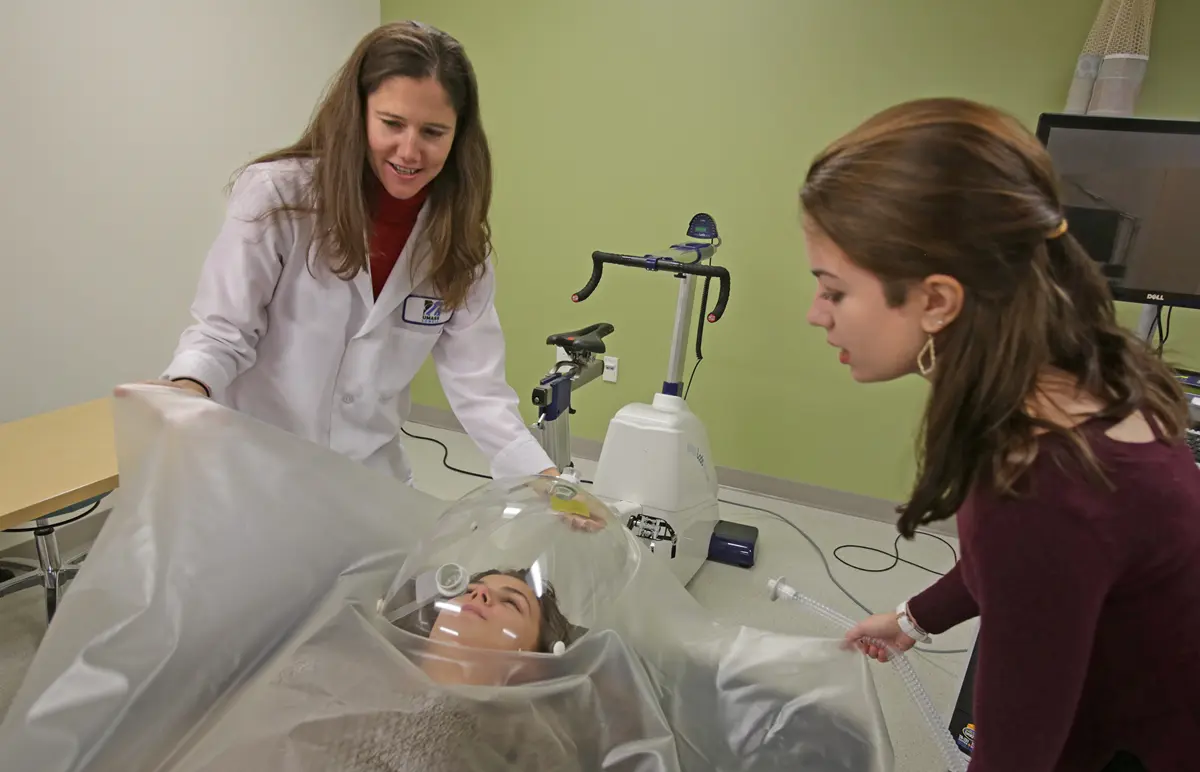
Health Assessment Lab

Public Health

Promoting health and wellbeing is at the core of UMass Lowell research in public health. Learn more about public health research.

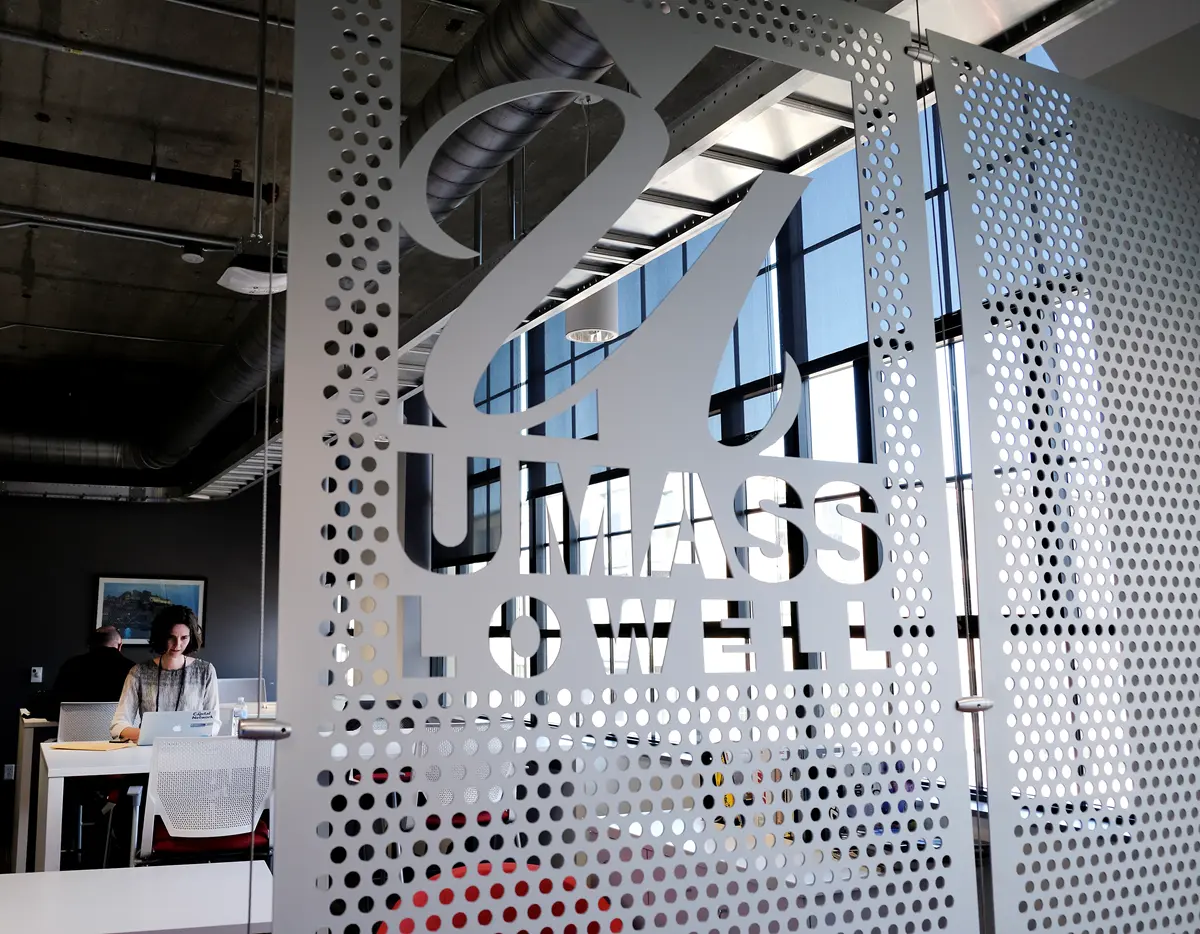
A UMass Lowell stencil/cut-out sign with a woman typing on a laptop computer in the background. Woman working at a desk behind a partition with the UMass Lowell logo.

Recent Awards

Keep up to date with our extensive research efforts.

Latest research awards

  • Sarah Merrill and three women members of her research team stand in order of height against a stone railing

    Professor Studies Impact of Trauma on Children’s Biology

    Psychology Assistant Professor Sarah Merrill studies the tags that trauma and other adverse experiences can leave on children’s genes – and whether interventions can buffer the effects of stress. Her research is part of the rapidly expanding field of epigenetics.
    Featured Story
  • Two women stand on a stage holding an award certificate.

    Nanoscientist Recognized with a Nation-Scale Honor

    Professor Marina Ruths was recently named a fellow of the American Chemical Society in recognition of her research in friction studies and for her service to the professional organization. 
    Featured Story
  • Eric Paley, Kim Holloway, Kim Driscoll and Carolyn Kirk at the Massachusetts TechHubs event.

    UMass Lowell Seeks Solutions to Housing Crisis Through Massachusetts TechHubs Program

    The Healey-Driscoll administration and the Innovation Institute at the Massachusetts Technology Collaborative announced Thursday that Greater Lowell has been designated a Housing Innovation TechHub through the Massachusetts TechHubs Program, an initiative intended to strengthen regional innovation ecosystems across the state.
    Press Release