Topics: Research Community & Outreach
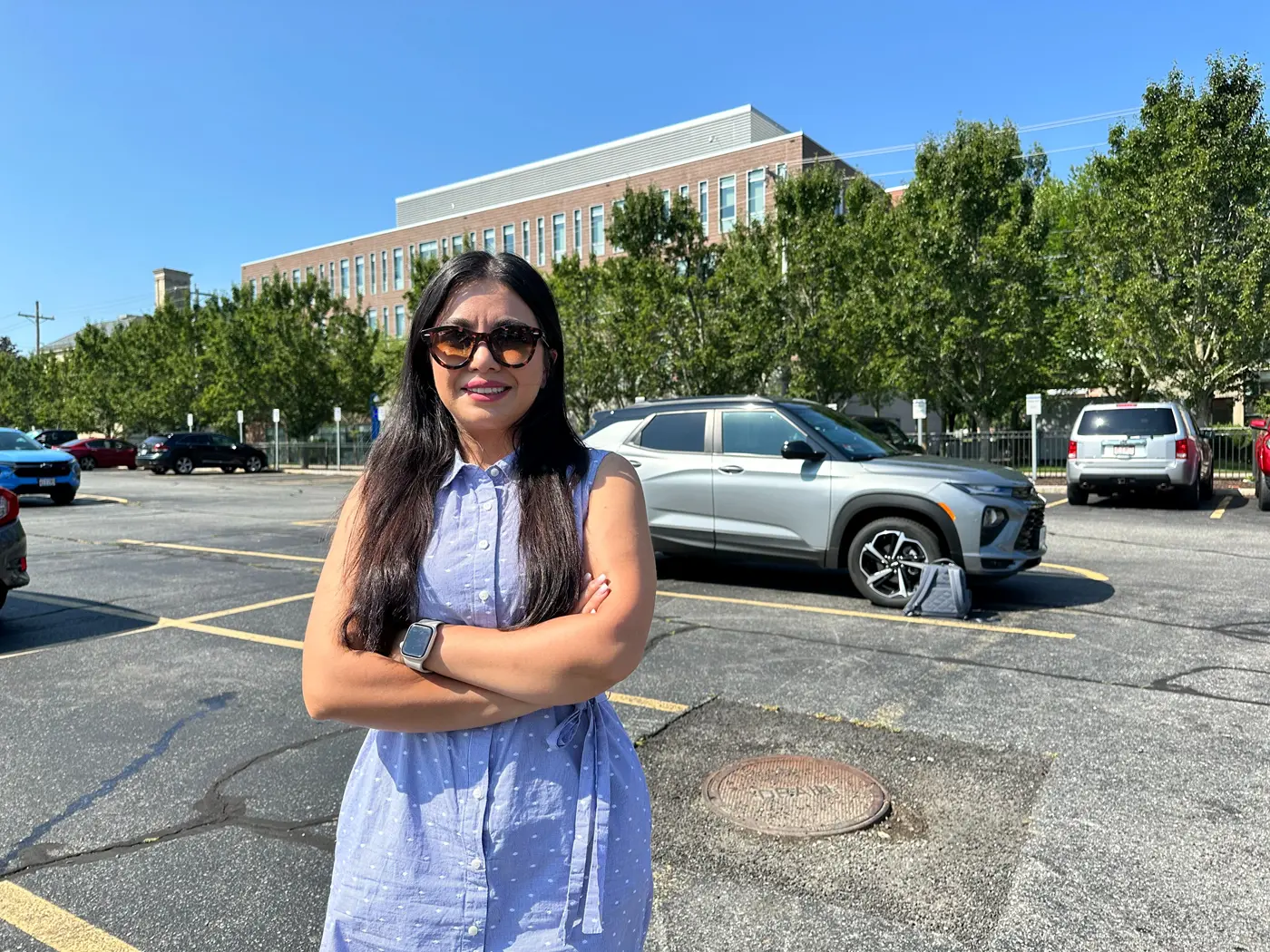 Image by K. Webster
 Industrial engineering Ph.D. candidate Mahsa Ghandi, shown next to a test borehole on South Campus, is working with Asst. Prof. Jasmina Burek on research into geothermal energy networks.
Jasmina Burek, an assistant professor in the Department of Mechanical and Industrial Engineering, is studying the life cycle of geothermal energy networks that are designed to heat and cool a mix of residential, commercial and public buildings in cities.
Under a $200,000 National Science Foundation grant, Burek and industrial engineering Ph.D. candidate Mahsa Ghandi are developing a new method to analyze the economic, environmental and social effects of geothermal energy networks across the entire life cycle, from the manufacture of components and installation through the end of their lifespan and replacement.
They are developing the life cycle analysis tool using a geothermal energy network in Framingham, now fully operational, that is the first utility-owned geothermal system of its kind in the U.S. In late 2024, the project received a U.S. Department of Energy grant to double its size; Burek and Ghandi will use the second loop to validate their life cycle analysis tool.
“We’re building a rigorously validated modeling tool to help developers and cities analyze and make better decisions” about replacing aging energy infrastructure, especially for natural gas, Burek says.
Burek’s grant is part of a broader collaboration on two pilot projects among the state, other universities, cities, natural gas utilities and the Home Energy Efficiency Team (HEET), a pioneering Massachusetts nonprofit that proposes and studies geothermal networks and advocates for state laws that encourage utilities to install them.
UMass Lowell is also at the forefront of the Massachusetts Clean Energy and Environment Legacy Transition (CELT) Initiative, a public-private-academic effort to help communities transition to clean energy and train workers to install and maintain geothermal energy networks.
“UMass Lowell is leading the development of a geothermal energy roadmap for the state,” says Ruairi O’Mahony, director of CELT and UMass Lowell’s associate vice chancellor for sustainability and enterprise development.
Geothermal energy technology is not new. Geothermal systems are much more efficient than natural gas or even air-source heat pumps because they use the constant temperature of the earth below ground level – about 55 degrees Fahrenheit in Massachusetts – to heat and cool buildings.
They work by running a loop of pipe containing water and a little refrigerant underground to absorb heat in winter or shed it in summer. A heat pump with a compressor then concentrates that heat or cold before sending the fluid through the building, using either a forced air or forced hot water system, and returning it to the ground loop.
Once the infrastructure is installed, geothermal systems are also very inexpensive to run, requiring only a small amount of electricity to power the heat pump. But the upfront cost is too high for most individual building owners.
“For normal people with average incomes, [installation] is very difficult to afford,” Ghandi says. “But with a networked system, you’re serving a mix of buildings; you’re decreasing the average cost, and it should be more efficient.”
For example, commercial and public buildings like schools and libraries generally need more heating and cooling on weekdays, but they can cut back on evenings and weekends when there’s more demand in people’s homes – and vice versa, Ghandi says.
Large geothermal energy networks involve the drilling of multiple boreholes, like wells, that all connect to a single horizontal pipe below ground. The horizontal pipeline is similar to a natural gas main, with smaller lines connecting it to each building in the network.
That makes natural gas utilities good potential partners for conversion to geothermal networks, because they have workers and contractors skilled in digging trenches, laying pipe and connecting a major service line to individual buildings, says Zeyneb Magavi, HEET’s executive director.
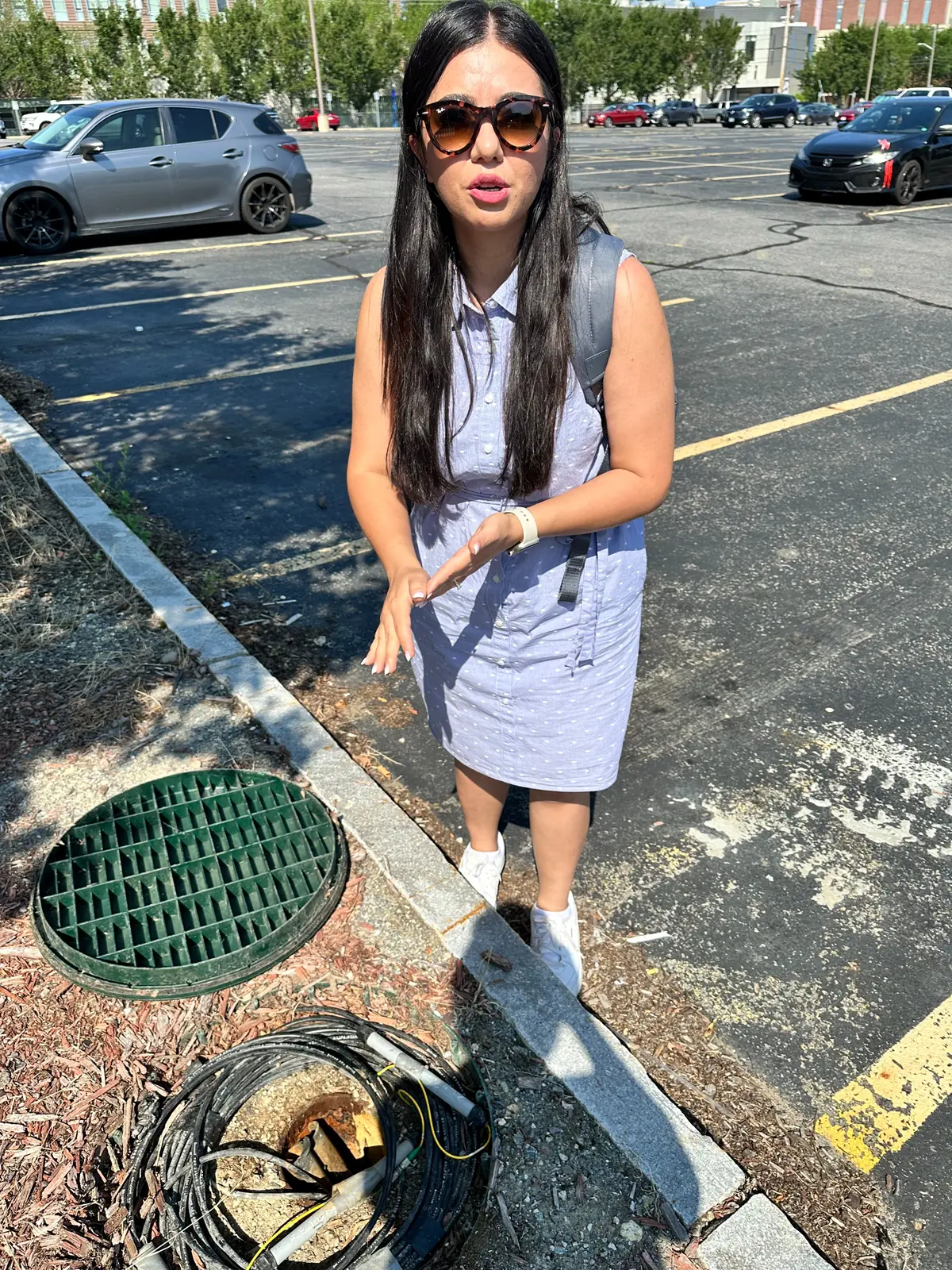 Image by K. Webster
 Ghandi points out monitoring equipment in another test borehole on South Campus.
“Massachusetts is a leader in this space because we at HEET proposed this technology and pathway back in 2017,” Magavi says. “This was the first gas utility pilot of this type of design in the country.”
Conversions also make sense right now, because many of the state’s natural gas service lines are more than 50 years old, leaky and in need of replacement, Ghandi says.
In Framingham, the upfront cost of the networked geothermal system’s infrastructure was borne by Eversource. The natural gas utility will recover that cost over time by billing customers in the network.
Under the pilot project, residential customers’ bills from Eversource are capped for the first two years at about $10 per month, while commercial customers have their bills capped at about $20. After that, rates will be set by utility regulators, but they are expected to remain low.
A second pilot project also launched in Lowell, where natural gas utility National Grid drilled two test boreholes in spring 2023 in a large parking lot next to South Campus, as part of a plan to install a geothermal network for university buildings and homes and businesses in the adjoining Acre neighborhood.
But the bids for drilling came in “astronomically higher” than anticipated, so National Grid withdrew and began working on pilot projects elsewhere in the state, O’Mahony says. The utility continues to share information about what it learned with its former Lowell partners, he says.
“Now we’re applying those lessons to projects across the state,” he says.
O’Mahony is optimistic that the Lowell project will move forward again soon, with the university taking the lead in working with engineering and contracting firms that already have geothermal experience as well as with community partners, including the Cambodian Mutual Assistance Association, which will do more outreach and education for private building owners.
“We’re in a good position to go back, make some design tweaks, increase awareness in the community and look at this as a project that would benefit the city of Lowell and the university,” O’Mahony says.