
 Image by Ed Brennen
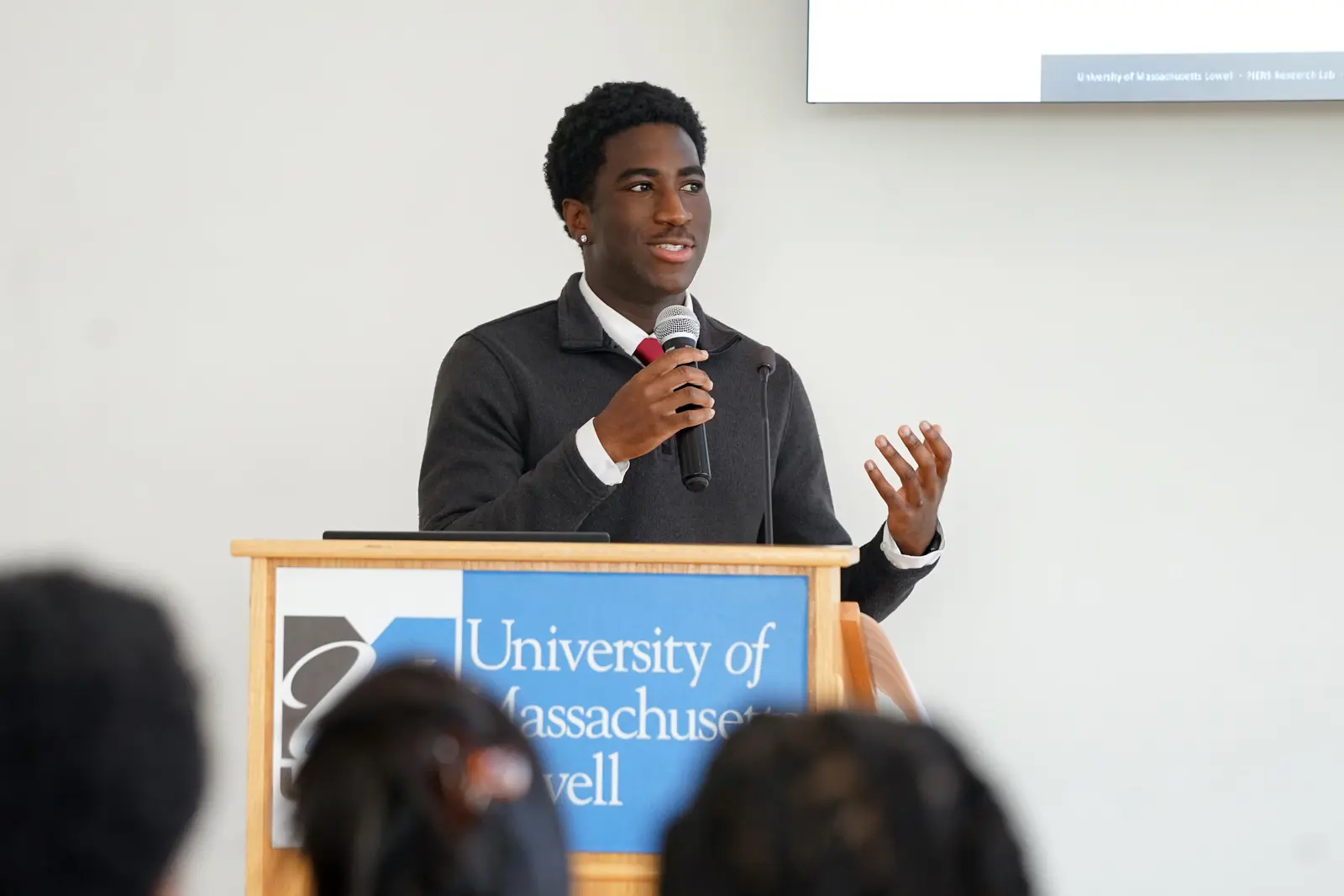
 Sophomore electrical engineering major Bright Dose presents his research on human-robot interaction that he is conducting as part of the STEP Research Initiative.
As a first-year electrical engineering major, Bright Dose felt like he was falling behind in his classes.
Looking for a way to regain his footing, he joined the Science, Technology, Engineering and Mathematics (STEM) Training and Excellence Program, or STEP, offered by the Office of Multicultural Affairs’ Rising 360° initiative.
“I wanted something that could keep me accountable,” says Dose, who saw immediate results after attending study sessions and working with mentors as a member of the inaugural STEP cohort. “It ended up being my best semester.”
Now a sophomore, Dose serves as a peer leader for STEP, which has seen its membership grow from 35 to 195 undergraduate students this year. The Worcester native was also accepted into the new STEP Research Initiative, which pairs students with faculty mentors to conduct research, provides skill-building workshops and includes a $2,500 award.
Dose was among a half dozen students from STEP presenting their work at a recent research showcase at the Saab Emerging Technologies and Innovation Center. The event, which also included students from the River Hawk Scholars Academy’s Roads to Research program, featured brief talks and a poster session.
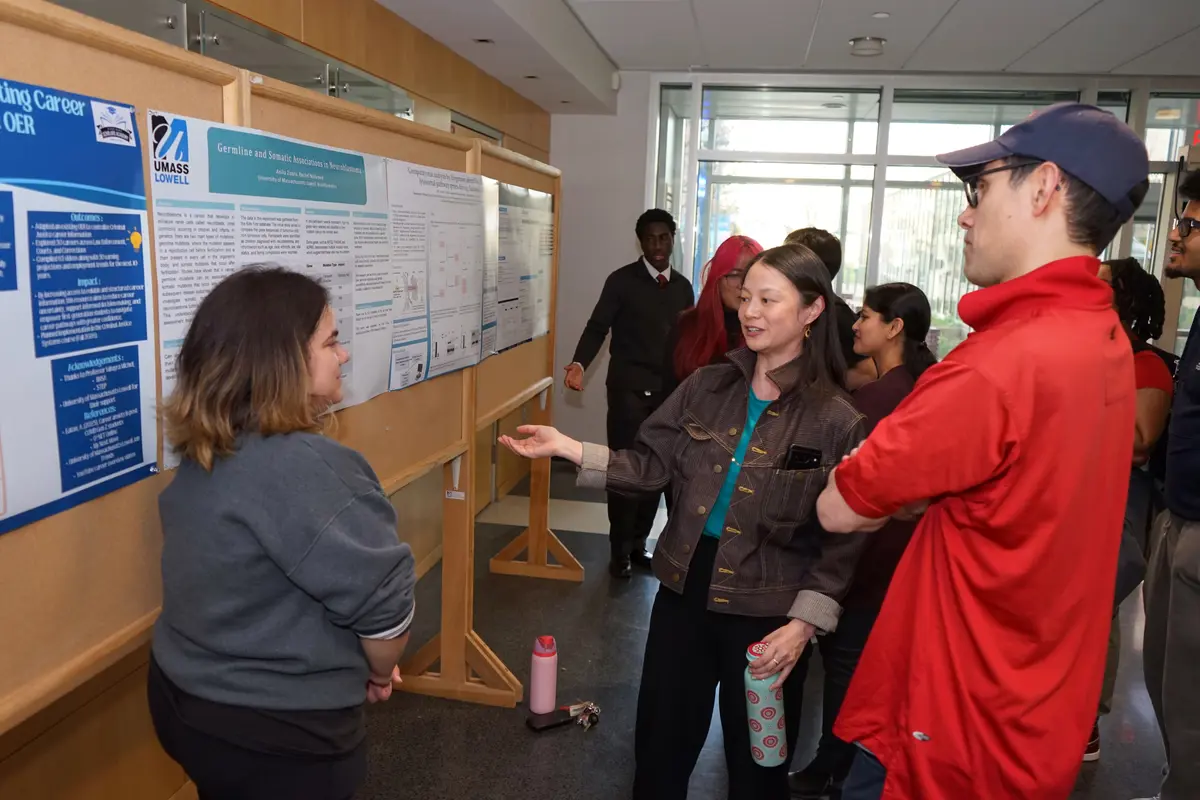 Image by Ed Brennen
 Sophomore chemical engineering major Anika Ziobro, left, shares the research work they conducted through the STEP Research Initiative.
Junior biology major Amanda Lodi says STEP is giving her the research experience she needs as she prepares for medical school.
“Breaking into these spaces isn’t easy, but this program gave me a way in,” says Lodi, an Honors College student from Acton. “It’s been a dream come true.”
Lodi is working with Biomedical Engineering Associate Professor and Department Chair Walfre Franco to develop synthetic skin models that allow researchers to more accurately test biomedical imaging technologies under controlled conditions. The work aims to address gaps in how medical tools perform across diverse patient populations, where visual cues can be harder to detect.
“Before this, I didn’t know if I could get into medical school,” Lodi says. “Now, I feel like it’s possible.”
Anika Ziobro, a sophomore chemical engineering major from Marlborough, says STEP has helped them find focus and a sense of community.
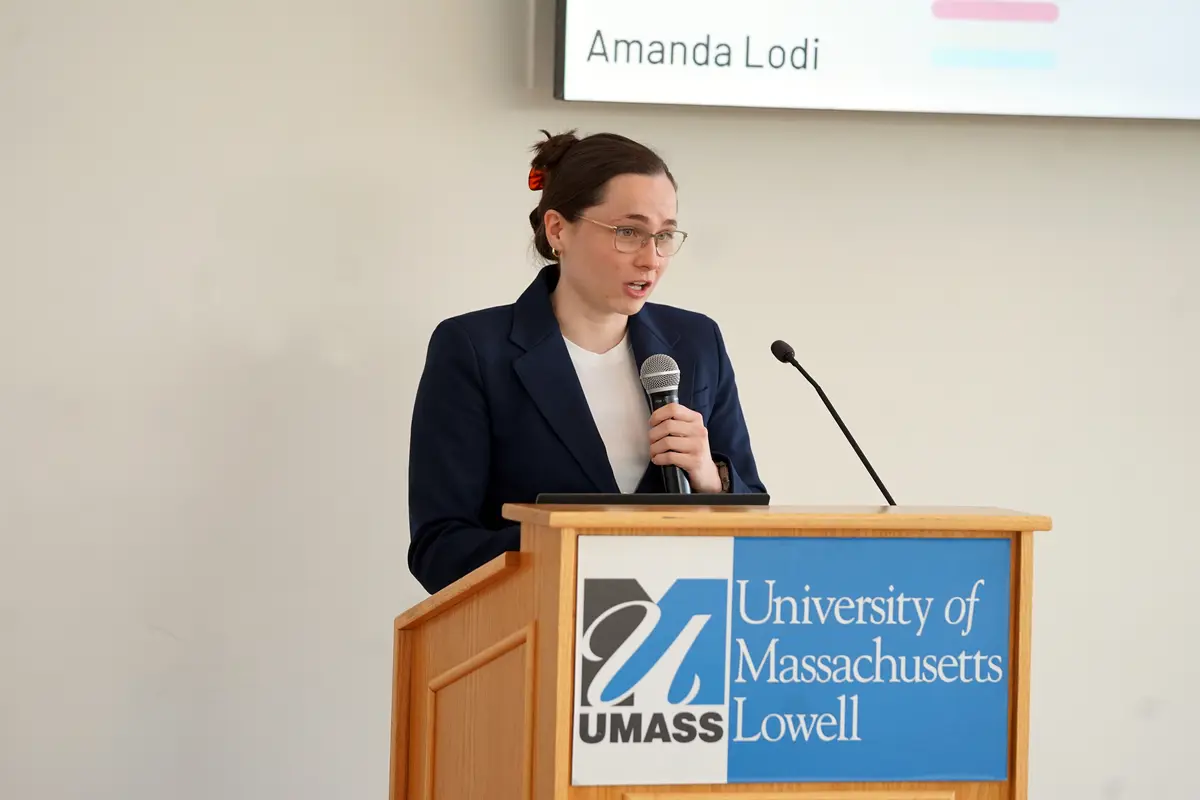 Image by Ed Brennen
 Junior biology major Amanda Lodi says the STEP Research Initiative has been "a dream come true."
That’s precisely the goal of the applicant-based program, says Alisa Michel, a coordinator in the Office of Multicultural Affairs who oversees STEP.
“We’re continuing to expand how we connect students with opportunities on campus, build community, have fun and create a sense of belonging in STEM,” she says.
Maria Velazquez, an associate teaching professor of mechanical engineering, leads many of the STEP workshops. She says the transformation she sees in students is one of the most rewarding aspects of the program.
“Students come in not knowing what research is, and over time, they learn to ask questions and become comfortable with uncertainty,” Velazquez says.
That growth is evident in students like Dose, who has gone from struggling in his first year to looking ahead to graduate study.
“UMass Lowell is known for its research, so I wanted to get ahead before going into a master’s or doctoral program,” he says.
Working in the PIERS (People, Intelligence, Environments, Robots and Society) Lab with faculty mentor Samantha Reig, an assistant professor of computer science, Dose has contributed to a project developing a web-based repository to help researchers study how humans interact with robots.
“I’ve learned much more about robotics than I expected,” he says. “I’ve also learned how research is conducted and how research papers work. It’s been a wonderful experience.”
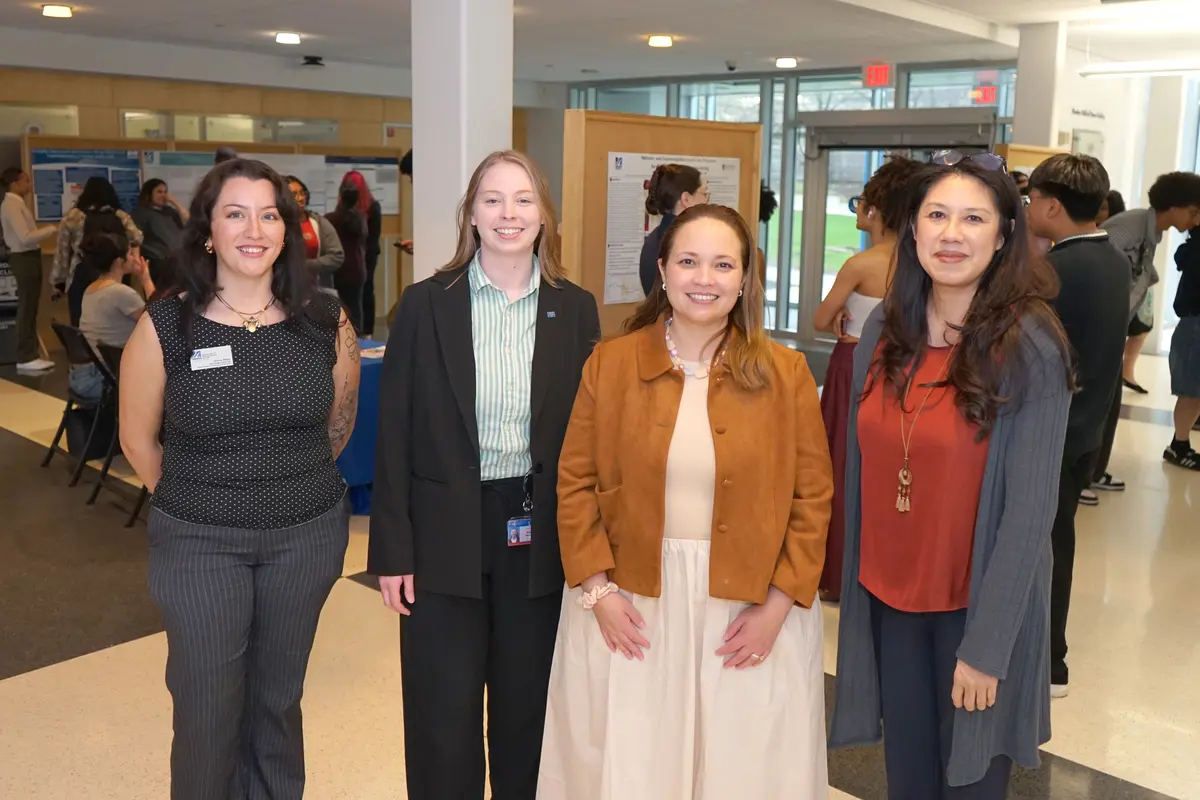 Image by Ed Brennen
 The recent research showcase was a collaboration between the STEP Research Initiative and the River Hawk Scholars Academy's Roads to Research Program, led by, from left, RHSA Program Assistant Jenna Kapp, OMA Coordinator Alisa Michel, Mechanical Engineering Associate Teaching Professor Maria Velazquez and Dean of Equity and Inclusion Leslie Wong.