As an English major, you will acquire skills in writing, critical thinking, research and analysis that are highly marketable in the workforce.

Bachelor of Arts in English

Student holds a microphone inside a newsroom.

Sharpen your writing, reading and research skills with UMass Lowell’s Bachelor of Arts in English degree. 

Our supportive department offers small classes and faculty mentorship. Dive into internships, write for student publications or work on theatre productions. You’ll build a portfolio and gain professional experiences that set you apart.

A degree in English can lead to diverse careers, including publishing, media, teaching, law or graduate study. You'll graduate prepared to think clearly, write persuasively and succeed. 

Learn about our online B.A. in English.

What Can You Do with a Degree in English?

Known for their excellent written and oral communication and analytical skills, our alumni work in a wide range of industries, including:

  • Media
  • Publishing
  • Education
  • Law
  • Arts 
  • Business
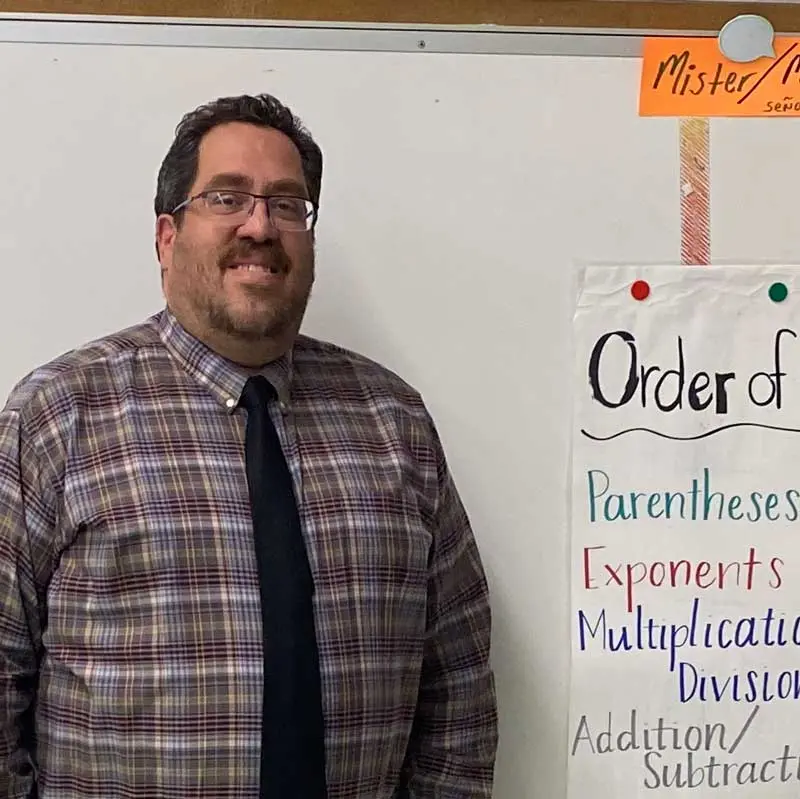
Roberta Rivera in his middle school classroom.

Career Placements

  • Boston Mayor Michelle Wu’s Office
  • National Public Radio
  • Lawrence High School
  • Regis College 
  • Simpson Gumpertz & Heger
  • Google
  • LinkedIn
  • Harvard Business Publishing
  • CNN
  • Boston Celtics

Graduate Schools

  • Johns Hopkins University
  • Merrimack College
  • Regis College
  • Relay Graduate School of Education
  • Simmons University
  • Southern New Hampshire University
  • Suffolk University
  • University of Massachusetts-Lowell

Meet Our Students and Alumni

Tim Murphy reading "My Big TOE."
Tim Murphy '21
English Literature

Tim Murphy says his experiences at UMass Lowell have increased his confidence along with his expertise.

School has helped me learn how to work toward any goal and accomplish it.
Emmy Misail works on her comic strip
Emmy Misail '20
English – Journalism and Professional Writing

Emmy Misail won an Honors College creativity fellowship to draw comic strips under the guidance of an art professor.

Journalism and professional writing offer a really broad range of pathways to choose from.
Michelle Garcia reads aloud in front of a class
Michelle Garcia '21
English, Sociology

Michelle Garcia, a rising spoken word poet, is also learning how to write poetry for the page.

Writing keeps me sane. It keeps me grounded.

Year-by-Year Course Plan

Check out our degree pathways, which offer sample plans for completing your degree in four years.

For students who entered fall 2018 and beyond.

Freshman Year

Fall Semester

Course NumberCourse NameCredits
ENGL.1010 /
HONR.1100
College Writing I /
First Year Seminar in Honors: Text in the City (CW)
3
FAHS.1090First Year Seminar1
MATH.xxxxMath Perspective (MATH) - MATH.1110 (QL) recommended43
WLxx.xxxxLanguage 1 and Culture3
xxxx.xxxxSocial Sciences Perspective (SS)3
xxxx.xxxxFree Elective3
Total16

Spring Semester

Course NumberCourse NameCredits
ENGL.1020College Writing II (CW)3
ENGL.2380Introduction to Creative Writing3
WLxx.xxxxLanguage 2 and Culture3
xxxx.xxxxSciences with Lab Perspective (SCL)3-4
xxxx.xxxxArts and Humanities Perspective (AH)3
Total15-16

Sophomore Year

Fall Semester

Course NumberCourse NameCredits
ENGL.2000Critical Methods3
ENGL.3/4xxxCreative Writing Elective3
xxxx.xxxxArts and Humanities Perspective (AH)3
xxxx.xxxxSciences with Lab Perspective (SCL)3-4
xxxx.xxxxLanguage 3 and Culture /
World Ready Elective1
3
Total15-16

Spring Semester

Course NumberCourse NameCredits
ENGL.3/4xxxCreative Writing Elective23
ENGL.3/4xxxLiterature Elective3
xxxx.xxxxSocial Sciences Perspective (SS)3
xxxx.xxxxArts and Humanities Perspective (AH)3
xxxx.xxxxLanguage 4 and Culture /
World Ready Elective1
3
Total15

Junior Year

Fall Semester

Course NumberCourse NameCredits
ENGL.3/4xxxLiterature Elective3 (DCA), (SRE)3
ENGL.3/4xxxCreative Writing Elective23
xxxx.xxxxFree Elective (QL)3
xxxx.xxxxScience, Technology, Engineering, and Mathematics Perspective (STEM)3
xxxx.xxxxWorld Ready Elective1 / Free Elective3
Total15

Spring Semester

Course NumberCourse NameCredits
ENGL.3/4xxxCreative Writing Elective2 (AIL)3
ENGL.3/4xxxLiterature Elective33
xxxx.3/4xxxFree / Minor Elective3
xxxx.xxxxSocial Sciences Perspective (SS)3
Total15

Senior Year

Fall Semester

Course NumberCourse NameCredits
ENGL.4230 /
ENGL.4240
Shakespeare 1 /
Shakespeare 2 (WOC), (IL)
3
ENGL.3/4xxxCreative Writing Elective23
ENGL.3/4xxxLiterature Elective33
xxxx.xxxxFree / Minor Elective3
Total15

Spring Semester

Course NumberCourse NameCredits
ENGL.4500 /
ENGL.4010
Creative Writing Capstone (CTPS)3
ENGL.3/4xxxOptional English / Free Elective3
xxxx.xxxxFree / Minor Elective3
Total15

Total Minimum Credits = 120.

1World Ready Language Track (WR track) requires successful completion of a two course sequence in a World Language (depending on placement) and three approved courses on the culture/history/literature/film related to that language, but taught in English. (Total of 15 credits.) For detailed information refer to Policies - Language Requirements in the undergraduate catalog.

2Appropriate Creative Writing Electives are listed below.

3Some students may satisfy the Diverse Traditions requirement with a 2000 level course and should consult with their advisors to be sure that they will also satisfy both the DCA and SRE ELOs.

4Quantitative Literacy (QL) is fulfilled outside the English major. The department recommends that all majors take MATH.1110 which fulfills both the Math Breadth of Knowledge requirement and the Quantitative Literacy ELO. See QL course listing for a full list of classes that fulfill this requirement.

A minimum of 36 credits, appropriately distributed, is required in English department courses. Students may not exceed the maximum of 54 credits of English department courses (not counting College Writing I and II). At least 66 credits must be earned outside of the major.

  • In order to graduate, students must earn a cumulative 2.200 grade point average for all English department courses, with the exception of College Writing I and II.
  • Students must complete 12 credits of advanced creative writing courses and 9 credits of literature electives as well as Introduction to Creative Writing (ENGL.2380), Critical Methods (ENGL.2000), Shakespeare 1 or 2 (ENGL.4230 / ENGL.4240), and a 4000 level creative writing capstone course.
  • Majors must take at least one course that fulfills the department's Diverse Literary Traditions requirement. Students should consult AR in SIS for the department's list of approved courses.

No more than two Breadth of Knowledge courses can be taken with the same prefix. The Core Curriculum courses may be taken in any sequence. Refer to the Core Curriculum policy for further details. You should meet with your faculty advisor to determine how you will meet the Core Curriculum requirements.

Current UMass Lowell students should be using their Advisement Report in SiS. If you need assistance, please contact your advisor.

Required Courses

Two foundation courses are required (6 credits):

  • ENGL.2380 Introduction to Creative Writing (must be completed before taking any advanced creative writing courses)
  • ENGL.2000 Critical Methods of Literary Inquiry

Five approved creative writing electives are required (15 credits):

Note: At least one of these must be a level II course.

Three 3000 or 4000 level literature electives are required (9 credits):

Any 3000/4000 level literature course qualifies. Review your Advising Report in SIS for the full list.

One of these literature courses should meet the department requirement for “Diverse Literary Traditions”.

One of the following is required (3 credits):

One capstone course is required (3 credits):

Optional: An additional six English electives may be taken (0-18 credits):

Additional English courses (up to six courses within the 54 credit limit) may be taken in literature, theatre, or writing. For students contemplating graduate school in the discipline, additional 3000/4000 level creative writing and literature courses are recommended. Students are encouraged in the spring of junior year or fall of senior year to seek an experiential learning opportunity such as the Practicum (Internship) or Community Writing 1 or 2, depending on the student's career goals and interests. Students planning a career in secondary teaching should consider the Undergraduate Seminar on the Teaching of Writing.

Creative Writing students are not required to take a minor, but they are encouraged to do so. Depending on the student's career goals and interests, several different minors may be appropriate. All students are encouraged to discuss possible minors with their academic advisors.

Restriction on off-campus study:

Be advised that any course taken at another institution must be formally approved prior to enrollment.

See the catalog policy for details.

Breadth of Knowledge (BOK) Glossary

  • SS - Social Sciences Perspective - 9 credits
  • AH - Arts and Humanities Perspective - 9 credits
  • SCL - Sciences with Lab Perspective - 6 credits
  • STEM - Science, Technology, Engineering and Math Perspective - 3 credits
  • CW - College Writing I and II - 6 credits
  • MATH - Math Perspective - 3 credits

Read more about the Breadth of Knowledge requirements.

Essential Learning Outcomes (ELO) Glossary

  • AIL - Applied and Integrative Learning
  • CTPS - Critical Thinking and Problem Solving
  • DCA - Diversity and Cultural Awareness
  • IL - Information Literacy
  • QL - Quantitative Literacy
  • SRE - Social Responsibility and Ethics
  • WOC - Written and Oral Communication

Read more about the Essential Learning Outcomes.

For students who entered fall 2025 and beyond.

Freshman Year

Fall Semester

Course NumberCourse NameCredits
ENGL.1010 /
HONR.1100
College Writing I /
First Year Seminar in Honors: Text in the City (CW)
3
FAHS.1090First Year Seminar1
MATH.xxxxMath Perspective (MATH) - MATH.1110 (QL) recommended43
WLxx.xxxxLanguage 1 and Culture3
xxxx.xxxxSocial Sciences Perspective (SS)3
xxxx.xxxxFree Elective3
Total16

Spring Semester

Course NumberCourse NameCredits
ENGL.1020College Writing II (CW)3
WLxx.xxxxLanguage 2 and Culture3
xxxx.xxxxSciences with Lab Perspective (SCL)3-4
xxxx.xxxxArts and Humanities Perspective (AH)3
xxxx.xxxxxFree Elective3
Total15-16

Sophomore Year

Fall Semester

Course NumberCourse NameCredits
ENGL.2000Critical Methods (CTPS), (IL)3
ENGL.2390Introduction to Professional Writing (WOC)3
xxxx.xxxxArts and Humanities Perspective (AH)3
xxxx.xxxxScience with Lab Perspective (SCL)3-4
xxxx.xxxxLanguage 3 and Culture /
World Ready Elective1
3
Total15-16

Spring Semester

Course NumberCourse NameCredits
ENGL.3/4xxxLiterature Elective33
ENGL.3xxxWriting Elective23
xxxx.xxxxSocial Sciences Perspective (SS)3
xxxx.xxxxArts and Humanities Perspective (AH)3
xxxx.xxxxLanguage 4 and Culture /
World Ready Elective1
3
Total15

Junior Year

Fall Semester

Course NumberCourse NameCredits
ENGL.3/4xxxTheory/Composition/Language3 (AIL)3
ENGL.3/4xxxWriting Elective23
xxxx.xxxxScience, Technology, Engineering, and Mathematics Perspective (STEM)3
xxxx.xxxxWorld Ready Elective1 /
Free Elective
3
Total15

Spring Semester

Course NumberCourse NameCredits
ENGL.3/4xxxWriting Elective23
ENGL.3/4xxxLiterature Elective3 (DCA), (SRE)3
ENGL.3/4xxxEnglish Elective / Free Elective3
xxxx.3/4xxxFree Elective3
xxxx.xxxxSocial Sciences Perspective (SS)3
Total15

Senior Year

Fall Semester

Course NumberCourse NameCredits
Total15
ENGL.2/3/4xxxEnglish Elective3
ENGL.3/4xxxEnglish Elective / Free Elective3
ENGL.4xxxCapstone33
xxxx.xxxxFree Elective3

Spring Semester

Course NumberCourse NameCredits
ENGL.3/4xxxWriting Elective23
ENGL.3/4xxxEnglish Elective / Free Elective3
xxxx.xxxxFree Elective3
Total15

Total Minimum Credits = 120

Minimum [major] Credits: 36

Maximum [major] that can be counted toward graduation: 54

1World Ready Language Track (WR track) requires successful completion of a two course sequence in a World Language (depending on placement) and three approved courses on the culture/history/literature/film related to that language, but taught in English. (Total of 15 credits.) For detailed information refer to Policies - Language Requirements in the undergraduate catalog.

2See list of options for writing electives.

3See requirements for literature electives, Theory/Composition/Language, capstone, and portfolio requirements below. One literature elective must fulfill the department’s Diverse Traditions requirement. Some students may satisfy the Diverse Traditions requirement with a 2000 level course and should consult with their advisors to be sure that they will also satisfy both the DCA SRE ELOs.

4Quantitative Literacy (QL) is fulfilled outside the English major. The department recommends that all majors take MATH.1110 which fulfills both the Math Breadth of Knowledge requirement and the Quantitative Literacy ELO. See QL course listing for a full list of classes that fulfill this requirement.

A minimum of 36 credits, appropriately distributed, is required in English department courses. Students may not exceed the maximum of 54 credits of English department courses (not counting College Writing I II). At least 66 credits must be earned outside of the major.

  • In order to graduate, students must earn a cumulative 2.200 grade point average for all English department courses, with the exception of College Writing I and II.
  • Students must complete Introduction to Professional Writing (ENGL.2390); Critical Methods (ENGL.2000); 15 credits of advanced writing courses; 6 credits of literature electives; 3 credits of English electives; 3 credits of Theory/Composition/Language electives, and a 4000 level capstone course or practicum.
  • Majors must take at least one course that fulfills the department's Diverse Traditions requirement. Students should consult the AR in SIS for the department's list of approved courses.

No more than two Breadth of Knowledge courses can be taken with the same prefix. The Core Curriculum courses may be taken in any sequence. Refer to the Core Curriculum policy for further details. You should meet with your faculty advisor to determine how you will meet the Core Curriculum requirements.

Current UMass Lowell students should be using their Advisement Report in SiS. If you need assistance, please contact your advisor.

Restriction on off-campus study:

Be advised that any course taken at another institution must be formally approved prior to enrollment.

See the catalog policy for details.

Writing Requirements

Two foundation courses are required (6 credits):

  • ENGL.2390 Introduction to Professional Writing (must be completed before taking any advanced writing courses)
  • ENGL.2000 Critical Methods of Literary Inquiry

Five approved writing electives are required (15 credits):

One capstone course is required (3 credits):

Any 4000 level writing course on the list above or ENGL.4900 Directed Study in Writing (must be pre-arranged with faculty approval).

Portfolio Requirement:

Students must submit an electronic portfolio of work to a JPW faculty committee in order to graduate. This portfolio should include a resume and cover letter, and substantial written and/or multimedia work created for a public audience, including assignments from relevant coursework, output from extracurricular activities, and work done as part of an internship.

Additional Requirements

Two literature electives are required (6 credits):

Students take at least two 3000/4000 level literature courses (any 3000 or 4000 level literature course qualifies).

One English elective is required (3 credits)

Any ENGL course at the 2000 level and above

One of the following Theory/Composition/Language courses is required (3 credits):

Optional: Up to six free English electives may be taken (0-18 credits):

Additional English courses (up to six courses within the 54 credit limit) may be taken in literature, theatre, or writing. For students contemplating graduate school in the discipline, additional 3000 or 4000 level writing and literature courses are recommended. Students planning a career in secondary teaching should consider the Undergraduate Seminar on the Teaching of Writing.

Breadth of Knowledge (BOK) Glossary

  • SS - Social Sciences Perspective - 9 credits
  • AH - Arts and Humanities Perspective - 9 credits
  • SCL - Sciences with Lab Perspective - 6 credits
  • STEM - Science, Technology, Engineering and Math Perspective - 3 credits
  • CW - College Writing I and II - 6 credits
  • MATH - Math Perspective - 3 credits

Read more about the Breadth of Knowledge requirements.

Essential Learning Outcomes (ELO) Glossary

  • AIL - Applied and Integrative Learning
  • CTPS - Critical Thinking and Problem Solving
  • DCA - Diversity and Cultural Awareness
  • IL - Information Literacy
  • QL - Quantitative Literacy
  • SRE - Social Responsibility and Ethics
  • WOC - Written and Oral Communication

Read more about the Essential Learning Outcomes.

For students who entered fall 2021 and beyond.

Freshman Year

Fall Semester

Course NumberCourse NameCredits
ENGL.1010 /
HONR.1100
College Writing I /
First Year Seminar in Honors: Text in the City (CW)
3
FAHS.1090First Year Experience Seminar1
MATH.xxxxMath Perspective (MATH) - MATH.1110 (QL) recommended13
WLxx.xxxxLanguage 1 and Culture3
xxxx.xxxxSocial Sciences Perspective (SS)3
xxxx.xxxxFree Elective3
Total16

Spring Semester

Course NumberCourse NameCredits
ENGL.1020College Writing II (CW)3
ENGL.2810British Literary Traditions23
WLxx.xxxxLanguage 2 and Culture3
xxxx.xxxxSciences with Lab Perspective (SCL)3-4
xxxx.xxxxArts and Humanities Perspective (AH)3
Total15-16

Sophomore Year

Fall Semester

Course NumberCourse NameCredits
ENGL.2000Critical Methods of Literary Inquiry2 (CTPS), (IL)3
ENGL.2820American Literary Traditions23
xxxx.xxxxSciences with Lab Perspective (SCL)3-4
xxxx.xxxxLanguage 3 and Culture /
World Ready Elective3
3
xxxx.xxxxFree Elective3
Total15-16

Spring Semester

Course NumberCourse NameCredits
ENGL.2/3/4xxxLiterature Elective4 (DCA), (SRE)3
ENGL.3/4xxxLiterature Elective43
xxxx.xxxxSocial Sciences Perspective (SS)3
xxxx.xxxxArts and Humanities Perspective (AH)3
xxxx.xxxxLanguage 4 and Culture /
World Ready Elective3
3
Total15

Junior Year

Fall Semester

Course NumberCourse NameCredits
ENGL.3/4xxxLiterature Elective43
ENGL.3xxxTheory/Composition/Language/Methods4 (AIL)3
xxxx.xxxxArts and Humanities Perspective (AH)3
xxxx.xxxxScience, Technology, Engineering, and Mathematics Perspective (STEM)3
xxxx.xxxxWorld Ready Elective3 / Free Elective3
Total15

Spring Semester

Course NumberCourse NameCredits
ENGL.3/4xxxLiterature Elective43
xxxx.3/4xxxFree Elective3
xxxx.xxxxSocial Sciences Perspective (SS)3
Total15

Senior Year

Fall Semester

Course NumberCourse NameCredits
ENGL.3/4xxxLiterature Elective43
xxxx.3/4xxxFree Elective3
xxxx.xxxxFree Elective3
Total15

Spring Semester

Course NumberCourse NameCredits
ENGL.4xxxCapstone: 4000-level Literature Elective (WOC)3
xxxx.3/4xxxFree Elective3
xxxx.xxxxFree Elective3
Total15

Total Minimum Credits = 120

1Quantitative Literacy (QL) is fulfilled outside the English major. The department recommends that all majors take MATH.1110 which fulfills both the Math Breadth of Knowledge requirement and the Quantitative Literacy ELO. See QL course listing for a full list of classes that fulfill this requirement.

2These three foundations courses may be taken in any order: Critical Methods, British Literary Traditions, and American Literary Traditions. They will introduce you to essential approaches to literary study and to the literary history that will ground your further studies. We strongly encourage you to take these courses before moving on to upper-level English courses.

3World Ready Language Track (WR track) requires successful completion of a two course sequence in a World Language (depending on placement) and three approved courses on the culture/history/literature/film related to that language, but taught in English. (Total of 15 credits.) For detailed information refer to Policies - Language Requirements in the undergraduate catalog.

4See requirements for period electives, Theory/Composition/Language/Methods, and capstone below. Some students may satisfy the Diverse Traditions requirement with a 2000 level course and should consult with their advisors to be sure that they will also satisfy both the DCA and SRE ELOs.

A minimum of 36 credits, appropriately distributed, is required in English department courses. Students may not exceed the maximum of 54 credits of English department courses (not counting College Writing I and II) within the first 120 credits presented toward graduation. At least 66 credits must be earned outside of the major.

In order to graduate, students must earn a cumulative 2.200 grade point average for all English department courses, with the exception of College Writing I and II.

All English majors must take at least two courses that satisfy the Diverse Literary Traditions requirement. These courses explore authors and texts through the historically under-represented perspectives of race, ethnicity, gender, disability, post-coloniality, and sexuality. Certain diversity courses may also significantly address non-western literary traditions. Courses satisfying this requirement take as their main focus literary traditions that respond to and represent voices outside the traditional canon, providing students with an opportunity to consider the complex power dynamics that influence literature and the academic field of literary study and to consider the way literary texts can engage and influence these same power dynamics. Students should consult the AR in SIS for the department's list of approved courses.

No more than two Breadth of Knowledge courses can be taken with the same prefix. The Core Curriculum courses may be taken in any sequence. Refer to the Core Curriculum policy for further details. You should meet with your faculty advisor to determine how you will meet the Core Curriculum requirements.

Current UMass Lowell students should be using their Advisement Report in SIS. If you need assistance, please contact your advisor.

Restriction on off-campus study:

Be advised that any course taken at another institution must be formally approved prior to enrollment.

See the catalog policy for details.

Required Courses

Each of the following 2000 level foundation courses is required (9 credits):

Six approved English literature electives are required (18 credits):

Students take six literature electives. One of these may be at the 2000 level (but can be 3000/4000 level). Five of the electives must be at the 3000/4000 level. Courses must also meet the literary period distribution requirements listed below (lists of approved courses for period categories may be found in the Literature AR on SIS):

One of the following Theory/Composition/Language/Methods courses is required (3 credits):

One capstone course is required (3 credits):

The capstone will provide a culminating opportunity to complete a substantial learning project. Students should discuss their interests with their academic advisor to plan ahead for the capstone. Choose one of the following, depending on student goals and interests:

  • An Individually-Designed Research Project
    • ENGL.4xxx Literary Research and Methods Seminar
  • Experiential Learning
  • A 4000-level Literature course (including single-author studies, upper-level thematic/period study, and advanced theory/methods courses)

Optional: An additional six English electives may be taken (0-18 credits):

Additional English courses (up to six courses within the 54 credit limit) may be taken in literature, theatre, or writing. For students contemplating graduate school in the discipline, additional 3000 or 4000 level literature courses are recommended. Students are encouraged in the spring of junior year or fall of senior year to seek an experiential learning opportunity such as the Practicum (Internship) or Community Writing 1 or 2, depending on the student's career goals and interests. Students planning a career in secondary teaching should consider the Undergraduate Seminar on the Teaching of Writing.

Note: Literature students are not required to take a minor, but they are encouraged to do so. Depending on the student's career goals and interests, several different minors may be appropriate. All students are encouraged to discuss possible minors with their academic advisors.

Breadth of Knowledge (BOK) Glossary

  • SS - Social Sciences Perspective - 9 credits
  • AH - Arts and Humanities Perspective - 9 credits
  • SCL - Sciences with Lab Perspective - 6 credits
  • STEM - Science, Technology, Engineering and Math Perspective - 3 credits
  • CW - College Writing I and II - 6 credits
  • MATH - Math Perspective - 3 credits

Read more about the Breadth of Knowledge requirements.

Essential Learning Outcomes (ELO) Glossary

  • AIL - Applied and Integrative Learning
  • CTPS - Critical Thinking and Problem Solving
  • DCA - Diversity and Cultural Awareness
  • IL - Information Literacy
  • QL - Quantitative Literacy
  • SRE - Social Responsibility and Ethics
  • WOC - Written and Oral Communication

Read more about the Essential Learning Outcomes.

For students who entered fall 2025 and beyond.

Freshman Year

Fall Semester

Course NumberCourse NameCredits
ENGL.1010 /
HONR.1100
College Writing I /
First Year Seminar in Honors: Text in the City (CW)
3
FAHS.1090First Year Seminar1
MATH.xxxxMath Perspective (MATH) - MATH.1110 (QL) recommended43
WLxx.xxxxLanguage 1 and Culture3
xxxx.xxxxSocial Sciences Perspective (SS)3
xxxx.xxxxFree Elective3
Total16

Spring Semester

Course NumberCourse NameCredits
ENGL.1020College Writing II (CW)3
ENGL.xxxxFoundations Course23
WLxx.xxxxLanguage 2 and Culture3
xxxx.xxxxSciences with Lab Perspective (SCL)3-4
xxxx.xxxxArts and Humanities Perspective (AH)3
Total15-16

Sophomore Year

Fall Semester

Course NumberCourse NameCredits
THEA.3110Play Production (AIL)3
ENGL.xxxxFoundations course2 - ENGL.2330 Play Analysis (CTPS)3
xxxx.xxxxTheatre Elective33
xxxx.xxxxScience, Technology, Engineering, and Mathematics Perspective (STEM)3
xxxx.xxxxLanguage 3 and Culture /
World Ready Elective1
3
Total15

Spring Semester

Course NumberCourse NameCredits
ENGL.xxxxFoundations course23
xxxx.xxxxTheatre Elective33
xxxx.xxxxSocial Sciences Perspective (SS)3
xxxx.xxxxArts and Humanities Perspective (AH)3
xxxx.xxxxLanguage 4 and Culture /
World Ready Elective1
3
Total15

Junior Year

Fall Semester

Course NumberCourse NameCredits
ENGL.4230 /
ENGL.4240
Shakespeare 1 / Shakespeare 2 (WOC), (IL)3
ENGL.xxxxDramatic Literature Elective3 (DCA), (SRE)3
xxxx.xxxxTheatre Elective33
xxxx.xxxxArts and Humanities Perspective (AH)3
xxxx.xxxxSciences with Lab Perspective (SCL)3-4
Total15-16

Spring Semester

Course NumberCourse NameCredits
ENGL.xxxxDramatic Literature Elective3
xxxx.xxxxTheatre Elective33
xxxx.xxxxSocial Sciences Perspective (SS)3
xxxx.xxxxWorld Ready Elective1 / Free Elective3
xxxx.xxxxFree Elective3
Total15

Senior Year

Fall Semester

Course NumberCourse NameCredits
THEA.xxxxCapstone Course3
xxxx.3/4xxxFree Elective3
xxxx.xxxxFree Elective3
Total15

Spring Semester

Course NumberCourse NameCredits
xxxx.3/4xxxFree Elective3
xxxx.xxxxFree Elective3
Total15

Total Minimum Credits = 120

Minimum [major] Credits: 36

Maximum [major] that can be counted toward graduation: 54

1World Ready Language Track (WR track) requires successful completion of a two course sequence in a World Language (depending on placement) and three approved courses on the culture/history/literature/film related to that language, but taught in English. (Total of 15 credits.) For detailed information refer to Policies - Language Requirements in the undergraduate catalog.

2Theatre Arts has three foundations courses: ENGL.2330 Play Analysis, ENGL.3820 World Theatre I: Ancient Greece to 18th Century OR ENGL.3830 World Theatre II: 19th Century to the Present, and THEA.2300 Foundations of Theatrical Design

3There are several different varieties of Theatre Electives, with a required distribution. These can be taken in any order; see the list of Theatre Electives and specific categories and distribution requirements below. One literature elective must fulfill the Department’s Diverse Traditions requirement. Some students may satisfy the Diverse Traditions requirement with a 2000 level course and should consult with their advisors to be sure that they will also satisfy both the DCA and SRE ELOs.

4Quantitative Literacy (QL) is fulfilled outside the English major. The department recommends that all majors take MATH.1110 which fulfills both the Math Breadth of Knowledge requirement and the Quantitative Literacy ELO. See QL course listing for a full list of classes that fulfill this requirement.

A minimum of 37 credits, appropriately distributed, is required for the Theatre Arts major:

  • In order to graduate, students must earn a cumulative 2.200 grade point average in their coursework for the Theatre Arts major.
  • Students must complete 18 credits with the “ENGL” prefix and 13 credits of “THEA” prefix courses. They may then select additional THEA or ENGL courses to complete the major. See below for details on various categories and requirements.
  • Students must complete a capstone course in Theatre in their senior year (see options below). The capstone may be a one-credit course.
  • At least one course must fulfill the department's Diverse Literary Traditions requirement; consult with your adviser or see the list in the SIS advising report.

No more than two Breadth of Knowledge courses can be taken with the same prefix. The Core Curriculum courses may be taken in any sequence. Refer to the Core Curriculum policy for further details. You should meet with your faculty advisor to determine how you will meet the Core Curriculum requirements.

Current UMass Lowell students should be using their Advisement Report in SiS. If you need assistance, please contact your advisor.

Restriction on off-campus study:

Be advised that any course taken at another institution must be formally approved prior to enrollment.

See the catalog policy for details.

Required Courses

The Theatre Arts Concentration consists of 36 credits. Of these, a minimum of 15 credits of “ENGL” course work and 12 credits of THEA coursework are specifically required; students may select from either course group for the remaining 9 required credits.

Each of the following foundation courses is required (9 credits):

  • ENGL.2330 Play Analysis
  • ENGL.3820 / ENGL.3830 World Theatre I: Ancient Greece to 18th Century / World Theatre II: 19th Century to the Present
  • THEA.2300 Foundations of Theatrical Design

One of the following courses in Shakespeare is required (3 credits):

Students must take Play Production at least once (3 credits):

  • THEA.3110 Play Production (3cr; may be repeated for credit)

At least two courses in Dramatic Literature/Theatre History Electives (6 credits):

At least one course in Performance Electives (min. 3 credits):

At least one course in Creative Electives (min. 3 credits):

Two additional 3-credit Theatre Arts Electives (either ENGL or THEA) in any of these areas:

Students need to take two more courses (6 credits) in any one of the four areas listed below; see course lists in each of these sub-sections above for specific options. Students should choose these courses from the area in which they wish to specialize.

  • Dramatic Literature/Theatre History
  • Performance
  • Creative
  • Technical Theatre

A 3-credit capstone course is required:

Optional: An additional 18 credits in THEA and ENGL electives may be taken (0-18 credits):

Additional courses (up to 18 credits within the 54 credit limit) may be taken in literature, theatre, or writing. For students contemplating graduate school in the discipline, additional 3000 or 4000 level theatre or dramatic literature courses are recommended.

Note: Theatre Arts students are not required to take a minor, but they may wish to do so. Depending on the student's career goals and interests, several different minors may be appropriate. All students are encouraged to discuss possible minors with their academic advisers.

Breadth of Knowledge (BOK) Glossary

  • SS - Social Sciences Perspective - 9 credits
  • AH - Arts and Humanities Perspective - 9 credits
  • SCL - Sciences with Lab Perspective - 6 credits
  • STEM - Science, Technology, Engineering and Math Perspective - 3 credits
  • CW - College Writing I and II - 6 credits
  • MATH - Math Perspective - 3 credits

Read more about the Breadth of Knowledge requirements.

Essential Learning Outcomes (ELO) Glossary

  • AIL - Applied and Integrative Learning
  • CTPS - Critical Thinking and Problem Solving
  • DCA - Diversity and Cultural Awareness
  • IL - Information Literacy
  • QL - Quantitative Literacy
  • SRE - Social Responsibility and Ethics
  • WOC - Written and Oral Communication

Read more about the Essential Learning Outcomes.

Why study English at UMass Lowell?

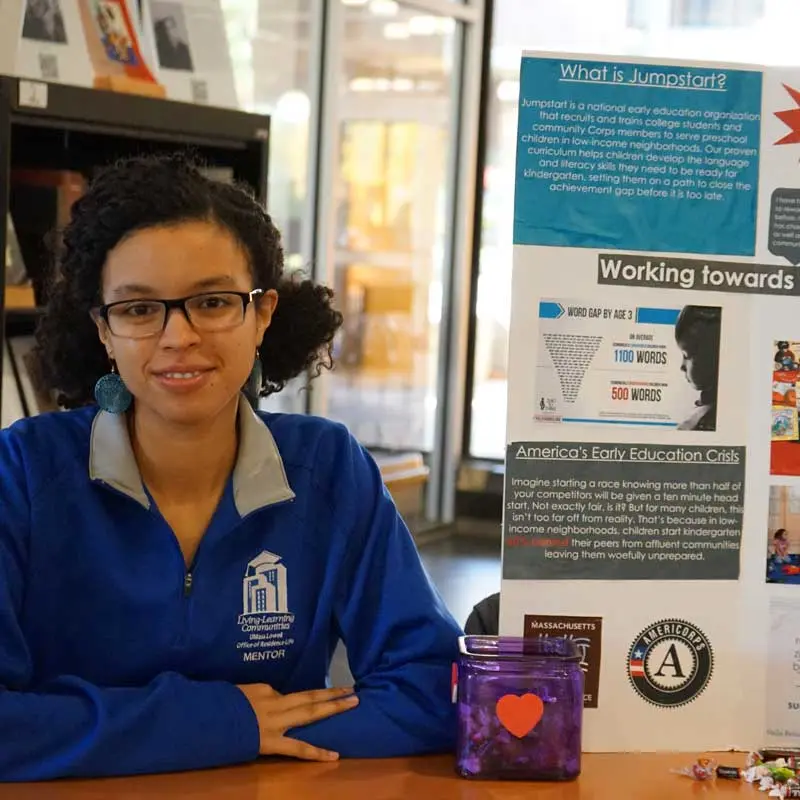
Emily Crespo sits at a table with a Jumpstart poster.

Internships That Lead to Careers

Many of our graduates are hired by the organizations at which they intern, including:

  • Bartlett Community Partnership School
  • The Lowell Sun
  • The Museum of Fine Arts Boston
  • WHDH Channel 7 News 
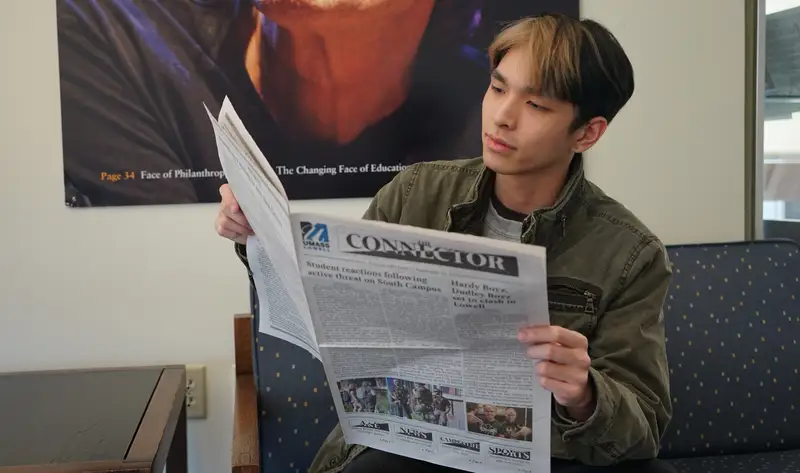
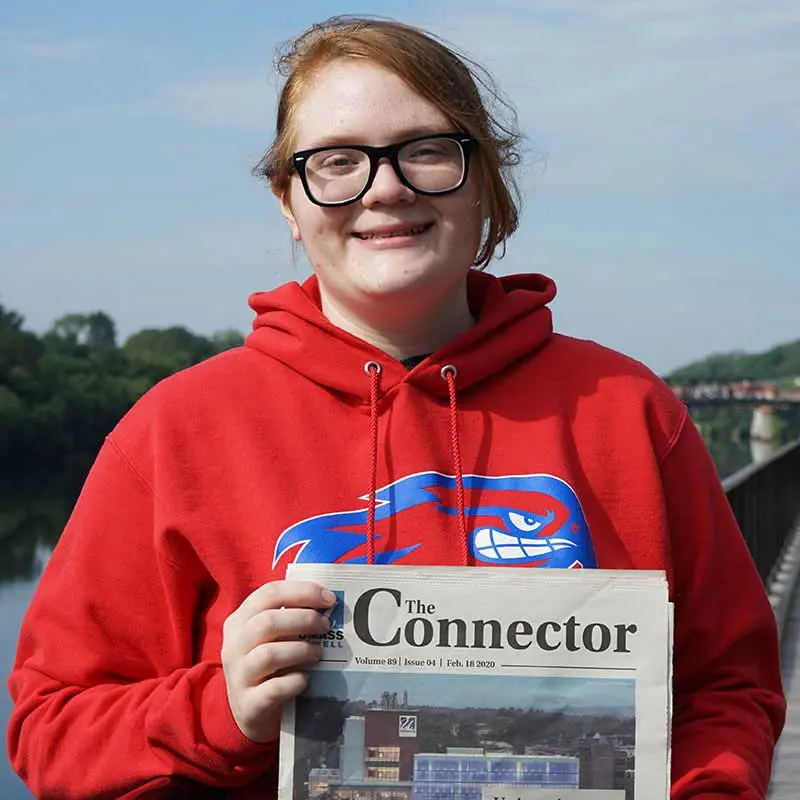
Brigid Archibald holds up copy of The Connector

Student Organizations

Put learning into practice with these student-run organizations.

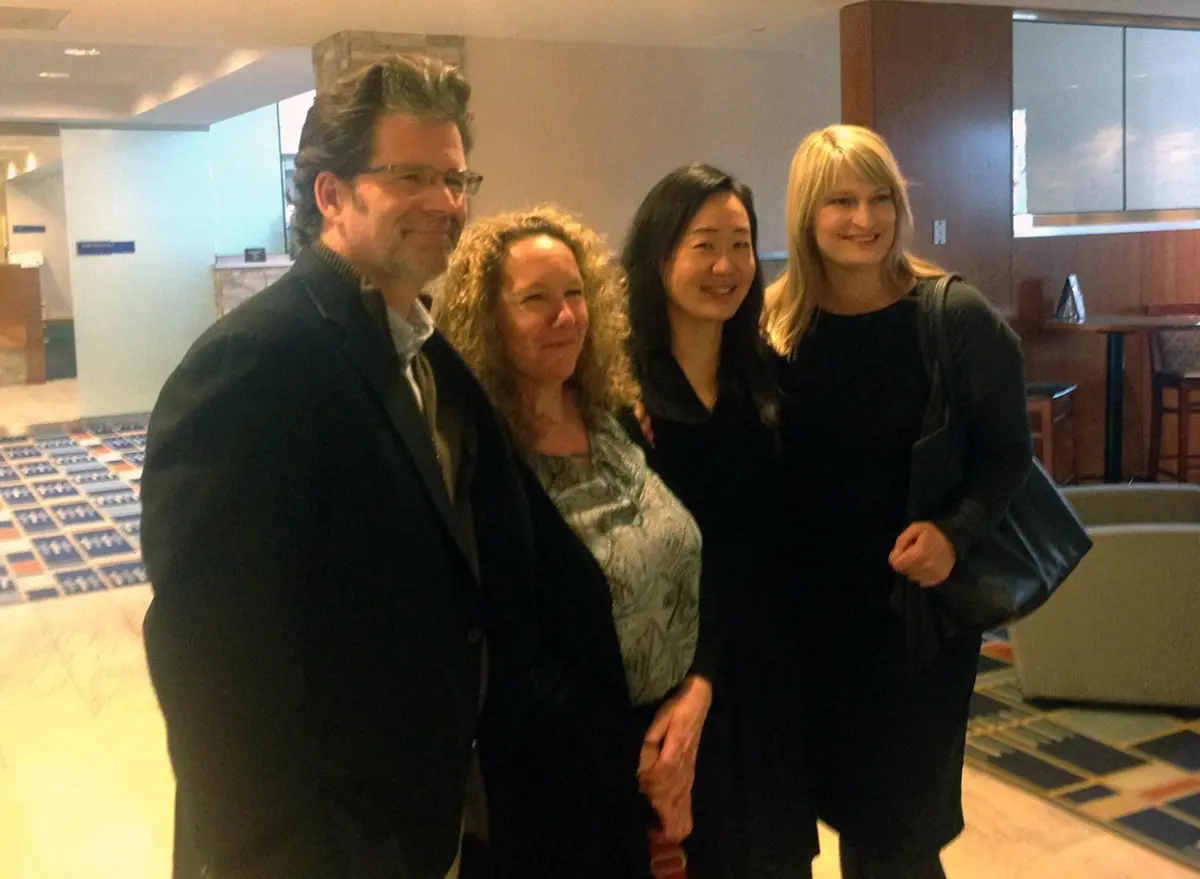
Creative writing faculty Andre Dubus, Maureen Stanton, Sandra Lim, and Maggie Dietz

Expert Faculty

Engage with our nationally recognized faculty through small class sizes and highly personalized advising.
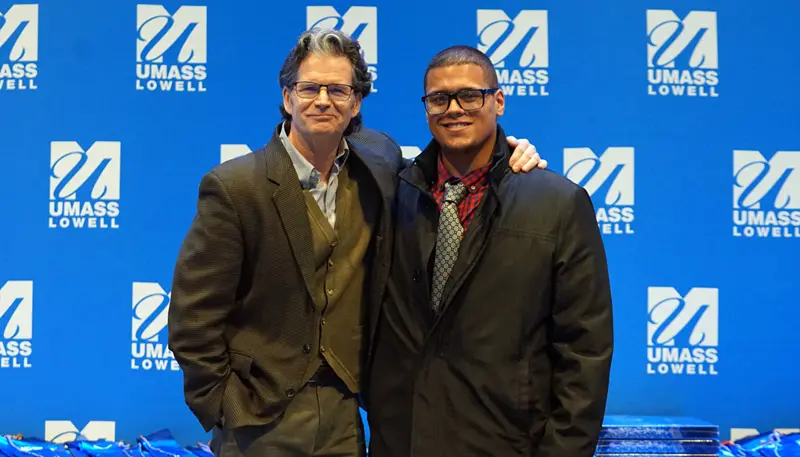
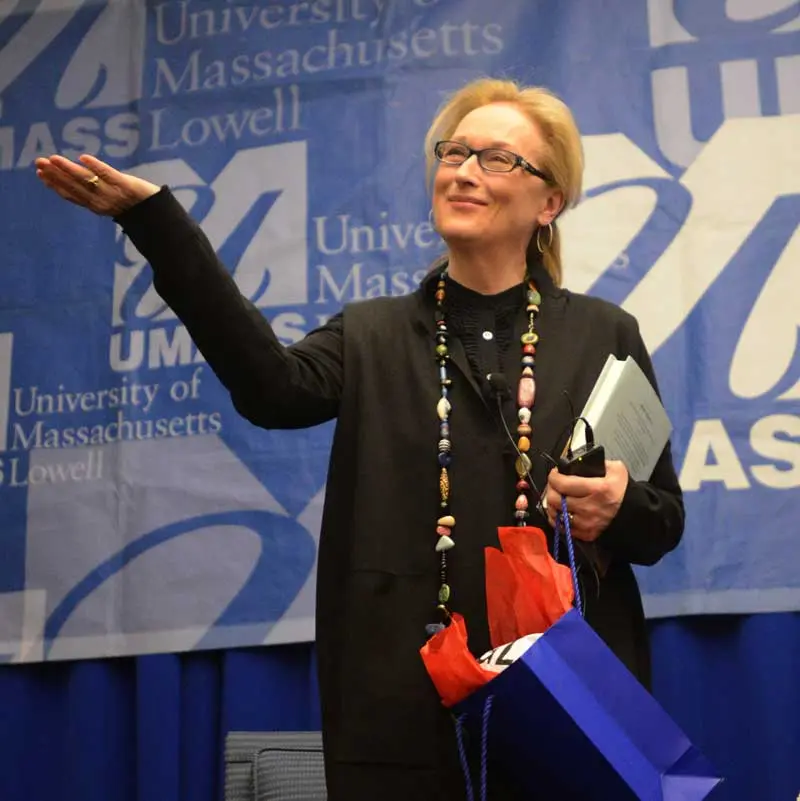
Meryl Street holding a book in front of the UMass banner

Scholarships

UMass Lowell and the English Department offer you the opportunity to apply for scholarship awards, including English-specific scholarships such as the Meryl Streep Scholarship, Stephen King Scholarship and more.

Visit UMass Lowell

Launch virtual tour

Visit campus, meet our people and picture yourself here. Find in-person and virtual tours and events.

Still Exploring Majors?

We've got 120+ programs. Browse our Program Finder to find the one that's right for you.

View All Programs