As an industrial engineering major, you will learn how to apply science, mathematics and fundamental engineering principles to improve complex systems and operations.

What courses will you take?

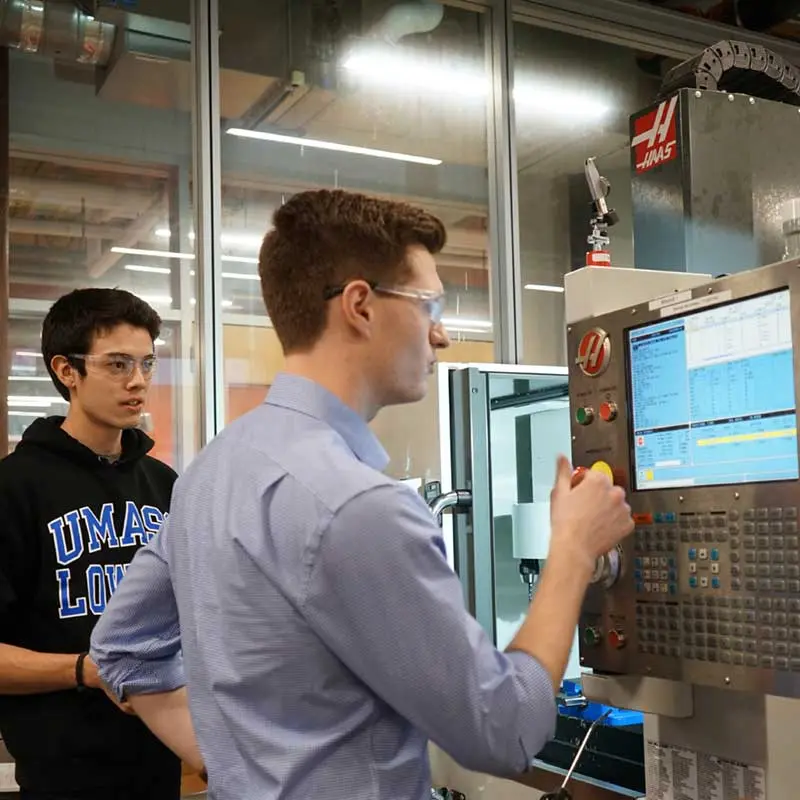
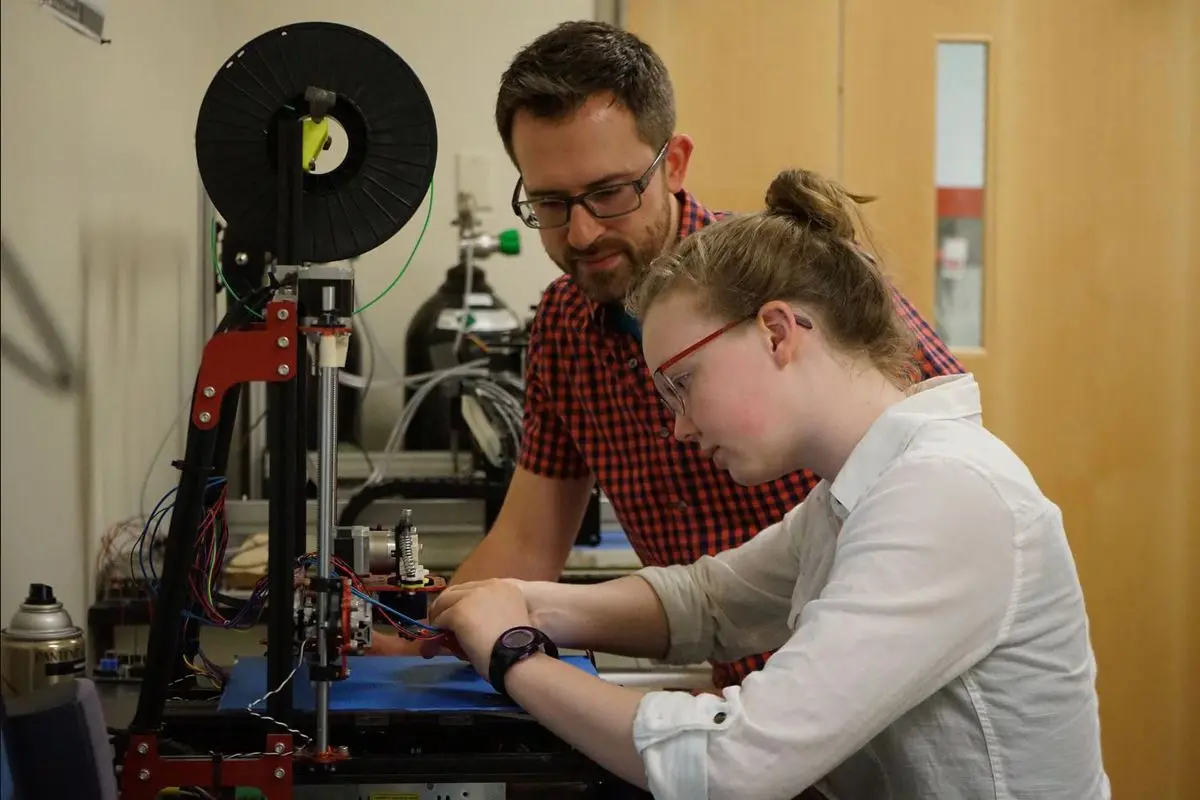
Two industrial engineering students work with equipment in a UMass Lowell lab

The B.S.E. in Industrial Engineering at UMass Lowell emphasizes manufacturing and automation and gives students hands-on experience through problem-based learning. 

You will follow a rigorous and well-rounded curriculum that provides a solid science and engineering foundation, with advanced coursework in automation and control, manufacturing process, ergonomics, analytics and operations management. 

Designed to be multidisciplinary, you can choose courses within the Francis College of Engineering, the Kennedy College of Sciences and the Manning School of Business. In addition, you may also pursue minors in areas such as robotics, production and operations management.
Want to switch to the industrial engineering major from another UML department? View the requirements.

Year-by-Year Course Plan

Check out our degree pathways, which offer sample plans for completing your degree in four years.

For students who entered fall 2025 and beyond.

Freshman Year

Fall Semester

Course NumberCourse NameCredits
Total15
ENGL.1010 /
HONR.1100
College Writing I /
First Year Seminar in Honors: Text in the City (CW)
3
CHEM.1210Chemistry I (SCL)3
CHEM.1230LChemistry I Lab (SCL)1
MECH.1100Foundations of Mechanical and Industrial Engineering1
MATH.1310Calculus I (MATH)4
xxxx.xxxxSocial Sciences Perspective (SS), (DCA) recommended13

Spring Semester

Course NumberCourse NameCredits
Total17
ENGL.1020College Writing II (CW)3
MATH.1320Calculus II (STEM)4
PHYS.1410Physics I (SCL)3
PHYS.1410LPhysics I Lab (SCL)1
MECH.1200Introduction to Engineering Design3
xxxx.xxxxArts and Humanities Perspective (AH), (DCA)3

Sophomore Year

Fall Semester

Course NumberCourse NameCredits
Total18
ENGN.2050Statics3
MATH.2310 /
MATH.2410
Calculus III / 
Honors Calculus III
4
IENG.2100Engineering Design and Manufacturing3
MECH.2960Materials Science for Engineers3
PHYS.2450Physical Properties of Matter (SCL)3
PHYS.2450LPhysics III Lab (SCL)1
ENGN.2100Professional Development Seminar1

Spring Semester

Course NumberCourse NameCredits
Total15
ENGN.2060Strength of Materials3
MATH.2210Linear Algebra I3
ECON.2010Principles of Microeconomics (SS)3
PHIL.1030
PHIL.2410
Introduction to Ethics /
Engineering and Ethics (AH), (SRE)
3
xxxx.xxxxSocial Sciences Perspective (SS), (DCA)3

Junior Year

Fall Semester

Course NumberCourse NameCredits
Total16
EECE.2160ECE Application Programming3
IENG.3010Deterministic Modeling and Analysis3
IENG.3030Manufacturing Processes3
IENG.3300Work Design3
IENG.3310Technical Communication for Industrial Engineers1
MATH.3860Probability and Statistics I3

Spring Semester

Course NumberCourse NameCredits
Total15
EECE.2650Logic Design3
IENG.3020Stochastic Modeling and Analysis3
IENG.4070Facilities Planning and Material Handling3
IENG.4140Engineering Economics3
xxxx.xxxxArts and Humanities Perspective (AH)3

Senior Year

Fall Semester

Course NumberCourse NameCredits
Total15
ENGN.4019Engineering Capstone Design Proposal3
IENG.4010Automation and Control3
IENG.4050Production and Inventory Management3
IENG.4060Quality Control3
MIST.4060
Data Mining for Business Intelligence3

Spring Semester

Course NumberCourse NameCredits
Total16
ENGN.4020Capstone Design Project (AIL), (WOC), (IL)3
IENG.4040Manufacturing Systems Automation3
IENG.4041Manufacturing Systems Automation Lab1
IENG.4300Human Factors Engineering3
xxxx.xxxxTechnical Elective23
xxxx.xxxxManagement3 or Technical Elective23

Total Minimum Credits = 120

Minimum [major] Credits: 127

Maximum [major] that can be counted toward graduation: 127

1Industrial Engineering majors must take one course that meets the Core Curriculum Essential Learning Outcome of Diversity and Cultural Awareness (DCA); students must select at least one Breadth of Knowledge course in either Arts and Humanities or Social Sciences that has been approved for DCA . Please see the DCA course listing for a complete list of classes that fulfill this requirement.

2Students must see their advisement report in SIS for a list of approved technical electives.

3Management Electives:

No more than two Breadth of Knowledge (BOK) courses can be taken with the same prefix. The Core Curriculum courses may be taken in any sequence. Refer to the Core Curriculum policy for further details. You should meet with your faculty advisor to determine how you will meet the Core Curriculum requirements.

Current UMass Lowell students should use their Advisement Report in SIS. If you need assistance, please contact your advisor.

Restriction on off-campus study:

Be advised that any course taken at another institution must be formally approved prior to enrollment. See the catalog policy for details.

Breadth of Knowledge (BOK) Glossary

  • SS - Social Sciences Perspective - 9 credits
  • AH - Arts and Humanities Perspective - 9 credits
  • SCL - Sciences with Lab Perspective - 6 credits
  • STEM - Science, Technology, Engineering and Math Perspective - 3 credits
  • CW - College Writing I and II - 6 credits
  • MATH - Math Perspective - 3 credits

Read more about the Breadth of Knowledge requirements.

Essential Learning Outcomes (ELO) Glossary

  • AIL - Applied and Integrative Learning
  • CTPS - Critical Thinking and Problem Solving
  • DCA - Diversity and Cultural Awareness
  • IL - Information Literacy
  • QL - Quantitative Literacy
  • SRE - Social Responsibility and Ethics
  • WOC - Written and Oral Communication

Read more about the Essential Learning Outcomes.

What Can You Do with a Degree in Industrial Engineering?

With an industrial engineering degree from UMass Lowell, you can design smarter systems, improve efficiency and solve real-world problems across nearly every industry.

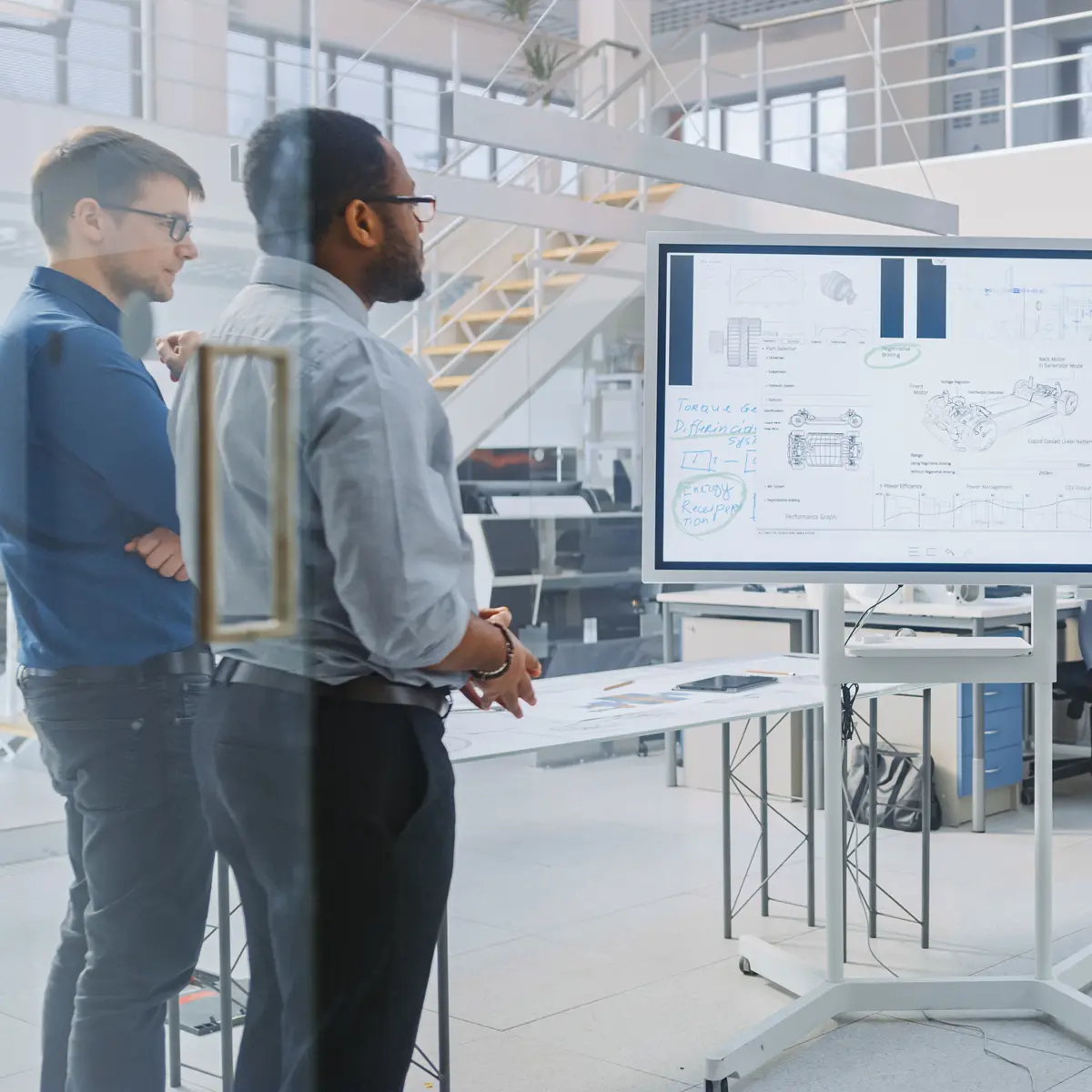
Male, industrial engineers looking at schematic on large computer screen in open, modern school building

Our graduates work in a wide range of industries, including:

  • Manufacturing
  • Transportation systems
  • Health care 
  • Business administration
  • Nanomanufacturing
  • 3D printing
  • Biomedical manufacturing

Industrial Engineering Careers

  • Project manager
  • Production engineer
  • Consultant
  • Process analyst
  • Quality engineer
  • Reliability engineer
  • Operations manager
  • Supply chain analyst

Why Study Industrial Engineering at UMass Lowell?

UMass Lowell Formula Society of Automotive Engineers (SAE) Team poses with a race car.

Student Organizations

Put your learning into practice. Check out some of the fun ways UML students come together. 
Male faculty member instructs female student on use of machine.

Research Opportunities

Our faculty excel in several primary research areas, including dynamic systems, thermofluid transport, and mechanics and materials.

Students can benefit from learning how to conduct research in one of our faculty-run research labs focusing on energy and sustainability, defense and security, manufacturing and industry, and engineering education. UMass Lowell is also home to several renowned research centers that promote interdisciplinary collaborations in areas such as 3D printing, baseball research, wind energy, nanomanufacturing and robotics.

Dean Kennedy standing in front of the Magic Kingdom at Disney World

Co-op Program

Our highly successful co-op program allows you to apply your engineering knowledge in the technical job market and develop skills necessary for success after graduation.

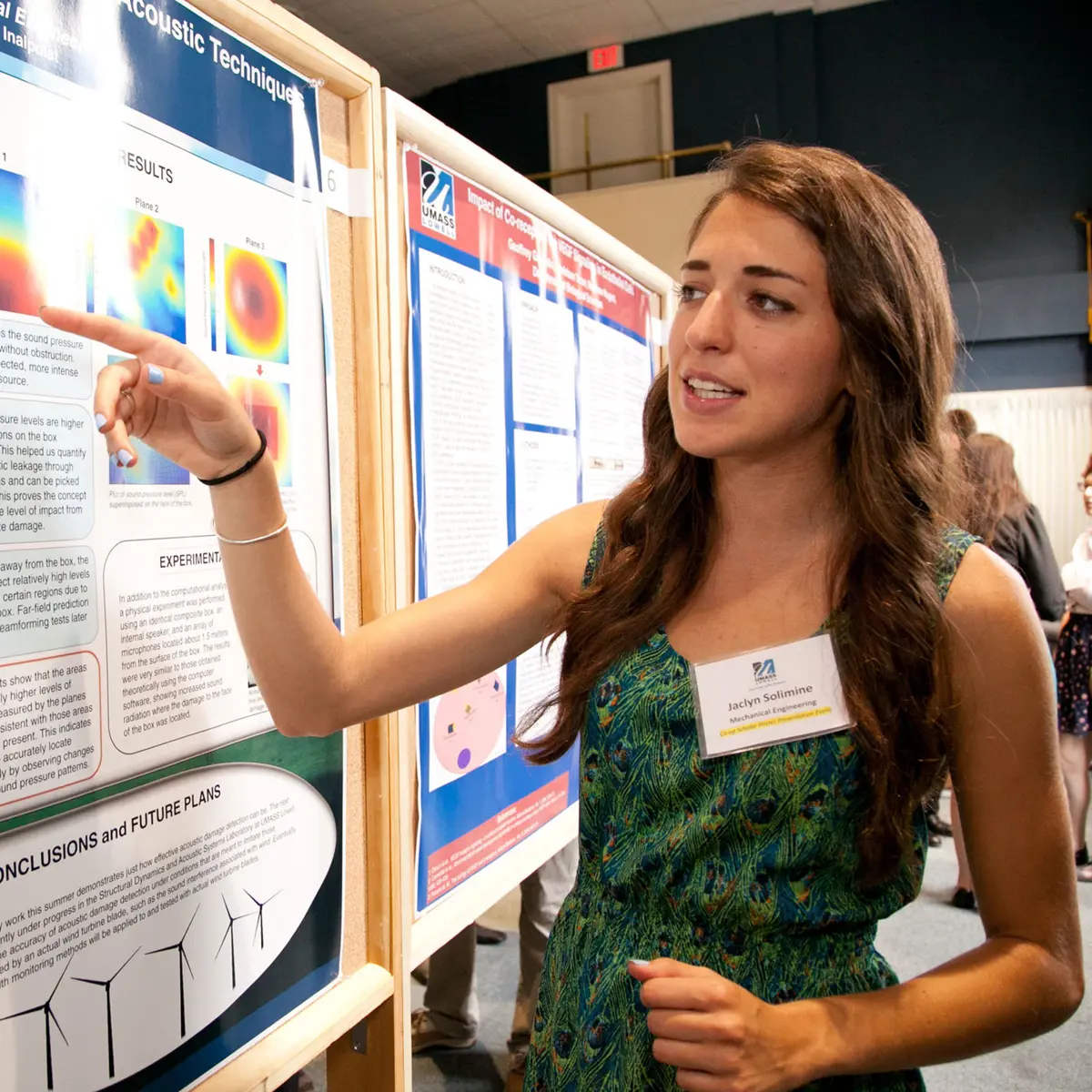
Jaclyn Solimine presents her research

Career Connected Experience: The UMass Lowell Guarantee

Every first-time, first-year UMass Lowell student will have the opportunity to pursue at least one Career Connected Experience (internships, co-ops, clinical placements, service learning, study abroad and more) during their undergraduate career — earning pay, credits or both before they graduate.

Visit UMass Lowell

Launch virtual tour

Visit campus, meet our people and picture yourself here. Find in-person and virtual tours and events.

Still Exploring Majors?

We've got 120+ programs. Browse our Program Finder to find the one that's right for you.

View All Programs