
Choose renewable or nuclear engineering and gain hands-on experience through advanced labs and research with the Master of Science in Engineering (MSE) in Energy Engineering at UMass Lowell.

Solve Complex Energy Challenges with the Master's in Energy Engineering

The Masters in Energy Engineering at UMass Lowell prepares you to lead sustainable energy initiatives through advanced coursework, hands-on learning and professional connections. Build a foundation in energy efficiency, then specialize in one of two high-demand options:

  •  Renewable Energy Engineering: Study solar, wind, fuel cells, batteries and green combustion through the Mechanical and Industrial Engineering Department.
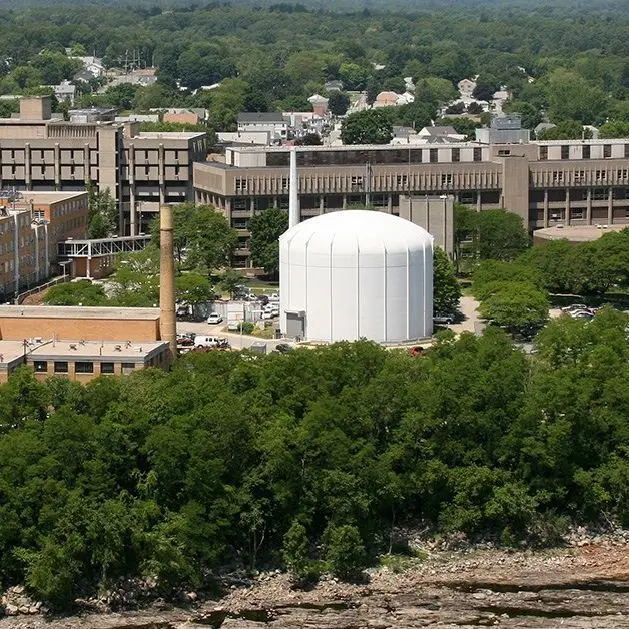
  • Nuclear Engineering: Gain specialized experience in power plant safety, radiation protection, advanced detectors, nuclear safeguards and fuel-cycle modeling. As the only public institution in New England with an on-campus nuclear reactor, UMass Lowell offers valuable access to hands-on nuclear engineering education through the Chemical Engineering Department.
Why Earn Your Master's in Energy Engineering at UMass Lowell?

A birds-eye view of the Nuclear Reactor on UMass Lowell's North Campus.

Study at New England’s Only Public University With an On-Campus Nuclear Reactor

Through supervised experiences with reactor operations, radiation safety and nuclear technologies, you can build practical engineering skills valued by employers in the energy and nuclear industries.

Christopher Niezrecki

Learn From Energy Systems and Sustainability Experts

Work with experienced faculty who are experts in energy systems and sustainable technologies. You'll learn directly from researchers and professionals driving advancements in the energy industry.

Professor John Duffy and four UMass Lowell students working on a solar panel project.

Gain Hands-On Experience in Advanced Energy Labs

You’ll apply your knowledge through experiential learning opportunities to conduct research and build a portfolio of practical experience and a network of contacts.

Student working in reactor.

Access Cutting Edge Facilities

Our state-of-the-art labs and research centers allow you to work with advanced energy materials, renewable energy technologies and efficient energy systems.

Customize Your Master's in Energy Engineering Curriculum

The M.S.E. in Energy Engineering is a 30-credit master's degree. Graduate students can choose to complete a thesis, project or course-only option.

All programs are 30 credits, consisting of a combination of 15 credits of core course work, a choice of either 6 credits of thesis, 3 credits of project or 15 from courses, and electives.
Required Core Courses
Course NumberCourse NameCredits
Total15
ENGY.5040Energy Engineering Workshop3
ENGY.5050Nuclear Reactor Physics3
ENGY.5070Nuclear Reactor Engineering Analysis3
ENGY.5090System Dynamics3
ENGY.5280Advanced Transport Phenomena3

Thesis and Course-Only Requirements

There are two pathways to earning an MS degree in Energy Engineering in the Renewable option:
Thesis: 30 credits - 24 credits of courses (15 credits from core), plus 6 credits of thesis
Course-Only: 30 credits - all from courses (15 from core, none from thesis)
Electives
Course NumberCourse NameCredits
Total9, 12 or 15 (see options above)
CHEN.5060Colloidal, Interfacial and Nanomaterials Science and Engineering3
CHEN.5080Material Science and Engineering3
CHEN.5100Advanced Separation Processes3
CHEN.5200Advanced Thermodynamics3
CHEN.5230Nanodevices and Electronic Materials3
CHEN.5350Principles of Cell and Microbe Cultivation3
CHEN / ENGY.5390Mathematical Methods for Engineers3
EECE.5130Control Systems3
EECE.5150Power Electronics3
EECE.5250Power Distribution Systems3
EECE.5280Alternative Energy Systems3
EECE.5840Probability and Random Processes3
ENGY.5180Energy Technology, Economics and Policy3
MECH.2580Aero/Wind Engineering3
MECH.5050Directed Studies3
MECH.5130Finite Element Analysis I3
MECH.5200Numerical Methods for Partial Differential Equations3
MECH.5210Fundamentals of Solar Utilization3
MECH.5220Wind Energy Fundamentals3
MECH.5250Grid-Connected Solar Electrical Systems3
MECH.5260Transport Processes in Energy Systems3
MECH.5270Solar Systems Engineering3
MECH.5280PV Manufacturing3
MECH.5285Energy Policy and Energy Codes3
MECH.5290Fuel Cell Fundamentals3
MECH.5320Off-Grid Solar Electric Systems3
MECH.5330Nanomaterials for Energy3
MECH.5340Green Combustion and Bio-Fuels3
MECH.5350Fundamentals of Sustainable Energy3
MECH.5491Advanced Thermodynamics3
MECH.5540Dynamic Systems and Controls3
MECH.5710Quality Engineering3
MECH.5740Design for Reliability Engineering3
MECH.5750Industrial Design of Experiments3
MECH.5760Engineering Project Management3
MECH.5810Advanced Fluid Mechanics3
MECH.5890Finite Element in Thermo-Fluids3
MECH.6020Special Topic: Thermo-Fluids3
PLAS.5470Materials for Renewable Energy and Sustainability3
MATH.5300Applied Math I3
PHYS.5380Physical Optics3
PHYS.5390Electro-Optics3
PHYS.5770Solid State Electronic and Optoelectronic Devices3
Thesis Option (6 credits)
Course NumberCourse NameCredits
XXXX.XXXX3
XXXX.XXXX3
Total6


Total Credits = 30

Last updated: 1/17/2019

All programs are 30 credits, consisting of a combination of 15 credits of core course work, a choice of either 6 credits of thesis, 3 credits of project or 15 from courses, and electives.
Required Core Courses in Advanced Mathematics (pick 1)
Course NumberCourse NameCredits
Total3
MECH.5200Numerical Methods for Partial Differential Equations (Spring)3
MECH.5260Transport Processes in Energy Systems (Spring)3
MECH.5540Dynamic Systems and controls (Fall)3
Required Core Courses (pick 3)
Course #Course NameCr.
Total9
MECH.5210Fundamentals of Solar Utilization (Fall)3
MECH.5220Wind Energy Fundamentals (Fall)3
MECH.5270Solar Systems Engineering (Spring)3
MECH.5250Grid-Connected Solar Electric Systems (Spring)3
MECH.5350Fundamentals of Sustainable Energy (Spring of even numbered years)3
Required Course (during last or next to last semester)
Course #Course NameCr.
Total3
MECH.5040 OR ENGY.5040Energy Engineering Workshop (Fall or Spring)3

Thesis and Course-Only Requirements

There are two pathways to earning an MS degree in Energy Engineering in the Renewable option:
Thesis: 30 credits - 24 credits of courses (15 credits from core), plus 6 credits of thesis
Course-Only: 30 credits - all from courses (15 from core, none from thesis)
Electives
Course NumberCourse NameCredits
Total9, 12 or 15 (see options above)
CHEN.5060Colloidal, Interfacial and Nanomaterials Science and Engineering3
CHEN.5080Material Science and Engineering3
CHEN.5100Advanced Separation Processes3
CHEN.5200Advanced Thermodynamics3
CHEN.5230Nanodevices and Electronic Materials3
CHEN.5350Principles of Cell and Microbe Cultivation3
CHEN / ENGY.5390Mathematical Methods for Engineers3
EECE.5130Control Systems3
EECE.5150Power Electronics3
EECE.5250Power Distribution Systems3
EECE.5280Alternative Energy Systems3
EECE.5840Probability and Random Processes3
ENGY.5180Energy Technology, Economics and Policy3
MECH.2580Aero/Wind Engineering3
MECH.5050Directed Studies3
MECH.5130Finite Element Analysis I3
MECH.5200Numerical Methods for Partial Differential Equations3
MECH.5210Fundamentals of Solar Utilization3
MECH.5220Wind Energy Fundamentals3
MECH.5250Grid-Connected Solar Electrical Systems3
MECH.5260Transport Processes in Energy Systems3
MECH.5270Solar Systems Engineering3
MECH.5280PV Manufacturing3
MECH.5285Energy Policy and Energy Codes3
MECH.5290Fuel Cell Fundamentals3
MECH.5320Off-Grid Solar Electric Systems3
MECH.5330Nanomaterials for Energy3
MECH.5340Green Combustion and Bio-Fuels3
MECH.5350Fundamentals of Sustainable Energy3
MECH.5491Advanced Thermodynamics3
MECH.5540Dynamic Systems and Controls3
MECH.5710Quality Engineering3
MECH.5740Design for Reliability Engineering3
MECH.5750Industrial Design of Experiments3
MECH.5760Engineering Project Management3
MECH.5810Advanced Fluid Mechanics3
MECH.5890Finite Element in Thermo-Fluids3
MECH.6020Special Topic: Thermo-Fluids3
PLAS.5470Materials for Renewable Energy and Sustainability3
MATH.5300Applied Math I3
PHYS.5380Physical Optics3
PHYS.5390Electro-Optics3
PHYS.5770Solid State Electronic and Optoelectronic Devices3
Thesis Option (6 credits)
Course NumberCourse NameCredits
XXXX.XXXX3
XXXX.XXXX3
Total6


Total Credits = 30

Last updated: 1/17/2019

Where Our Graduates Work

  • National Grid
  • Eversource Energy
  • Schneider Electric
  • Dominion Energy
  • AECOM
  • BAE Systems
  • Westinghouse Electric Company
  • Duke Energy Corporation
  • Constellation
  • New Leaf Energy, Inc.
  • New York Power Authority
  • NextEra Energy Resources
  • Automated Logic Corporation
  • Solar Landscape

Hear From Our Students

Katherine Moses in front of Lowell City Hall
Katherine Moses '12
Energy Engineering

Katherine Moses ’12 came to Lowell to get a master’s degree in energy engineering. She fell in love with the city and has worked as Lowell’s energy manager since 2014, helping it become more energy efficient while also partnering with UML on sustainability projects.

One of the things I’ve always appreciated about UMass Lowell is how it applies what you learn in a real-world project.
Headshot of Jyotik Savaj
Jyotik Savaj '19
Energy Engineering/Solar

Jyotik Savaj, who is enrolled in the Master of Science in Energy Engineering/Solar Program, aims to help fulfill the need for solar power and has a paid co-op job at Exyte, an engineering and project management company specializing in high-tech facilities.

Conserving our environment is why we do this.

Tuition and Admissions

Eligible students must complete the Free Application for Federal Student Aid (FAFSA) to be considered for financial assistance.

Complete the FAFSA

As a graduate student, you may qualify for federal student aid and other need-based scholarships. To be considered for financial assistance, you must complete the Free Application for Federal Student Aid (FAFSA). Learn more at UMass Lowell Graduate Aid.

The Free Application for Federal Student Aid (FAFSA) is available to U.S. citizens, permanent residents, and certain eligible non-citizens. Please visit Financial Aid if you have questions about your eligibility.

Apply: Summer 2026 - Spring 2027  Apply: Summer 2027 - Spring 2028

  • Application Fee: $75
  • Statement of Purpose: Outline goals, experience and achievements (max 2 pages)
  • Letters of Recommendation: Two (2) for master's, three (3) for doctoral applicants.
  • Transcripts: You may apply with unofficial transcripts, but if accepted, official transcripts are required.
  • Test Scores: The Graduate Record Examination (GRE) is required for Doctor of Philosophy (Ph.D.) programs. GRE scores are not required for master’s programs. Applicants to master’s programs may submit GRE scores if they wish, but doing so is optional. Please send test scores to EngineeringCAS using school code 4530.

All materials must be received before your application is reviewed. To add documents before review, log in and select “Program Materials.”

International Applicants

English proficiency is required. If English is not your country’s national language, please submit one of the following scores:

  • Test of English as a Foreign Language (TOEFL): 79+
  • International English Language Testing System (IELTS): 6.5+
  • Duolingo: 115+
  • ASC English: Level 6+
  • Pearson Test of English (PTE): 53+

For the TOEFL, please send your scores to EngineeringCAS using the school code B887.

Take the Next Step

Start your online application today!

Request More Information

Take a Virtual Tour of UMass Lowell

Launch virtual tour

Explore UMass Lowell from anywhere in the world. See the spaces where our students study, create, learn and live through a self-guided, interactive tour.

Questions? Contact Us!

Phone:
800-656-4723 (U.S. Students)
978-934-2390 (International Students)

Email:
Graduate_Admissions@uml.edu