As an education major, you will have the opportunity to earn dual certification to teach elementary school children and children with moderate disabilities in Massachusetts.

Bachelor of Arts in Education

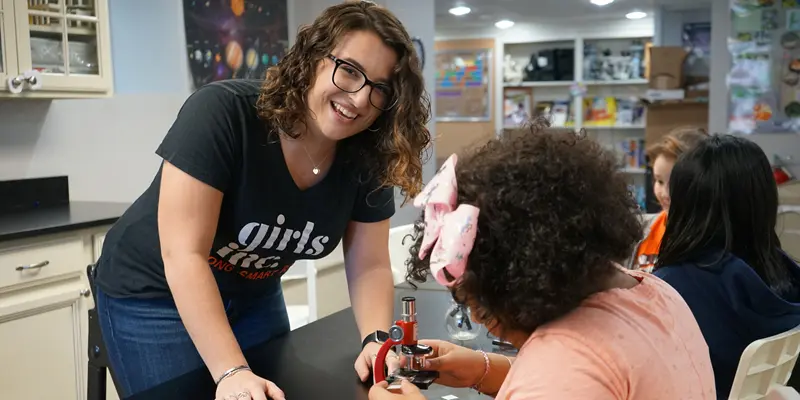
A UMass Lowell teaching student shows a chart to a young student as others look on

UMass Lowell’s Bachelor of Arts in Education prepares you for licensure in elementary education and moderate disabilities (grades 1–6 and PreK–8). 

You’ll learn how to create inclusive classrooms, develop engaging lesson plans and teach diverse learners, including English language learners and students with disabilities.

From your first semester, you’ll get real-world teaching experience through fieldwork in local partner schools. Whether you're heading into teaching or graduate study, this program will give you the confidence, knowledge and experience to succeed.

What Can You Do with a Degree in Education?

With a degree in education from UMass Lowell, you’ll be licensed to teach elementary education (grades 1–6) and moderate disabilities (Pre-Kindergarten to grade 8) in Massachusetts, with the flexibility to teach in other states through reciprocal agreements.

A UMass Lowell UTeach student interacts with students in a classroom.

Where Our Graduates Work

  • Biology teacher, Andover Public Schools
  • Elementary special education teacher, Lawrence Public Schools
  • Grade 1 teacher, Chelmsford Public Schools
  • Grade 1 teacher, Wilmington Public Schools
  • Special education teacher, Lowell Public Schools

Year-by-Year Course Plan

Check out our degree pathways, which offer sample plans for completing your degree in four years.

For students who entered fall 2025 and beyond.

Freshman Year

Fall Semester

Course NumberCourse NameCredits
ENGL.1010 /
HONR.1100
College Writing I /
First Year Seminar in Honors: Text in the City (CW)
3
EDUC.1100Introduction to Teaching in Inclusive Classrooms3
HIST.1050 /
HIST.1070
Western Civilization I /
World History to 1500 (AH), (DCA)
3
PSYC.1010Introduction to Psychological Science (SS)3
SCIE.2200Integrated Sciences: Biology, Ecology, and Earth Systems (SCL)3
Total15

Spring Semester

Course NumberCourse NameCredits
ENGL.1020College Writing II (CW)3
HIST.1110United States History to 18773
MATH.1070Elementary Math for Teaching: Numbers and Operations (MATH)3
PSYC.2600Child and Adolescent Development (SS)3
EDUC.1600Technology and Digital Literacy in the Classroom3
Total15

Sophomore Year

Fall Semester

Course NumberCourse NameCredits
HIST.1080World Civilizations Since 15003
EDUC.2100Introduction to Moderate Disabilities3
EDUC.2600Language and Reading Development (SS)3
EDUC.3000Understanding Family and Community Engagement (SS)3
SCIE.2400Integrated Sciences: Astronomy, Physics, and Technology (SCL)4
Total16

Spring Semester

Course NumberCourse NameCredits
HIST.1120United States History since 18773
ENGL.2980 /
EDUC.2030
Children's Literature /
Multicultural Children's Literature in the Classroom (AH)
3
ENGL.2/3/4xxxFree Elective13
EDUC.2500Teaching Elementary Social Studies in the Inclusive3
EDUC.3200Methods of Teaching Students with Moderate Disabilities3
MATH.1080Elementary Math for Teachers: Algebra and Data Analysis3
Total18

Junior Year

Fall Semester

Course NumberCourse NameCredits
Total18
EDUC.3300Classroom Management and Behavior Supports (SS)3
EDUC.3500Language and Writing Development3
EDUC.3600Teaching Science through Inquiry in the Inclusive (IL), (WOC)3
ENGL.xxxxFree Elective1 (AH)3
MATH.2270Elementary Math for Teaching: Geometry3
HIST.3/4xxxFree Elective (AH)3

Spring Semester

Course NumberCourse NameCredits
Total14
EDUC.4100Pre-practicum2
EDUC.3400Mathematics and Problem Solving in the Inclusive E (CTPS), (QL)3
EDUC.2200Education Assessment of Students with Moderate D3
ENGL.2/3/4xxxFree Elective23
xxxx.xxxxSocial Sciences Perspective (SS)3

Senior Year

Fall Semester

Course NumberCourse NameCredits
EDUC.4620Literacy Instruction and Assessment in the Elementary Classroom3
EDUC.4110 /
EDUC.4120
Elementary Education Practicum and Seminar /
Special Education Practicum and Seminar
9
Total12

Spring Semester

Course NumberCourse NameCredits
EDUC.4000Sheltered English Instruction3
EDUC.4110 /
EDUC.4120
Elementary Education Practicum and Seminar /
Special Education Practicum and Seminar
9
Total12

Total Minimum Credits = 120

Minimum [major] Credits: 36

Maximum [major] that can be counted toward graduation: 54

1Language Focus. Students should see their advisement report in SIS for a list of approved electives.

2Literature Focus. Students should see their advisement report in SIS for a list of approved electives.

The BA Ed. degree pathway shows the courses that are required to complete the degree. The semester in which some courses are offered may differ and accommodations will be made. Courses with higher numbers (3000 and above) are generally taken in the junior and senior years. The education courses are highly field based and often require additional hours of field work in schools to better prepare you for your career.

Notes:

  • All EDUC courses are required.
  • All courses with prefixes MATH, ENGL, HIST, PSYC are required. If a course is not available in a timely fashion, exceptions may be made providing a course which meets similar subject matter knowledge is taken. This change can only be made with approval of the program coordinator.
  • HIST, ENGL, and SCIE courses can be taken in any order.

GPA and MTEL

Teacher candidates must maintain an undergraduate GPA of 2.750 or better.

To receive their teaching licenses, they must also have passed the appropriate Massachusetts Tests for Educator Licensure (MTEL) for the two teacher licenses (Communication and Literacy – Reading and Writing, General Curriculum Multi-Subject Test and Math Test, Foundations of Reading). See MTEL website for more information.

Consult your advisor on the best timing for completing each MTEL and for test preparation resources.

Field Experience and Practicum Requirements

Many courses have field experiences in local schools which may requires completion of hours beyond course meeting times. Teacher candidates, when required, must submit materials for criminal background checks and must provide fingerprints. Program coordinators will supply information on these processes.

In order to work in schools during field experiences and the practicum, the teacher candidate must exhibit professional dispositions and behaviors and be of “sound moral character.” The candidate at all times must exhibit good judgment, personal integrity, and exemplary behavior. Candidates must demonstrate that they understand their professional responsibilities and have the integrity to work in schools where they will be responsible for the education and welfare of minors. Further, they must know how to engage in collaborative and collegial professional work with fellow teachers and staff.

Students enrolled in practicum courses EDUC.4110 and EDUC.4120 should expect to be in their school placements five full days per week for the duration of each semester, or 15 weeks, even if hours required by the Massachusetts Department of Elementary and Secondary Education have been met.

Graduation Requirements

In order to graduate with a BA Ed. degree and teacher license, candidates must complete the approved program including both practica (600 hours in total). The practicum candidate is assessed using the Department of Elementary and Secondary Education Candidate Assessment of Performance (CAP) instrument and process. Candidates must demonstrate that they have met the Professional Standards for Teaching and are proficient in their ability to:

  • Develop well-structured lessons.
  • Adjust practice based on student assessment data.
  • Meet diverse needs.
  • Create of a safe learning environment for all students.
  • Hold high expectations for student learning.
  • Demonstrate reflective practice.

Breadth of Knowledge

The UMass Lowell Core includes requirements designed to familiarize students with multiple perspectives regarding diverse areas of knowledge and modes of inquiry outside of their major discipline. Students gain insights into these perspectives by taking courses outside of their major discipline. The BA Ed. degree is structured for students to meet this requirement. See Breadth of Knowledge (BOK) for more information.

No more than two BOK courses can be taken with the same prefix. The Core Curriculum courses may be taken in any sequence. Refer to the Core Curriculum policy for further details. You should meet with your faculty advisor to determine how you will meet the Core Curriculum requirements.

Current UMass Lowell students should be using their advisement report in SIS. If you need assistance, please contact your adviser.

Restriction on off-campus study:

Be advised that any course taken at another institution must be formally approved prior to enrollment.

See the catalog policy for details.

Breadth of Knowledge (BOK) Glossary

  • SS - Social Sciences Perspective - 9 credits
  • AH - Arts and Humanities Perspective - 9 credits
  • SCL - Sciences with Lab Perspective - 6 credits
  • STEM - Science, Technology, Engineering and Math Perspective - 3 credits
  • CW - College Writing I and II - 6 credits
  • MATH - Math Perspective - 3 credits

Read more about the Breadth of Knowledge requirements.

Essential Learning Outcomes (ELO) Glossary

  • AIL - Applied and Integrative Learning
  • CTPS - Critical Thinking and Problem Solving
  • DCA - Diversity and Cultural Awareness
  • IL - Information Literacy
  • QL - Quantitative Literacy
  • SRE - Social Responsibility and Ethics
  • WOC - Written and Oral Communication

Read more about the Essential Learning Outcomes.

For students who entered fall 2020 and beyond.

Freshman Year

Fall Semester

Course NumberCourse NameCredits
ENGL.1010 /
HONR.1100
College Writing I /
First Year Seminar in Honors: Text in the City (CW)
3
HIST.1050Western Civilization I (AH), (DCA)3
LIFE.1010 /
ENVI.1100
Life Science I /
Global Environmental Studies (SCL)
3
LIFE.1030L /
ENVI.1120L
Life Science I Lab /
Global Environmental Studies Lab (SCL)
1
PSYC.1010Introduction to Psychological Science (SS)3
EDUC.1100Introduction to Teaching in Inclusive Classrooms3
Total16

Spring Semester

Course NumberCourse NameCredits
ENGL.1020College Writing II (CW)3
HIST.1110United States History to18773
MATH.1070Elementary Math for Teaching: Numbers and Operations (MATH)3
PSYC.2600Child and Adolescent Development (SS)3
EDUC.1600Technology and Digital Literacy in the Classroom3
Total15

Sophomore Year

Fall Semester

Course NumberCourse NameCredits
HIST.1080World Civilizations Since 1500 (DCA)3
CHEM.1010Applied Chemistry for Non-Scientists (SCL)3
ENGL.2xxxLanguage Focus3
EDUC.2000Foundations of Reading3
EDUC.2100Introduction to Moderate Disabilities3
Total15

Spring Semester

Course NumberCourse NameCredits
MATH.2270Elementary Math for Teaching: Geometry and Measurement (STEM)3
HIST.1120United States History since 18773
ENGL.2980Children's Literature (AH)3
EDUC.2500Teaching Elementary Social Studies in the Inclusive13
EDUC.3200Methods of Teaching Students with Moderate Disabilities13
Total15

Junior Year

Fall Semester

Course NumberCourse NameCredits
EDUC.3500Language and Writing Development3
HIST.3/4xxxElective3
ENGL.2/3/4xxxLiterature Focus3
MATH.1080Elementary Math for Teaching: Algebra and Data Analysis3
EDUC.3600Teaching Science through Inquiry in the Inclusive (IL), (WOC)3
xxxx.xxxxArts and Humanities Perspective (AH)3
Total18

Spring Semester

Course NumberCourse NameCredits
ENGL.2xxxLanguage Focus3
EDUC.4100Pre-practicum (AIL)12
EDUC.3400Mathematics and Problem Solving in the Inclusive E (CTPS), (QL)3
EDUC.2200Education Assessment of Students with Moderate D13
xxxx.xxxxSocial Sciences Perspective (SS)3
Total14

Senior Year

Fall Semester

Course NumberCourse NameCredits
ENGL.2580Disability in Literature (SRE)23
EDUC.xxxxEducation Minor Elective3
PSYC.2550Community Psychology3
PSYC.3630Introduction to Disability Studies3
xxxx.3/4xxxFree Elective3
Total15

Spring Semester

Course NumberCourse NameCredits
EDUC.xxxxEducation Minor Elective3
PSYC.3620Psychology of Developmental Disabilities3
PSYC.4820 /
PSYC.4830
Dvptl Disabilities Fieldwork: Service Provision /
Dvptl Disabilities Fieldwork: Leadership & Advoc
3
SOCI.2250Sociology of Disability3
Total12

Total Minimum Credits = 120.

1Expect to do an additional 10-15 hours over semester visiting schools in both semesters.

2Alternative SRE course can be taken with the approval of advisor

The BA Ed. degree Disability Studies for Educational and Community Organizations Option pathway shows the courses that are required to complete the degree. The semester in which some courses are offered, may differ and accommodations will be made. Courses with higher numbers (3000 and above) are generally taken in the junior and senior years. The education courses are highly field based and often require additional hours of field work in schools to better prepare you for your career.

Notes:

  • All EDUC courses are required.
  • All courses with prefixes MATH, ENGL, HIST, PSYC are required. If a course is not available in a timely fashion, exceptions may be made providing a course which meets similar subject matter knowledge is taken. This change can only be made with approval of the program coordinator.
  • CHEM.1010 may be replaced by other physical science course with a lab such as PHYS.1210 / PHYS.1210L
  • The three MATH courses (1070, 2270, 1080) may be taken in any sequence.
  • The third Social Science elective may not be in Psychology.

Field Experience

Many courses have field experiences in local schools and community organizations which may require completion of hours beyond course meeting times. When required, you may have to submit materials for criminal background checks and must provide fingerprints. Program coordinators will supply information on these processes.

In order to work in schools and communities during field experiences, the student must exhibit professional dispositions and behaviors. The student, at all times must exhibit good judgment, personal integrity and exemplary behavior. Students must demonstrate that they understand their professional responsibilities and have the integrity to work in schools and community organizations where they will be responsible for the education and welfare of minors. Further, they must know how to engage in collaborative and collegial professional work with fellow educators and staff.

Breadth of Knowledge

The UMass Lowell Core includes requirements designed to familiarize students with multiple perspectives regarding diverse areas of knowledge and modes of inquiry outside of their major discipline. Students gain insights into these perspectives by taking courses outside of their major discipline. The BA Ed. degree is structured for students to meet this requirement. See Breadth of Knowledge (BOK) for more information.

No more than two BOK courses can be taken with the same prefix. The Core Curriculum courses may be taken in any sequence. Refer to the Core Curriculum policy for further details. You should meet with your faculty advisor to determine how you will meet the Core Curriculum requirements.

Current UMass Lowell students should be using their Advisement Report in SIS. If you need assistance, please contact your adviser.

Restriction on off-campus study:

Be advised that any course taken at another institution must be formally approved prior to enrollment.

See the catalog policy for details.

Breadth of Knowledge (BOK) Glossary

  • SS - Social Sciences Perspective - 9 credits
  • AH - Arts and Humanities Perspective - 9 credits
  • SCL - Sciences with Lab Perspective - 6 credits
  • STEM - Science, Technology, Engineering and Math Perspective - 3 credits
  • CW - College Writing I and II - 6 credits
  • MATH - Math Perspective - 3 credits

Read more about the Breadth of Knowledge requirements.

Essential Learning Outcomes (ELO) Glossary

  • AIL - Applied and Integrative Learning
  • CTPS - Critical Thinking and Problem Solving
  • DCA - Diversity and Cultural Awareness
  • IL - Information Literacy
  • QL - Quantitative Literacy
  • SRE - Social Responsibility and Ethics
  • WOC - Written and Oral Communication

Read more about the Essential Learning Outcomes.

Why Study Education at UMass Lowell?

First-year education majors at UMass Lowell Angela Messina and Mykala Guzman practice teaching on Mursion avatars. Image by K. Webster

Advanced Facilities

Learn to teach using our facilities and technologies, including:

women collaborating around a table

Expert Faculty

Through outreach and research, our faculty brings real change to schools, ultimately improving the lives of students. Research areas include:

  • Working with English learners
  • Early literacy
  • Instructional leadership
  • Science, technology, engineering, and mathematics (STEM) education
A UMass Lowell education student sits at a table with two young students in a school classroom

Professional Growth and Scholarships

Throughout the program, you will have opportunities to meet with teachers and principals and attend professional development sessions to learn about your chosen career.

In addition, all teacher candidates are eligible to apply for a variety of UMass Lowell scholarships and to work in schools as tutors, for which stipends are available.

A UMass Lowell UTeach student interacts with students in a classroom.

Career Connected Experience: The UMass Lowell Guarantee

Every first-time, first-year UMass Lowell student will have the opportunity to pursue at least one Career Connected Experience (internships, co-ops, clinical placements, service learning, study abroad and more) during their undergraduate career — earning pay, credits or both before they graduate.

Meet Our Students

Ryan Descheneaux talks with another student in front of a project poster board.
Ryan Descheneaux '24
Education

Ryan Descheneaux was inspired to teach by his uncle.

UMass Lowell has shaped me to become an educator who is flexible and willing to teach all age groups.
Declan Burke reads a book to students via laptop
Declan Burke '23
Education

Declan Burke struggled in school as a child. Now he plans to become a special education teacher.

I want to help these students realize their talents and potential.
Janelle Christopher and her mom, Lorainne.
Janelle Christopher '22
Education

Janelle Christopher started studying at UMass Lowell at the same time as her mom, Lorraine.

We were both first-gen college students at the same time.

Visit UMass Lowell

Launch virtual tour

Visit campus, meet our people and picture yourself here. Find in-person and virtual tours and events.

Still Exploring Majors?

We've got 120+ programs. Browse our Program Finder to find the one that's right for you.

View All Programs