Artificial Intelligence is transforming education – changing how we teach, learn and interact with information. Here we share resources and tools about how our community is using this technology.

Welcome to UMass Lowell’s exploration of Artificial Intelligence (AI). AI is a dynamic technology that is transforming how we work, teach and learn. To keep our community informed, we will regularly update this site with resources and the latest news on how our university is leveraging AI and adapting to its use in research and learning.

We acknowledge that AI is a powerful tool designed to enhance, not replace, human capabilities. As we continue to integrate AI into our educational and research practices, we will prioritize human judgment, adhere to ethical principles, and ensure that the well-being of our students, faculty and staff remains at the forefront. Email AITaskForce@uml.edu to learn more or get involved.

Colorful digital brain with circuitry patterns and glowing lights, with the text 'WHAT IS AI?' below it.

What Is Generative AI and How Can I Use It?

Generative Artificial Intelligence (AI) is a groundbreaking software technology that can create original content such as text, images, music and videos, based on patterns and rules learned from vast amounts of existing data. Unlike traditional AI systems that are designed to recognize and analyze patterns (such as word suggestions when you text), generative AI goes a step further by producing new, unique content that aims to mimic the style and characteristics of the data it was trained on.

This technology has the potential to revolutionize various industries — including higher education.

There are many ways to incorporate generative AI into your personal and professional life. For instance, you can use AI-powered writing tools to help overcome writer's block, generate ideas or even create entire articles or stories based on a prompt or topic. Similarly, artists and designers can leverage generative AI to explore new creative possibilities, such as generating unique textures, patterns or even entire compositions. In the realm of music, generative AI can assist in composing melodies and rhythms. AI has the potential to be an exciting and transformative tool for creators, innovators and problem-solvers alike.

Zoomed in photo of Lowell Textile School shield

Transforming Teaching and Learning

AI offers a number of positive possibilities for teaching and learning.
Computer engineering lab space

Research Writing

Find guidance, information and resources on the use of AI in research writing.
Trading room in the Pulichino Tong Building

Optimizing Operations

Enhance productivity by streamlining research and enhancing learning experiences with AI tools.
Up-close image of computer keyboards and mouse

AI Workshops

The Center for Excellence in Learning and Teaching is offering a year-long series of faculty workshops.

AI: Friend or Foe? (UML Magazine)

  • Can AI save the planet? Will AI help us live longer? How does AI affect security and privacy? UML Magazine considers the impact of AI, answering these and other pressing questions.
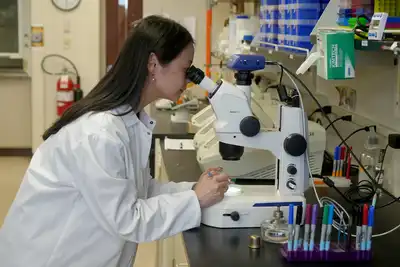
  • Biological Sciences Assistant Professor Teresa Lee looks into a microscope in a lab

    12 of the Nation's Best and Brightest Researchers

    Over the past four years, the National Science Foundation has recognized 12 UMass Lowell faculty researchers as some of the nation’s best junior, tenure-track scholars by awarding them prestigious Faculty Early Career Development (CAREER) grants.
    Featured Story
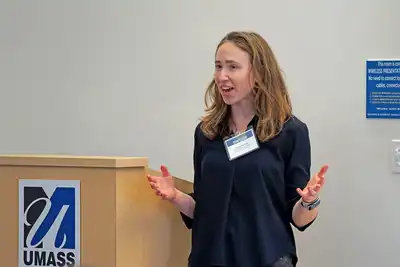
  • A woman gestures with her hands while giving a talk alongside a podium in a room.

    Computer Scientist Finds the Rules for Helpful Robots and AI

    Assistant Professor of Computer Science Samantha Reig, a researcher with AI-CARING, a National Science Foundation-funded initiative exploring how artificial intelligence can be used to help support older adults, is focused on figuring out how emerging technologies can fill gaps in day-to-day life without going beyond what’s needed.