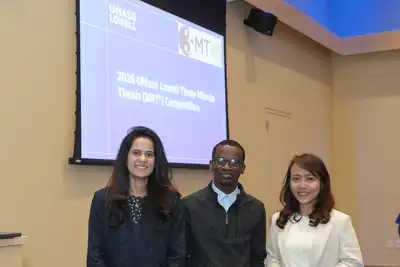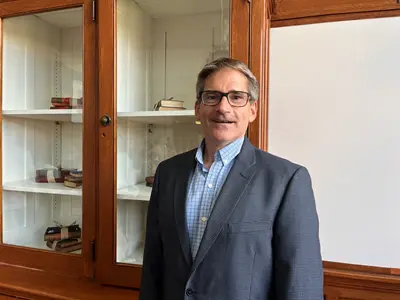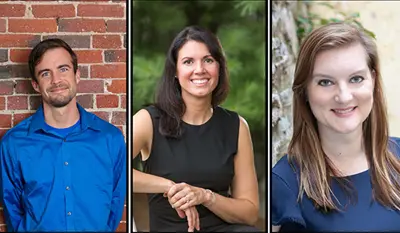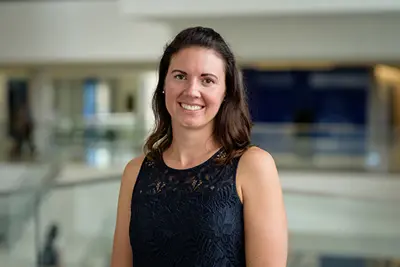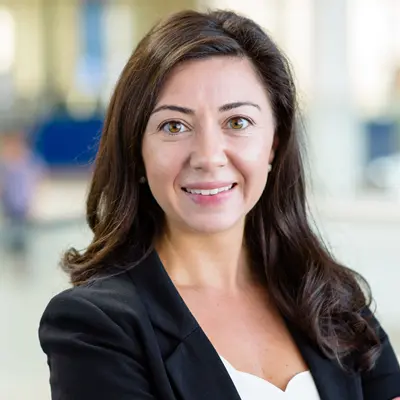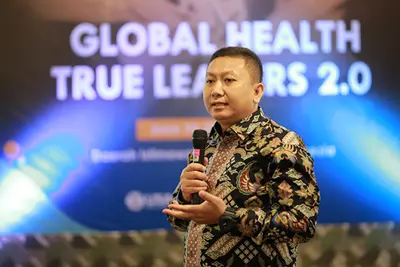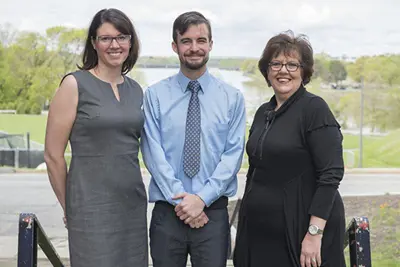
Three Minute Thesis is an international program designed to help graduate students explain their research in a succinct and compelling way to general audiences.
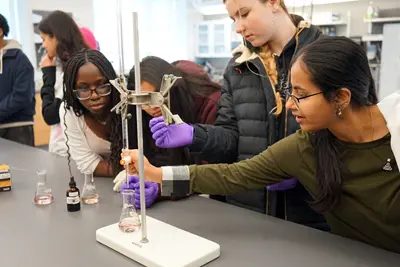
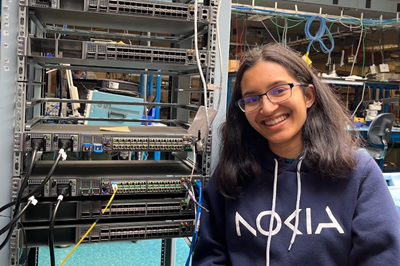
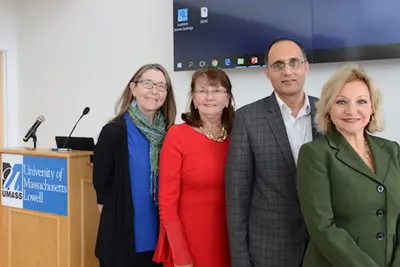
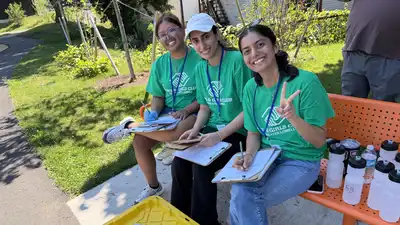
More than 100 local high school students visited UMass Lowell for an International Day of Women and Girls in STEM event that connected them with faculty and student researchers and highlighted the importance of mentorship in supporting women in science, technology, engineering and mathematics.
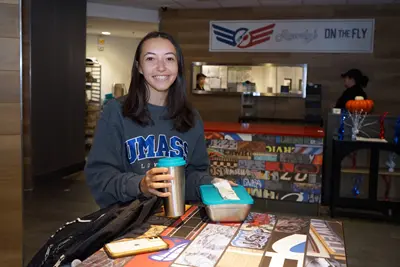
University Dining is advancing UMass Lowell’s sustainability efforts through a new reusable container program and research collaborations that promote plant-forward, environmentally responsible dining.
The Biomedical and Nutritional Sciences Department received a $750,000 Workforce Development Grant from the Massachusetts Life Sciences Center to build two specialized teaching and research facilities: mammalian cell culture and histology laboratories.
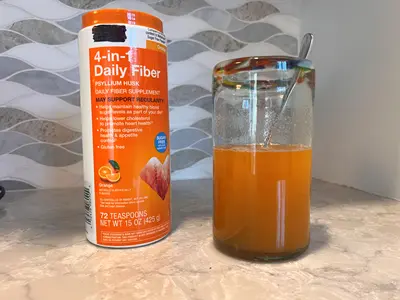
Two recent pilot studies published in Toxicology and Applied Pharmacology and Environmental Health suggest that consuming a soluble fiber supplement regularly with food reduces levels of toxic PFOS and PFOA.
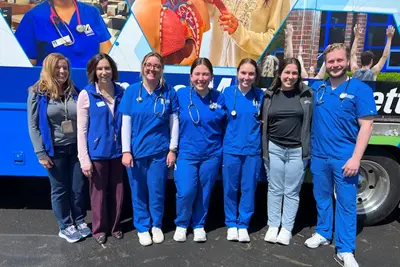
To bring care directly to children in Lowell, the Zuckerberg College of Health Sciences has partnered with Lowell Public Schools and the Lowell Community Health Center to launch a Mobile Health Unit.
UMass Lowell, BJ’s Wholesale Club, EatWell Meal Kits and the Greater Lowell Health Alliance are joining forces to provide healthy meal kits along with nutrition education to study participants.
Zuckerberg students gain experience working for biotechnology companies, hospitals, municipalities, professional sports teams and rehabilitation clinics, honing their skills before graduating.
Assoc. Prof. Kelsey Mangano of Biomedical and Nutritional Sciences in the Zuckerberg College of Health Sciences received a $900,000 grant from Harnessing Emerging Research Opportunities to Empower Soldiers (HEROES), a joint research and development initiative of UMass Lowell and the United States Army Combat Capabilities Development Command Soldier Center (DEVCOM), to study the natural production of omega-3s.
Keep the brain energized throughout the day by eating whole foods like fruit, vegetables, whole grains and healthy fats that help regulate mood, lower stress and boost concentration.
Asst. Prof. Fanfei Meng of the Biomedical and Nutritional Sciences Department is evaluating the effectiveness of combining antibiotics and anti-inflammatory drugs in a nanoparticle to treat sepsis.
Researchers at UMass Lowell are studying whether a small natural molecule could treat a genetic disorder that causes muscle weakness and progressive nervous system damage.
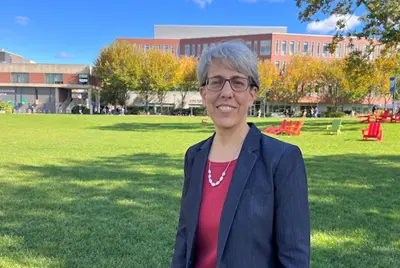
Mary Gallant, who was appointed dean of the Zuckerberg College of Health Sciences in September, grew up in Hudson, New Hampshire, and attended Harvard University.
Getting the right balance of calcium and magnesium in your diet may be more important to keeping your bones healthy than getting the recommended daily minimum of each mineral, says Liam Fouhy ’19, a doctoral student in public health.
In a new study published in the Annals of Neurology, Assoc. Prof. of Public Health Natalia Palacios found that healthy, anti-inflammatory bacteria were less abundant among people who were diagnosed with Parkinson’s disease.
UMass Lowell students, from a range of majors, share what they learned during their recent paid internships, co-ops and research experiences – and how it’s given them new perspectives on their coursework.
A new analysis of 15 global studies on cardiovascular disease shows that women are diagnosed and treated later than men for cardiac issues, resulting in worse outcomes for women than for men.
Assoc. Prof. Jonghan Kim of the Biomedical and Nutritional Sciences Department is leading a study to develop a long-acting nanoparticle drug that removes iron from the body without harsh side effects.
This past academic year, Pre-Health Advising had a 100% acceptance rate among students and alumni who applied to dental school and a 90% acceptance rate for those who applied to medical school.
The Zuckerberg College of Health Sciences recently rolled out its Mobile Health Unit, a 34-foot recreational vehicle that travels to local communities to promote health and wellness.
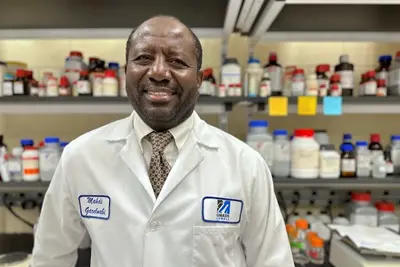
A health sciences professor is the new director of the ADVANCE Office for Faculty Equity. A researcher specializing in cardiovascular disease, Assoc. Prof. Mahdi Garelnabi brings extensive experience working on diversity within the American Heart Association and other groups.
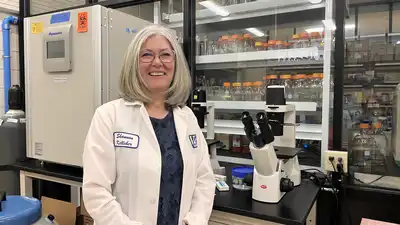
Prof. Shannon Kelleher of the Biomedical and Nutritional Sciences Department and her research team identified molecules in human milk for the first time that may be responsible for regulating milk volume.
Members of the Center of Biomedical and Health Research in Data Sciences found that natural language processing could lead to better suicide risk assessment and prevention.
The River Hawk Scholars Academy is expanding its programs for first-generation college students, including adding a study abroad course and a conference organized by students, thanks to federal aid and grants from nonprofits.
Biomedical and Nutritional Sciences Assoc. Prof. Kelsey Mangano has received a three-year $496,885 grant from the U.S. Department of Agriculture to examine whether high consumption of titanium dioxide is related to poor gut health.
Research by Assoc. Prof. Jonghan Kim of the Department of Biomedical and Nutritional Sciences in the Zuckerberg College of Health Sciences was recently awarded a $1.2 million grant from the National Heart, Lung and Blood Institute for a study that will help to better predict the impact of doxorubicin on cancer patients’ hearts.
Prof. Katherine Tucker of Biomedical and Nutritional Sciences was named the 2021 Distinguished University Professor, the highest accolade bestowed on a UMass Lowell faculty member for outstanding contributions to teaching, research and service.
Students learned about internship opportunities at a dozen early-stage medical device and biotech startups during a networking event co-hosted by the Massachusetts Medical Device Development Center (M2D2) and the UML student chapter of the Biomedical Engineering Society.
The major in pharmaceutical sciences combines classes in biomedical sciences and business to prepare students for jobs in pharmaceutical and biotechnology companies. Students can go on for advanced degrees in the same field – or an MBA.
Osteoporosis has been traditionally viewed as a disease of non-Hispanic white women, says Asst. Prof. Sabrina Noel. But the reality is more complicated, she says in a new paper that looks at inequities and gaps in the research.
Assoc. Prof. Kelsey Mangano, a nutrition researcher, says that the health of the planet and our own health go hand in hand – and that by improving one, we can improve the other.
The new “Health Sciences Hub” in the Health and Social Sciences Building is a one-stop center for student success. It includes space for advising, tutoring, exam reviews, faculty and teaching assistant office hours, health sciences club meetings, interprofessional education and more.
The MAGIC program, started by Chemistry Assoc. Teaching Prof. Khalilah Reddie, aims to close the health professions and medical school admissions gap for students from underrepresented groups, especially students of color, through tutoring and support. Students say MAGIC has improved their academics and their confidence, while providing them with a community.
Thanks to alumni and staff at Northeast Rehabilitation Hospital in Salem, N.H., nearly 130 students in physical therapy and nutritional science got an insider view into how a team of care professionals collaborated to care for COVID-19 patients. They learned some surprising things.
Starting April 19, anyone 16 years and older living in Massachusetts can get vaccinated against COVID-19. Campus health experts and researchers recommend vaccination for everyone who can safely get the shot -- so that we can protect ourselves and others in our campus community.
More than 100 students in the Zuckerberg College of Health Sciences have volunteered to help out at Lowell General Hospital’s COVID-19 vaccination clinic, which gives about 2,000 shots each day. In addition, some nursing students are earning clinical hours while giving vaccinations.
The university has expanded its COVID-19 surveillance testing with the creation of an in-house test processing lab at Olney Science Center, where students are getting hands-on laboratory experience while helping to fight the pandemic.
Recent alumni from the Honors College say their honors experiences, from research with faculty to small seminars, have had a lasting impact, preparing them for advanced graduate studies and rewarding jobs.
Clinical Assistant Prof. Jennifer Nicoloro, director of the university’s undergraduate medical laboratory sciences program, provided an interview to this career-planning website to share the professional opportunities available to people interested in the field.
Prof. Timothy Ford, the new chair of Biomedical and Nutritional Sciences, has extensive experience researching infectious diseases, from E. coli to cholera, in countries around the world. Ford says that global epidemics, including COVID-19, need global as well as local solutions.
The Master’s of Public Health program is growing in size and reputation since it debuted six years ago. Starting in January, the health care management option will be offered completely online.
Asst. Prof. Serena Rajabiun and two other Zuckerberg College of Health Sciences professors are leading a $3.9 million federal grant to help HIV treatment centers improve care for Black women, who have higher infection rates and worse health outcomes because of poverty, stigma and structural racism.
Even before COVID-19 testing overwhelmed hospital and public health laboratories, medical lab scientists, including those who graduate from UMass Lowell, were in great demand. Now their skills – analyzing lab samples and helping doctors to diagnose patients – are more sought after than ever.
When two alumni now working at Lowell Community Health Center wanted volunteers for their “Stop the Spread” COVID-19 testing campaign this summer, they knew whom to call: their former professors in the Zuckerberg College of Health Sciences.
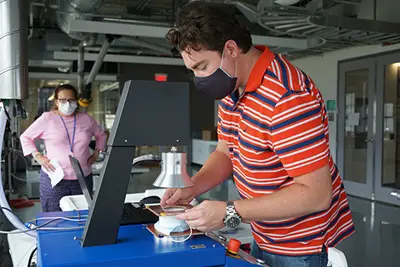
Thanks to a state grant, the university’s Fabric Discovery Center acquired equipment to test PPE that could be used to prevent transmission of COVID-19. Now, staff are conducting PPE testing for the state emergency management agency, hospitals, and regional companies that are ramping up to manufacture high-quality masks and gowns. And that’s just the beginning.
With the coronavirus pandemic persisting, people may be tempted to increase the use of disinfectants to help stem the spread of the virus. But these products contain Environmental Protection Agency (EPA)-registered pesticides that can cause harm, especially if not used as directed.
With the help of seed funding from the Office of Research and Innovation, faculty researchers from the Kennedy College of Sciences and the Zuckerberg College of Health Sciences will conduct studies designed to address the COVID-19 pandemic.
Epidemiologist and Public Health Prof. David Kriebel, who is reviewing data as it becomes available on the outbreak of COVID-19, sees cautiously encouraging trends on the containment of the virus emerging in China.
How zinc is distributed to tissues and cells is the root of Prof. Shannon Kelleher’s research, which aims to reveal the role that zinc plays in the development of inflammatory bowel disease and food allergies.
This year’s winners of the university's Dr. Martin Luther King Jr. Distinguished Service Awards have served the community through theater, community health research and volunteer work with homeless people and at-risk high school students.
Studies show that fad diets don't keep off weight in the long term. Faculty who are registered dietitians and students majoring in nutritional science share science-based advice to eat healthy for successful weight loss.
Chemistry Prof. Yuyu Sun and Assoc. Prof. Nancy Goodyear of Biomedical and Nutritional Sciences are using N-halamine – a biocide with proven germ-killing property – to reduce the occupational burden of exposure by protecting the hospital staff from harmful microorganisms that can cause various infections.
At UMass Lowell’s Center for Gerontology Research and Partnerships’ forum, speakers shared their latest research on aging workers in the workplace, age-friendly initiatives and asthma in older adults.
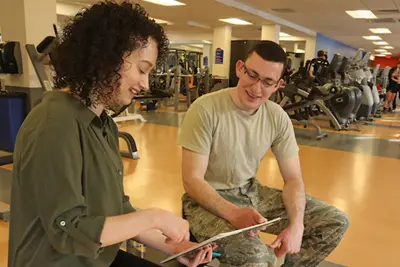
UMass Lowell Air Force ROTC Commander Jesse Jaramillo partnered with Zuckerberg College of Health Sciences faculty to deliver nutrition and exercise science education, counseling and training for cadets.
Prof. Katherine Tucker was a co-author, with researchers at Northwestern University Feinberg School of Medicine, on a study published in the March issue of the medical journal JAMA that found that the more eggs an individual consumes, the greater the risk for heart disease, stroke and overall mortality.
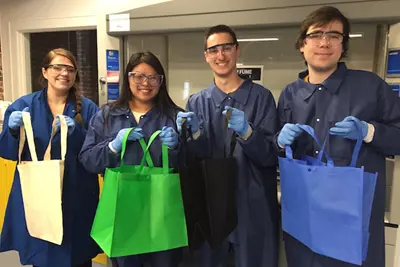
A team of public health students from the Zuckerberg College of Health Sciences, who are working at the Toxics Use Reduction Institute (TURI) on their capstone project, found safer cleaning solutions for reusable bags.
For an optimum web experience we recommend the latest version of Firefox, Chrome, Edge, or Safari. Please use one of the links below to install a supported browser.