As a Meteorology & Atmospheric Science major, you will study meteorology, weather forecasting, climatology and air pollution; the program also fulfills the education requirements for federally employed meteorologists.

Bachelor of Science in Meteorology and Atmospheric Science

Interested in becoming a meteorologist? Learn how this student made the most of the opportunities at UMass Lowell.

Explore How Weather Shapes the World

Turn your curiosity about weather into a career with a Bachelor of Science in Meteorology and Atmospheric Science. 

  • Learn to forecast weather, analyze climate change impacts and study air pollution.
  • Coursework provides a solid foundation in math, physics, chemistry and an understanding of how earth systems work. 
  • This program meets the education requirements for federally employed meteorologists, giving you a competitive edge. 

Many of our courses provide hands-on experiences. You’ll take measurements in the field—using our campus weather station and state-of-the-art radiosonde system—and conduct lab work to track atmospheric elements and pollutants. Throughout the program, you’ll work with real radar, satellite and weather model data used by industry professionals.

Prepare for careers in broadcast meteorology, scientific research, forecasting, environmental consulting or government agencies. With the foundation provided by the B.S. degree, you'll also be ready to pursue advanced degrees in atmospheric science or related fields.

What Can You Do with a Degree in Meteorology & Atmospheric Science?

Apply your understanding of the physical causes of weather and climate to solving practical problems, including:

  • Forecasting weather and climate 
  • Assessing the impact of weather and climate on public health, agriculture, industry and national defense
Victoria Wisniewski headshot

Meteorologists and atmospheric scientists are employed by diverse industries, including:

  • Commercial aviation companies
  • Private consulting firms
  • State and local governments
  • Television meteorology
  • Federal government
    (such as the National Oceanic and Atmospheric Administration, the National Weather Service, and the Department of Defense)

Meet Our Students

Victoria is showing us the precipitation
Victoria Wisniewski '23
Meteorology & Atmospheric Science

As an aspiring broadcast meteorologist, Victoria Wisniewski was attracted to UML due to its bachelor’s-to-master’s programs, successful alumni and research opportunities.

So many opportunities have come my way, and I couldn’t be happier.
UMass Lowell alumnus Michael Souza shakes the hand of Governor Maura Healey while another student looks on.
Michael Souza ’13, ’14
Meteorology and Atmospheric Science

Michael Souza ’13, ’14 is the go-to meteorologist at the Massachusetts Emergency Management Agency.

The university helped shape me into the scientist that I am today.
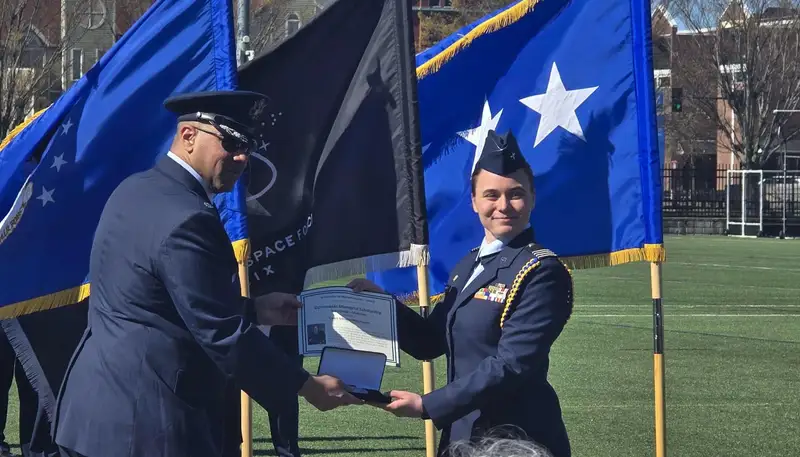
Lieutenant Colonel Jovon Williams and Schuyler McCullought in front of Air Force and Space Force flags.
Schuyler McCullough '26
Meteorology

Schuyler McCullough joined the Air Force ROTC – and gained a career as a weather officer.

I just picked meteorology because it sounded cool, and I ended up falling in love with the major.

Year-by-Year Course Plan

Check out our degree pathways, which offer sample plans for completing your degree in four years.

For students who entered fall 2020 and beyond.

Freshman Year

Fall Semester

Course NumberCourse NameCredits
Total15
ATMO.1020Weather Forecasting Seminar11
ENGL.1010 /
HONR.1100
College Writing I /
First Year Seminar in Honors: Text in the City (CW)
3
ENVI.1010Environmental Science Seminar (IL)1
ENVI.1200Principles of Environmental Science3
MATH.1310Calculus I (MATH)4
xxxx.xxxxArts and Humanities Perspective (AH)23

Spring Semester

Course NumberCourse NameCredits
Total15
CHEM.1210Chemistry I (SCL)3
CHEM.1230LChemistry I Lab1
ENGL.1020College Writing II (CW)3
ENVI.2010Earth Systems: Geosphere3
ENVI.2030LEarth Systems: Geosphere Lab (CTPS), (QL)1
MATH.1320Calculus II4

Sophomore Year

Fall Semester

Course NumberCourse NameCredits
Total16
ATMO.2140Meteorology Analysis Lab11
CHEM.1220Chemistry II (SCL)3
CHEM.1240LChemistry II Lab1
ENVI.2020Earth Systems: Atmosphere and Oceans (QL)3
ENVI.2040LEarth Systems: Atmosphere & Oceans Lab (CTPS)1
PHYS.1410Physics I (STEM)3
PHYS.1410LPhysics I Lab1
xxxx.xxxxSocial Sciences Persp. (SS)23

Spring Semester

Course NumberCourse NameCredits
Total15
ENVI.2050Earth Systems: Biosphere and Global Change3
ENVI.2070LEarth Systems: Biosphere and Global Change Lab1
MATH.2720Introduction to Programming with MATLAB3
MATH.2310Calculus III4
PHYS.2450Physical Properties of Matter3
PHYS.2450LPhysics III Lab1

Junior Year

Fall Semester

Course NumberCourse NameCredits
ATMO.3080Synoptic Meteorology13
ATMO.4130Physical Meteorology13
MATH.2340Differential Equations3
xxxx.xxxxArts and Humanities Perspective (AH)23
xxxx.xxxxSocial Sciences Perspective (SS)23
Total15

Spring Semester

Course NumberCourse NameCredits
ATMO.4120Synoptic Weather Patterns13
ATMO.4100Advanced Forecasting13
ATMO.4080The Climate System3
MATH.3860Probability and Statistics3
xxxx.xxxxSocial Sciences Perspective (SS)23
Total15

Senior Year

Fall Semester

Course NumberCourse NameCredits
ATMO.4150Atmospheric Dynamics13
ATMO.4930Internship: Atmospheric Science13
xxxx.xxxxArts and Humanities Perspective (AH)3
xxxx.xxxxFree Elective3
xxxx.xxxxTechnical Elective33
Total15

Spring Semester

Course NumberCourse NameCredits
Total15
ATMO.4160Advanced Dynamics13
ATMO.4710 /
ENVI.5100
Air Pollution /
Environmental Pollution
3
ATMO.4500Satellite and Radar Meteorology13
ATMO.4200Intro to Operational Numerical Weather Prediction13
ENVI.4000Senior Seminar1
xxxx.xxxxFree Elective2

Total Minimum Credits = 120

1Course offered alternate years.

2The Core Curriculum Essential Learning Outcomes for Diversity and Cultural Awareness (DCA) and Social Responsibility and Ethics (SRE) are fulfilled outside the EEAS major. See the DCA course listing and the SRE course listing for a full list of classes that fulfill these requirements.

3Capstone course. May be taken either semester of senior year. ATMO.4910 Directed Study or ATMO.4950 Honors Research: Atmospheric Science may also be used as a capstone course.

No more than two Breadth of Knowledge (BOK) courses can be taken with the same prefix. The Core Curriculum courses may be taken in any sequence. Refer to the Core Curriculum policy for further details. You should meet with your faculty advisor to determine how you will meet the Core Curriculum requirements.

Current UMass Lowell students should use their Advisement Report in SIS. If you need assistance, please contact your adviser.

Restriction on off-campus study:

Be advised that any course taken at another institution must be formally approved prior to enrollment. See the catalog policy for details.

Technical Electives

Breadth of Knowledge (BOK) Glossary

  • SS - Social Sciences Perspective - 9 credits
  • AH - Arts and Humanities Perspective - 9 credits
  • SCL - Sciences with Lab Perspective - 6-8 credits
  • STEM - Science, Technology, Engineering and Math Perspective - 3 credits
  • CW - College Writing I and II - 6 credits
  • MATH - Math Perspective - 3 credits

Read more about the Breadth of Knowledge requirements.

Essential Learning Outcomes (ELO) Glossary

  • AIL - Applied and Integrative Learning
  • CTPS - Critical Thinking and Problem Solving
  • DCA - Diversity and Cultural Awareness
  • IL - Information Literacy
  • QL - Quantitative Literacy
  • SRE - Social Responsibility and Ethics
  • WOC - Written and Oral Communication

Read more about the Essential Learning Outcomes.

A graduate in Meteorology and Atmospheric Science will be able to:
  1. Understand physical and chemical processes in an earth systems context.
  2. Apply knowledge of meteorology and atmospheric dynamics for weather forecasting and analysis of weather and climate patterns.
  3. Explain climate dynamics and climate variability and analyze patterns of climate change and impacts.
  4. Demonstrate an understanding of air pollution and air pollution control.
  5. Critically evaluate scientific data.
  6. Demonstrate computational, quantitative and oral/written language competence.

Why Study Meteorology & Atmospheric Science at UMass Lowell?

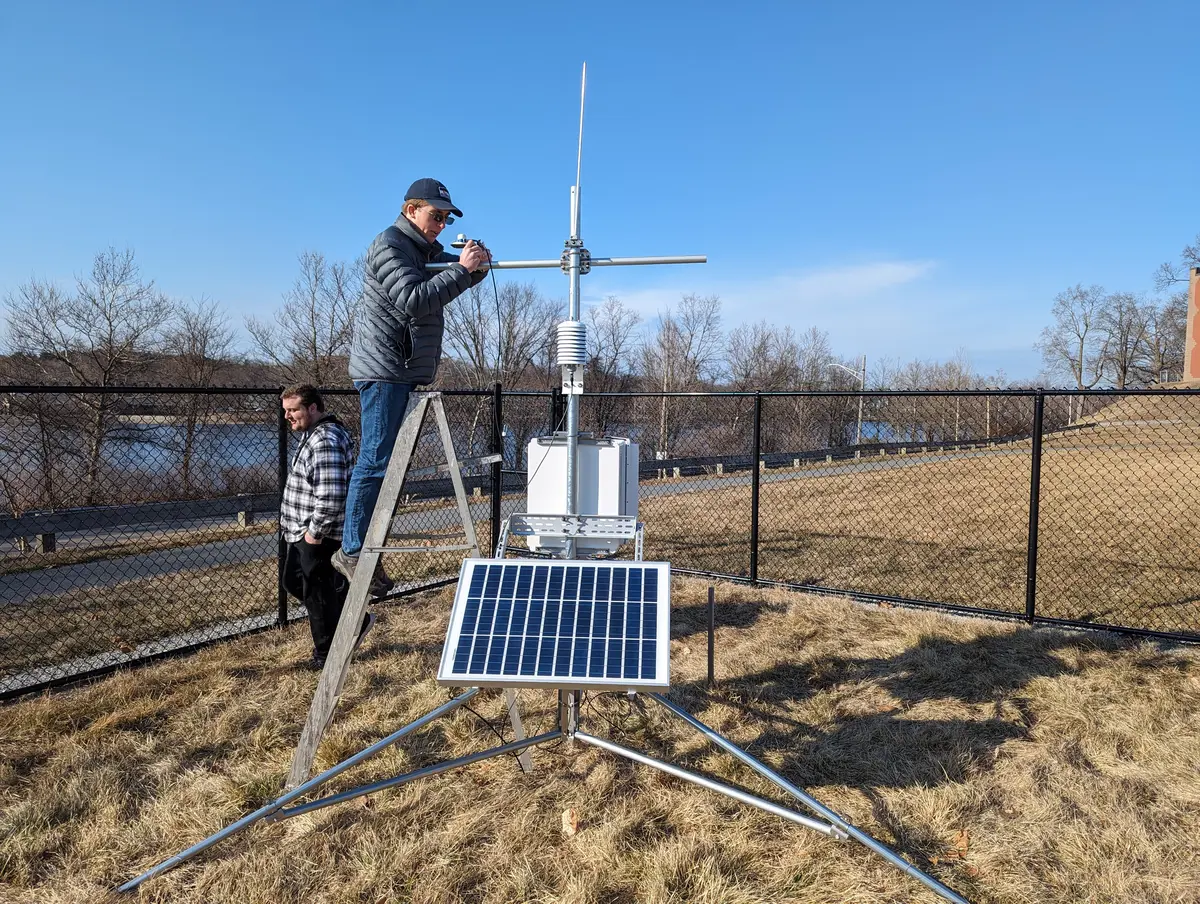
Man adjusts solar panel on site of weather station

Meteorology Starts at UML

UMass Lowell offers the only atmospheric science/meteorology major at a public university in Massachusetts.
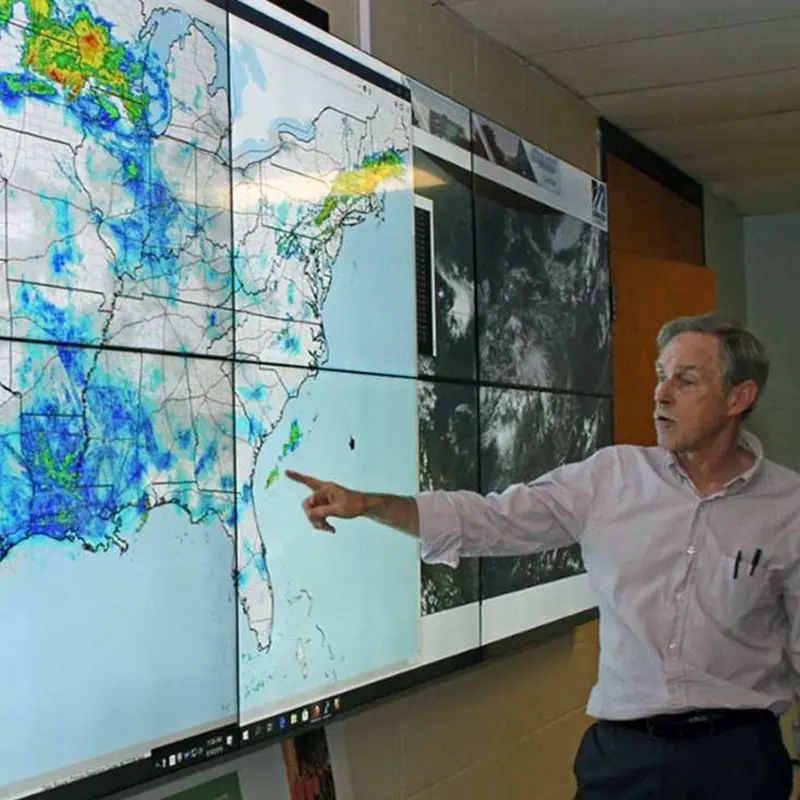
Professor Frank Colby of the EEAS department pointing to large, interactive weather monitor

Digital Weather Wall

Our Digital Weather Wall allows for real-time forecasting and analyses of weather and climate patterns on a large high-resolution display.

Meteorology-intern-Kristina-Oakland

Research Opportunities

Work with UMass Lowell faculty on current research, including:

  • Global-scale and regional weather and climate modeling
  • Forecasting of weather and extreme events

Student Organizations

Put your learning into practice by joining student-run clubs and organizations, including:

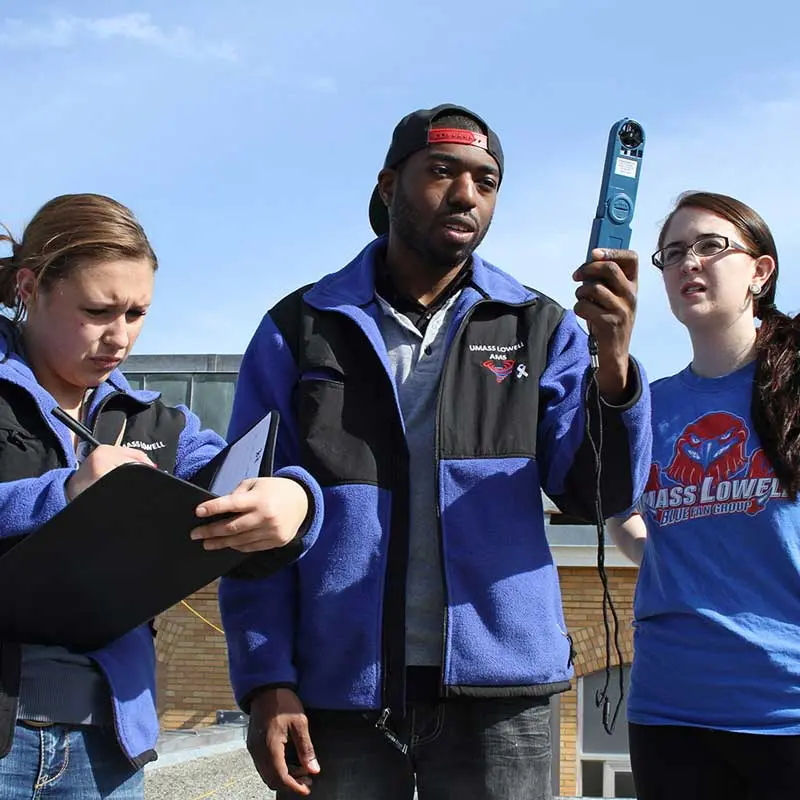
Three UMass Lowell students take weather readings with equipment

Career Connected Experience: The UMass Lowell Guarantee

Every first-time, first-year UMass Lowell student will have the opportunity to pursue at least one Career Connected Experience (internships, co-ops, clinical placements, service learning, study abroad and more) during their undergraduate career — earning pay, credits or both before they graduate.

Visit UMass Lowell

Launch virtual tour

Visit campus, meet our people and picture yourself here. Find in-person and virtual tours and events.

Still Exploring Majors?

We've got 120+ programs. Browse our Program Finder to find the one that's right for you.

View All Programs

Enhance your degree with a: