At a Glance
Year: 2027
Major: Plastics Engineering
Activities: Rist DifferenceMaker Program
Why plastics engineering? “Plastics is very hands-on, and my professors know me by name. I know them by name, too.”

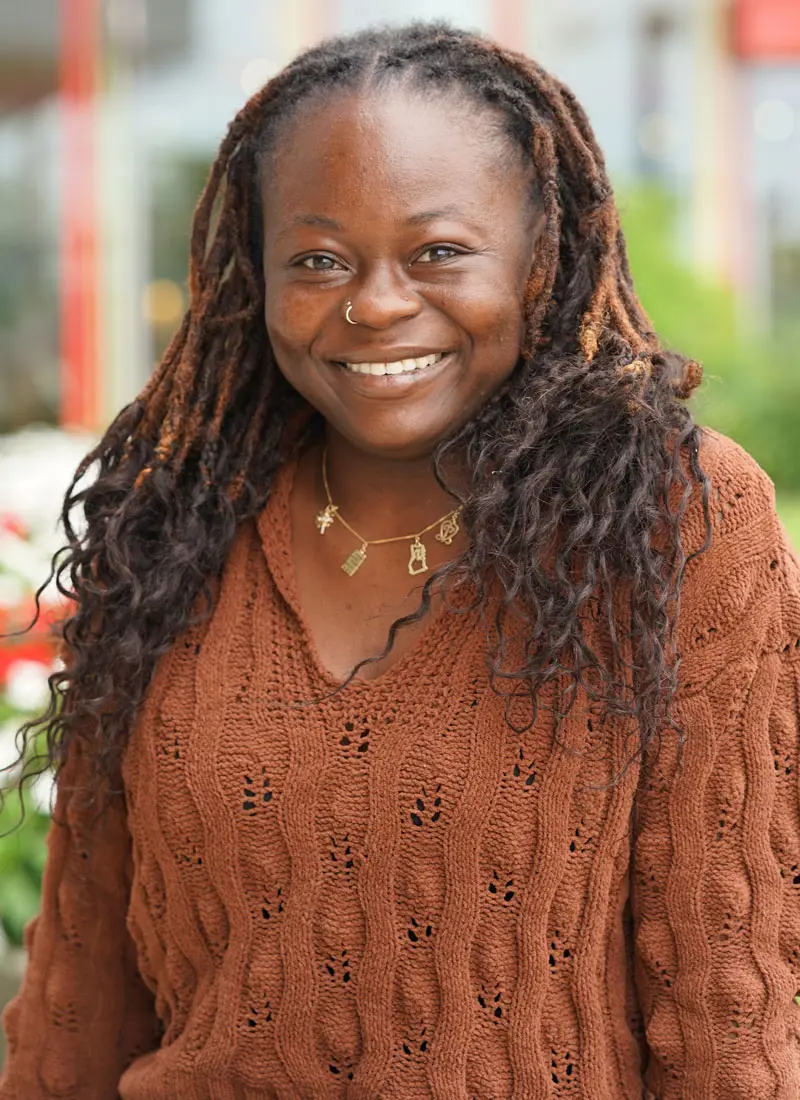
A class discussion about plastic pollution transported Joanita Amoah back to the streets of Accra, Ghana, where she grew up.
As her Introduction to Polymer Sustainability professor explained that plastic pollution was not just an American problem but an international one, Amoah immediately flashed back to her childhood.
“I was that little girl running around with trash bags getting caught on my foot,” says Amoah, who came to the United States by herself at age 10 to join her mother, who was living in Worcester.
That memory prompted Amoah to consider how she could use what she was learning as a plastics engineering major at UMass Lowell to help address the problem back home.
Amoah brought the idea to Plastics Engineering Professor Carol Barry, who encouraged her to pursue it through the Rist DifferenceMaker Institute, a campuswide program that engages UMass Lowell students in creative problem-solving, innovation and entrepreneurship.
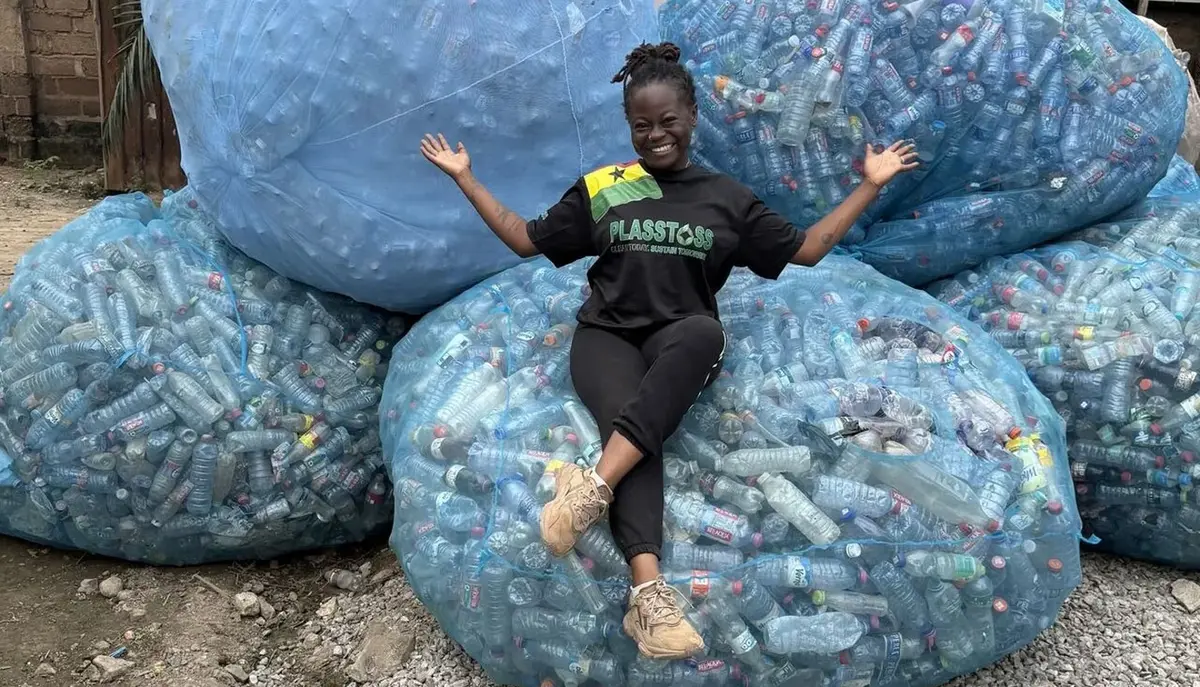
That ultimately led to Plastoss, Amoah’s recycling venture, designed to collect plastic waste in Ghana while creating safer, more stable income opportunities for local workers.
“I would like to come back home and not be walking through plastic everywhere,” Amoah says. “I would like it to be a better space for myself, my future children and the next generation of Ghanaians.”
After earning an associate degree from Quinsigamond Community College, Amoah transferred to UMass Lowell, where she initially planned to study biomedical engineering. She soon switched to plastics engineering, drawn to the program’s small size and hands-on approach.
With help from DifferenceMaker Director Richard Juknavorian, Amoah refined her idea for Plastoss, assembled a team and prepared for competitions. Together with plastics engineering major Brendan Viarella and public health major Amber Abu-Zahra, she won the $4,000 Commitment to a Sustainable Environment Award at the Rist DifferenceMaker Institute’s $50,000 Idea Challenge.
A few weeks later, she won the $3,000 Student Sustainability Innovation Award at the Rist Institute for Sustainability and Energy’s inaugural Sustainable Innovation Showcase and Challenge. The award helped fund a trip to Ghana, where Amoah launched Plastoss’ first 100-day pilot program during the summer before her senior year.
She began by interviewing about 40 plastic collectors about their work. Many were paid very little, lacked protective equipment and collected plastic informally, sometimes starting before dawn and then working another job during the day.
Plastoss recruited 35 collectors, provided personal protective equipment and collection nets, paid above the prevailing market rate and created a tracking system so workers could see how much plastic they had collected and how much they were owed.
The team initially gathered nearly 3,000 kilograms of plastic. After sorting and cleaning the material, however, about 2,000 kilograms remained for sale. Sand, dirt, liquid and colored plastics all affected the material’s weight and value — lessons Amoah says she could not have learned from a classroom or competition.
The pilot also brought unexpected challenges. Funding ran out before it ended, requiring Amoah to send money from the United States and arrange for the remaining plastic to be sold so the collectors could be fully paid.
“A pilot isn’t supposed to prove that your original plan was perfect,” Amoah says. “A pilot is supposed to show you the truth.”
The experience has left Amoah weighing several possibilities for Plastoss’ next phase, including selling baled plastic to manufacturers, processing it into products in Ghana or shipping it to the United States for further processing. Her priority is to develop a financially sustainable model that can continue creating jobs locally.
She also introduced recycling education programs at two Ghanaian schools. Students will participate in Plastoss Eco Leaders Clubs, learning about waste separation, recycling, environmental health and careers in sustainability while taking part in community cleanups and reuse projects.
For Amoah, the students offered a glimpse of the broader impact she hopes Plastoss can have.
“I feel very hopeful that we can change this,” she says. “We can develop for the better.”
Amoah plans to gain experience in the plastics industry after graduation before eventually returning to Ghana to build Plastoss.
“Everything that has happened has been such a blessing, an experience and a lesson that I would have never learned otherwise,” she says. “It has definitely pushed me out of my comfort zone.”
“I always get anxious when it comes to asking for help, but people here are so patient. It’s amazing. I never feel like I’m a burden.”