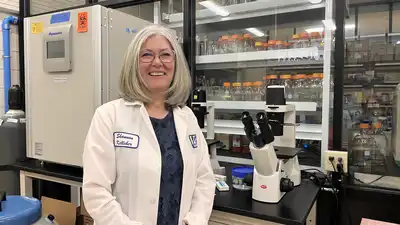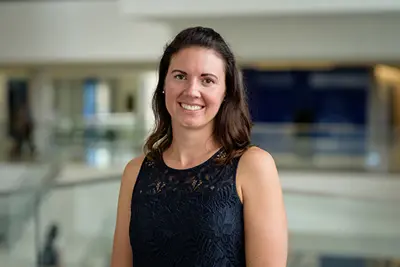
Professor Shannon Kelleher of the Department of Biomedical and Nutritional Sciences is working to uncover the biological reasons that affect milk supply to help mothers breastfeed.
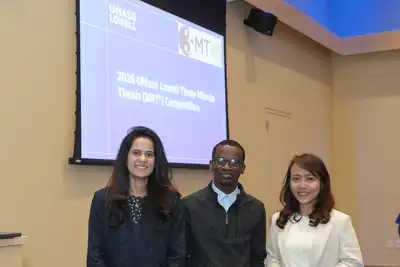
Three Minute Thesis is an international program designed to help graduate students explain their research in a succinct and compelling way to general audiences.
Research Assistant Angela Consentino ’17 of the Center for Population Health at UMass Lowell is partnering with the Greater Lowell Health Alliance and the Cambodian Mutual Assistance Association to better understand how cultural background, migration history, age and socioeconomic factors shape substance use attitudes, beliefs and behaviors.
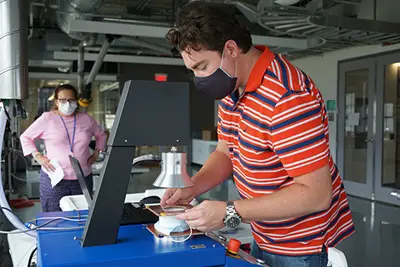
A team of engineering and physical therapy faculty and students is collaborating to on research to evaluate the accuracy of how augmented reality technology tracks joint motion and hand gestures.
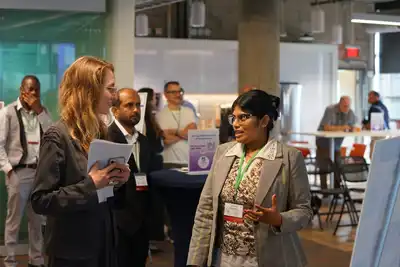
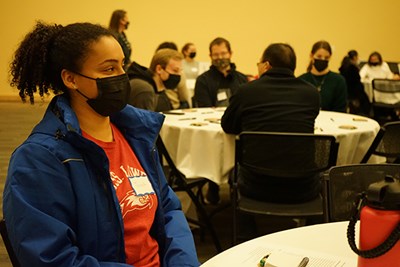
More than 75 UMass Lowell faculty, staff and graduate students came together for the inaugural STEM Teaching, Educator Learning and Research (STELAR) Conference, designed to spark collaboration and lay the groundwork for a new interdisciplinary STEM education and research center.
The Biomedical and Nutritional Sciences Department received a $750,000 Workforce Development Grant from the Massachusetts Life Sciences Center to build two specialized teaching and research facilities: mammalian cell culture and histology laboratories.
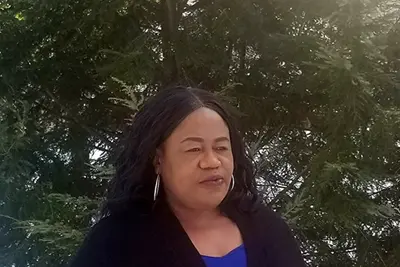
Associate Professor Angela Wangari Walter of the Department of Public Health in the Zuckerberg College of Health Sciences joins an elite group of scholars from across the nation who have been selected to receive the prestigious Fulbright U.S. Scholar award.
Professor and Chair of the Solomont School of Nursing Heidi Collins Fantasia and Doctor of Nursing Practice alumna Michelle Flanagan ’25 set the record straight on evidence-based treatments for menopause in a paper published in Nursing for Women’s Health.
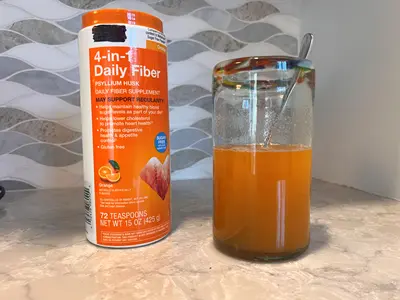
Two recent pilot studies published in Toxicology and Applied Pharmacology and Environmental Health suggest that consuming a soluble fiber supplement regularly with food reduces levels of toxic PFOS and PFOA.
The UMass Lowell team of Matthew Ruggiero ’25, Emily Lauretano ’25 and Kaylee Estevao ’25 beat 19 colleges in the fall to earn the regional College Bowl title. At the national competition in May, the team placed fourth among 11 colleges.
Thirteen Ph.D. students put their presentation skills to the test in UMass Lowell’s inaugural Three Minute Thesis competition, an international program designed to help graduate students explain their research in a succinct and compelling way to general audiences.
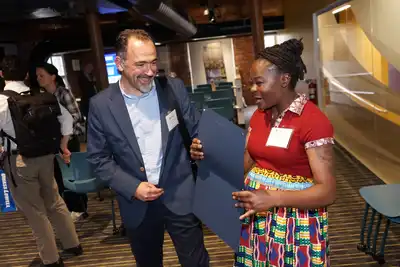
More than 200 students showcased their research work and academic endeavors at the 28th annual Student Research and Community Engagement Symposium at University Crossing.
UMass Lowell is now listed as a Carnegie Research 1 (R1) university, a prestigious designation used to identify the nation’s top research institutions.
The amount of PFAS exposure among construction workers is not yet known, but a new study aims to assess the extent and sources of PFAS exposure to inform safer industry practices.
Assoc. Prof. Kelsey Mangano of Biomedical and Nutritional Sciences in the Zuckerberg College of Health Sciences received a $900,000 grant from Harnessing Emerging Research Opportunities to Empower Soldiers (HEROES), a joint research and development initiative of UMass Lowell and the United States Army Combat Capabilities Development Command Soldier Center (DEVCOM), to study the natural production of omega-3s.
UMass Lowell's research symposium, “Friend or Foe: Transforming Social Media & AI for a Healthy Future,” brought together interdisciplinary experts and students to explore the complex relationship between technology, artificial intelligence and mental health.
In a study published in the February issue of the journal Stroke, Assoc. Prof. Lynne Gauthier of the Physical Therapy and Kinesiology Department found that “one-size-fits-all” insurance reimbursement is not an evidence-based policy.
Asst. Prof. Fanfei Meng of the Biomedical and Nutritional Sciences Department is evaluating the effectiveness of combining antibiotics and anti-inflammatory drugs in a nanoparticle to treat sepsis.
A group of researchers, including Public Health Assoc. Prof. Herpreet Thind of the Zuckerberg College of Health Sciences, is investigating whether yoga can be used to help manage Type 2 diabetes.
Asst. Prof. Yun-Ju Lai of the Solomont School of Nursing is leading a study that uses virtual reality to help UMass Lowell students improve health and well-being.
Physical Therapy Assoc. Prof. Maggie O’Neil and Computer Science Asst. Prof. Maru Cabrera are evaluating whether virtual reality gaming and a roving robot can improve the mobility of a group of children with cerebral palsy and keep them engaged.
Researchers at UMass Lowell are studying whether a small natural molecule could treat a genetic disorder that causes muscle weakness and progressive nervous system damage.
Getting the right balance of calcium and magnesium in your diet may be more important to keeping your bones healthy than getting the recommended daily minimum of each mineral, says Liam Fouhy ’19, a doctoral student in public health.
In a new study published in the Annals of Neurology, Assoc. Prof. of Public Health Natalia Palacios found that healthy, anti-inflammatory bacteria were less abundant among people who were diagnosed with Parkinson’s disease.
Asst. Prof. of Psychology Jiabin Shen will study the effects of injuries on children with autism, analyzing the disparities between risk factors, health care and financial costs.
A new analysis of 15 global studies on cardiovascular disease shows that women are diagnosed and treated later than men for cardiac issues, resulting in worse outcomes for women than for men.
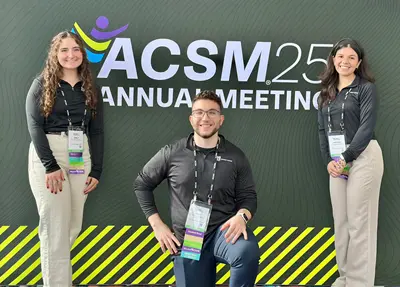
Physical Therapy and Kinesiology Asst. Prof. David Cornell recently received an American College of Sports Medicine Fellowship, an honor that recognizes professionals who have made significant contributions to the field of sports medicine and exercise science.
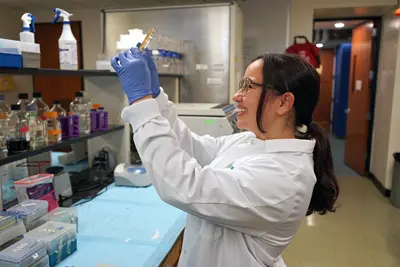
Assoc. Prof. Jonghan Kim of the Biomedical and Nutritional Sciences Department is leading a study to develop a long-acting nanoparticle drug that removes iron from the body without harsh side effects.
Prof. Shannon Kelleher of the Biomedical and Nutritional Sciences Department and her research team identified molecules in human milk for the first time that may be responsible for regulating milk volume.
Members of the Center of Biomedical and Health Research in Data Sciences found that natural language processing could lead to better suicide risk assessment and prevention.
Students in health sciences are gaining research experience in Lowell, working alongside an adult advisory group and local agencies to help make the city an “age-friendly” community.
A new study led by Assoc. Prof. Comfort Enah is evaluating whether a system that was designed to improve maternal and newborn health in rural America decades ago can bring similar benefits to Cameroon in central Africa.
A new study led by Prof. of Public Health Wenjun Li, with funding from a $4 million, five-year grant from the National Institute on Aging, will analyze how older people move and use the outdoor space in their communities.
Biomedical and Nutritional Sciences Assoc. Prof. Kelsey Mangano has received a three-year $496,885 grant from the U.S. Department of Agriculture to examine whether high consumption of titanium dioxide is related to poor gut health.
With mixers that follow a speed-dating format, the Honors College is matching more honors students with faculty mentors for research opportunities and final honors theses and projects. The college offers $1,500 fellowships to support student researchers, who may also be paid through faculty grants.
Research by Assoc. Prof. Jonghan Kim of the Department of Biomedical and Nutritional Sciences in the Zuckerberg College of Health Sciences was recently awarded a $1.2 million grant from the National Heart, Lung and Blood Institute for a study that will help to better predict the impact of doxorubicin on cancer patients’ hearts.
A new at-home rehabilitation gaming system that simulates a kayaking adventure, combined with therapist counseling on everyday tasks, can help stroke patients regain strength and mobility.
Osteoporosis has been traditionally viewed as a disease of non-Hispanic white women, says Asst. Prof. Sabrina Noel. But the reality is more complicated, she says in a new paper that looks at inequities and gaps in the research.
The need for home health care services has never been greater, or more challenging, than during COVID-19. Under a major federal grant, Public Health Prof. Emerita Margaret Quinn, lead researcher for the Safe Home Care Project, is using her expertise to address the hazards that home care aides face.
Assoc. Prof. of Nursing Comfort Enah takes a public health, community-based approach to research aimed at improving sexual and reproductive health in underserved communities and low-income countries. She focuses on using mobile apps to improve health outcomes.
Prof. Timothy Ford, the new chair of Biomedical and Nutritional Sciences, has extensive experience researching infectious diseases, from E. coli to cholera, in countries around the world. Ford says that global epidemics, including COVID-19, need global as well as local solutions.
Four current and former exercise science majors won praise at a conference for their research on a heart rate finger sensor – and honors student Andreas Himariotis carried off the top undergraduate prize.
Asst. Prof. Serena Rajabiun and two other Zuckerberg College of Health Sciences professors are leading a $3.9 million federal grant to help HIV treatment centers improve care for Black women, who have higher infection rates and worse health outcomes because of poverty, stigma and structural racism.
Thanks to a state grant, the university’s Fabric Discovery Center acquired equipment to test PPE that could be used to prevent transmission of COVID-19. Now, staff are conducting PPE testing for the state emergency management agency, hospitals, and regional companies that are ramping up to manufacture high-quality masks and gowns. And that’s just the beginning.
With the coronavirus pandemic persisting, people may be tempted to increase the use of disinfectants to help stem the spread of the virus. But these products contain Environmental Protection Agency (EPA)-registered pesticides that can cause harm, especially if not used as directed.
With the help of seed funding from the Office of Research and Innovation, faculty researchers from the Kennedy College of Sciences and the Zuckerberg College of Health Sciences will conduct studies designed to address the COVID-19 pandemic.
The 23rd annual Student Research and Community Engagement Symposium went online this spring. The quality of the student projects remained as high as ever, despite the change of venue.
With labs closed and all academic programs now online due to COVID-19, seniors are adapting their capstone projects. Some capstones have even taken on new relevance because they address aspects of the pandemic.
Epidemiologist and Public Health Prof. David Kriebel, who is reviewing data as it becomes available on the outbreak of COVID-19, sees cautiously encouraging trends on the containment of the virus emerging in China.
How zinc is distributed to tissues and cells is the root of Prof. Shannon Kelleher’s research, which aims to reveal the role that zinc plays in the development of inflammatory bowel disease and food allergies.
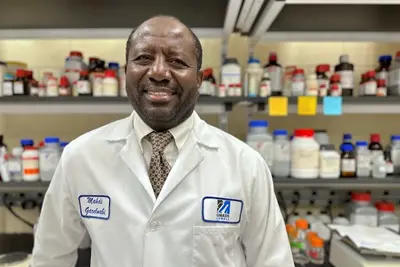
Chemistry Prof. Yuyu Sun and Assoc. Prof. Nancy Goodyear of Biomedical and Nutritional Sciences are using N-halamine – a biocide with proven germ-killing property – to reduce the occupational burden of exposure by protecting the hospital staff from harmful microorganisms that can cause various infections.
Research Prof. David Turcotte has won a federal grant of nearly $1 million to do more research on asthma – work that could benefit low-income seniors in Lowell.
Work environment graduate student Nicole Karlsson was the lead author on a published study that showed that about one in four home care workers reported at least one incident of verbal abuse by clients or their relatives during the preceding 12 months.
An athletic training method shown to reduce head injuries in high school football will be rolled out in Hawaii next week through an $800,000 grant to the UMass Lowell researcher who designed the system.
Sleep disruption can lead to depression, cardiovascular disease and accidents on the job or at home. To combat these issues, Asst. Prof. Yuan Zhang of the Solomont School of Nursing is partnering on a $1.7 million four-year National Institute of Aging grant to study strategies that help older night shift workers sleep soundly.
The university’s Climate Change Initiative hosted members of the state’s House Committee on Global Warming and Climate Change for a roundtable discussion on climate science and policy at which faculty members shared scientific research and expertise to help inform policy decisions.
At UMass Lowell’s Center for Gerontology Research and Partnerships’ forum, speakers shared their latest research on aging workers in the workplace, age-friendly initiatives and asthma in older adults.
More than 280 students finished the academic year by presenting their work at the annual Student Research & Community Engagement Symposium. Many of the students’ research projects aimed to solve or engage real-world problems, from public health to violent crime.
Prof. Katherine Tucker was a co-author, with researchers at Northwestern University Feinberg School of Medicine, on a study published in the March issue of the medical journal JAMA that found that the more eggs an individual consumes, the greater the risk for heart disease, stroke and overall mortality.
U.S. Rep. Lori Trahan learned about the latest technology used in parachutes and other battlefield innovations while touring the HEROES lab on Feb. 20.
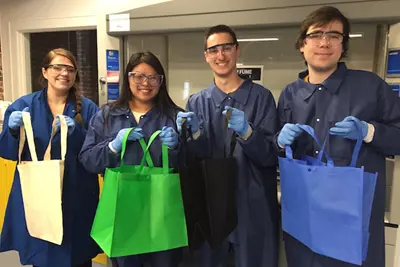
A team of public health students from the Zuckerberg College of Health Sciences, who are working at the Toxics Use Reduction Institute (TURI) on their capstone project, found safer cleaning solutions for reusable bags.
For an optimum web experience we recommend the latest version of Firefox, Chrome, Edge, or Safari. Please use one of the links below to install a supported browser.