
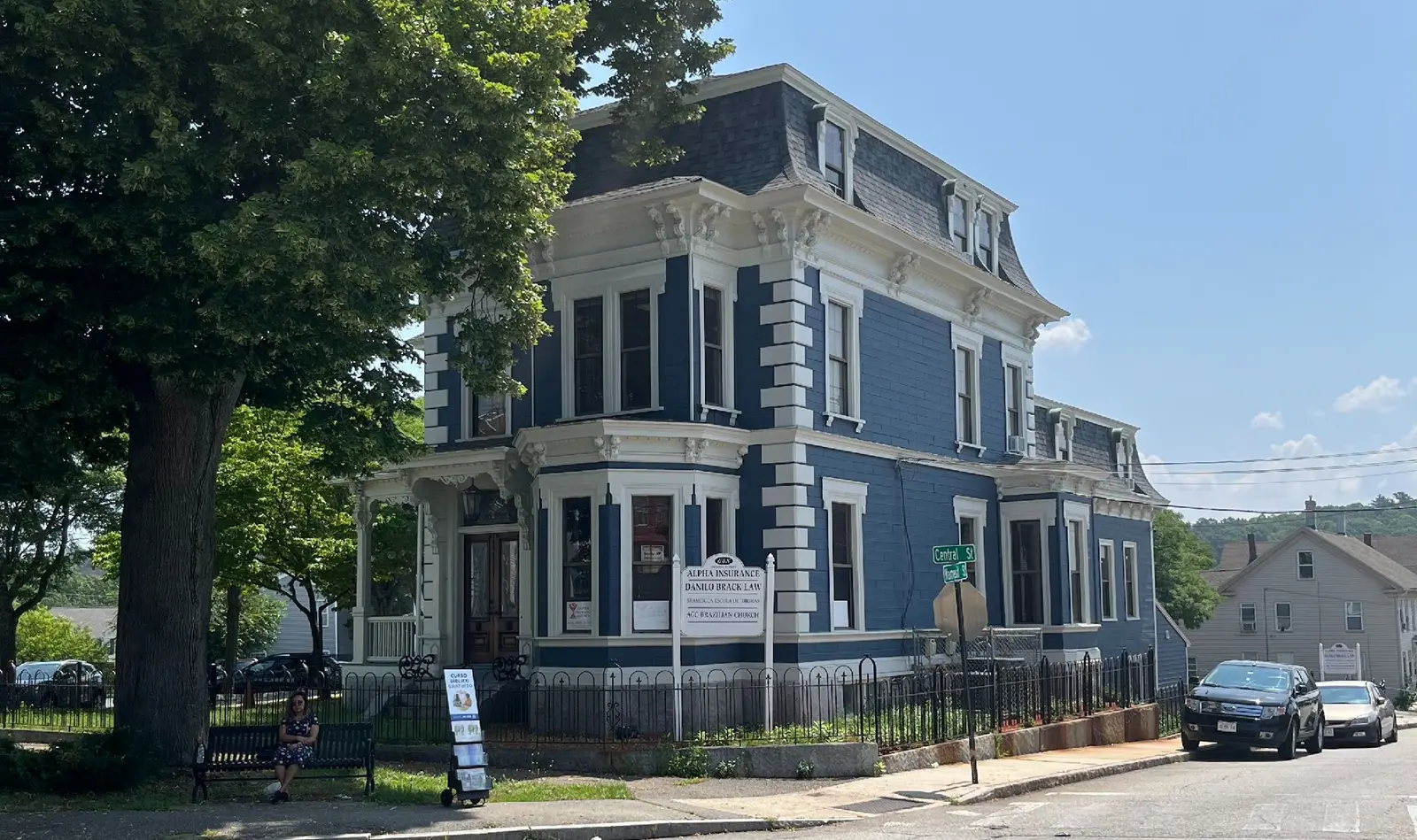
 Concurrent with the Italianate, French Second Empire also gained in popularity in the second half of the 19th century. It became a favored style of the urban elite, as seen in the Astor’s grand mansion in New York City, and for large civic structures, such as the Executive Building in Washington, D.C., or City Hall in Philadelphia. Lowell’s citizens participated in this trend. One of Lowell’s millionaires chose it for his house: the Frederick Ayer Mansion by architect S.S. Woodcock (1876), also known as the Franco-American School). But just prior to its construction, Samuel Wood, another successful Lowellian, also chose the style for his home in Back Central at 648 Central Street. With its commanding location on Hosford Square and high level of craftsmanship inside and out, it may also have been designed by Woodcock.
 Features of the Second Empire include the classical references such as columns and eave brackets already seen in the Italianate; the most distinguishing element, however, is the double-pitched roof that includes dormer windows on the lower pitch. It is known as a mansard roof, named after the French architect Francois Mansart. Below the roof, eaves extend generously and are supported by ornate carved brackets, often paired. Window trim is also often more elaborate, with engaged columns or pilasters and hoods over the lintels. Quoins are frequently used on the corners of the building.
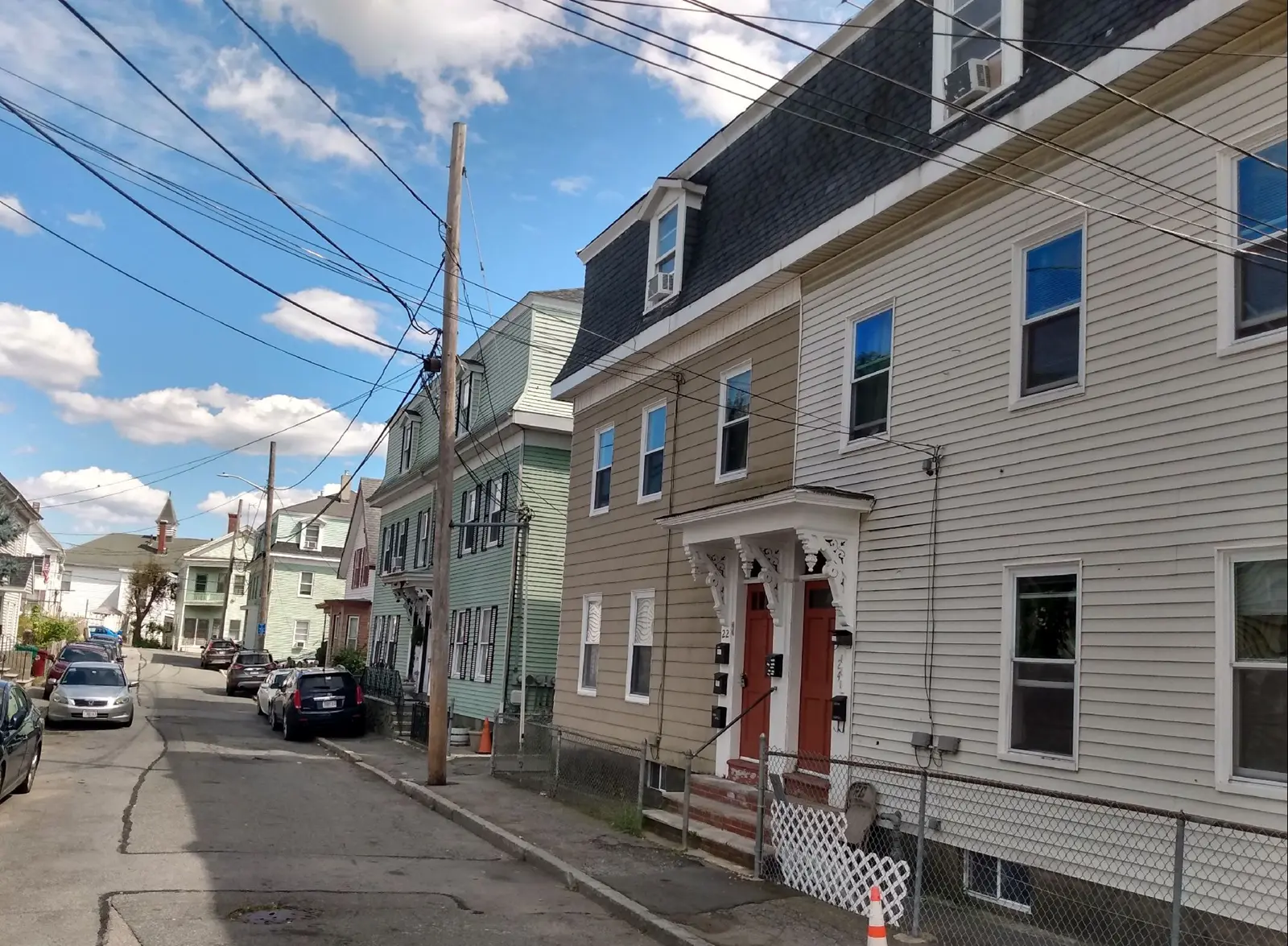 And as with the Greek Revival and Italianate, French Second is a style that could serve a single impressive mansion, or be simplified for use in commercial, multifamily or tenement structures. The grocery built by John J. Donovan at 512 Central has fish-scale shingles to denote its mansard roof and curved, molded brick lintels over the windows. The Greenwood Brothers grocery at 573 Lawrence raised its ornamental features up a notch. It has quoins on the corners, ornamental cast iron columns and capitals, window lintels with scallop shell decoration, paired brackets under the eaves, and the name of the store molded into the architrave and stringcourse. The building also stands out for its early use of cast stone rather than granite. Finally, the style was also popular for tenements in Back Central—the tenements on Pollard Street, such as 22-24, look like two-story structures but are in fact triple-deckers like their Italianate cousins. Only the carved entry hoods add ornamental interest.