
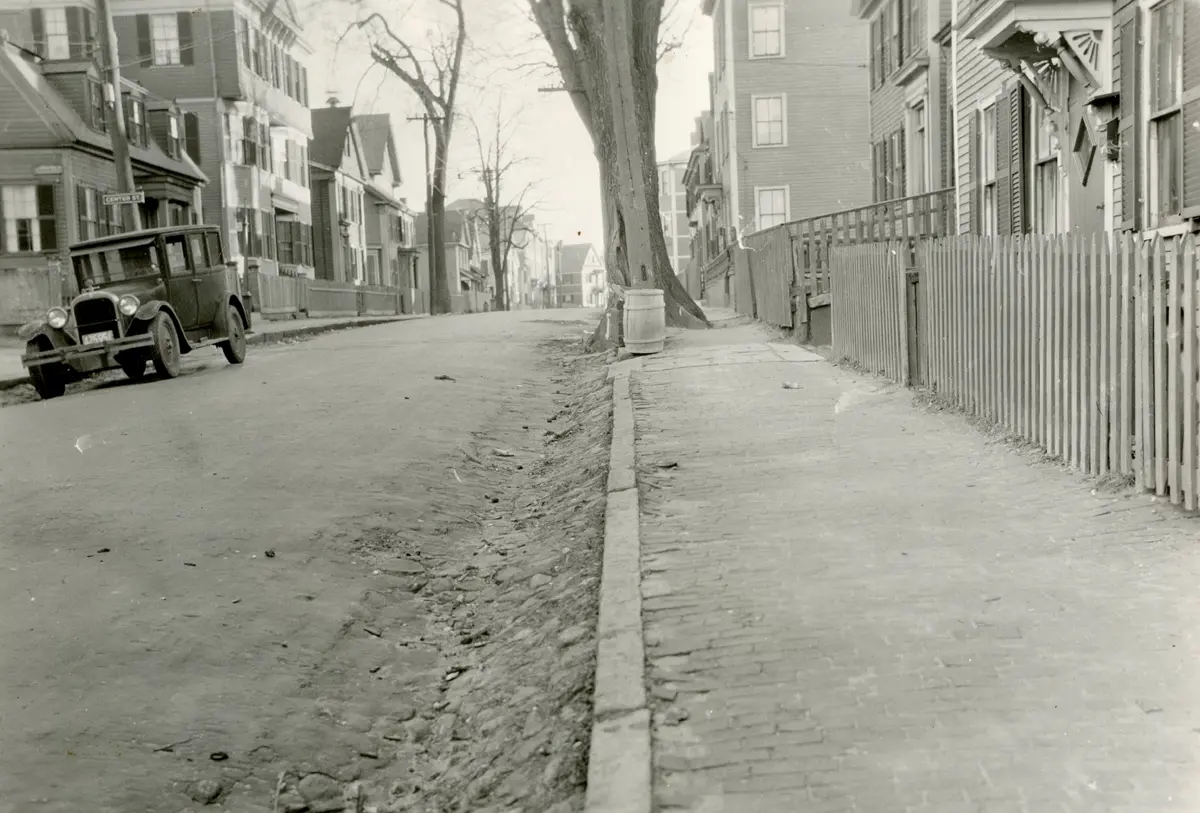
Chapel Street looking south in 1929, City Engineers Collection, #1670-OP.
The economic boom experienced by many Lowellians during the Second World War began to fade as early as 1945. Conditions worsened over the next decade as the city steadily lost population. Despite prosperity and housing developments in the area’s suburban communities, very little new construction occurred anywhere in Lowell.
In Back Central there had been virtually no new buildings erected since the 1920s. But during this decade home ownership among Back Central’s Portuguese began to rise. Unlike many other property owners in the neighborhood, notably the Irish who remained the major holders of Back Central rental units, the Portuguese lived in the homes they purchased. The considerable care they gave to their property, including the many renovations they undertook, was widely noted in local newspapers.
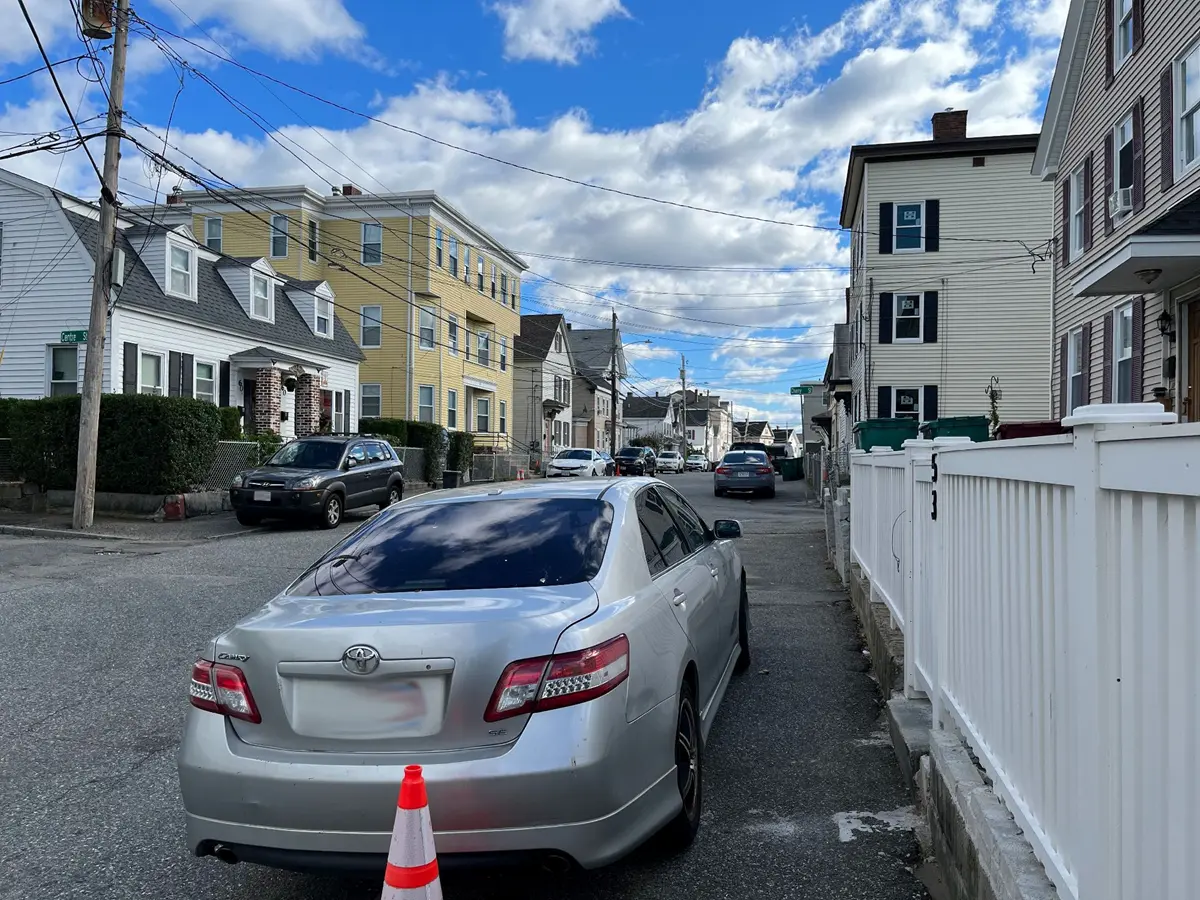
Chapel Street looking south in 2023.
Moreover, Back Central became known for the many gardens and grape arbors that flourished in the yards of Portuguese homes. These increased with the second great wave of Portuguese (primarily Azorean) immigration in the 1960s. Gardens and frontages often included religious and emblematic imagery, especially small shrines created by the homeowners or skilled artisans, and decorative mosaics and tiles can be seen on the exterior of many homes.
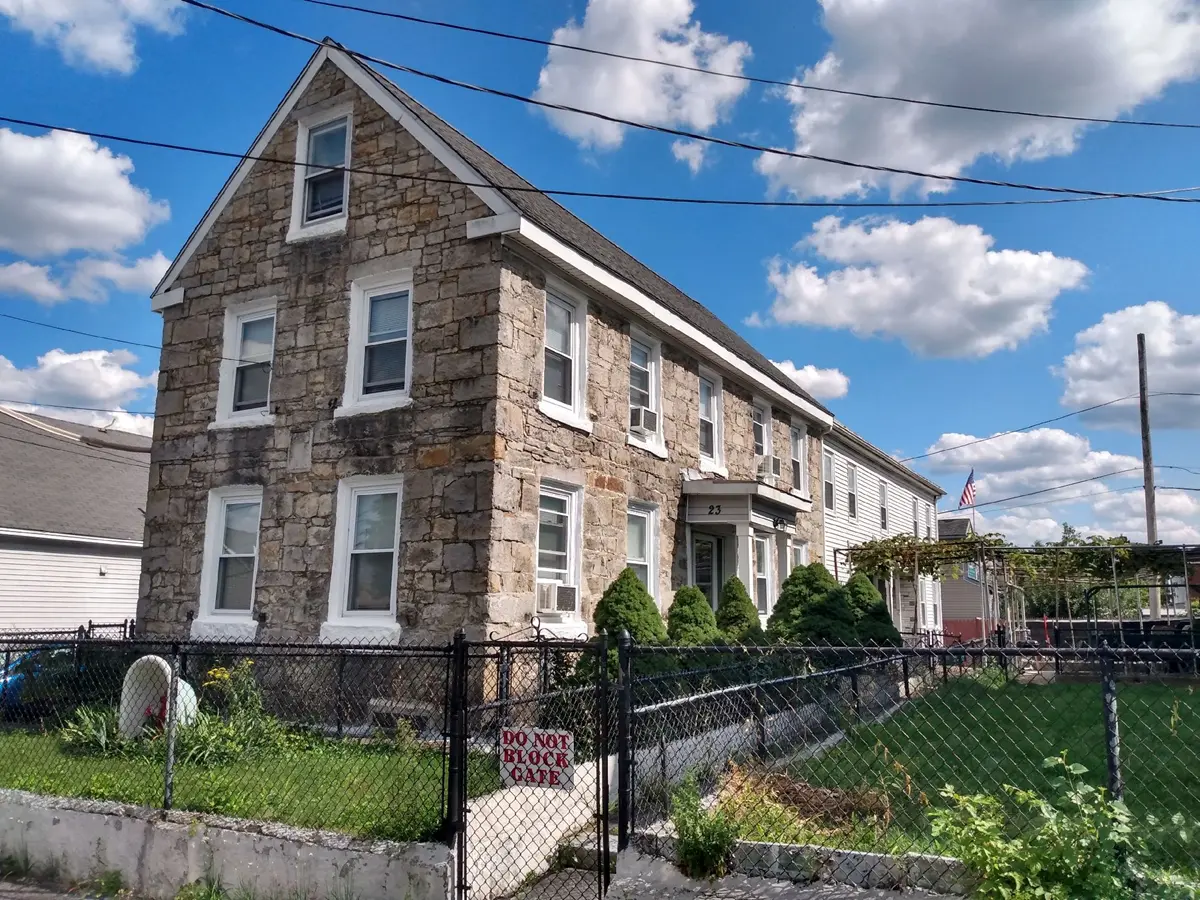
The c. 1825 Federal Style home at 23 Ames Street came into Portuguese ownership in the 20th century and has both a shrine and an arbor.
Businesses and clubs still centered around Central and Charles Streets. Frank Leandro’s fish market at 431 Central Street drew Lowellians from across the city and the Portuguese American Center (PAC) replaced their club with a new brick structure in 1976 that remains on the site today. Across Charles Street from the club a memorial space was created in 2000 for veterans that also includes a memorial marker for Humberto Correia, a long serving president of PAC. However, economic hardship persisted into the 1950s and some sections of Back Central, notably to the west of Gorham Street, in the vicinity of Winter Street, experienced severe urban blight.
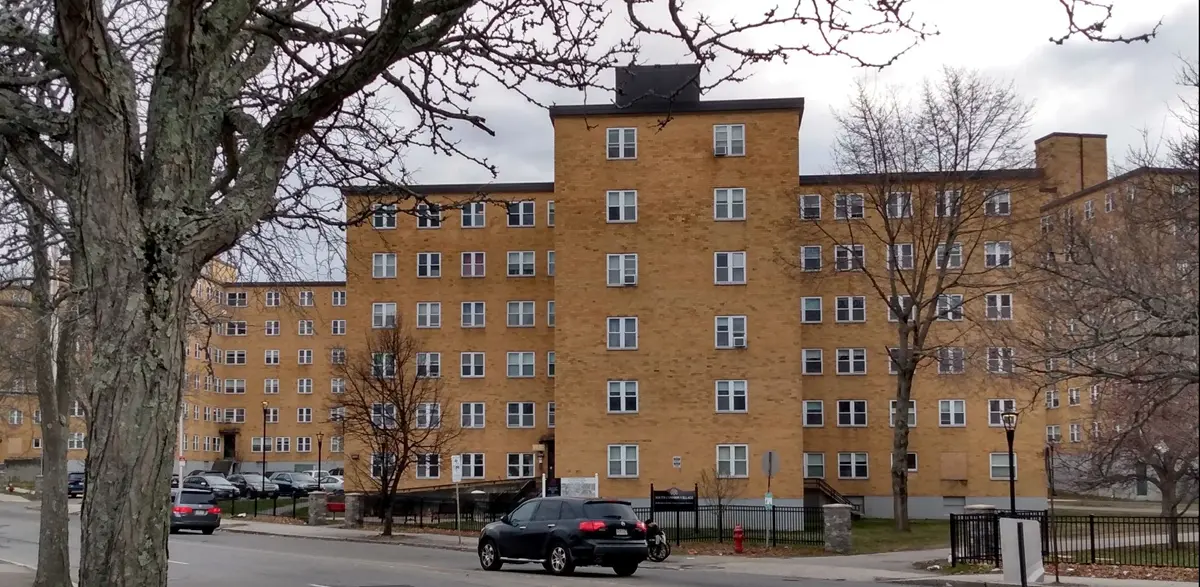
The Bishop Markham Housing Project, 2023.
As a remedy, city officials pushed for two major urban renewal projects by the late 1950s that both physically and visually isolated the Back Central neighborhood. One was the Bishop Markham Village, between Gorham Street and the South Common, planned as an ambitious public housing project. The second, called the Church Street Redevelopment, later known as Central Plaza, was aimed to generate commercial growth for Lowell’s struggling economy. When completed in 1958 the federally funded Bishop Markham Village boasted two seven-story and four-six story high-rise apartments, along with the several three-story units. All were stark, unornamented beige brick buildings, typical of the period’s public housing architecture.
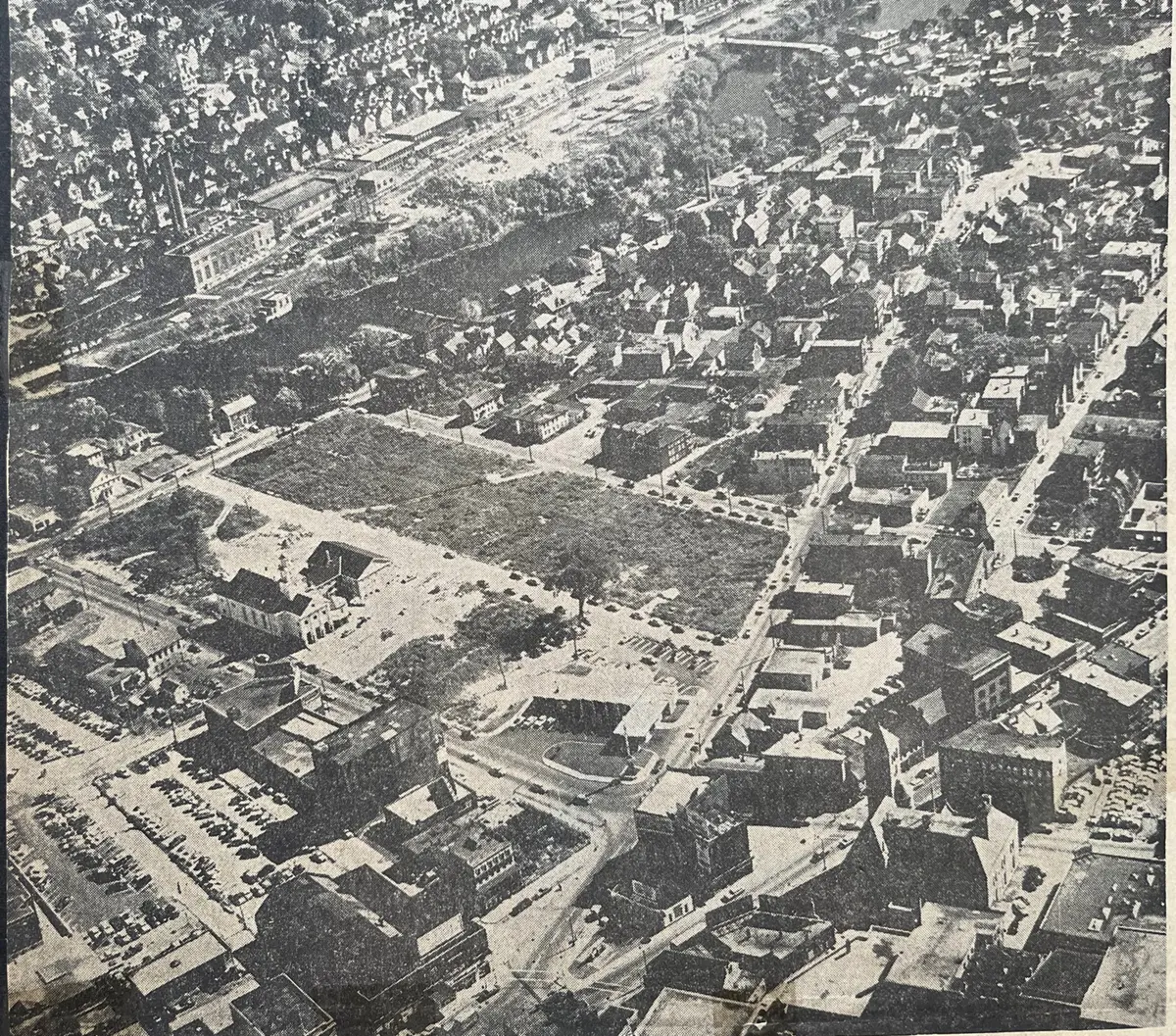
An aerial shot of the cleared site for the Central Plaza project, Lowell Sun, Nov. 13, 1960.
About the time that Bishop Markham Village was nearing completion, the city began to demolish a seven-acre area between Church, Tyler, and Charles streets. For Lowell’s City Planner Charles Zettek and his team, the site gave them the chance to bring in modern businesses with plenty of parking. Two regional chains anchored the ends of the strip, a Stop and Shop grocery store and a Zayre Discount Store, with smaller businesses in between. Completed in 1962, Central Plaza opened to great fanfare. The style was unabashedly Mid-Century Modern, forsaking any reference to historic ornament and relying instead on concrete, steel, and large plate glass windows. In addition to eradicating Tyler Street, the wholly north-facing orientation of the strip diminished access and physical integration with the neighborhood of Back Central to the south.
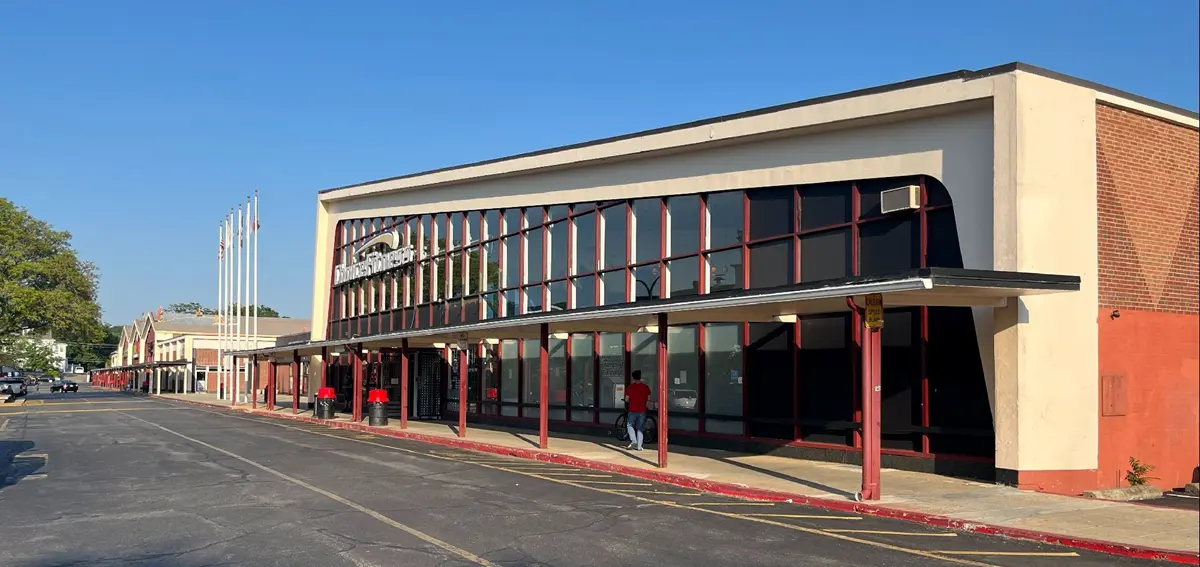
Central Plaza on Church Street, 2023.
The lone surviving historic structure, the ornate First Baptist Church (originally built in the 1830s, enlarged in the early 1900s) and notable for a young Dr. Martin Luther King, Jr., preaching there to the congregation in 1953, stood in marked contrast to the shiny new, modern plaza. From the church tower, however, the many historic and architecturally rich buildings that remain are clearly visible to the south rising upwards on the prominent hill, the defining natural feature of Back Central.