At a Glance
Year: 2027
Major: Biology (English Minor)
Activities: Honors College, Immersive Scholars Program, Leading, Engaging, and Advising Fellows (LEAF)

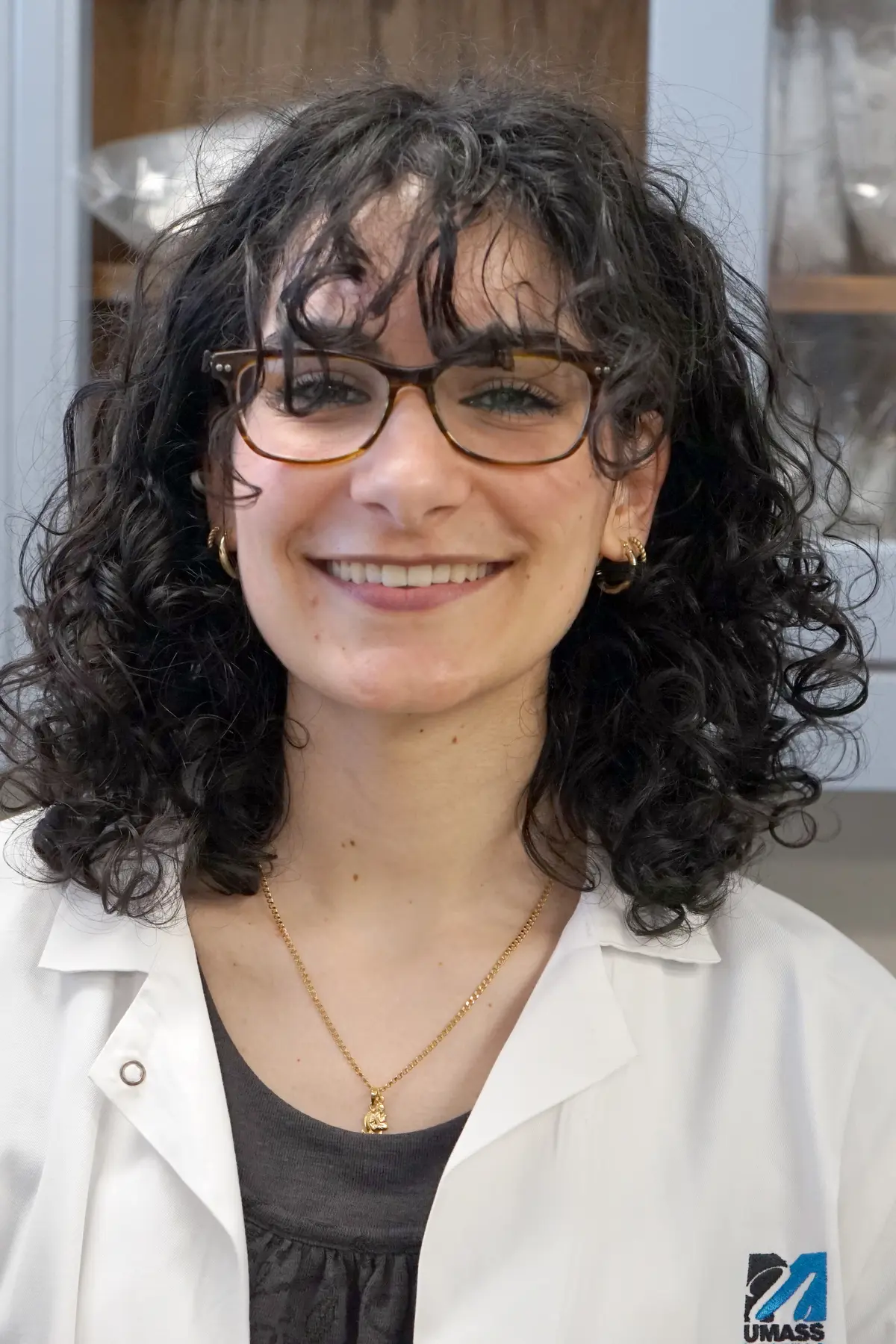
Biology major Branae Craveiro has always been fascinated by ecosystems. Her first fieldwork experience: studying the crabs and snails she collected at the beach when she was young.
After watching a documentary about fish in high school, the Peabody native knew she wanted to pursue marine biology. She didn’t think it was plausible, though, until she learned about the work of Sarah Gignoux-Wolfsohn, an assistant professor of biology at UMass Lowell.
“I have had a hard time imagining a life without the ocean in it, so finding a marine biology lab at UMass Lowell was very exciting,” says Craveiro.
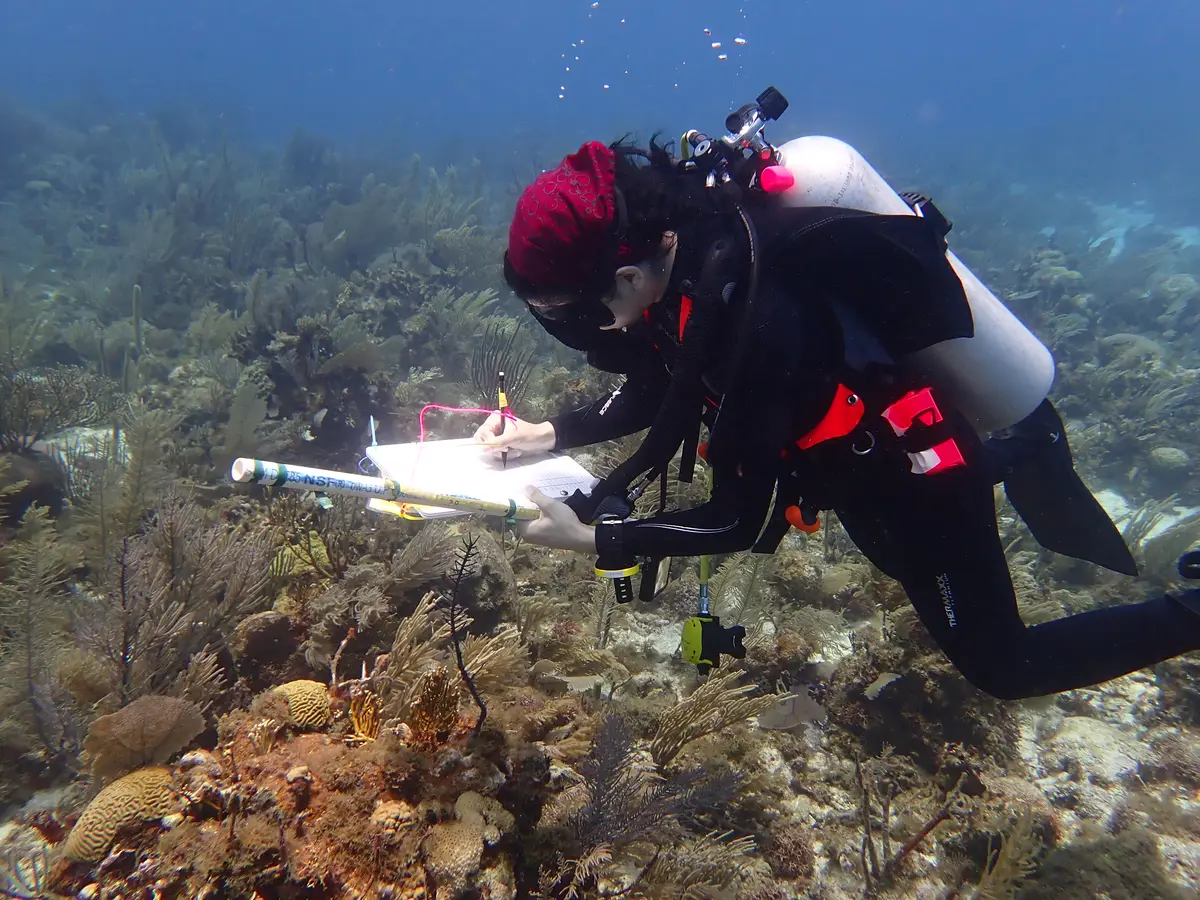
As a member of Gignoux-Wolfsohn’s lab, Craveiro traveled to Belize at the end of her junior year. There, they completed several scientific dives to collect data on stony coral tissue loss disease, which is affecting many of the coral reefs in the area.
For her honors thesis, Craveiro is looking at how coral-algae relationships are changing in response to bleaching. While most of her research focuses on samples from Panama, she was excited to see coral in real life for the first time in Belize.
“I got to see the organism I had been studying for the past two years, making the trip extra-special to me,” she says.
Through a collaborative program hosted by UMass Amherst’s Gloucester Marine Station, Craveiro earned her scientific diving certification from the American Academy of Underwater Sciences. UMass Lowell is a participating institution.
“We were doing three or four dives a day, but I never felt tired. I was having too much fun,” says Craveiro.
A few weeks after the Belize trip, Craveiro got to dive again, this time in Fort Lauderdale, Florida. Working with Leah Harper, a marine biologist from the Smithsonian MarineGEO program, Craveiro conducted a reef life survey. She was trained on how to collect the data, which went into the program’s global database.
“A big part of science is to make sure your data is accessible to everyone, so how we standardize collecting it is important,” says Craveiro.
That commitment to making science understandable and accessible also led Craveiro to minor in English.
“For Belize, a huge part of our mission and our grant was sharing our research and reason for being there with the local population,” she says.
During her junior year, Craveiro won a $7,500 Goldwater Scholarship, a competitive national scholarship that supports the next generation of researchers in science, technology, engineering and mathematics.
She also received the 2026 Sherry Reed Memorial Undergraduate Marine Conservation Scholarship, which included a $1,500 award to support her research.
Craveiro, who sees graduate school in her future, is grateful for the opportunities that she’s been given to explore at UMass Lowell.
“I feel like the more you learn about something, the more you can appreciate it,” she says.
“Put yourself out there, email professors, use your resources and get into research early.”