
Topics: Faculty & Staff Sciences Research
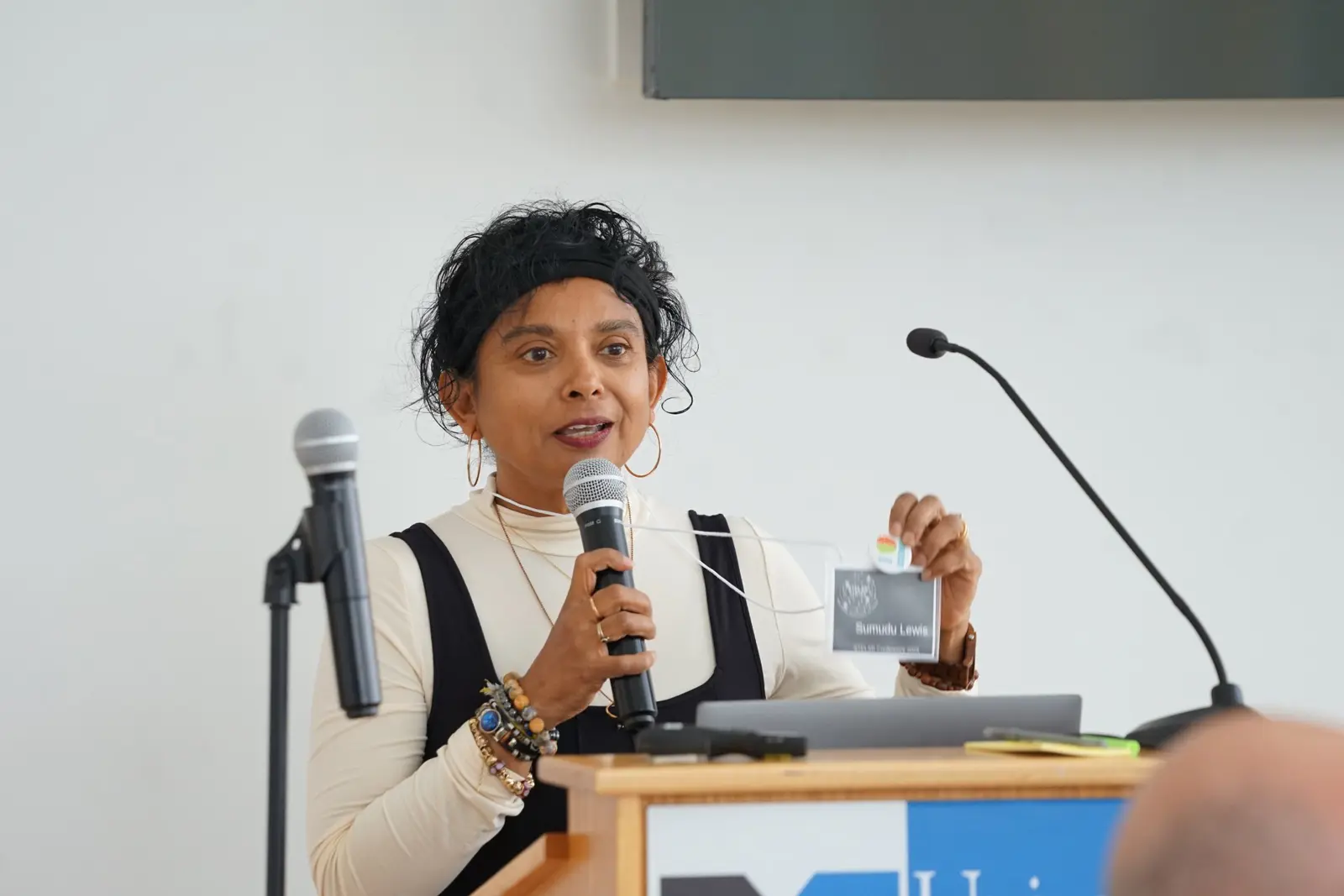 Image by Edward Brennen
 Education Clinical Professor Sumudu Lewis, director of the UTeach program, an education minor that prepares STEM majors for teaching careers, won the 2026 Manning Prize for Excellence in Teaching at UMass Lowell.
Education Clinical Professor Sumudu Lewis ’15, who directs the UTeach program, an education minor that prepares undergraduate STEM majors for teaching careers, found out on her birthday that she had been awarded this year’s Manning Prize for Excellence in Teaching.
“It came as a real surprise,” Lewis says. “It was a wonderful birthday.”
At the time, Lewis was in Taiwan with other university faculty and staff members to see how they could partner with National Pingtung University. Among other collaborations, Lewis hopes to take UTeach and Honors College students there to study abroad next year.
Study abroad for UTeach students is just one of several initiatives that won Lewis the Manning Prize, which is awarded annually to one faculty member at each of the five UMass campuses. Established in 2015 by alumni Robert ’84, '11 (H) and Donna Manning ’85, ’91, '11 (H), the $10,000 awards honor faculty who excel in serving students and the campus community.
“Sumudu is a teacher’s teacher. She gives herself to students with full heart and devotion to the UTeach program,” says Art and Design Associate Professor Karen Roehr, one of two faculty members who nominated Lewis for the award.
“Alums from UTeach credit her passion for teaching with igniting their own. Many K-12 teachers stand on her strong, STEM-ed teaching shoulders,” Roehr says. “Sumudu is also a generous and collaborative colleague.”
Lewis, who gives workshops in a summer program for incoming first-year engineering students and trains engineering learning assistants in effective teaching methods, was also nominated by Electrical and Computer Engineering Professor Kavitha Chandra.
Lewis says that she strives to inspire her students in science, technology, engineering and math (STEM) with the same kind of inquiry-based teaching and learning that captured her imagination when she was 13 years old.
That’s when Lewis, whose family had emigrated from Sri Lanka to England when she was 8, fell in love with chemistry through a class she was taking.
“My parents got me a chemistry set, and I started mixing things,” she says. “I really liked how science explained a lot of things I was curious about. And when you have an explanation, it’s very satisfying.”
At university, she double-majored in biology and chemistry, then went on for a doctorate in chemistry at the University of Sussex, “just because I was really good at it.”
But the specialization required for a research career didn’t satisfy her curiosity about such broader scientific questions as “How did life start? How did life evolve? How did humans develop?”
When Lewis first began teaching as a postdoctoral researcher at the University of Bangor in North Wales, she realized that being in the classroom allowed her to share her love of science while satisfying her own boundless curiosity.
“Most of my questions about science got answered when I started teaching because I had the same questions my students had, so I would just go and do my research,” she says. “I always found myself reading up on new things, new scientific discoveries, and thinking, ‘How did they do that?’”
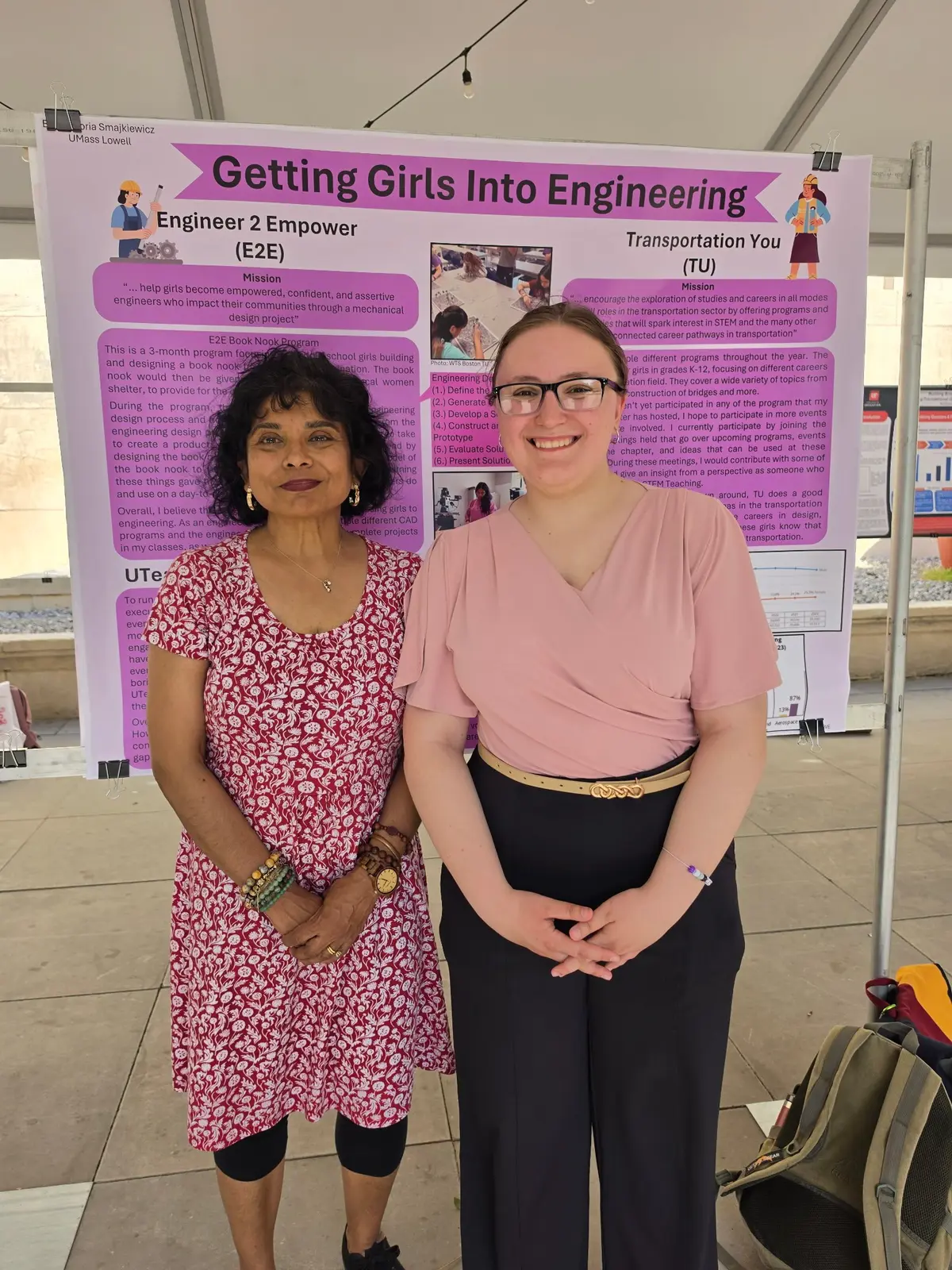 Image by Alex Eden
 Lewis and UTeach student Wiktoria Smajkeiwicz, a civil engineering major who presented a poster at the 2026 UTeach STEM Educators Conference in Austin, Texas.
After 10 years of teaching chemistry in London high schools, Lewis came to UMass Lowell and worked as a teaching assistant while earning a second doctorate in education. Partway through her degree program, she was hired as a master teacher for UMass Lowell’s UTeach program, which is part of the national UTeach network.
Now, as the program’s director and sole instructor, Lewis passes on inquiry-based teaching methods that help schoolchildren understand the scientific method through their own projects, experiments and discoveries.
But Lewis is always looking for ways to do more. In 2024, she started a study abroad program for her UTeach students and other education students at the University of Sussex, her alma mater.
The UMass Lowell students spend three days working as classroom assistants to math and science teachers in three different English schools, and they spend three days at the university working on projects that compare the English and American education systems.
“They get exposed to seeing how teachers teach and students learn in a different environment,” Lewis says. “England has a national curriculum. They get to see the content and how the teaching methods are the same or different from U.S. methods.”
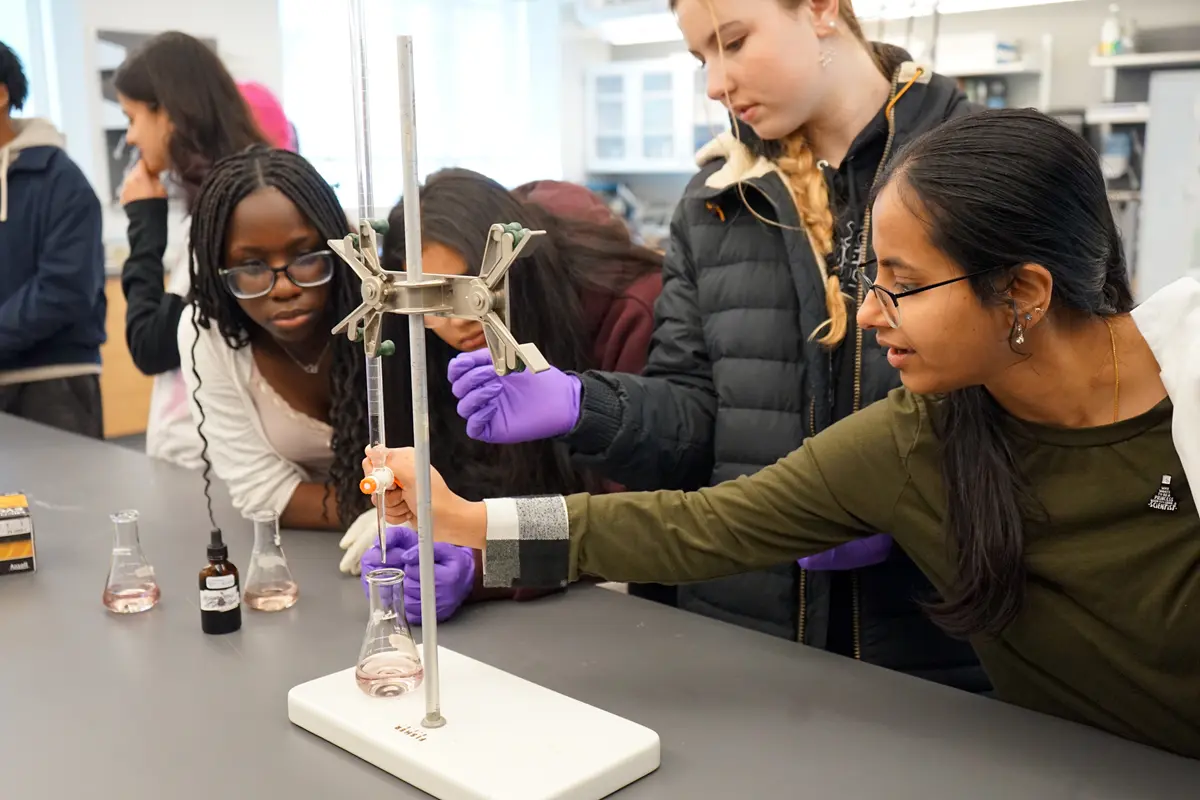
Lewis also helped to organize the first Women and Girls in STEM Day at UMass Lowell this year, bringing more than 100 students from area high schools to campus to learn from and with women professors and graduate students. It was held on Feb. 11, designated by UNESCO as the International Day of Women and Girls in Science.
Also, Lewis, Mechanical and Industrial Engineering Associate Professor David Willis and Biomedical Engineering Assistant Professor Yanfen Li are looking to start a new STEM Teaching, Educator Learning And Research (STELAR) center, where students and faculty can collaborate on innovative approaches to STEM research and teaching.
They are working on a grant to fund the establishment of the center, which would also partner with industry and the community, Lewis says.
The inaugural STELAR Conference was held last fall, and the three continue to host smaller events that they call “Starbursts,” which bring together faculty to discuss best practices for using AI in their research and in the classroom.
Lewis also sometimes teaches Chemistry I in the fall, and she puts on workshops for middle school teachers through the National Math and Science Initiative.
Through everything she does, she gets the satisfaction that comes with continual learning and collaboration.
“I always want to be constantly challenged,” she says.

