
 Image by Ed Brennen
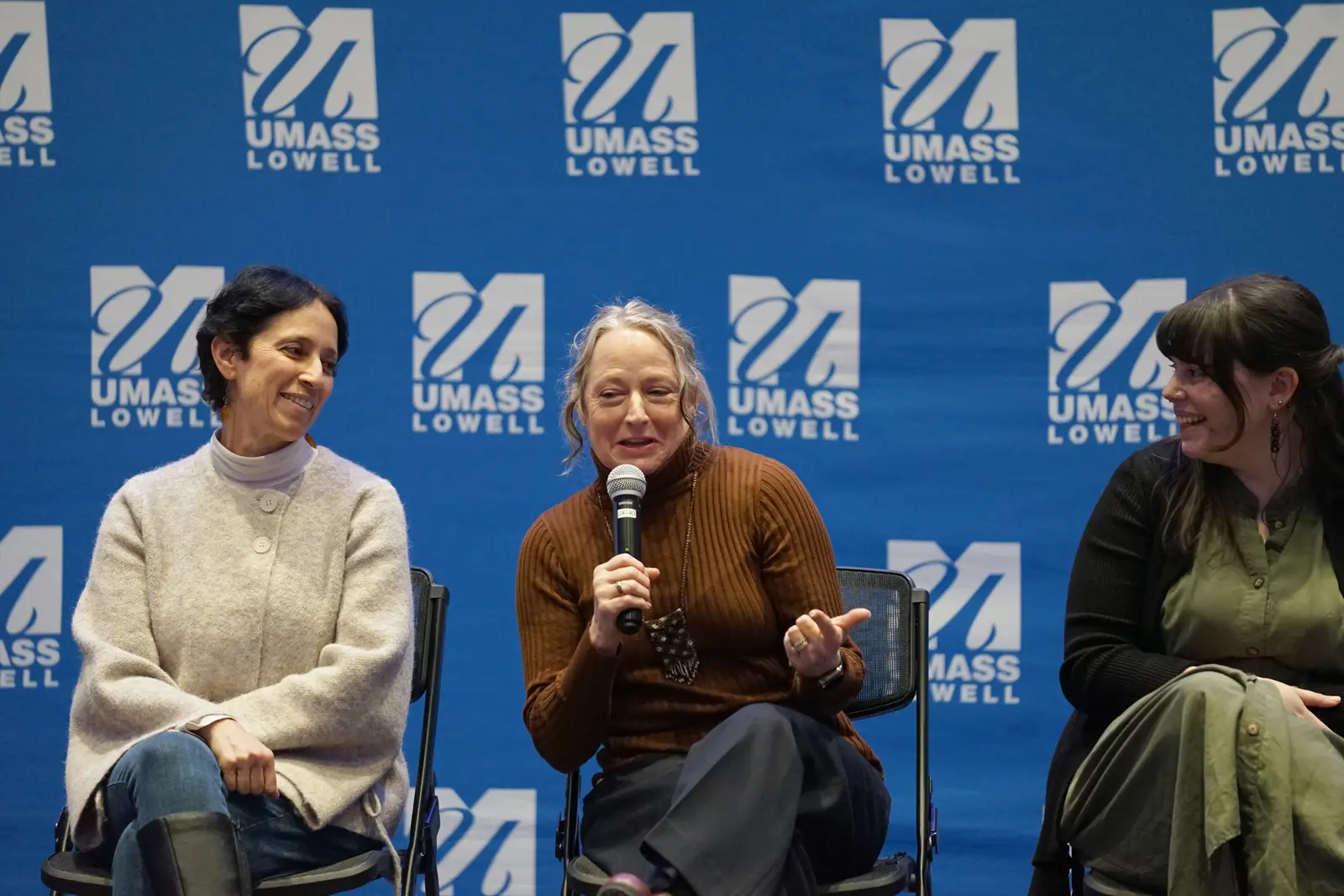
Associate Professor of Marketing Ann Kronrod, left, and Library Access Services Associate Zoey Mills, right, listen as Honors College Dean Jenifer Whitten-Woodring discusses her derailed acting career during the recent Failure Showcase at the Meehan Student Center.
Growing up in Chapel Hill, North Carolina, Jenifer Whitten-Woodring was determined to become an actress.
But after being rejected from the acting program at the University of North Carolina School of the Arts and later cut from Boston University’s theatre arts program during her third year, Whitten-Woodring had to find another path.
She went on to become an award-winning journalist, political scientist, professor and dean of UMass Lowell’s Honors College.
Whitten-Woodring, along with eight other faculty and staff members, recently shared her story at the Honors College’s inaugural Failure Showcase, an event designed to show students how setbacks can lead to unexpected opportunities.
“When things go bad and you think you’ve hit rock bottom, if you can manage to just pull yourself together, you’ll find your inner power,” Whitten-Woodring told students.
Held at the Meehan Student Center as part of the annual Honor Yourself Week, the event featured stories of academic setbacks, career disappointments, mental health struggles and personal upheaval.
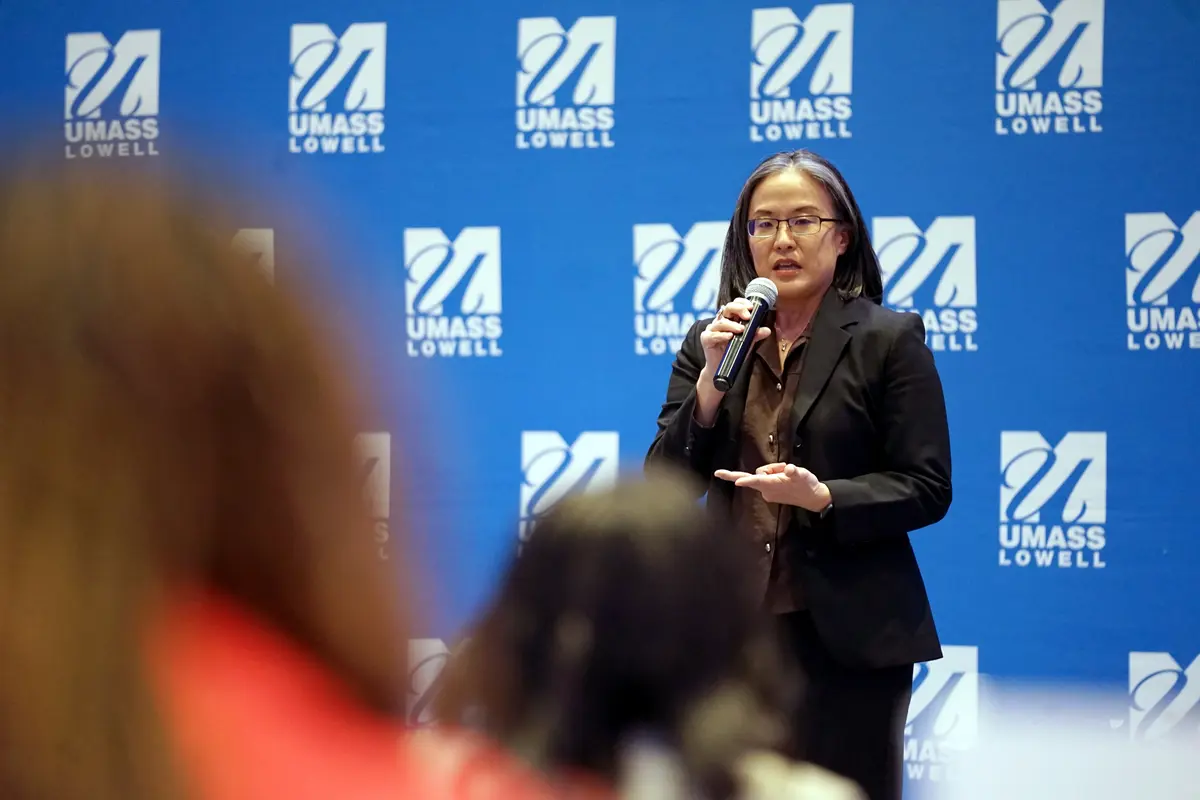 Image by Ed Brennen
Sue Kim, dean of the College of Fine Arts, Humanities and Social Sciences, tells students about her early college struggles during the Failure Showcase.
“You see their titles: provosts, deans, faculty, authors,” Maitland said. “And we don’t always see the journey, the obstacles, those failures, those pivots, those grappling with ideas of having to ‘start over.’”
Provost Lynne Cossman shared a lifetime of setbacks. She dropped out of college as a sophomore because her grades were so poor that she was about to be dismissed. She worked at a sunglasses store before returning to school, later struggled in graduate school and failed her comprehensive exams.
None of those experiences felt like preparation for a career in academic leadership, Cossman said. But she kept moving forward, eventually becoming a professor, department head and university administrator before being named provost.
“I’m not here because I avoided failure,” Cossman said. “I’m here because I kept going after failure.”
Sue Kim, dean of the College of Fine Arts, Humanities and Social Sciences, spoke about leaving college while struggling with depression and an eating disorder. She took a medical leave, sought treatment and returned to school with a new understanding of the importance of mental health.
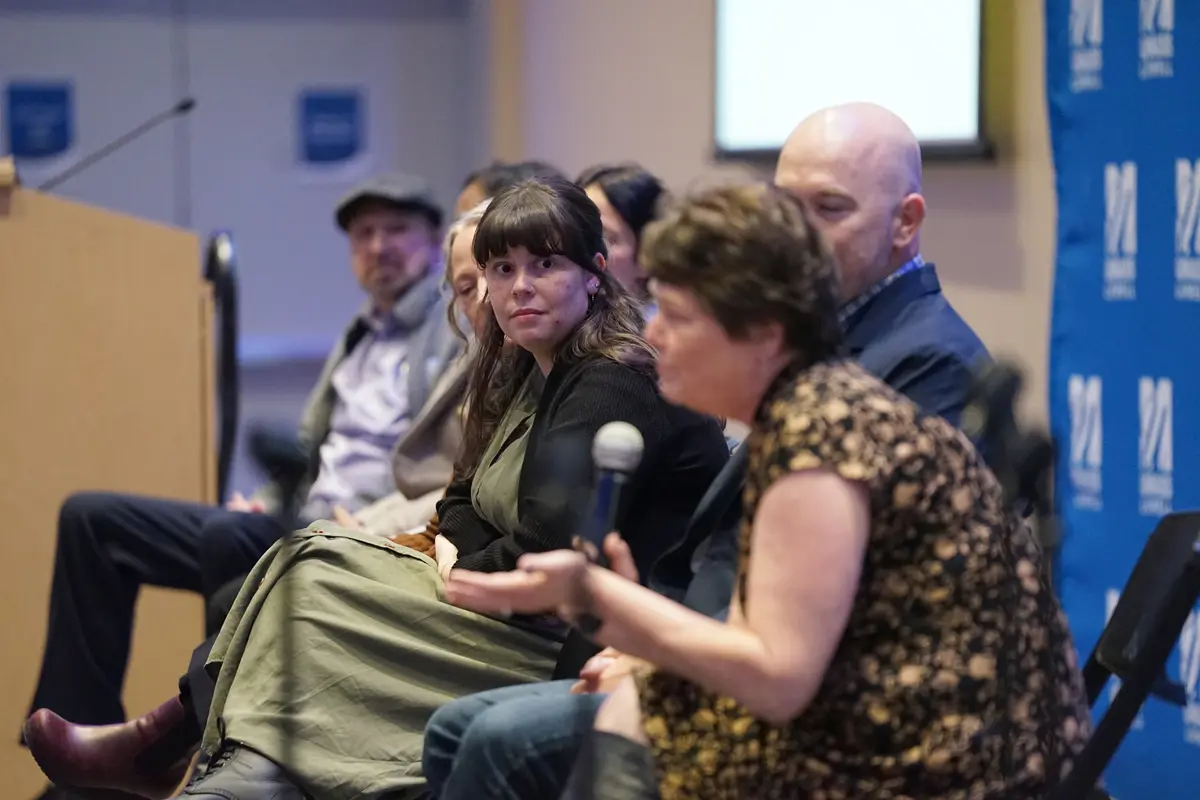 Image by Ed Brennen
Provost Lynne Cossman talks about dropping out of college as a sophomore while fellow Failure Showcase speakers look on.
What felt like the end of the world at the time, she said, became the beginning of a life in which she could “succeed, flourish and take risks.”
Ann Kronrod, an associate professor of marketing in the Manning School of Business, described being dismissed from her first Ph.D. program, denied a Fulbright scholarship and rejected for 53 jobs.
Eventually, she found a position at UMass Lowell that valued the connection between her background in linguistics and her research in marketing.
“Don’t waste your time on anyone who cannot appreciate you,” Kronrod told students.
Jimmy Boucher, a lab manager in the Francis College of Engineering, entered a biomedical engineering Ph.D. program believing it would lead to a career in teaching. But he struggled to find fulfillment in the research and questioned whether the program was the right path.
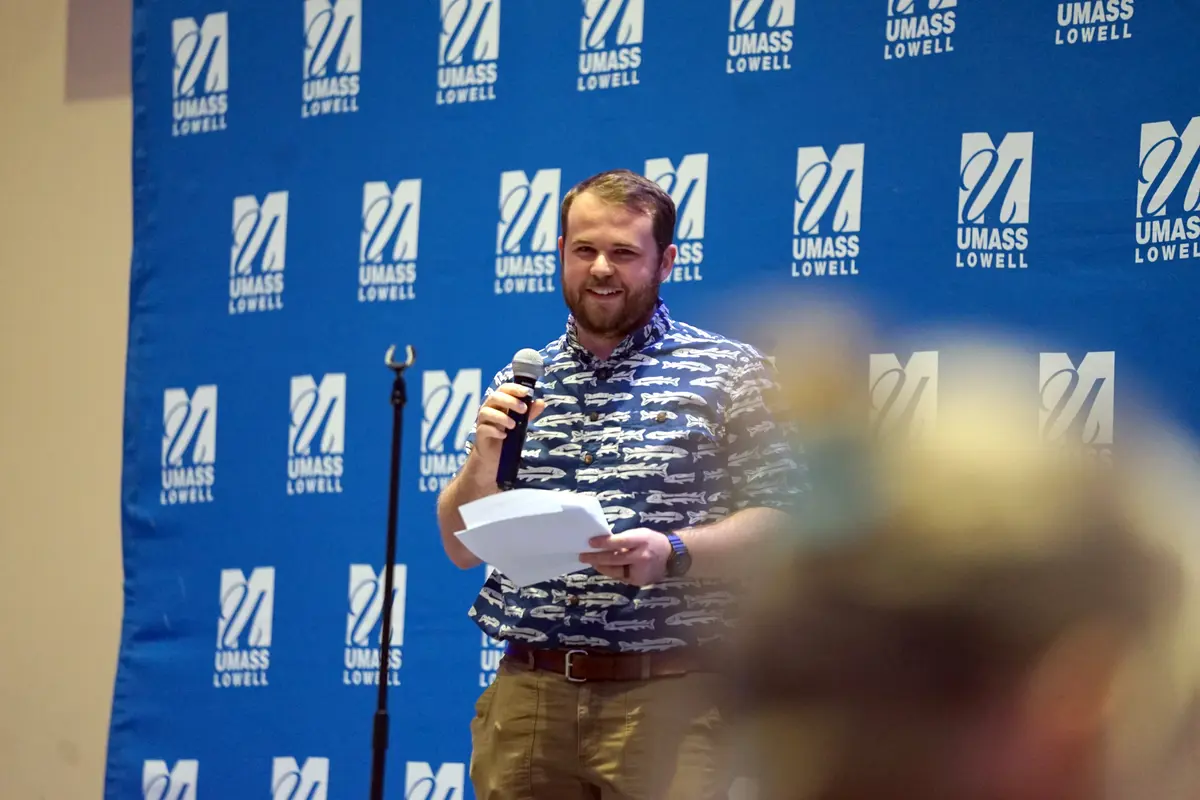 Image by Ed Brennen
Francis College of Engineering Lab Manager Jimmy Boucher shares with students his start-and-stop path to teaching.
“I didn’t really abandon the dream of teaching,” Boucher said. “I just changed the path.”
Other speakers included Bertie Greer, dean of the Manning School of Business; Julian Zabalbeascoa, associate director of the Honors College; Bob Giles, professor emeritus in the Kennedy College of Sciences; and Zoey Mills, library access services associate.
As each speaker left the stage, they received a Phoenix Award — a symbolic reminder that failure can be followed by renewal, growth and a new beginning.
The stories struck a chord with students who attended the event, including Chelsea Tabi, a sophomore nursing major from Raynham.
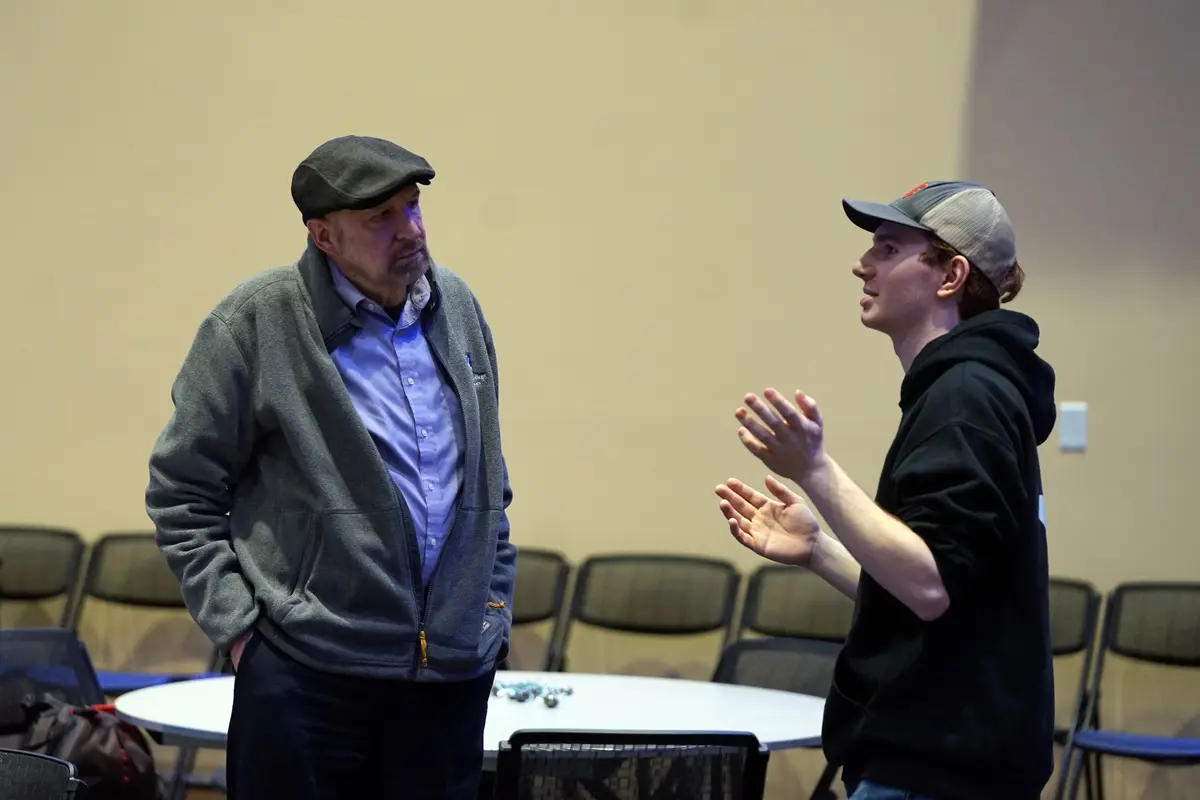 Image by Ed Brennen
Sophomore electrical engineering major Joshua Curtis, right, says he was surprised to hear that Kennedy College of Sciences Professor Emeritus Bob Giles, left, nearly gave up on his physics career.
Joshua Curtis, a sophomore electrical engineering major from Acton, was especially surprised to hear Giles discuss nearly leaving physics. Curtis is working with Giles on an honors project that involves teaching electronics to mechanical engineering students in Haiti.
“He’s done so many incredible things in physics, and he’s such an integral part of the Honors College,” Curtis said. “It really was surprising that he took a stutter step there.”
Virginia Zelaya, a sophomore criminal justice major from Auburn, said the speakers showed how personal and academic setbacks can redirect someone’s life in a positive way.
“The whole thing was super-inspiring,” she said. “It really does help you reflect on your own life.”
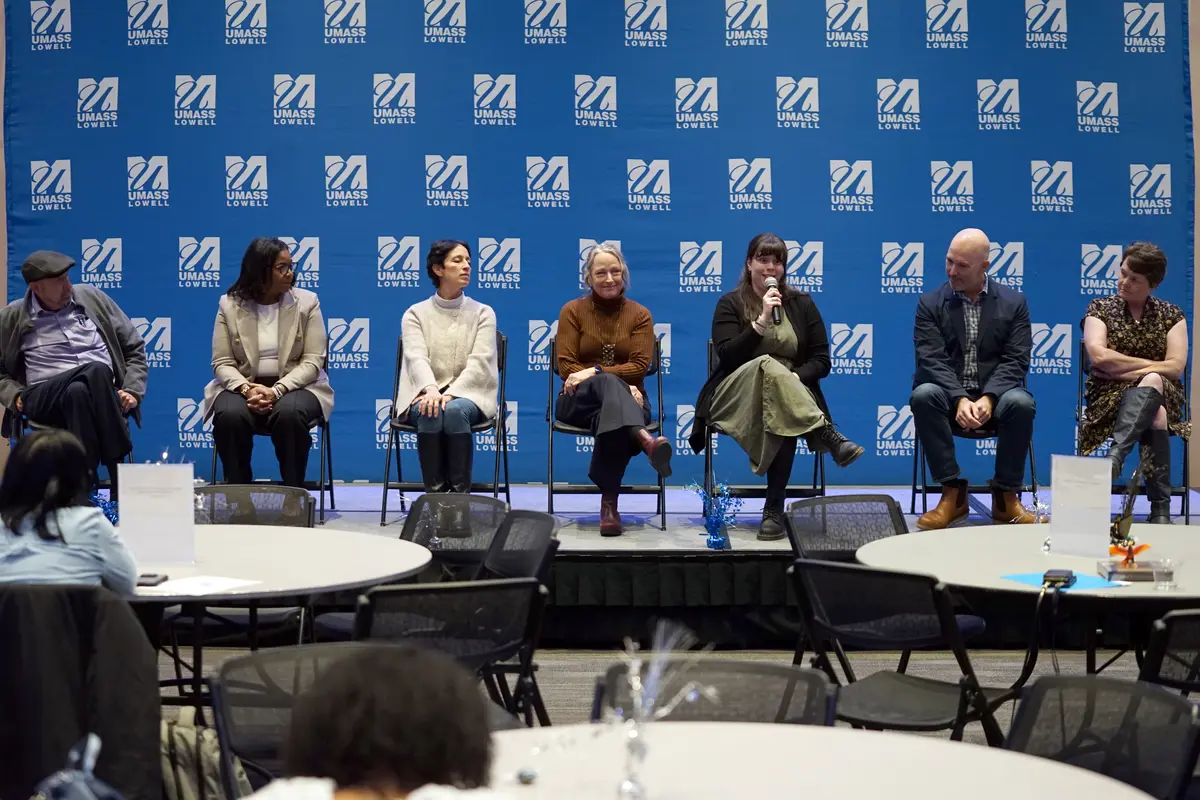 Image by Ed Brennen
Failure Showcase speakers participate in a Q&A with students following their talks.