
 Image by Ed Brennen
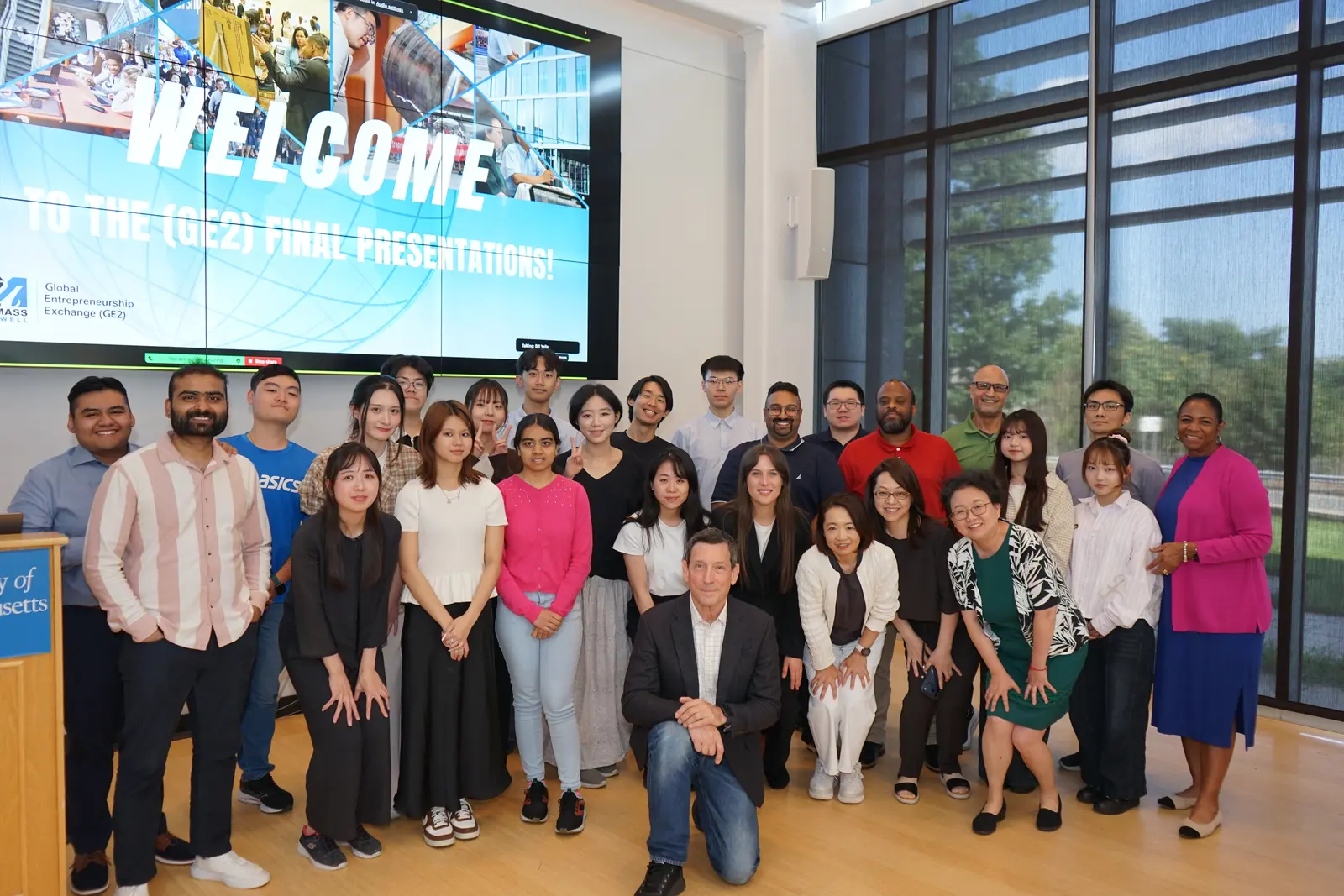
 Since launching in 2014, UMass Lowell's Global Entrepreneurship Exchange program has welcomed more than 1,500 students from over 30 countries. This summer's cohort included 23 students from Taiwan, Japan, Italy and UMass Lowell.
The first lesson for students in this summer’s Global Entrepreneurship Exchange (GE2) wasn’t about business models or market research. It was about adapting when plans change.
When a typhoon delayed the arrival of 10 students from Taiwan by two days, organizers quickly pivoted, moving the students online so they could begin meeting teammates and attending lectures before arriving at UMass Lowell.
By the end of the two-week program, they were collaborating across cultural differences and language barriers with classmates from Japan, Italy and UML, developing commercialization strategies for a promising technology developed at the university.
“Everybody helped each other,” says Annie Tai, who led the Taiwanese delegation from Ming Chuan University, a UML partner institution. “They worked until midnight in the dorm, and during weekends as well. I believe they learned a lot in this program.”
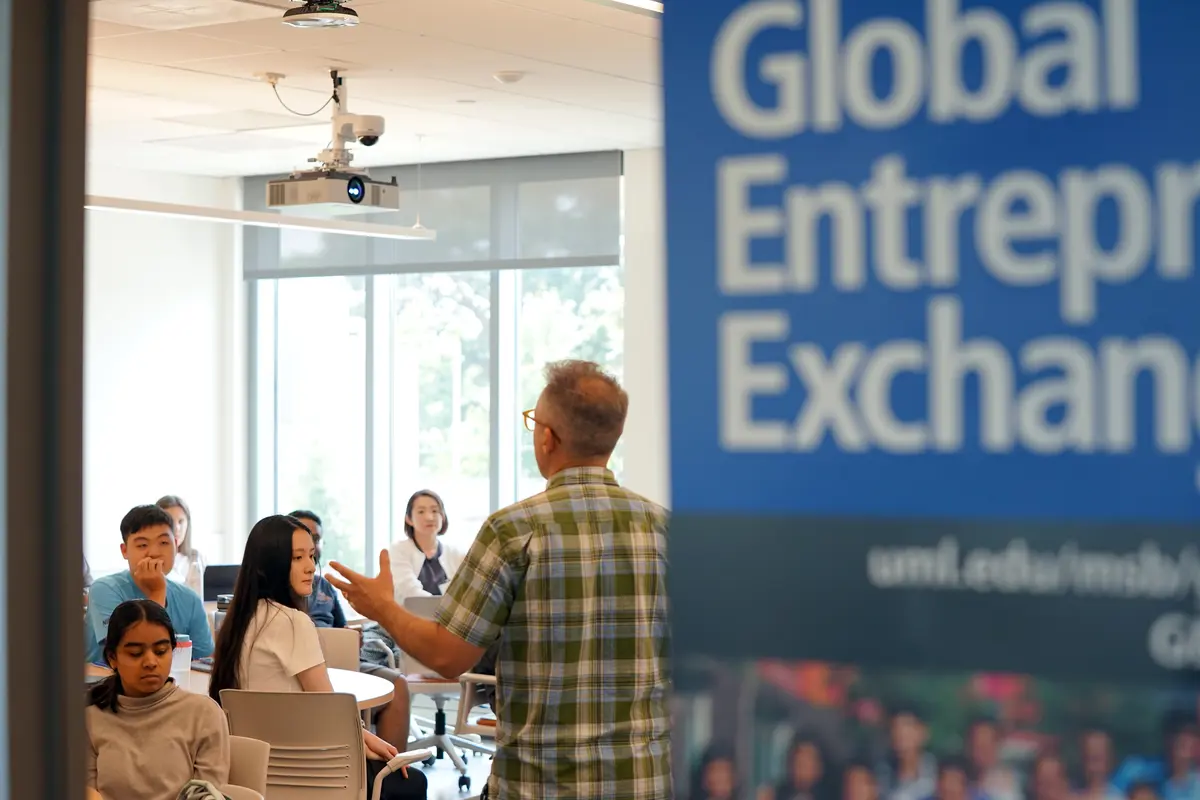 Image by Ed Brennen
 DifferenceMaker Director Richard Juknavorian leads a GE2 session on entrepreneurship at the Pulichino Tong Business Center.
Developed by Electrical and Computer Engineering Professor Xingwei Wang, CRISP-Sense uses sensors embedded in industrial microwaves to monitor heating, improving quality control and product safety. The technology is now being commercialized through Wang's startup, Exceed4U Inc., giving students the opportunity to help shape the business strategy of an emerging company.
After two weeks of research, customer discovery and business planning, the five teams presented their commercialization strategies during a final pitch competition. Their proposals were evaluated by Wang, Rist Family Endowed Dean of Business Bertie Greer, Wilson Center Director Yi Yang and Hakim Hammach, associate director of new venture development at UMass Lowell.
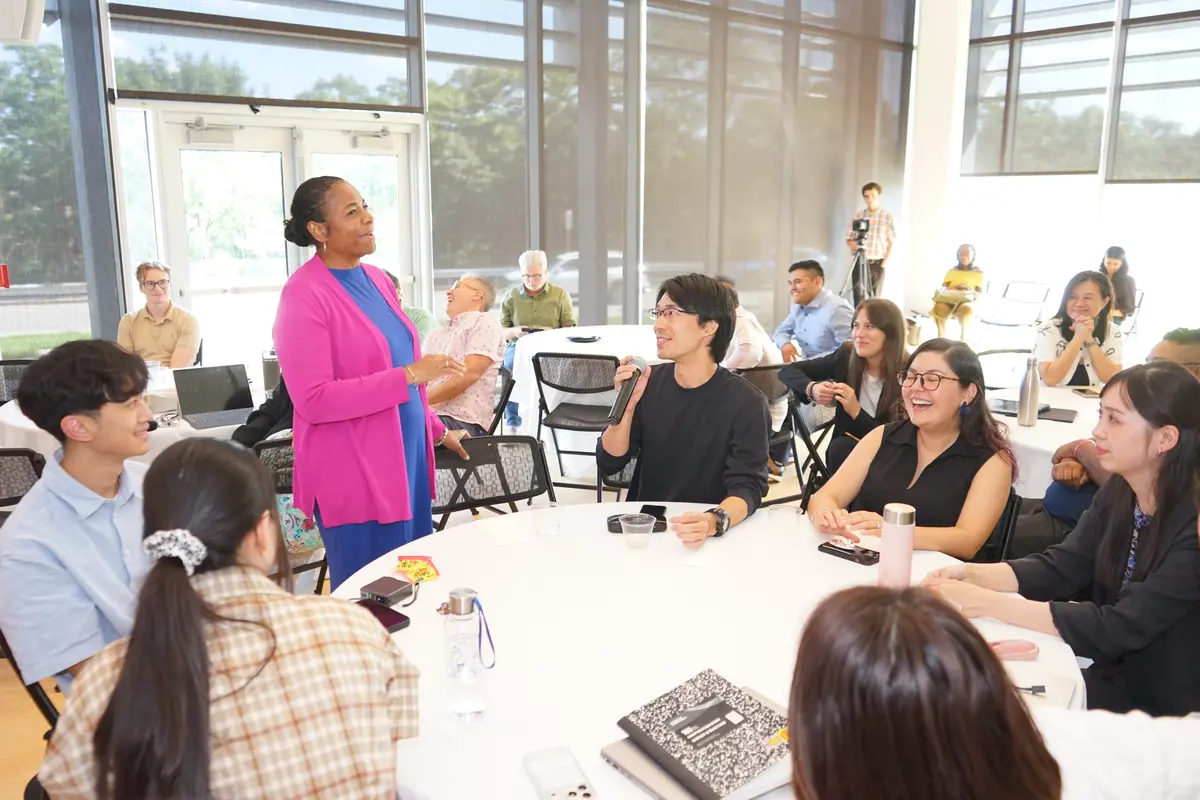 Image by Ed Brennen
 Manning School Dean Bertie Greer chats with GE2 participants during the conclusion of the two-week program at the Saab Emerging Technologies and Innovation Center.
“Their work was both inspiring and helpful,” she says. “In only two weeks, they made significant progress in understanding the technology, identifying new markets and developing thoughtful business ideas.”
Among the participants were six students from Japan enrolled in UML’s online MBA program through its partnership with Abitus, a Tokyo-based executive education firm. One of them, Ryo Akiba, helped lead the winning team, RECKY Industries. Akiba works in Michigan as a mechanical engineering leader for global automotive supplier Astemo and persuaded his employer to let him take two weeks away from work to participate in GE2.
“It’s completely different from taking classes online,” Akiba says. “You can make stronger connections with other students.”
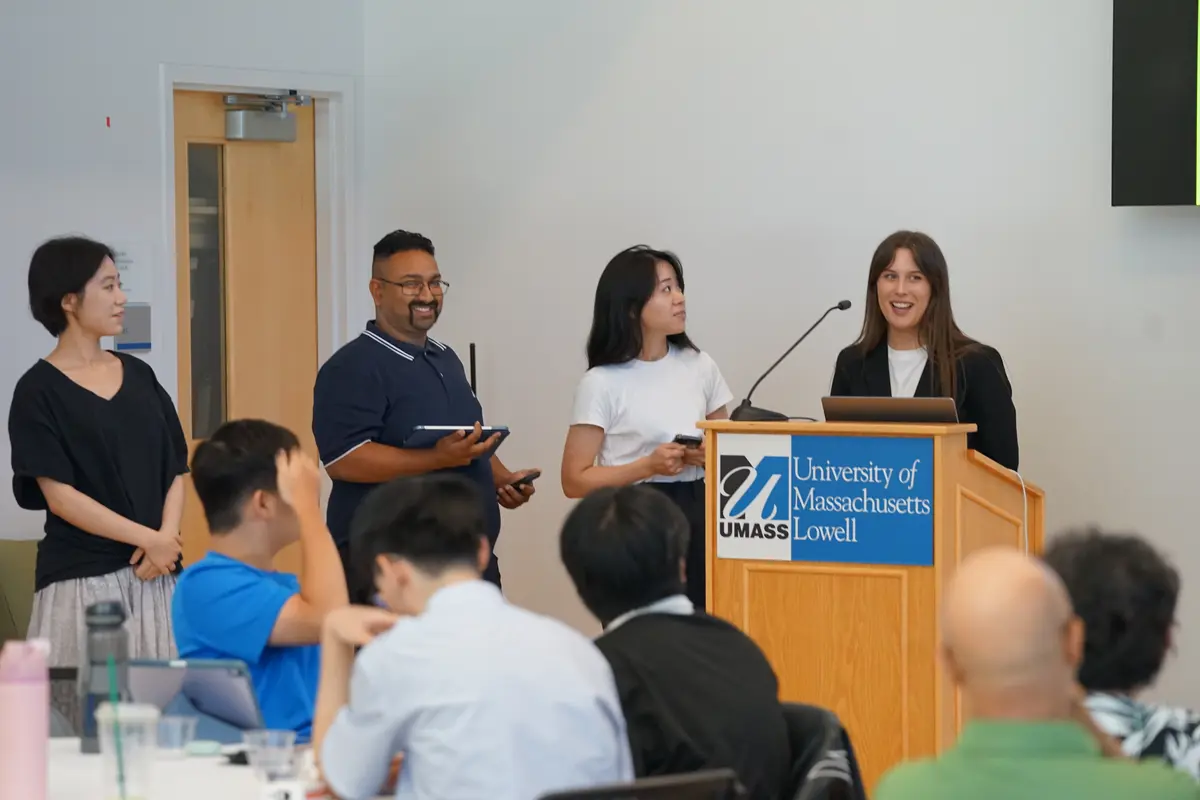 Image by Ed Brennen
 Costanza Ferre, right, a management engineering student from Milan, Italy, helps deliver her GE2 team's final pitch to judges.
“I wanted to know people from around the world,” Ferre says. “I appreciate not only the relationships with the other students, but also with the professors, because it gives me the opportunity to think about the future beyond my limits.”
Crosby Newbill, a retired Air Force veteran who is pursuing an MBA from the Manning School, called the experience “a game changer.”
“Working with classmates from Japan and Taiwan really opened my eyes,” he says. “It made me realize that I need to get better at preparing presentations for global markets. I have to develop my technology skills, as well as my understanding of the customs abroad.”
Beyond the classroom, students explored Lowell’s cluster of technology innovators in visits to UML’s Massachusetts Medical Device Development Center (M2D2), the New England Robotics Validation and Experimentation (NERVE) Center and the Fabric Discovery Center. They also toured the Massachusetts Biomedical Initiatives incubator in Worcester, explored the Lowell National Historical Park and spent time together visiting Boston and Newport, Rhode Island.
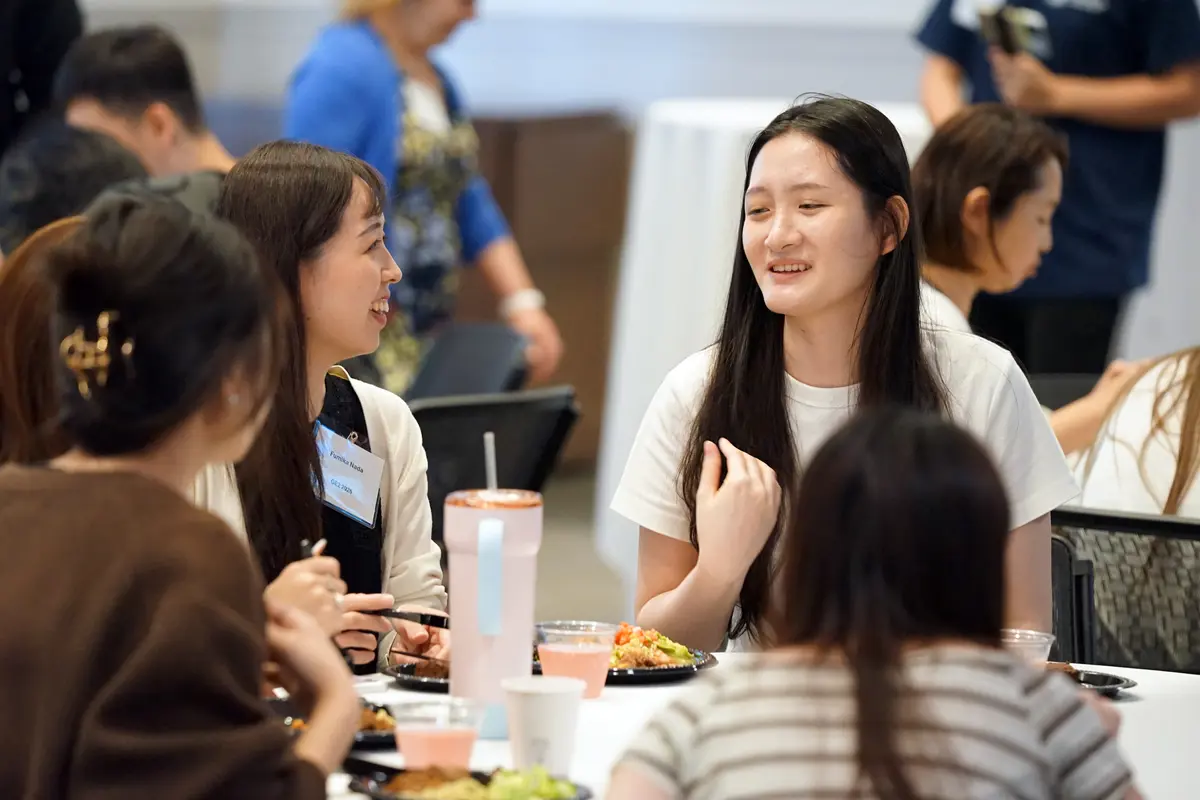 Image by Ed Brennen
 GE2 participants get to know each other during a welcome lunch at Alumni Hall.
“From the get-go, trying to figure out our game plan and learning how everybody worked was a challenge," he says. “Once we figured that out, it was smooth sailing.”
Greer says the experience equipped students with skills that will serve them throughout their careers.
“You're having to work with people from different cultures, people who don't speak your language as well as you do. You've got to solve a problem and stay true to the vision,” Greer told participants. “Communication, presentation, team building, collaboration — all of those are real skills. You will forever use them in your work environment.”
As the program concluded, visiting lecturer and GE2 leader Bill Yelle told students that his own first international experience as a graduate student helped launch a career that took him around the world. He encouraged them to think about how the relationships they built during GE2 could shape their own futures.
“I've learned a lot from you about how to work with other people,” Yelle said. “We’re all lifelong learners.”