

Outdoor Ice Skating at Lake Morey, Fairlee, Vermont
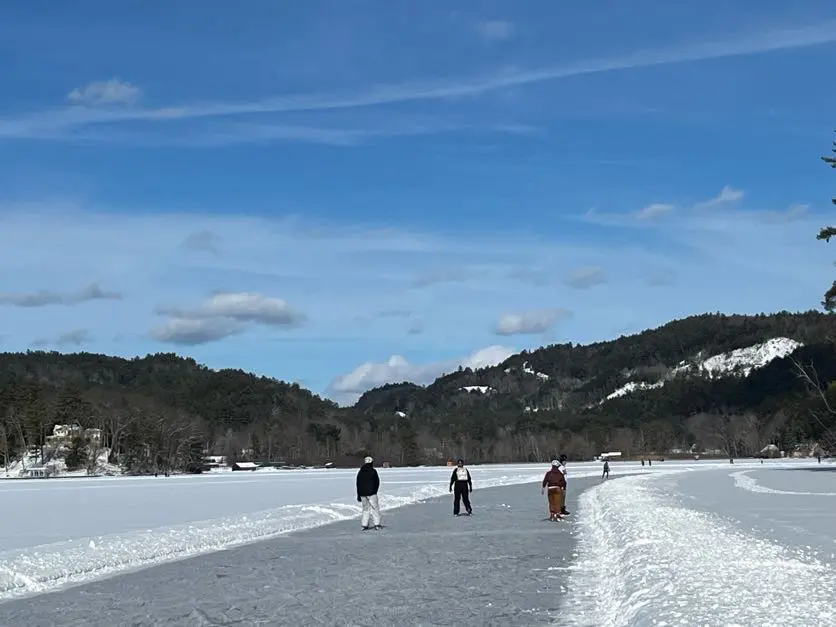
Lake Morey is on the New Hampshire / Vermont border, approximately two hours north of Lowell. Every winter it freezes over and the local resort plows a large 4 mile loop around the pond for ice skating. You may wonder why you would drive two hours to go ice skating, but you can't beat this experience!!! Natural ice was once the only surface one could go skating on, but now it's a rare opportunity! Natural ice typically has some texture, and often you can see the various lines and such that appeared in the ice as it formed over the winter, so it's really pretty and very cool to look at! Typically, the ice in February will be between 10 inches and probably 20-24 inches, depending on the winter conditions. Humans need only about 2-4 inches of ice to be safe, so even 8 inches is VERY thick for us. The resort sends out their brushing equipment which weighs a lot more than an average human, and you can be sure they only do that if it's safe! The bonus to using this location is that because it is regularly plowed, the route should be in quite good condition. Once we arrive, we will sit on the outdoor benches, lace up skates and get our skating legs under us. It typically takes 5-15 minutes for most people to get comfortable on skates. Once the group feels comfortable, we can start venturing a little farther, and consider doing the whole loop around. It is really a unique experience you don't want to miss!
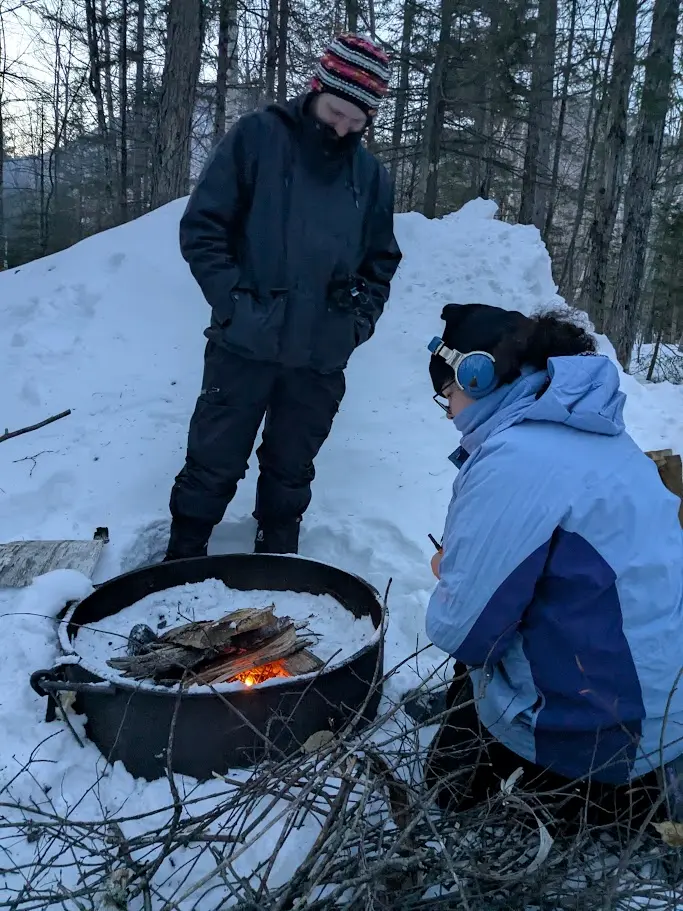
Intro to Winter Camping
Have you wanted to try something new and outside of the box? Have you thought about getting outside in winter but are worried you have enough gear to try winter camping?
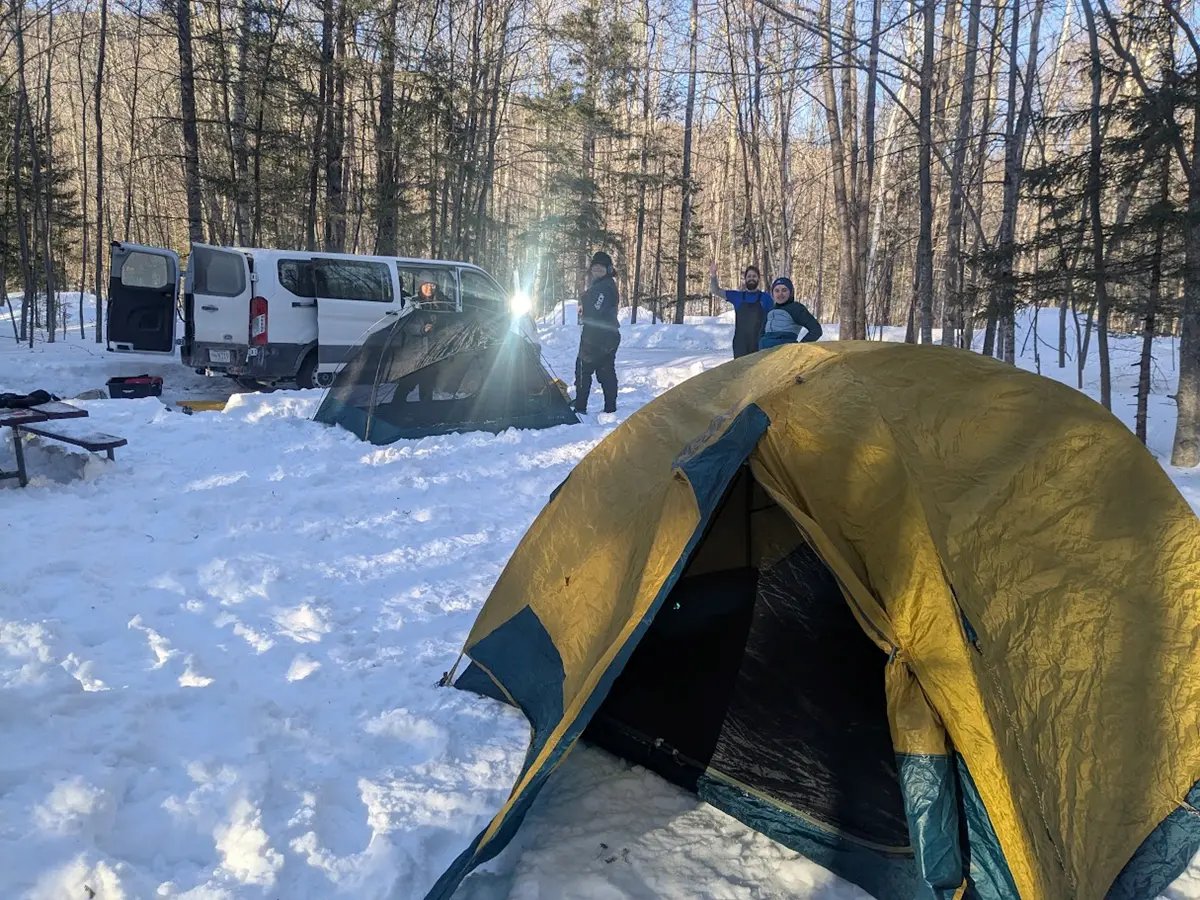
Our Intro to Winter Camping is intended to be a fun way to get outside and try what can be an intimidating activity -- all while using free borrowed gear to keep yourself warm, plus a lot of knowledge to learn how not to just stay warm, but have a great time!
The trip leaders are thrilled to introduce beginners to a whole new world. We will get the group FULLY set up with all the gear you could need, plus a little more you might not. Everyone's personal clothes and gear will be fully checked out and you'll get to borrow anything you don't already have, or try if you aren't sure.

It is possible to sleep outside in a variety of ways - The most important parts of your sleep system are the sleeping pad (a hefty insulated pad or two), and a sleeping bag (rated to a degree temp much colder than what is predicted). You can then set this up in a wooden shelter, tent, in a bivy sack (like a large thin sleeping bag), or even in other creative spaces, like under a tarp or in a dogsled (if you have one!).
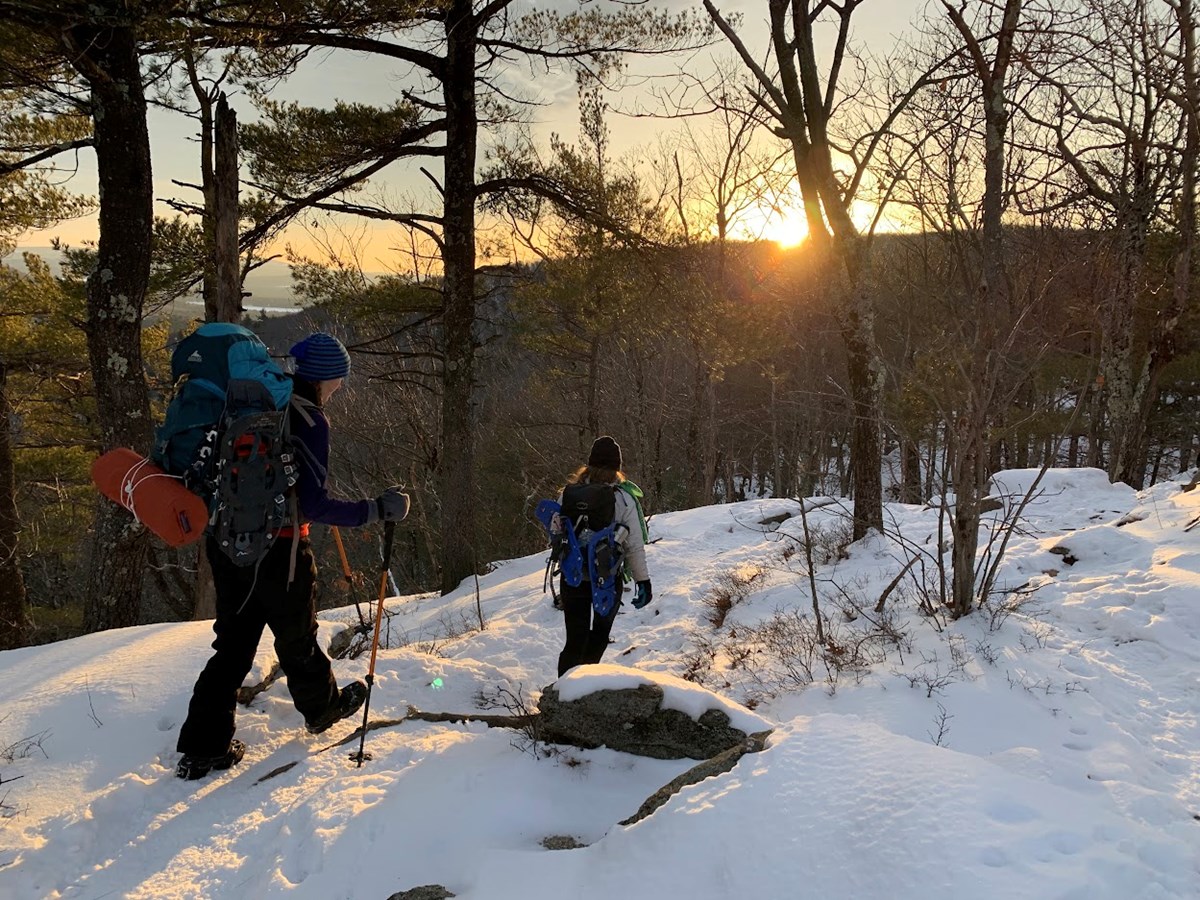
For our 2026 Trip, the group will drive to Royalston, MA and head to the Falls Brook Shelter. After arriving to the parking area, you will carry your gear in your backpack about 3/4 of a mile down to the the shelter. At that location, we will set up your gear, including sleeping systems and such, and just generally getting prepared for the night. The group will take a short hike (1-1.5 hours) to the beautiful Royalston Falls gorge to stretch your legs, then head back. Back at camp, you will prepare dinner, possibly with a nice big campfire and s'mores, learn yet more tips for staying warm overnight, then settle in to your bed. With our help, you should find that you are surprisingly warm!
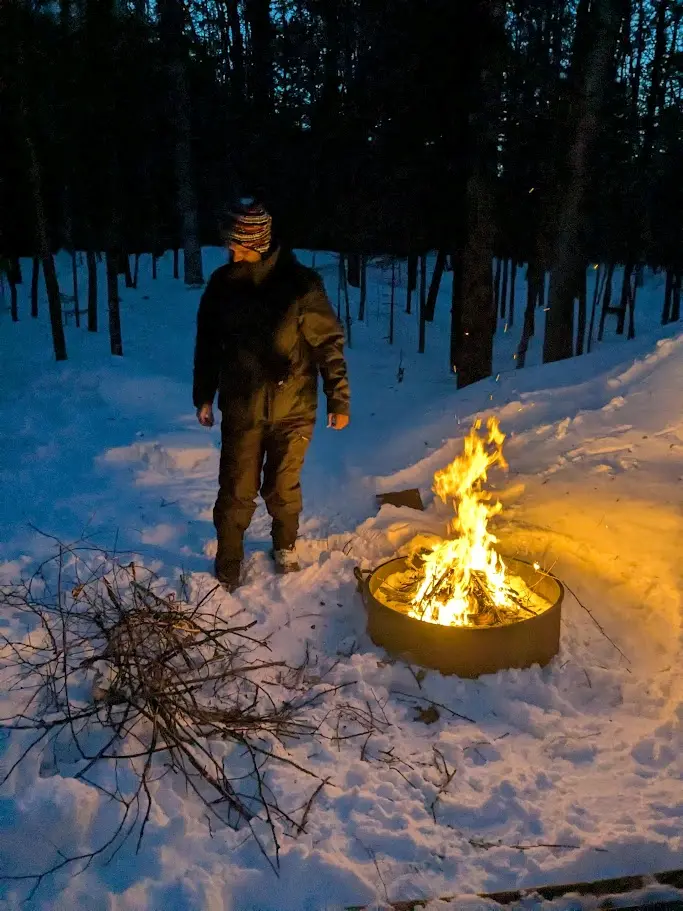
Being outside in the evening in winter is absolutely beautiful - a clear night with twinkling stars is invigorating, a snowy night with fat flakes falling is delightful. The silence in the winter is rejuvenating!
The next day, after enjoying breakfast, we will enjoy breakfast, pack up, then walk back to the van.
After we've driven back home to Lowell, we'll clean our gear and be inspired to try it again!
This trip is open to Guests of UMass Lowell (UML) students, faculty and staff who are also on the trip!
Exertion and Skill Level
Ice Skating: No previous ice skating skills necessary, but bring a willing attitude. At most, we will skate around a 4.5 mile loop, which may take approximately two hours or so. People may decide to do less.
Winter Camping: No previous camping or outdoors skills necessary, just a good attitude! Exertion is low, with bursts of activity to learn how to stay warm.
Tentative Itinerary: Ice Skating at Lake Morey
- 8 a.m. Meet at the Outdoor Center and Bike Shop, get set up with warm gear
- 9-11 a.m. Drive together to Fairlee, Vermont
- 11 a.m. Get skates, get comfortable on the ice. Enjoy some lunch, then skate around the 4.5 mile loop
- 3-5 p.m. Return to Outdoor Center and Bike Shop
Tentative Itinerary: Winter Camping Overnight Trip
- Wednesday, February 11, 2026 at 6:45 p.m. Meet in person to talk over winter camping and how to prepare
- Sunday, February 15, 2026 at 8:30 a.m. Meet at the Outdoor Center and Bike Shop, gear shake-down, prepare all gear in backpacks
- Midday: Drive together to Royalston, Massachusetts area
- Early to mid-afternoon: Set up camp (tents, sleeping bags, kitchen area and more.)
- Mid-afternoon: Go for a short hike to a beautiful gorge to get moving!
- Late afternoon: Return to campsite; cook dinner; enjoy campfire; learn tips for staying warm; enjoy the moonlight! Play in the snow!
- Monday morning (Presidents Day holiday!), around 7-8 a.m. Wake up, enjoy breakfast, pack up gear.
- After pack-up, hike back uphill to the parking lot.
- By early to mid-afternoon, return to Lowell, return gear, head home!
Trip Packing List
Clothing should be non-cotton. In cool/cold temperatures, the saying is, "Cotton is rotten" -- this is because cotton, when wet due to sweat or outside moisture (snow, rain, etc), clings to your body without providing any insulation. Fleece, wool, or treated down provide the "dead air space" structure to hold heat.
In order to stay warm and comfortable during our winter activities, you will want and need to wear non-cotton layers, from the layer closest to you to the outermost layer, including socks. Jeans, t-shirts and sweatshirts are cotton and therefore not appropriate for this activity. "Work out gear" is usually good, as is anything labeled wool, silk, nylon, polypropylene, fleece; cotton at any percentage is not ideal. Please look at all your clothing's labels to make sure you have layers that they are anything except cotton. Remember, we have some gear you may borrow. When driving in the van, there's no problem wearing cotton.
CLOTHING
- Long underwear shirt/base layer Recommend 1 long-sleeve, quick-dry, lightweight, non-cotton, no sweatshirts
- *Insulating upper layer Recommend 1-2 layers fleece, wool, or puffy top layer, should be compact
- *Rain jacket/shell Used for both rain and wind.
- Underwear Quick-dry (non-cotton) preferable
- Long underwear bottoms/lower base layer Recommend 1-2 pairs, quick-drying material such as nylon or polyester required
- Pants/Shorts/Hiking Skirt Recommend 2 pairs quick-dry, non-cotton, no jeans
- *Rain Pants Used for both rain and wind. Bottoms are a must, as weather in mountains can change suddenly
- Socks Hiking socks should be a wool mid-weight hiking style are required, especially for wet conditions and blister prevention; 2-3 pairs is ideal.
- Hiking Shoes or Boots with good tread, and ideally with ankle support
- *Gaiters lightweight ankle protection to keep debris out of shoes, especially pebbles & mud. Necessary in winter weather.
- Sunglasses Recommend with leash
- *Warm Hat Sun and/or cold protection, depending on season
- *Gloves
- Scarf/Neck Gaiter optional
OPTIONAL
- Snacks for yourself We will provide snacks; however, if you want to bring some extra along, bring no more than 1-2 per day
- Camera (or camera phone). A protective case is highly recommended. Turn phone to airplane mode to preserve battery (and enjoy nature)
- Multi-tool or pocketknife
- Binoculars

For overnight trips:
PERSONAL
- Pajamas (optional)
- Toothbrush, toothpaste, floss
- Feminine hygiene supplies plus toiletries disposal bag, pee rag
- Personal environmental supplies Sunscreen, lip balm, bug spray
- If needed: Hair ties
- If needed: Contacts/contact solution
- Small pack towel and/or Bandana Washcloth is a perfect size. Versatile: use as sweat rag, hanky, napkin and more.
- Personal Medications
- Medical Insurance Card
- Optional: Hand sanitizer Small bottle
EQUIPMENT
- *Headlamp
- *Sleeping bag Proper temperature rating for the season necessary; we use 0 degree bags for winter camping
- *Sleeping pad
- *Trekking poles
- *Backpack 40+ liters required. We provide 65 liter backpacks.
FOOD AND WATER
- *Bowl Recommend a small plastic Tupperware-type bowl. No plate needed.
- *Mug or cup Lightweight plastic for warm drinks.
- *Utensils For backpacking portion.
- *2 Water Bottles Hydration; start hydrating the day before
*All items with an asterisk are available to check-out and included in the cost of your registration. There are no extra costs for any gear you use!
Register for upcoming trips on our Trips and Events Calendar webpage
Contact
- Email: OutdoorAdventure@uml.edu
- Phone: 978-934-1549