
2026 Tripathy Memorial Endowed Graduate Fellowship Award Recipients
The Tripathy Memorial is proud to present the 2026 Tripathy Memorial Endowed Graduate Fellowship Award to Anthony J. Branco, Kalsoon Jan, and Porvajja Nagarajan. These graduate students have presented outstanding work in their dedicated research areas and continue to push the boundaries of science, engineering, and knowledge. Highlighted below are summaries of their research. Congratulations to these remarkable students!
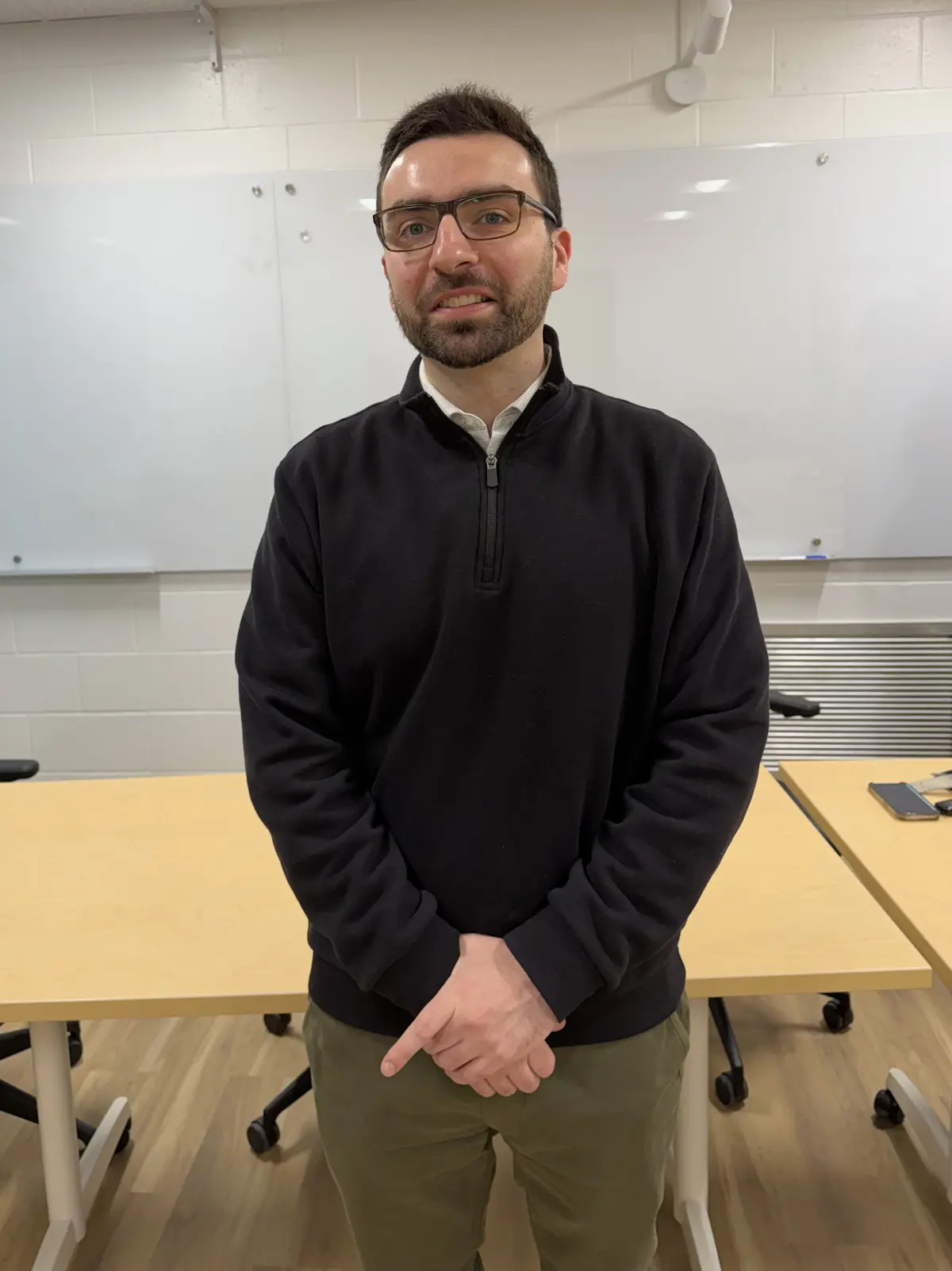
Anthony J. Branco
Anthony J. Branco
2026 Fellowship Awardee
"The Fellowship is phenomenally supportive of the future development of graduate candidates’ careers that follow the leadership of the late Sukant Tripathy. The award permits graduate candidates to do independent, novel research at the interface of materials science, chemistry, or engineering that greatly impact their respective fields. Furthermore, the fellowship directly supports emerging graduate students to prepare them in vigorous, challenging academic environments. Importantly, this award directly allows us to be challenged, and potentially fail, by doing incredibly rewarding and novel research later in our graduate candidate journey. This unique opportunity is unlike any other, and I recommend it immensely to all those seeking to push the frontiers of their research fields. This Fellowship is a profound advantage to the graduate students at University of Massachusetts Lowell, and hopefully, does great justice to the legacy of Professor Tripathy’s career here. I remain convinced that this is one of the leading opportunities here at the University of Massachusetts Lowell that permit us to be exemplary across many domains of research now and in the future." - Anthony J. Branco
- Advisor: Professor Michael B. Ross, Department of Chemistry
- Research Topic for Doctor of Philosophy (Ph.D.) Degree:Structural Basis for Tunability in Post-Transition Metal Alloyed Plasmonics
Abstract: Understanding and manipulating light-matter interactions at the nanoscale present profound opportunities for the development of future advanced materials. One of these light-matter interactions, known as surface plasmon resonance, describes phenomena whereas light can be confined and amplified on length scales as small as a couple of nanometers. Traditionally, the field of plasmonics utilized single-element, noble metal nanoparticles; however, through alloying processes we can manipulate how and when these materials absorb and scatter light—which can subsequently be used for advanced functional materials platforms. I study how multi-length scale assessments can understand the structural and electronic basis of this alloyed plasmonic tunability. Specifically, our multi-length scale studies leverage advanced spectroscopy and electron microscopy to probe element-specific and ensemble correlations across a multiple-nanometer length scale. Dictating these nanoscale light-matter interactions of alloys permits us to construct optically and spatially precise materials for future heterogeneous catalysts, quantum technologies, and novel biosensing.
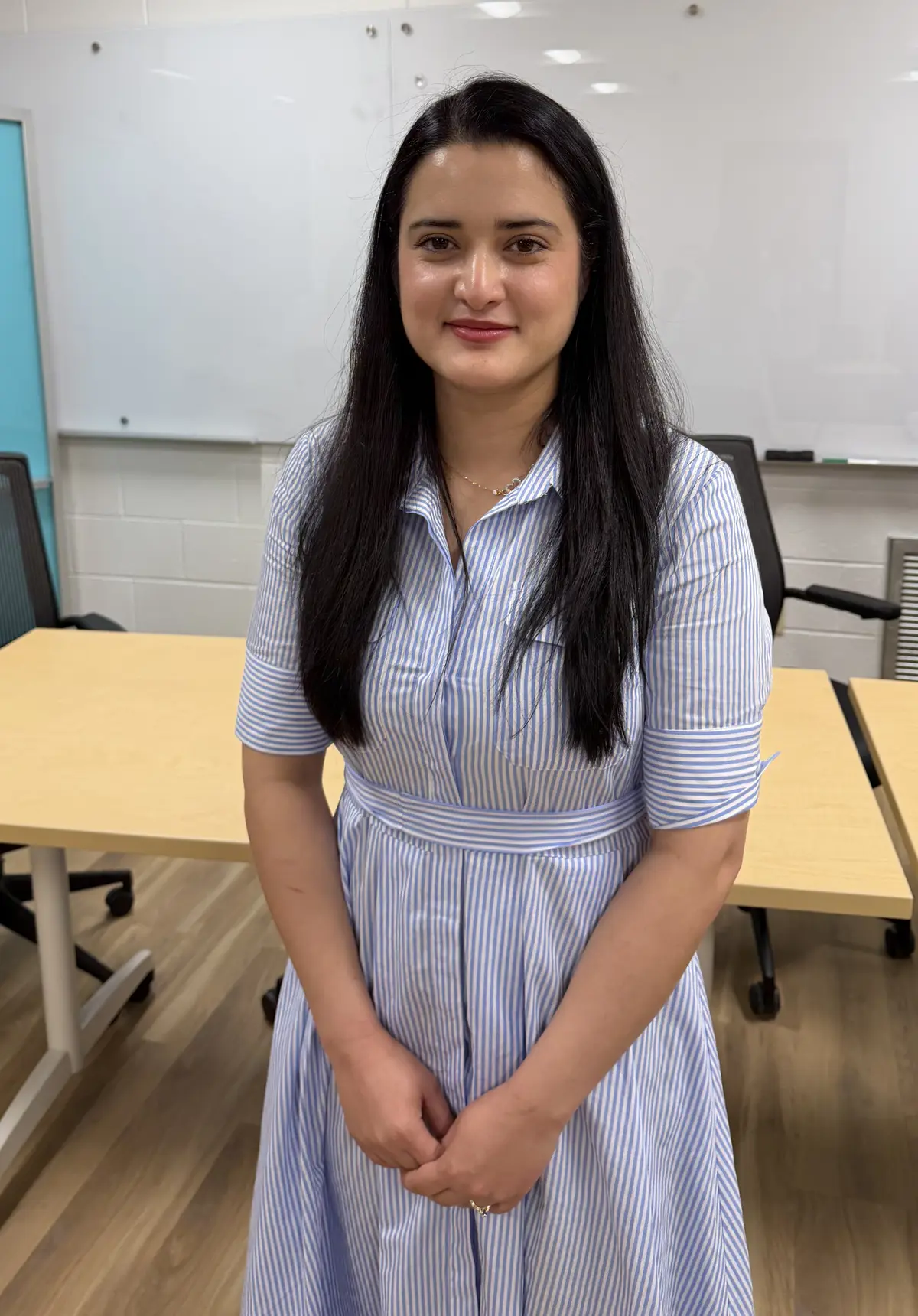
Kalsoon Jan
2026 Fellowship Awardee
- Advisor: Professor Wan-Ting Grace Chen, Department of Chemistry
- Research Topic for Ph.D. Degree: Advancing Chemical Recycling of Multilayer and Mixed Plastic Waste via Hydrothermal Liquefaction and Chemolytic Deconstruction Strategies
Abstract: The increasing accumulation of plastic waste, particularly multilayer packaging, mixed plastics, and contaminated streams, presents major challenges for plastics recycling. This work investigates integrated chemical recycling strategies using hydrothermal liquefaction (HTL), chemolysis, and quantum mechanical methods to valorize complex plastic waste streams. First, the influence of calcium carbonate (CaCO3), a common contaminant under HTL with polyethylene (PE) was examined. CaCO3 altered product distributions, with over 90% calcium transferred to the aqueous phase while oil yields reached 80%. Second, co-liquefaction of PE with polypropylene (PP), polystyrene (PS), polyethylene terephthalate (PET), and ethylene vinyl alcohol (EVOH) was explored to simulate mixed plastic waste. More labile polymers promoted PE deconstruction and modified product compositions; notably, PS increased oil yields by 67% and aromatic products by 82%. Finally, a two-step chemolytic process combined acidolysis-based delamination with catalytic PET glycolysis, where catalyst type, loading and hydration state influenced BHET and MHET selectivity.
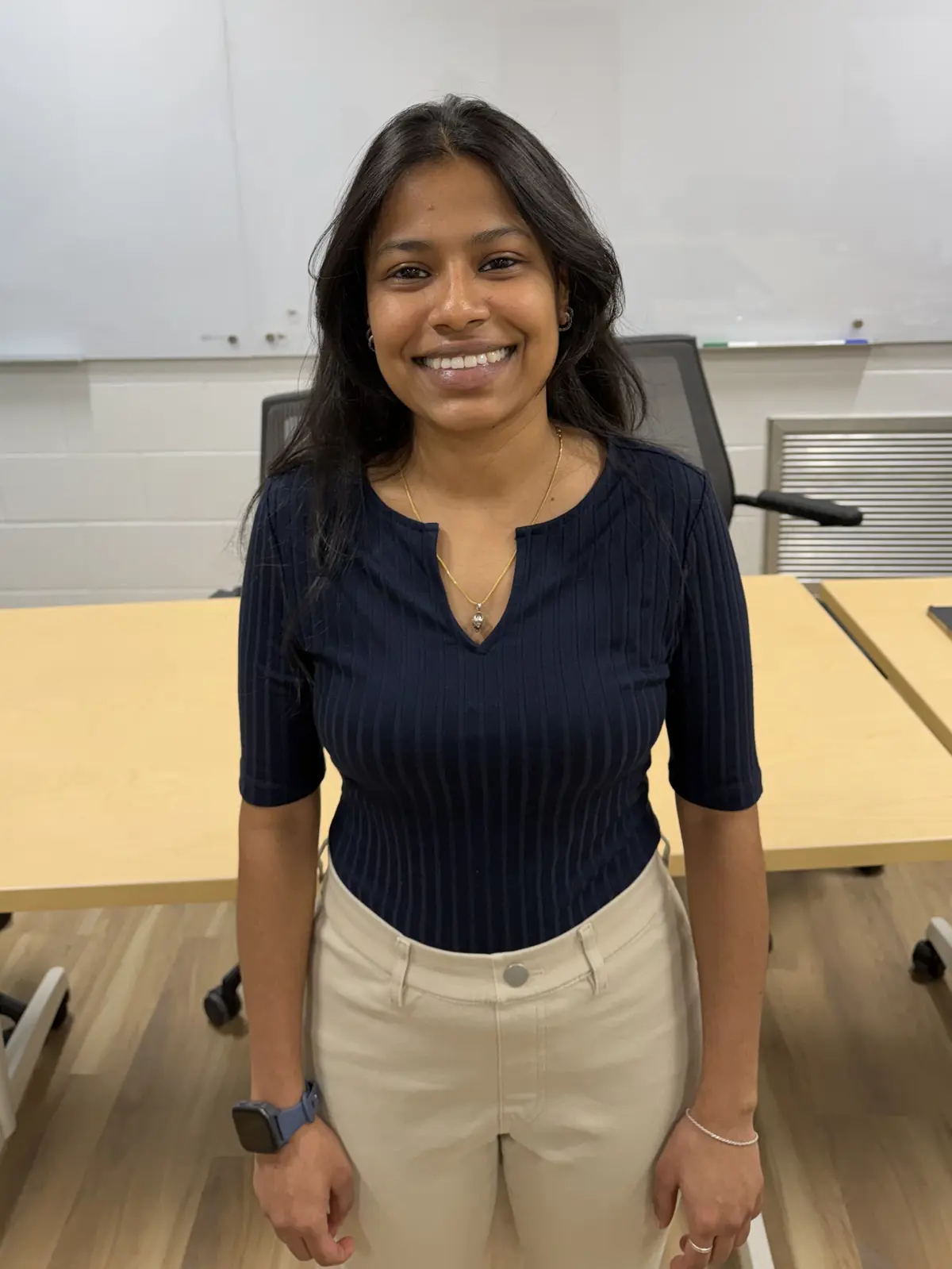
Porvajja Nagarajan
2026 Fellowship Awardee
"Receiving the Tripathy Memorial Graduate Fellowship has been one of the highlights of my PhD journey at UMass Lowell. The fellowship process pushed me to articulate not just what I research, but why it matters and where I want to take it. That clarity has been genuinely valuable as I approach the final stretch of my dissertation and begin thinking about what comes next. Beyond the financial support, being recognized by the Tripathy committee as an outstanding graduate student in materials science means a great deal, particularly as an international student who came to this field through an unconventional path. This recognition also sets a meaningful tone as I pursue postdoctoral and industry research opportunities, serving as a testament to the quality and impact of the work coming out of the Ross lab at UMass Lowell. I hope this fellowship continues to recognize graduate students whose work sits at the intersection of fundamental science and real-world impact, as Professor Tripathy's own legacy did." - Porvajja Nagarajan
- Advisor: Professor Michael B. Ross, Department of Chemistry
- Research Topic for Ph.D. Degree: Designing Multifaceted Gold Nanostructures for Heterogeneous Electrocatalytic Applications
Electrochemical catalysis offers a direct pathway to address climate change— including converting carbon dioxide (CO2) into valuable fuels, upgrading biomass-derived compounds, and splitting water to produce clean hydrogen. Gold nanoparticles are uniquely positioned for these reactions due to their tunable surface chemistry and electronic properties, and at the nanoscale, shape is as significant as composition. “Concave” nanoparticles expose undercoordinated, high-energy atomic sites that alter catalytic selectivity.
This doctoral work establishes how nanoparticle shape governs electrocatalytic performance. A bismuth-mediated synthesis exploiting crystal lattice mismatch yields distinct concave gold nanostructures, and controlled geometric comparisons reveal that concave surfaces selectively promote CO production while suppressing competing parasitic reactions in CO2 electroreduction. These shape-design principles extend further to high-entropy alloy nanoparticles targeting industrial hydrogen evolution reaction. Advanced synchrotron techniques such as X-ray total scattering provide atomic-scale mechanistic insight, bridging nanomaterials synthesis, structural characterization, and electrochemical engineering toward scalable clean energy solutions.

Pictured left to right: Ertan Agar, Sourabh Kulkarni, Jayant Kumar, Ashok Cholli, Shayesten Tafazoli, Susan Tripathy, Paul Bryce, and Ramaswamy Nagarajan.
The Selection Committee
- Jayant Kumar, Professor of Physics and Applied Physics, Director of the Center for Advanced Materials (CAM), Email: Jayant_Kumar@uml.edu
- Ramaswamy Nagarajan, Professor, Plastics Engineering, and Co-Director of the Harnessing Emerging Research Opportunities to Empower Soldiers (HEROES) Initiative, Email: Ramaswamy_Nagarajan@uml.edu
- Susan Thomson-Tripathy, Email: Susan_Tripathy@uml.edu
- Dhimiter Bello, Associate Professor, Director of Research and Graduate Studies for the Zuckerberg College of Health Sciences, Email: Dhimiter_Bello@uml.edu
- Ashok Cholli, President, Polnox Corporation, Email: ACholli@Polnox.com