
 Image by Ed Brennen
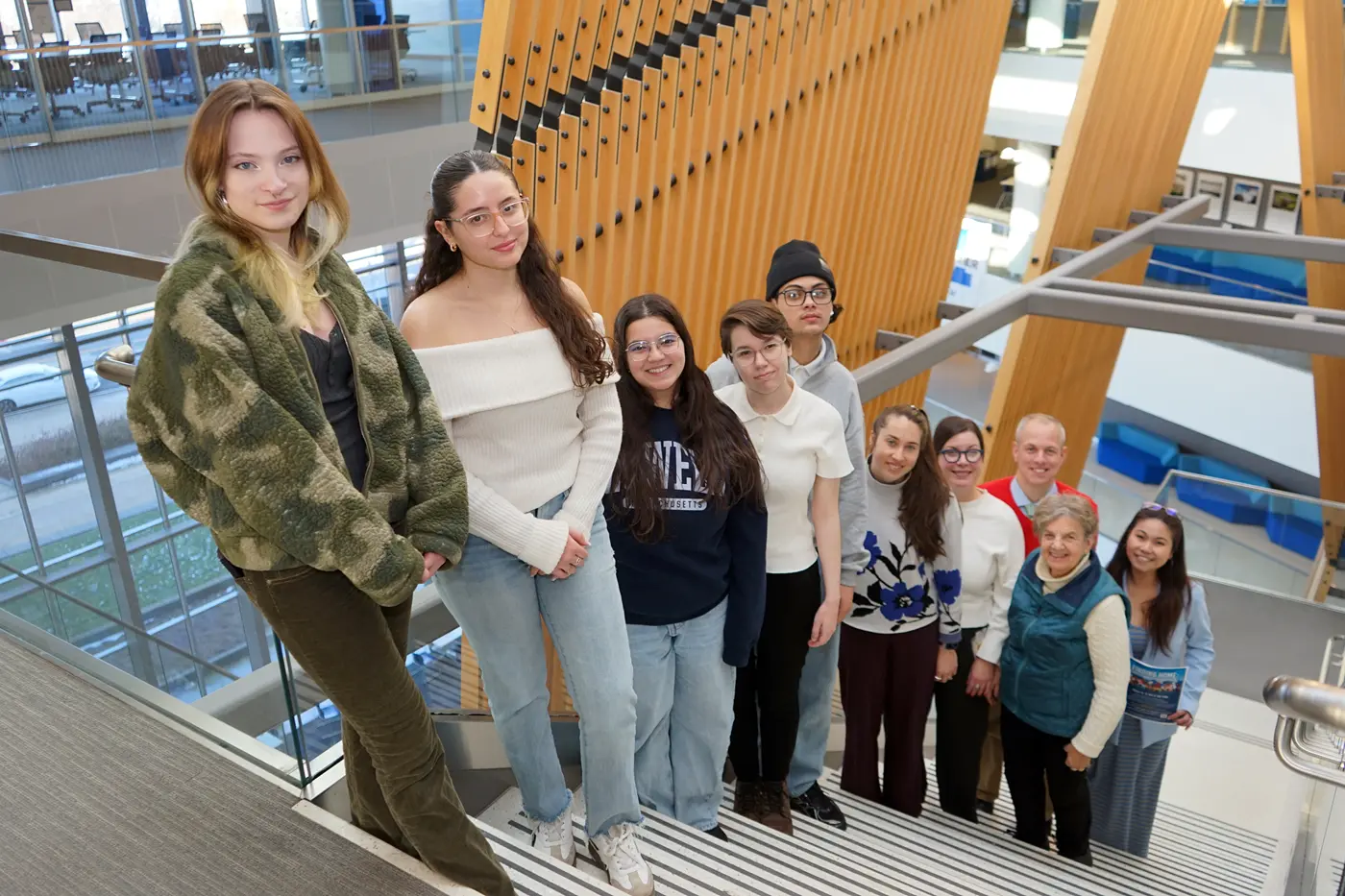
 International Institute of New England fellows, from left, Roxane Philip, Maria Clara Rangel, Lara El Amme Pingitore, Lauren McNally and Amin Essouabni were recently recognized for completing their first semester of work at the nonprofit organization.
Having emigrated from Brazil to the United States with her family as a child, Lara El Amme Pingitore understands the challenges of learning English and adapting to a new culture.
That’s what makes her paid fellowship with the International Institute of New England (IINE), a nonprofit that supports refugees and immigrants, so meaningful.
“I've been where they are,” says Pingitore, a sophomore who is double-majoring in political science and world languages and cultures. “I've had to learn English, my parents have had to learn English, and I can see a lot of these people in my parents’ shoes.”
Pingitore is among nine UMass Lowell students who recently completed the first semester of a new paid fellowship program with the IINE, coordinated through the Office of the Provost and funded through work-study support from the Chancellor Julie Chen Fund for Student Success.
Working six to 10 hours per week either remotely or in-person at IINE’s Lowell site, students assist families with English lessons, youth tutoring and access to essential services.
For Roxane Philip, a sophomore from Newton who is double-majoring in biology and chemistry, the experience is creating a stronger connection to the city.
“I didn’t really explore Lowell a lot my freshman year, but I’ve gotten to know all the communities,” says Philip, who works primarily in youth tutoring and the IINE food pantry. “I’m learning how a sense of community can really help someone.”
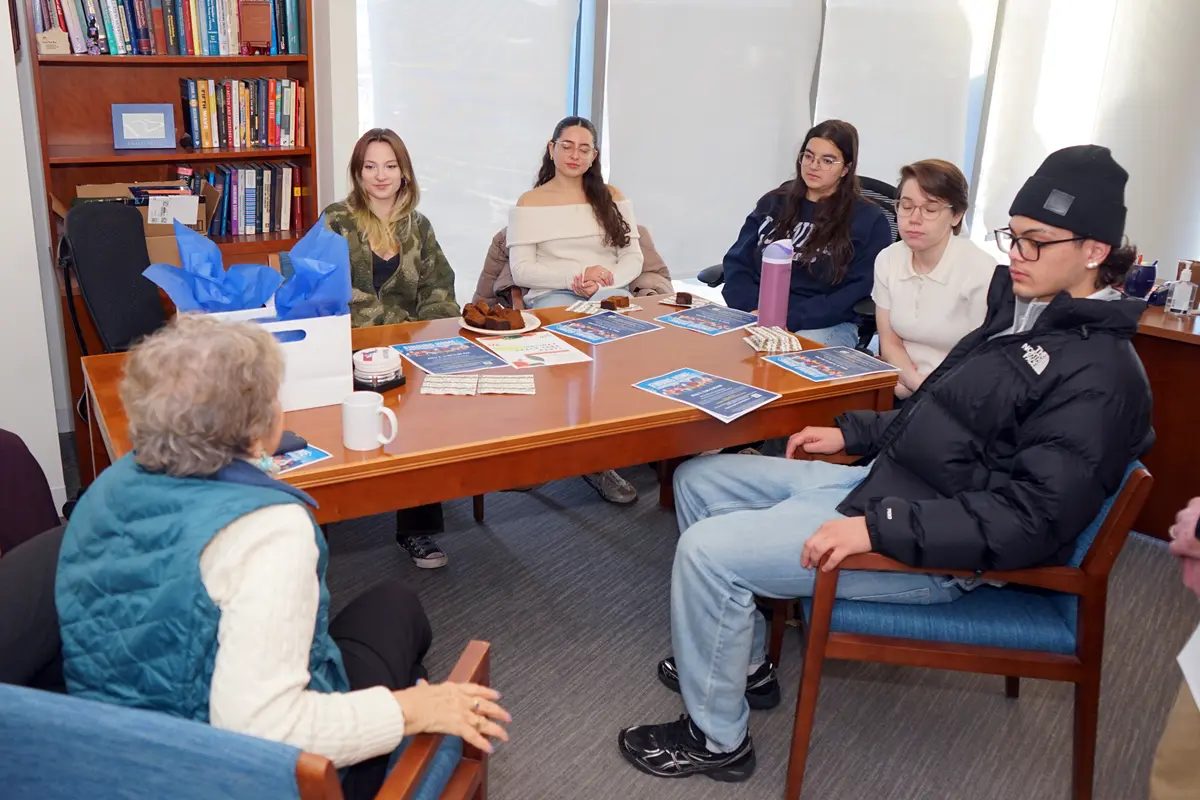 Image by Ed Brennen
 Professor Emerita Paula Rayman, left, who serves as the university's liaison for the IINE fellowship program, chats with five of the fall semester participants during a ceremony at the Provost's Office.
“Our staff and clients truly benefit from having the students here,” Rowe says.
Senior political science major Maria Clara Rangel supports youth tutoring programs and says the work is “rewarding, humbling and wonderful.”
“Getting to know the kids and being able to support them is the most rewarding part,” says Rangel, who is from Everett. “It’s something I didn’t realize I could do in this way.”
Lauren McNally, a senior sociology major from Westford, works in English for Speakers of Other Languages (ESOL) classrooms. She has been struck by the motivation of adult learners navigating life in a new country.
“They came from really tough situations, but they are resilient and always motivated to learn,” McNally says.
Meera Patel, a senior honors biology major from Tyngsborough, says the fellowship has helped her develop interpersonal skills such as communication, organization and problem-solving.
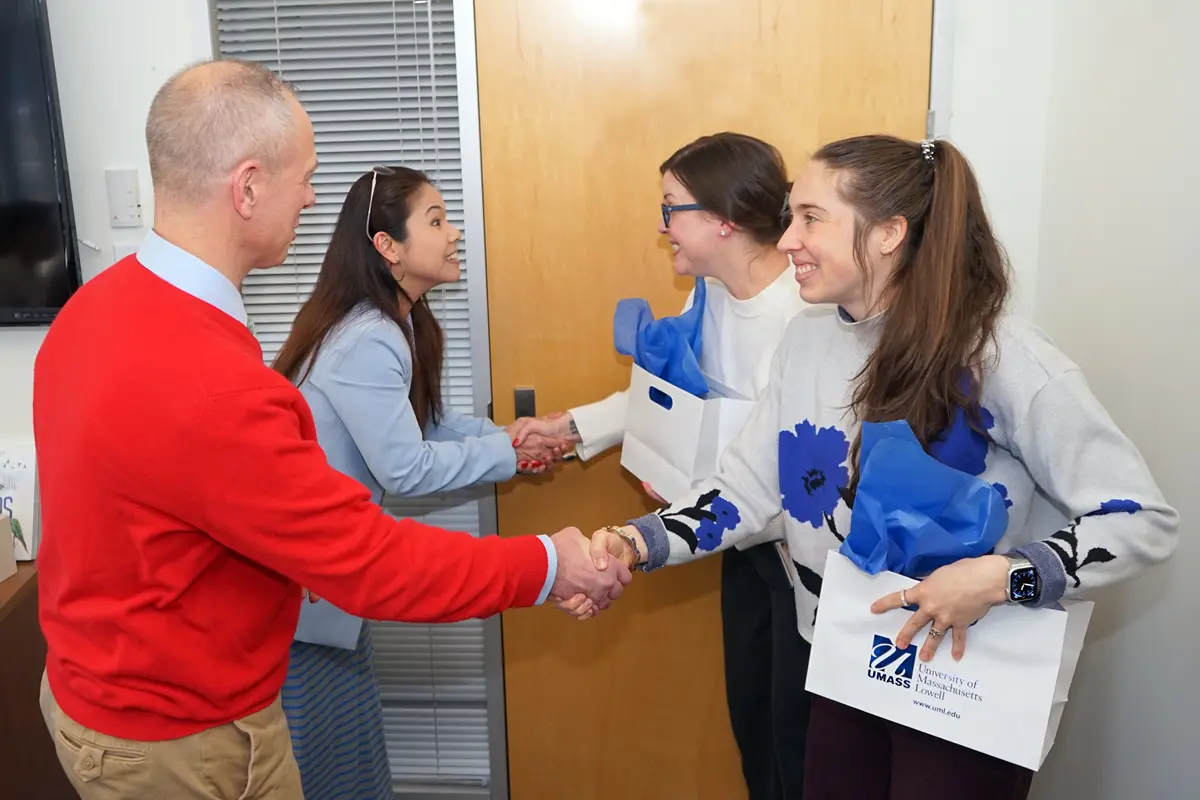 Image by Ed Brennen
 From left, Dean of Student Affairs and Experiential Learning James Kohl and Executive Assistant to the Provost Meylia Kurnianto thank the IINE's Kristy Honeycutt and Caroline Rowe during a semester-ending ceremony.
First-year nursing major Amin Essouabni works in ESOL classrooms on Fridays, helping adult learners with phonics, computer skills and typing exercises.
“I really enjoy seeing my students every week,” says Essouabni, who is from Woburn. “Even though they’re adults, they’re my students. There is a lot of mutual respect.”
Professor Emerita Paula Rayman, founding director of UMass Lowell’s Peace and Conflict Studies program and current International Faculty Fellow, serves as the university’s liaison for the partnership.
Six of the nine students are expected to return for the spring semester, continuing what Rayman describes as a strong foundation for future cohorts.
“This work connects learning to real lives,” Rayman says. “The students are building bridges between the university and the community.”