
 Image by Courtesy
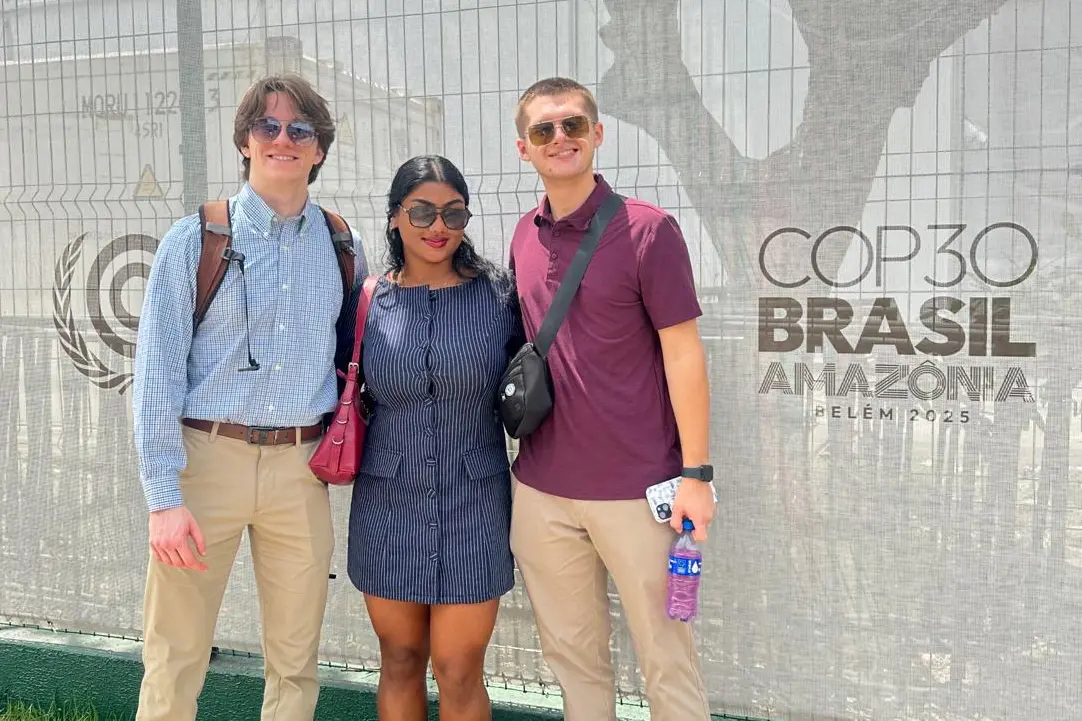
 Students Colin Ormond, Angel Molekunnel and Andrew Fenner are part of a six-person delegation that represented UMass Lowell at COP30.
Despite the United States not having an official presence at the annual United Nations climate summit, UMass Lowell showed up in full force.
For the fifth year in a row, UMass Lowell sent students and professors to the Conference of the Parties (COP), where nearly 200 countries come together yearly to discuss climate action strategies and negotiate the next steps toward mitigating climate change. This year’s two-week conference, which took place in Belém, Brazil, marked the first time since the inaugural COP in 1995 that the U.S. federal government declined to send an official delegation. The representation from the U.S. remained strong, however, with state and local governments, nonprofits and higher education institutions in attendance.
The UMass Lowell delegation, consisting of four students and two professors, was the only delegation from a Massachusetts public university to attend COP30. The students received funding for the trip from the Rist Institute for Sustainability and Energy.
The students and professors reflected on their experiences and shared their biggest takeaways from COP30:
Cate Kleeman ’25, a business analytics master’s student
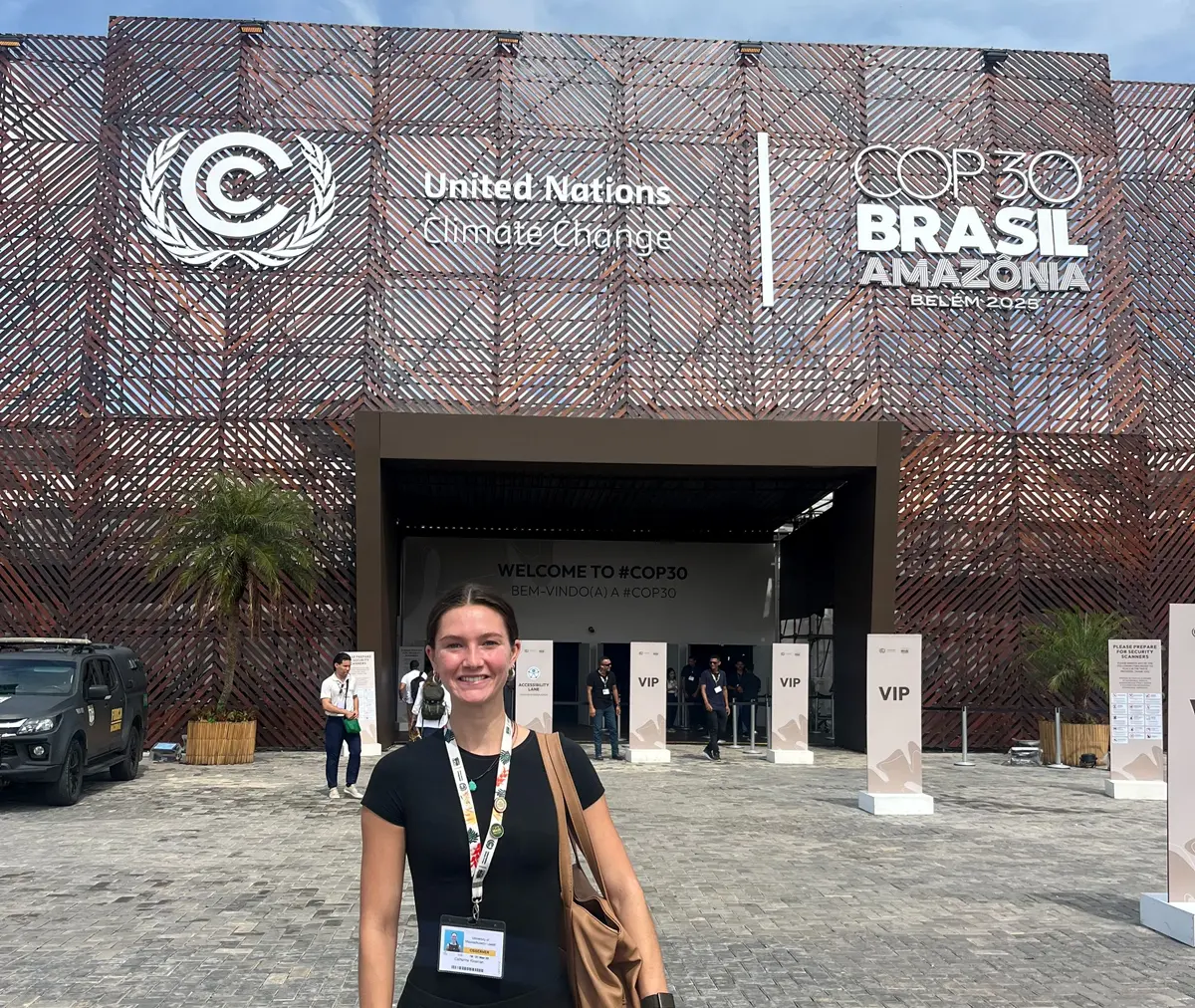 Image by Courtesy
 COP30 reinforced the importance of collaboration for Cate Kleeman.
Surrounded by people from all over the world, it was surprisingly easy to build a genuine community. Despite the U.S. not participating in formal negotiations this year, I was happy to meet so many fellow Americans also deeply engaged in climate work. At COP30, people from all walks of life were united by a shared commitment to climate justice. Even if we disagree on how to get there, it truly felt like we were all on the same team. I left Belém inspired by the Mutirão, a Brazilian term that refers to a collective work effort where a community comes together to achieve a shared goal. This is my biggest takeaway from COP30 – the global Mutirão against climate change.
Andrew Fenner, a climate change and sustainability senior
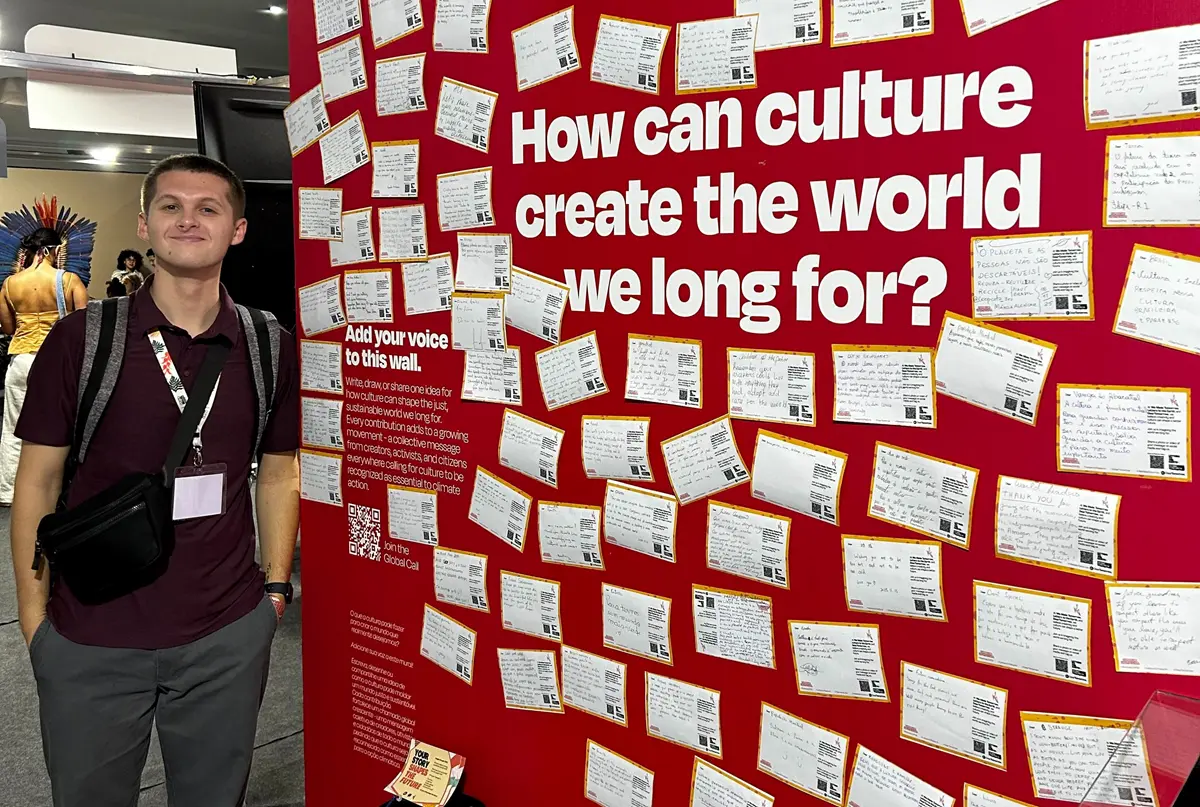 Image by Courtesy
 Andrew Fenner found COP30 "life-changing."
Being at COP30 and having the opportunity to speak with and connect with people from across the globe really put things into perspective. It doesn’t matter where you’re from, your age, your gender or your discipline – climate change will affect all of us, and it will take all of us working together to change the trajectory we’re on.
Although the official negotiations had serious shortcomings – most notably the failure to produce a roadmap for phasing out fossil fuels – there was still so much that was positive. The amount of knowledge being shared throughout those halls was incredibly gratifying to witness. I would highly recommend that anyone apply to be part of UMass Lowell’s future COP delegation.
Angel Molekunnel ’25, a finance master’s student
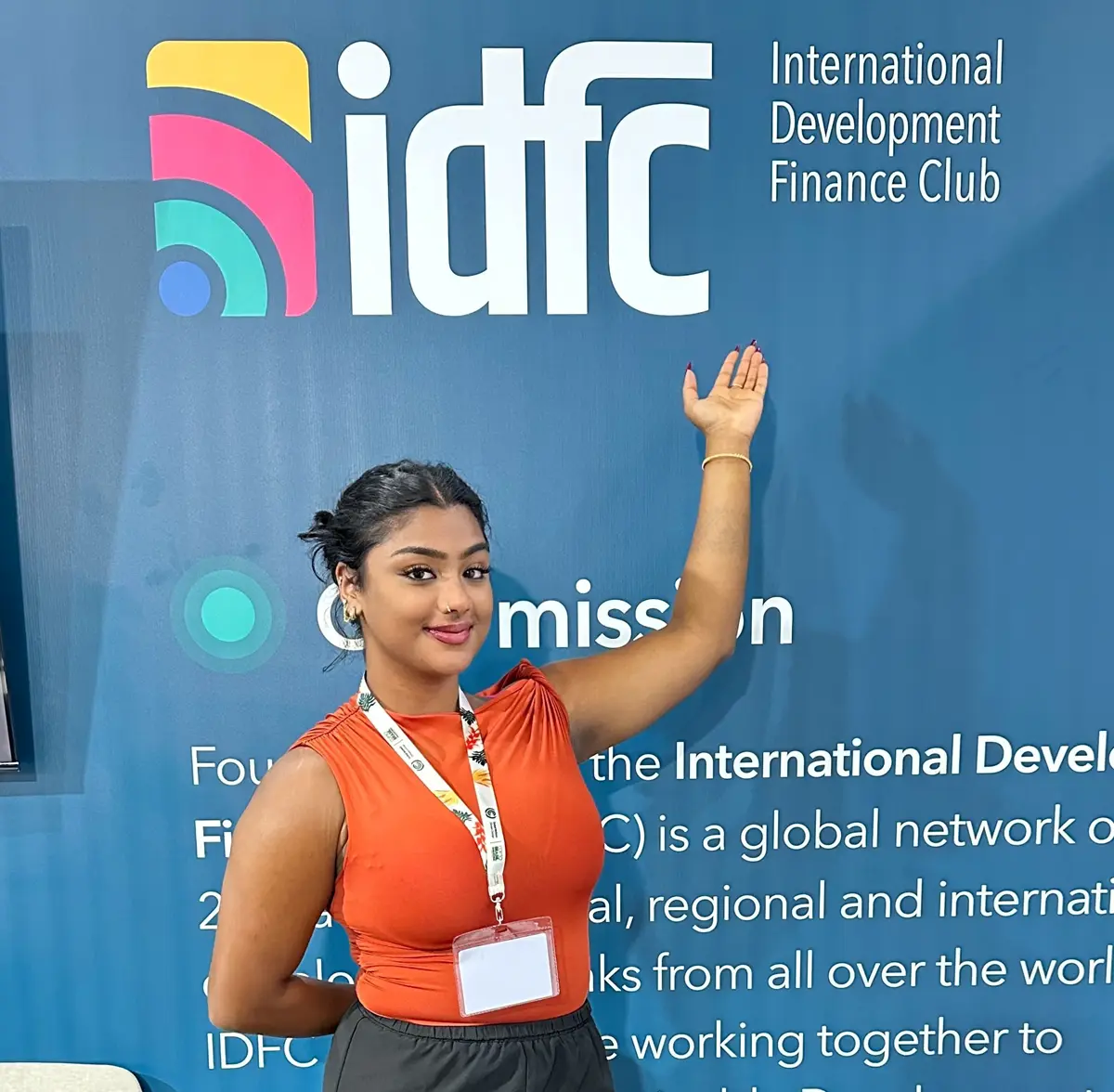 Image by Courtesy
 Angel Molekunnel focused on global finance targets at COP30.
Learning that the TFFF aims to direct 20% of its funding directly to Indigenous peoples made the COP climate financial plan, Baku to Belém Roadmap, feel much more personal. It showed me that the push to mobilize $1.3 trillion isn't just about balancing budgets, it’s about ensuring a just transition for the people I saw in the Green Zone. It made me realize that true climate success lies in building the financial plumbing that allows these forest-based small businesses to thrive.
Colin Ormond, a political science senior
 Image by Courtesy
 Colin Ormond, left, saw the importance of implementing policies to fight climate change.
This message particularly resonated with me due to my work as a Clean Energy and Environment Legacy Transition (CELT) Fellow with the Massachusetts Executive Office of Energy and Environmental Affairs (EEA). At EEA, I see firsthand how state-level decisions on issues like clean energy transition, natural gas reduction and climate-ready infrastructure directly shape our ability to meet broader climate targets. Attending COP30 reinforced that this state/regional-level work is not just complementary to federal action, but essential to global progress.
Overall, COP30 highlighted the gap that often exists between ambition and implementation, and it strengthened my commitment to working in spaces where those decisions are actually carried out. It was inspiring to see what's possible and motivating to return home and help advance the policies needed to get us there.
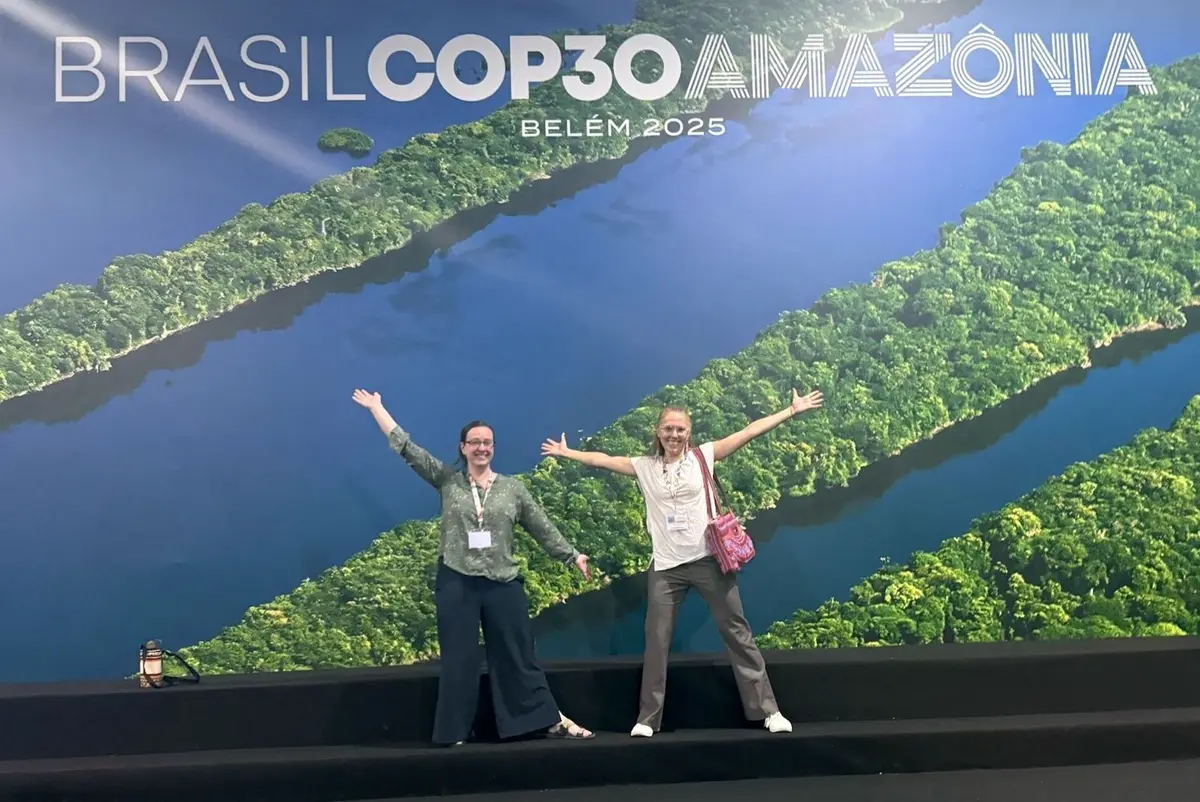 Image by Courtesy
 Assistant Professors Joy Winbourne and Jasmina Burek are bringing what they learned at COP30 back to UMass Lowell's campus.
Jasmina Burek, an assistant professor in the Department of Mechanical and Industrial Engineering
Attending COP30 felt full circle. As part of my research, I’ve compiled a national greenhouse gases (GHG) emissions inventory, which is used to track progress toward limiting global warming to 1.5 degrees Celsius. In Belém, I followed research and systematic observation negotiations that make GHG emissions inventories more accurate by improving input data and emission factors. I firmly believe that keeping observation stations, such as GHG emissions monitors, funded in both developed and developing countries strengthens GHG emissions inventories, improves decisions and leaves less room for climate misinformation to spread. Together, these measurements independently check the numbers countries report.
At the same time, global action remains too slow. A decade after COP 21 in Paris, emissions and fossil use haven’t fallen fast enough. At COP30, I presented my work on local climate action through universities’ handprints, defined as a measurable positive impact a university helps create beyond its campus through its teaching, research and partnerships. Universities should adopt the handprint as a standard, evidence-based practice and scale it project by project and campus by campus, so that local results add up to global progress.
Joy Winbourne, an assistant professor in the Department of Environmental, Earth and Atmospheric Sciences
Attending COP30 reinforced my commitment to working toward local to global action for climate change mitigation and adaptation. The climate crisis is here, and we have to work toward adapting to the most harmful impacts. If we want to avoid even worse impacts, we need to stop emitting GHG from the burning of fossil fuels and deforestation.
Leaving COP30 felt bittersweet because the needle did not move on global negotiations. Action toward reducing emissions did not occur, nor did a roadmap to phasing out fossil fuels. However, as demonstrated by the energy in the pavilions and side events, this is not stopping a significant number of groups, countries and governments from taking action now to reach these goals. Sharing stories on approaches, what case studies have been successful, and how we can bring those home to Lowell was a huge takeaway of COP30.