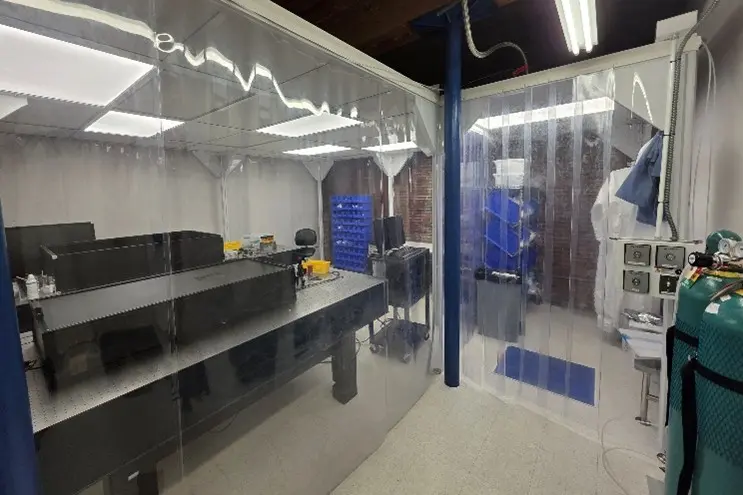
The Massachusetts Alliance for Space Technology and Sciences (MASTS) offers state-of-the-art facilities for testing and developing small satellites and spacecraft components. For additional information about the MASTS instruments, please visit the Core Research Facilities database.
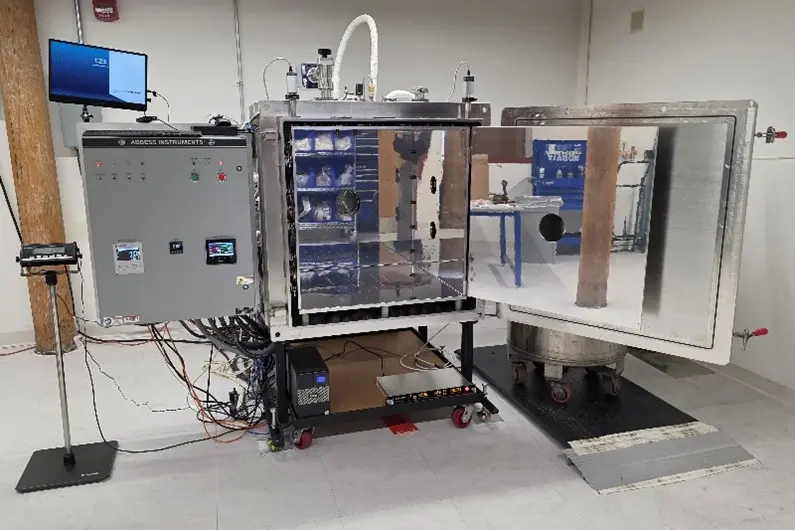
Thermal Vacuum Testing Facility
The Abbess Instruments 36-inch cube chamber recreates the vacuum (10-6 torr) and temperature swings (from -150 degrees Celsius to +150 degrees Celsius) of space to ensure small satellites can survive and operate reliably in orbit.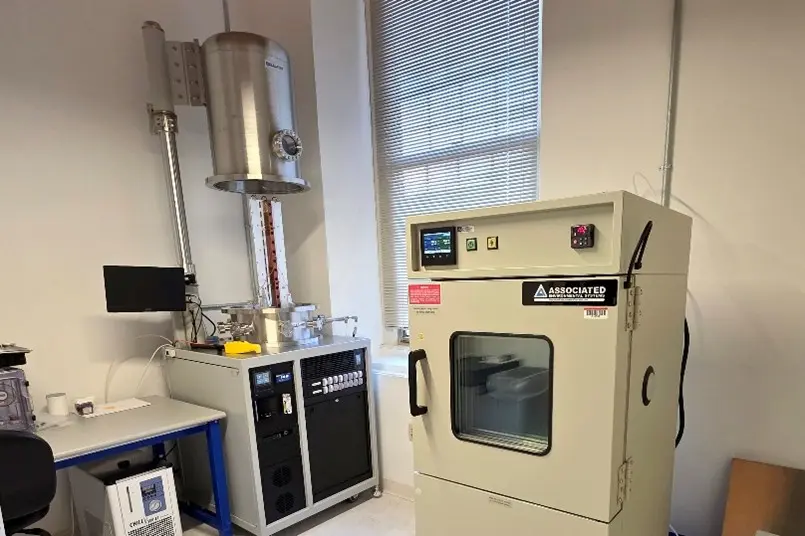
Material Outgas Testing Facility
This facility tests how materials react in space-like conditions, making sure they don’t release harmful effluents that could cloud sensors or affect satellite performance. Materials are first conditioned using the Associated Environmental Systems HD-202 temperature and humidity chamber (right) before being placed in the modified Kurt J. Lesker 18-inch bell jar vacuum chamber (left) to complete the outgas test. A precision scale A&D Weighing BM-20 microbalance quantifies the outgas amount, and a residual gas analyzer characterizes most common elements.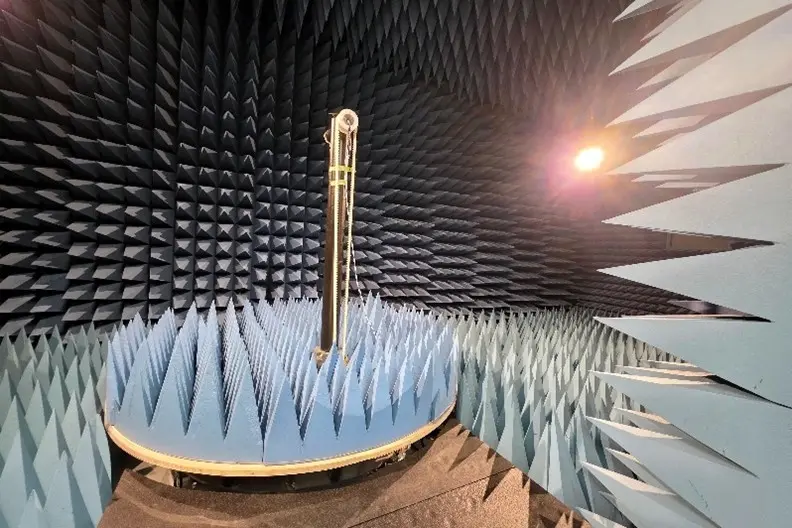
Anechoic Chamber for Radio Frequency Testing
The ETS-Lindgren anechoic chamber can be used to evaluate communication system performance by quantifying antennas and radio systems from one gigahertz to 40 gigahertz.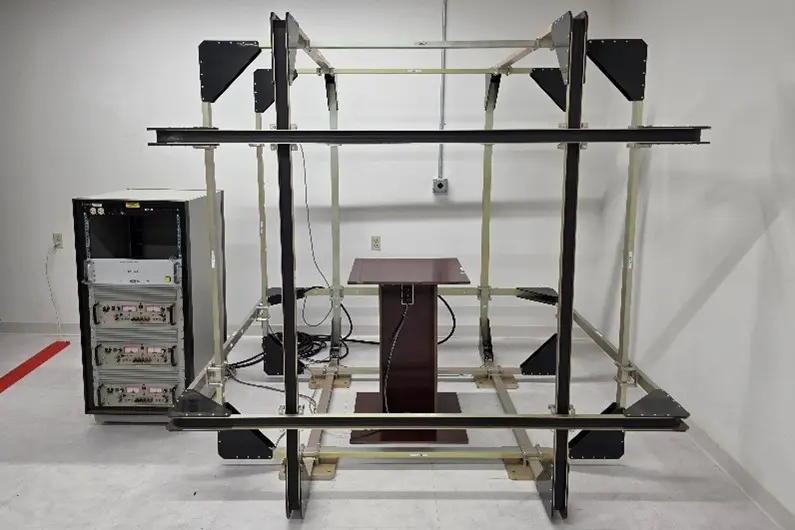
Attitude Control System Testing Facility
A Helmholtz coil system subjects sensors and systems to the expected magnetic field in orbit.