
Long before glow-in-the-dark bowling alleys with flashy video screens and private VIP lanes, a different version of the sport was taking root in Lowell.
Historical records show duckpin bowling was being played in Lowell as early as 1894, making the city one of the earliest documented homes of the uniquely challenging game. Similar to candlepin bowling, duckpin uses a grapefruit-sized ball without finger holes. But its pins are shorter, fatter and lighter versions of traditional bowling pins, making strikes notoriously difficult to achieve.
Duckpin bowling peaked in popularity in the 1960s, when there were around 450 certified alleys in the United States, mostly on the East Coast. Today, though, there are only about three dozen alleys still in operation — and only two in Massachusetts.
One of them, North Chelmsford Lanes, sits less than 3 miles from UMass Lowell’s South Campus.
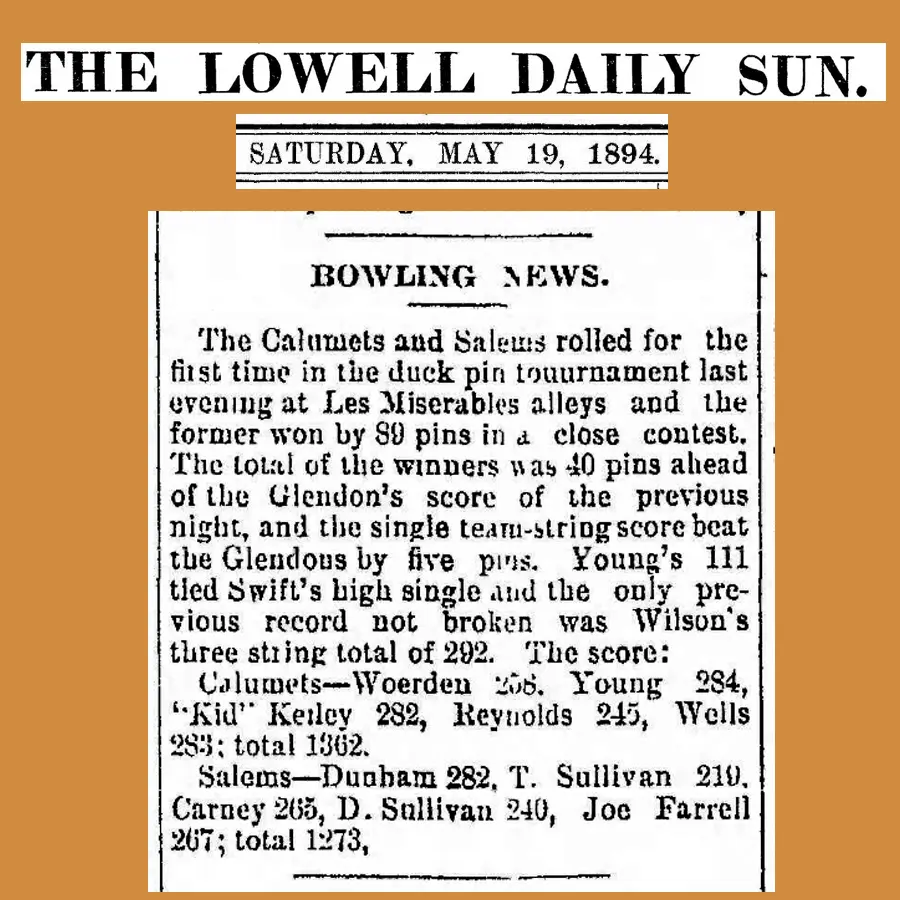
A newspaper clipping from the Lowell Daily Sun shows that duckpin bowling was played in the city as early as 1894.
“It’s like stepping into a whole other world,” says Manning School of Business grad Grace Dockery ’26, who spent the spring semester working with the bowling alley’s co-owners through Mill City Consulting, a course that gives students real-world experience helping to grow local businesses.
Dockery, along with rising senior business majors Hari Verma, Tony Ferriero and Jarrod Racki, helped co-owners Michael Wetmore and Tom Couturier explore ways to modernize operations, strengthen marketing and reach younger customers without sacrificing the character that has made North Chelmsford Lanes a community fixture for more than 80 years.
“The students were great to work with. The communication was there. They listened to what we had to say for our ideas,” says Couturier, a longtime North Chelmsford Lanes patron who partnered with Wetmore to buy the business in 2025. They connected with Mill City Consulting through Manning School Department Assistant Susanne Ferrara, a bowling league member at the lanes.
The students designed a new logo and developed branded social media templates on Canva to help promote leagues, parties and special events. Since the business’ only online presence is its Facebook page, Verma used AI-assisted development tools to create a prototype website.
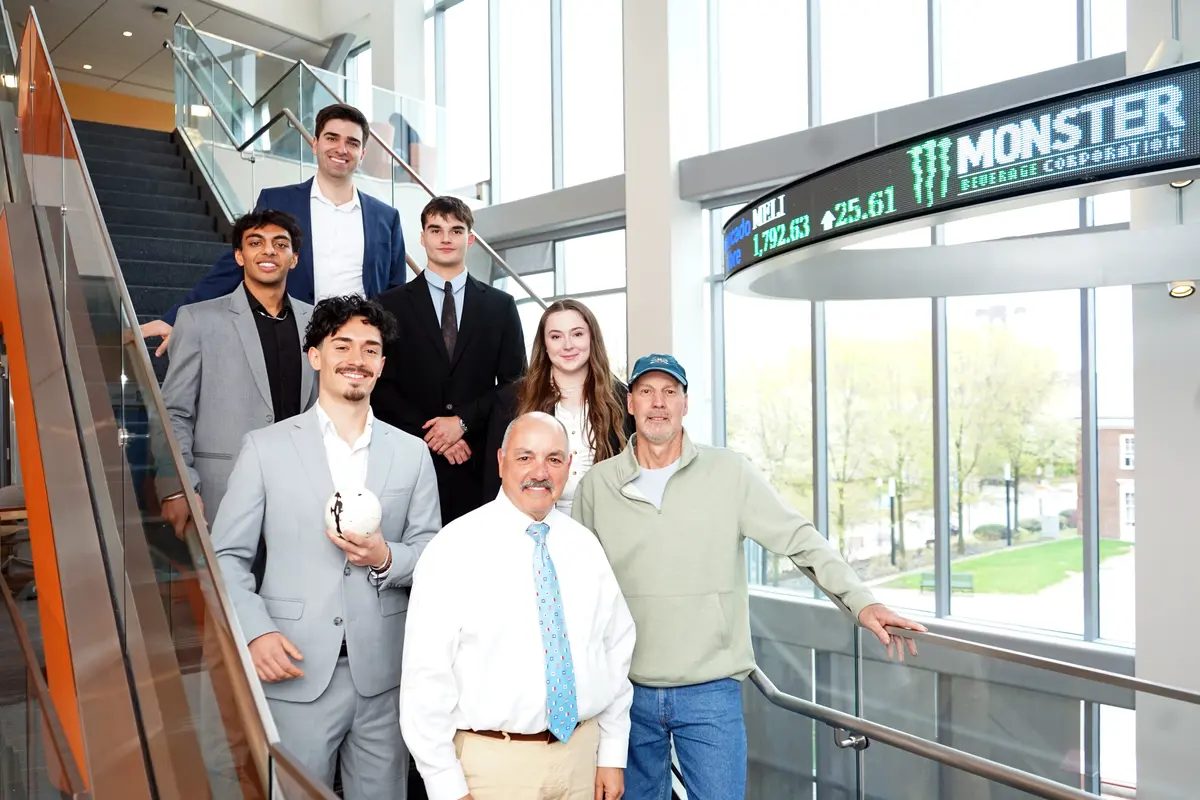 Image by Ed Brennen
 North Chelmsford Lanes co-owner Michael Wetmore, front right, and league member Joe Santoro, front center, visited campus to hear the final presentation of the Mill City Consulting class led by adjunct faculty member Daniele Parravano, top. The student team included, clockwise from top right, Jarrod Racki, Grace Dockery, Tony Ferriero and Hari Verma.
Verma also helped develop an automated Excel-based bookkeeping system to replace the owners’ paper-and-pencil recordkeeping.
Not every recommendation may be implemented exactly as presented, but Couturier says the students brought valuable perspectives and fresh ideas.
“The spreadsheet that they made was awesome,” he says. “We only need a little bit of what they gave us, but maybe someday we’ll need more.”
Dockery, a Tewksbury native with concentrations in management and entrepreneurship, worked with the North Chelmsford Historical Society to uncover old photographs of the building.
“Grace found some really cool stuff that we hadn’t seen,” Couturier says.
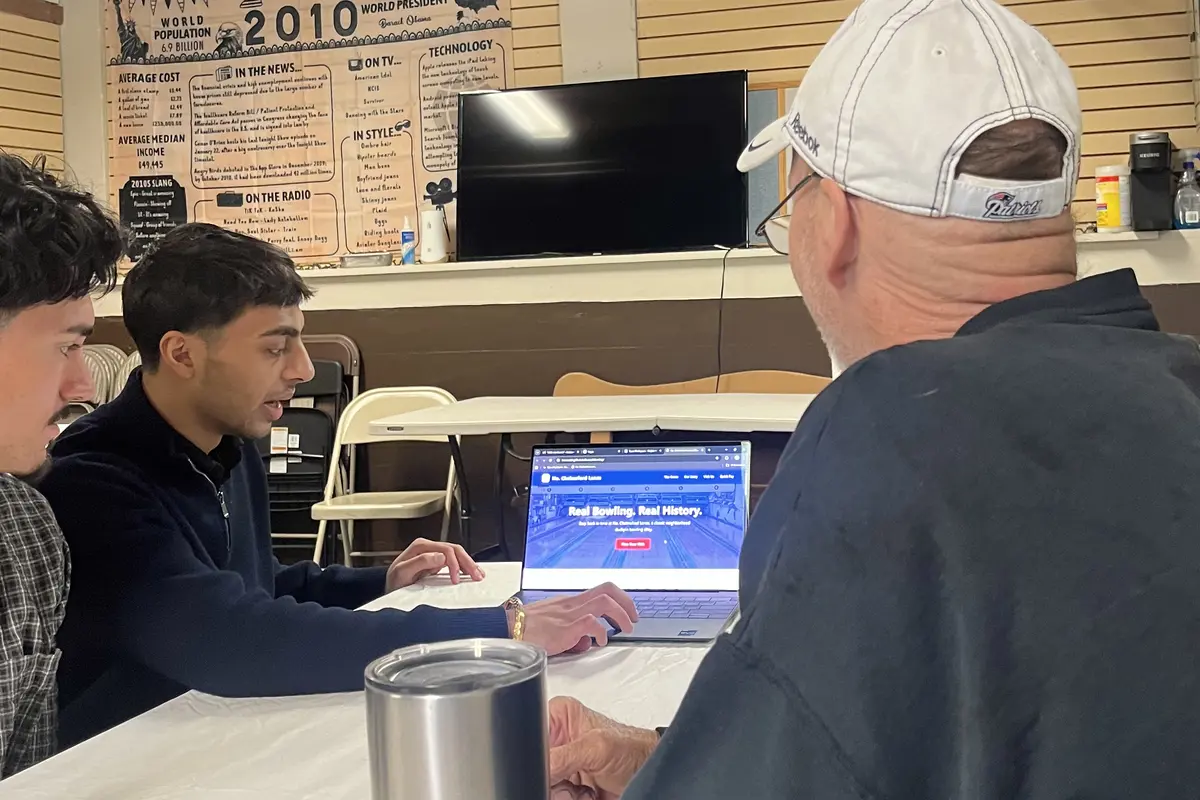 Image by Grace Dockery
 Business major Hari Verma shows North Chelmsford Lanes co-owner Michael Wetmore a prototype website he created for the duckpin bowling alley.
“It helped me look at pain points in a different way,” says Dockery, who recently began a full-time talent acquisition position with Teradyne. “Taking all of the information from strategy classes and actually implementing it into a project added a lot of value.”
Mill City Consulting is taught by adjunct faculty member Daniele Parravano and supported by Executive in Residence David Laurello, who serves as an advisor and co-instructor.
“The course gives students hands-on, career-connected experience while allowing them to apply what they are learning in the classroom,” Parravano says. “Dave and I have really enjoyed seeing the students grow, build relationships with business owners and help solve challenges that matter to the community. That connection between students, the university and local businesses is what makes the Manning School of Business special.”
Keeping a duckpin alley running requires more than attracting customers. The specialized pin-setting machines used by the sport are no longer manufactured, making repairs increasingly difficult.
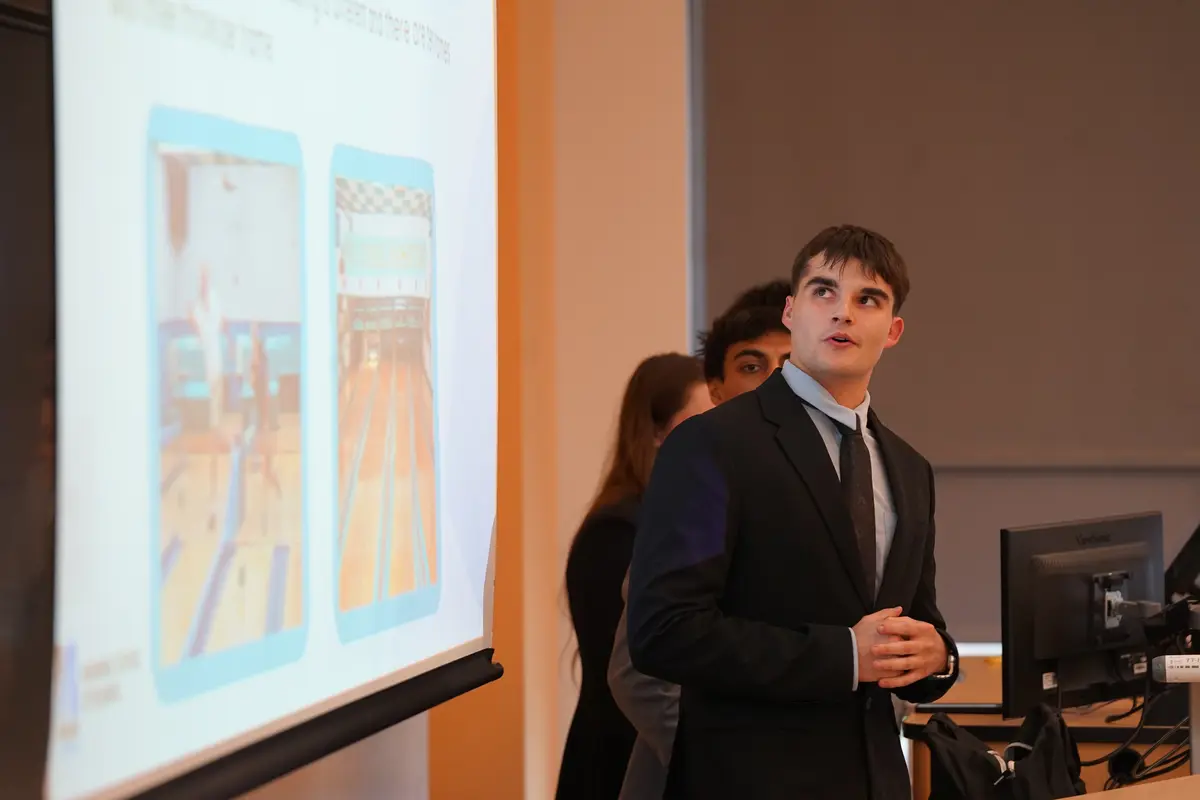 Image by Ed Brennen
 Business major Jarrod Racki shares some of his group's recommendations during the Mill City Consulting course's final presentations this spring.
Despite those challenges, Wetmore and Couturier have continued making improvements to the facility while preserving its historic character. They closed the business for the month of June to replace all six lanes, using salvaged wood from a bowling alley in upstate New York. They have also bought brand-new bowling shoes, and they plan to spruce up a back room for group parties.
Like his fellow consultants, Verma had never tried duckpin bowling before the project. Now, he looks forward to introducing the sport to his friends.
“It’s definitely harder than it looks,” says Verma, who is working this summer as a research assistant with Associate Professor of Finance Sanghill Kim.
While Verma doesn’t see himself going into a career as a business consultant, he’s glad he took the Mill City Consulting course.
“It’s such an eye-opening look into the world of business,” he says. “It was probably one of the best classes I’ve taken at UMass Lowell, hands down.”
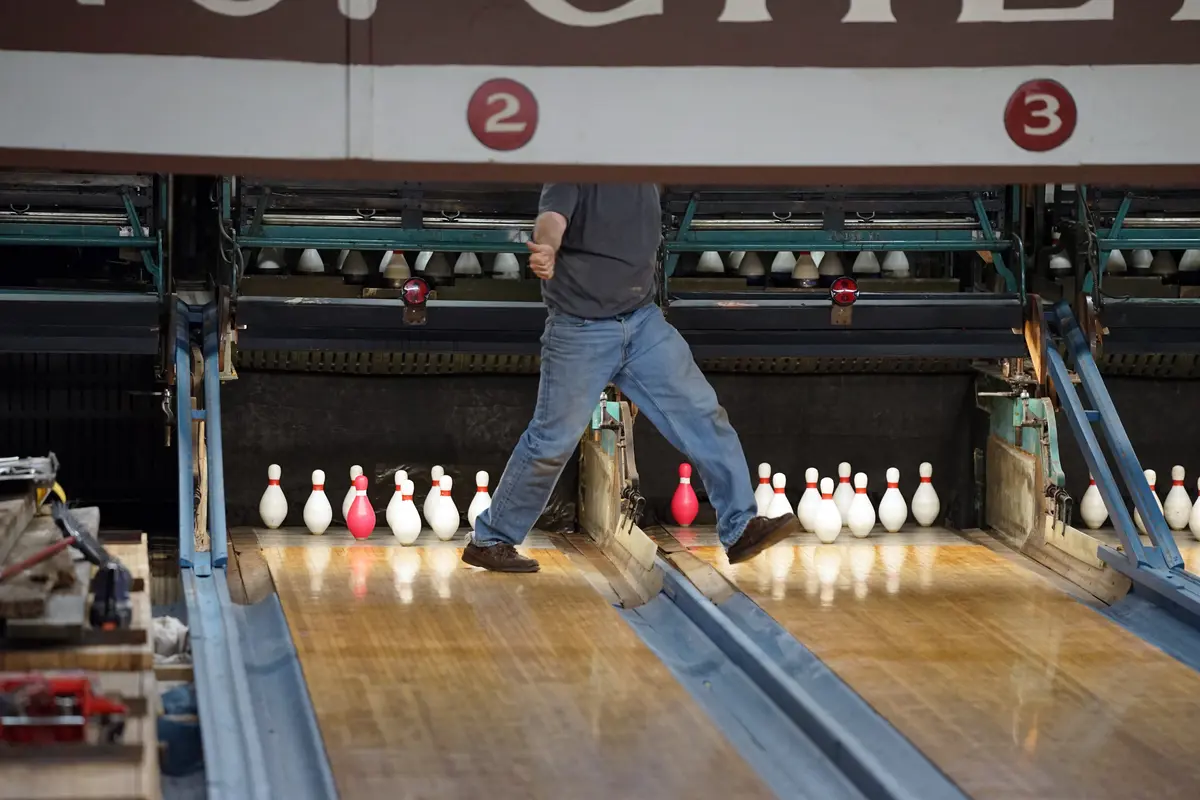 Image by Ed Brennen
 North Chelmsford Lanes co-owner Tom Couturier gives a thumbs up to bowlers after clearing a problem with the pin-setting machinery.