
 Image by courtesy
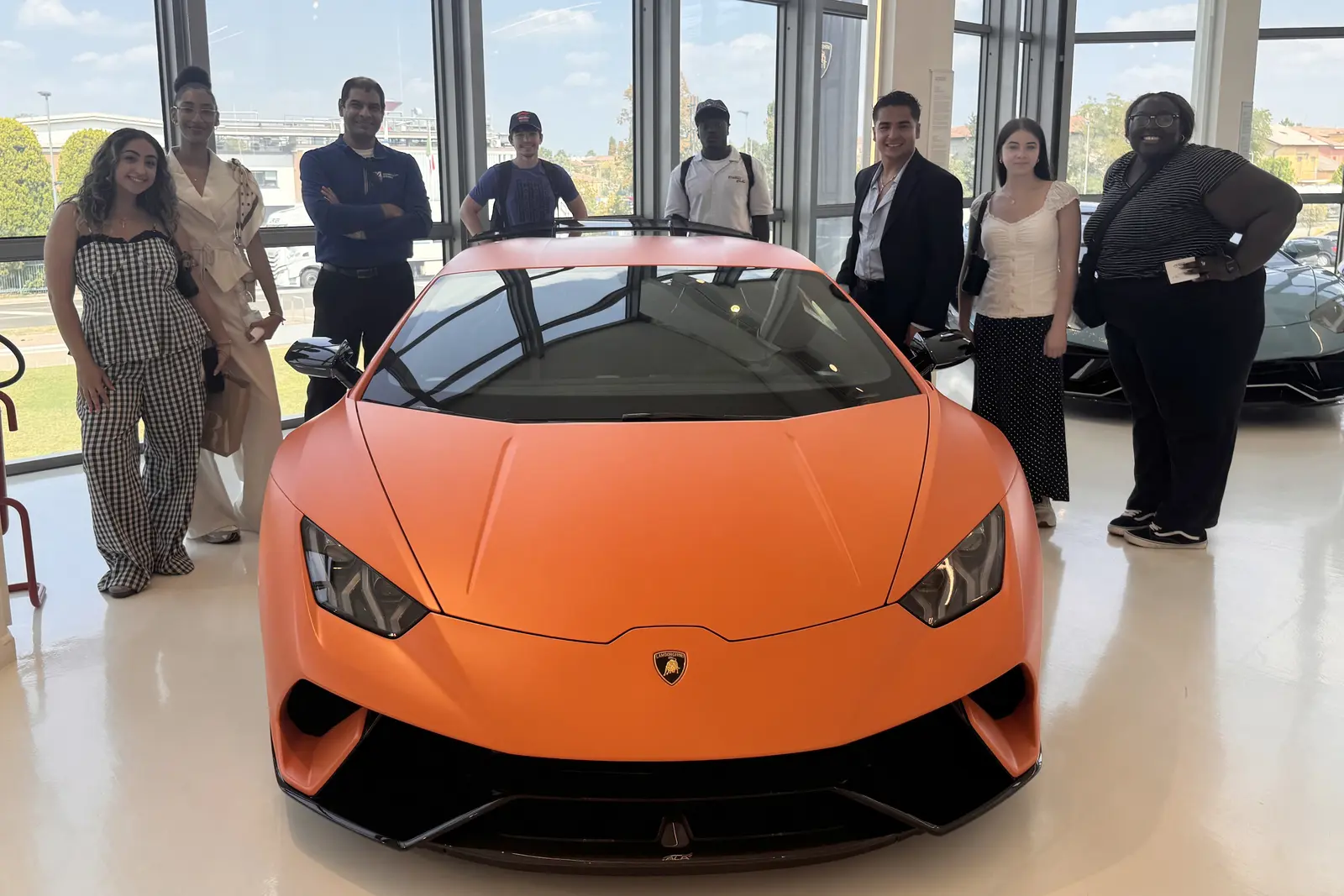
 As part of the International Business and Emerging Technologies study abroad course, Manning School of Business students visited the Lamborghini headquarters in Modena, Italy.
Pasta and Lamborghinis don’t have much in common.
But for seven Manning School of Business students studying in Italy this summer, visiting the factories where both are made offered an illuminating lesson in international business.
At Barilla, students saw a massive operation where automation helps produce pasta at an enormous scale. At Lamborghini, they watched skilled employees assemble highly customized luxury vehicles. A visit to motorcycle manufacturer Ducati provided yet another approach to balancing technology, efficiency and craftsmanship.
“Three world-class companies, and the right amount of automation was different at each one,” said junior Rylie Hamblin, a finance and international business student from Middleborough.
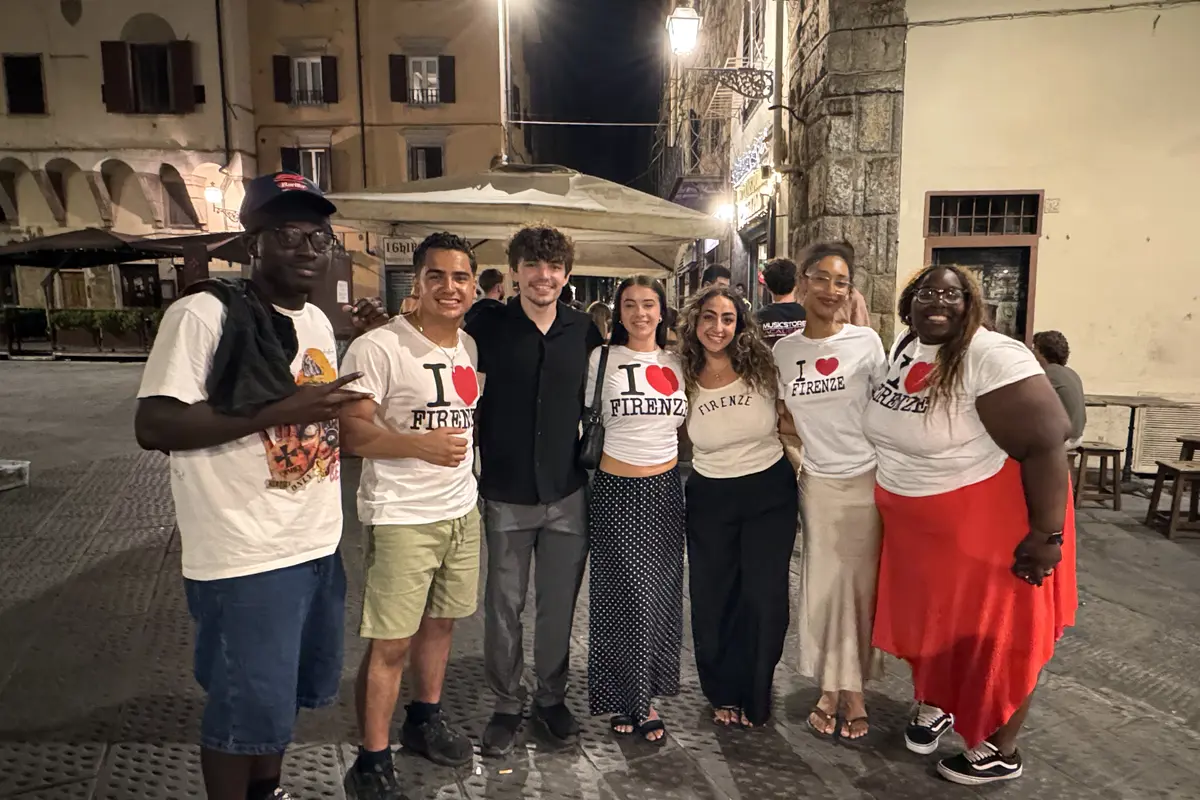 Image by courtesy
 Seven Manning School of Business students spent three weeks in Italy this summer learning about international business and emerging technologies.
Based in Florence, students combined classroom learning with cultural experiences across Italy. The program also included a cooking class, visits to the Uffizi Gallery and Michelangelo’s David and excursions to Cinque Terre and Rome.
“What stood out most,” Deokar said, “was seeing students ask thoughtful questions, make connections across business, technology and culture, and learn from experiences that went far beyond a textbook.”
For Brandon Diaz ’26, the company visits provided a chance to go behind numbers he had previously encountered as a finance student.
“Last semester, I analyzed Ferrari and Volkswagen Group as investments. This summer I walked the floors behind those numbers,” said Diaz, a Lowell native who took the study abroad course as his last program requirement for graduation. “Financial performance does not start on a spreadsheet. It starts with people, processes and decisions inside the business.”
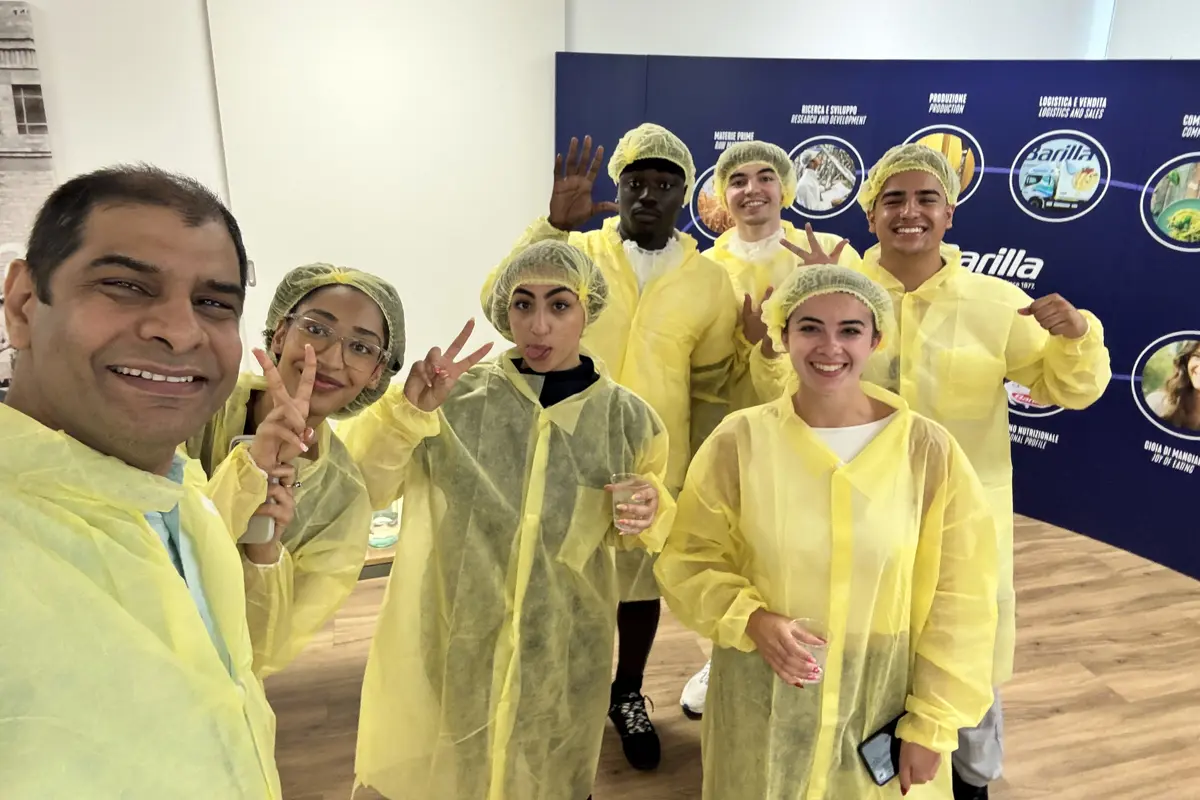 Image by courtesy
 Manning School of Business students toured the Barilla pasta company in Parma, Italy.
“At Ducati and Lamborghini, I noticed technology being used to support employees rather than completely replace them,” said Sands, a junior marketing student from North Reading.
Students found business lessons away from the factory floor, too.
Hamblin was surprised by a Zara fast fashion checkout counter in Florence that identified every item in her basket at once. Combined with differences she observed in stores, restaurants and everyday life, the experience challenged some of her assumptions about business and technology.
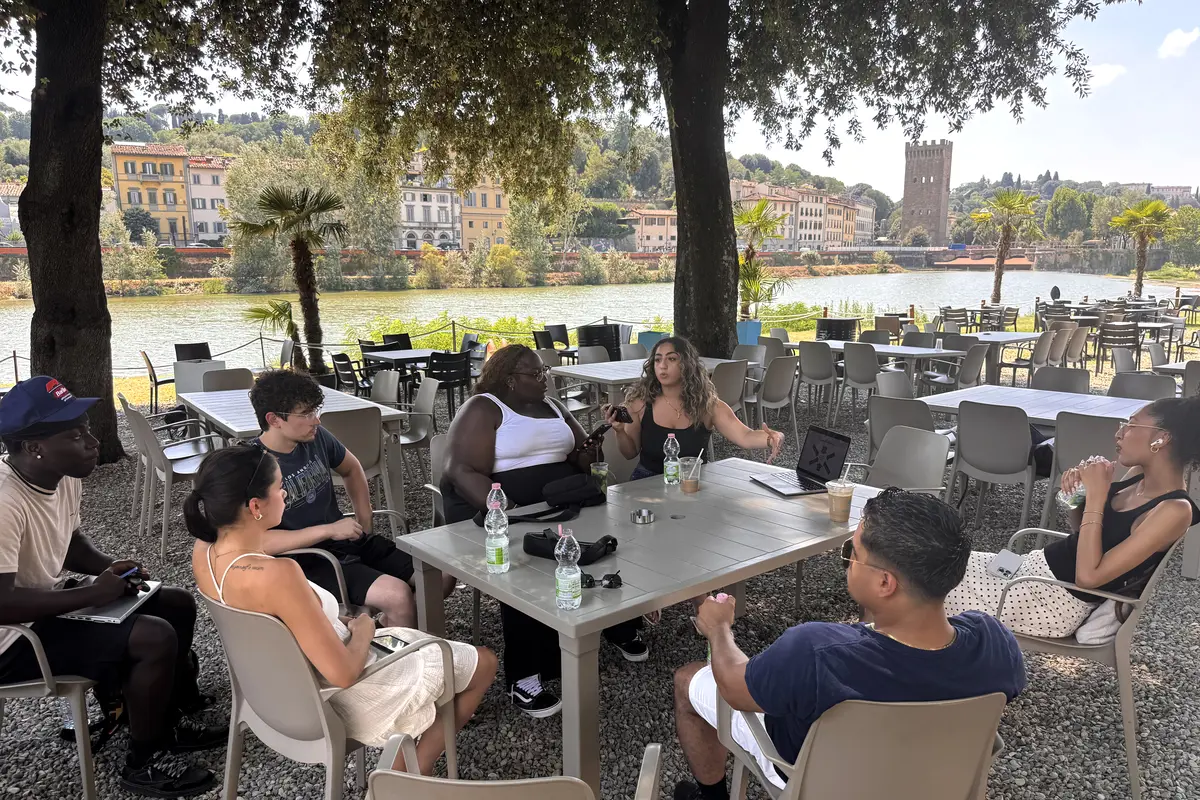 Image by courtesy
 Manning School students make their final presentations on the banks of the Arno River in Florence.
The group also included business students Joselyn Dos Santos, Ashley Prince and Merna Beshay ’26, who took the course after completing her international business and marketing studies to fulfill her dream of studying abroad.
For Osei-Bonsu, a senior finance and management information systems student from Dracut, the experience offered a new perspective on business.
“Before this program, business to me meant numbers on a page, market entry strategies, buying and merging companies, ownership percentages,” he said. “I left with a much deeper respect for the people behind the balance sheets.”