

Topics: Alumni Research International
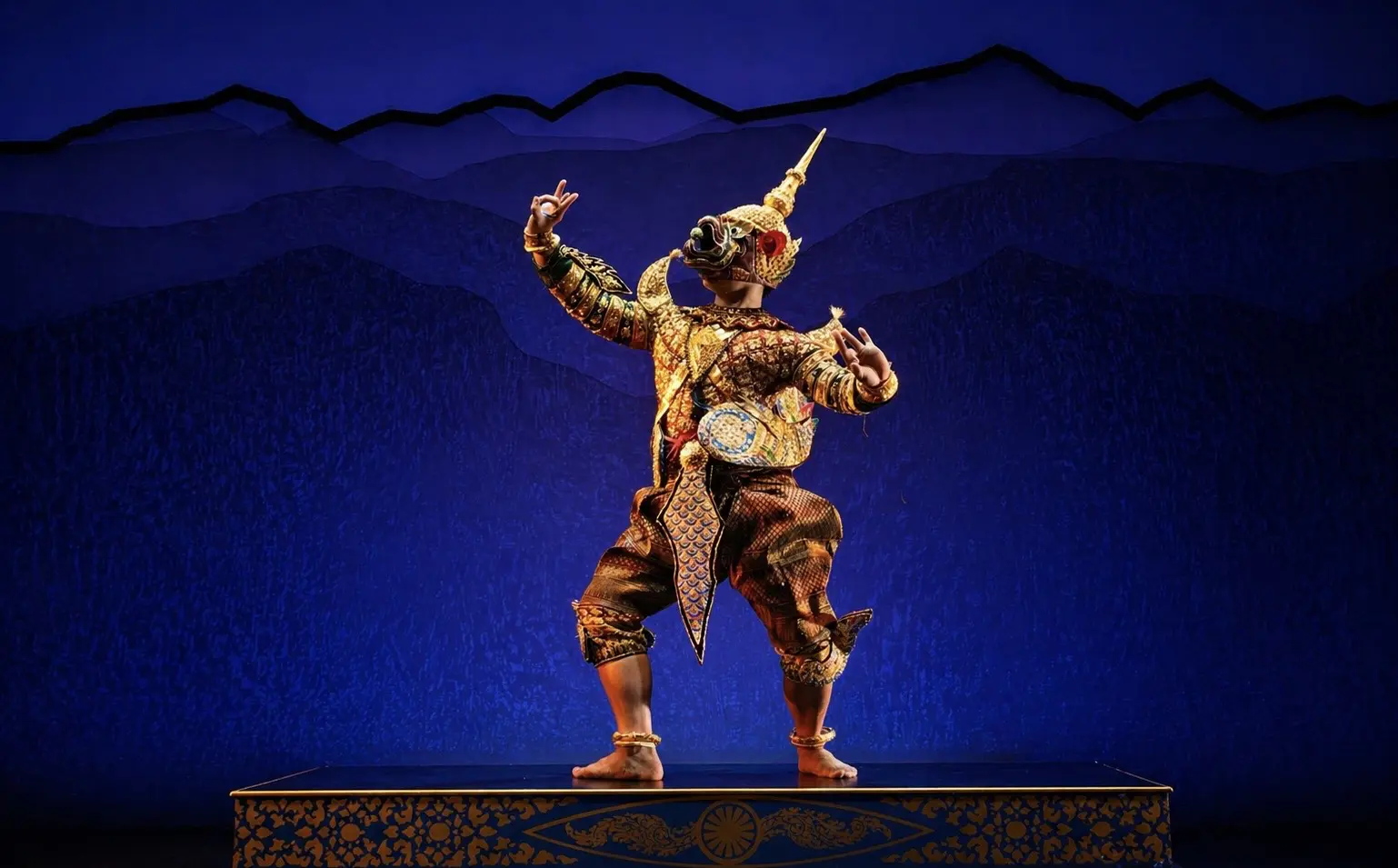 Image by Theresa Tha
 Chummeng Soun '21, seen here performing in "A Khmer Swan Lake," will use his Fulbright to study efforts to preserve traditional dance in Cambodia.
For the first time in nearly a half century, three recent graduates of UMass Lowell have won Fulbright U.S. Student Program Awards to do research and teach abroad.
The Fulbright awards are available to graduating college seniors, graduate students and young professionals, who can use them to pursue graduate study, conduct research or teach English overseas. The last UMass Lowell graduate to win a Fulbright U.S. Student Award was Susan A. Bosworth, in 1979, to study ethnomusicology in Poland.
This year’s winners include two recent alumni, both Honors College graduates, who received Fulbright Open Study/Research Awards, and one who qualified for a Fulbright English Teaching Assistant Award.
Chummeng Soun ’21, of Lowell, program director and a leading dancer with the Angkor Dance Troupe, a Cambodian American dance company, will spend 10 months in Cambodia working with dancers there who are trying to preserve their culture’s classical dance tradition, which was nearly eradicated by the Khmer Rouge genocide of the late 1970s.
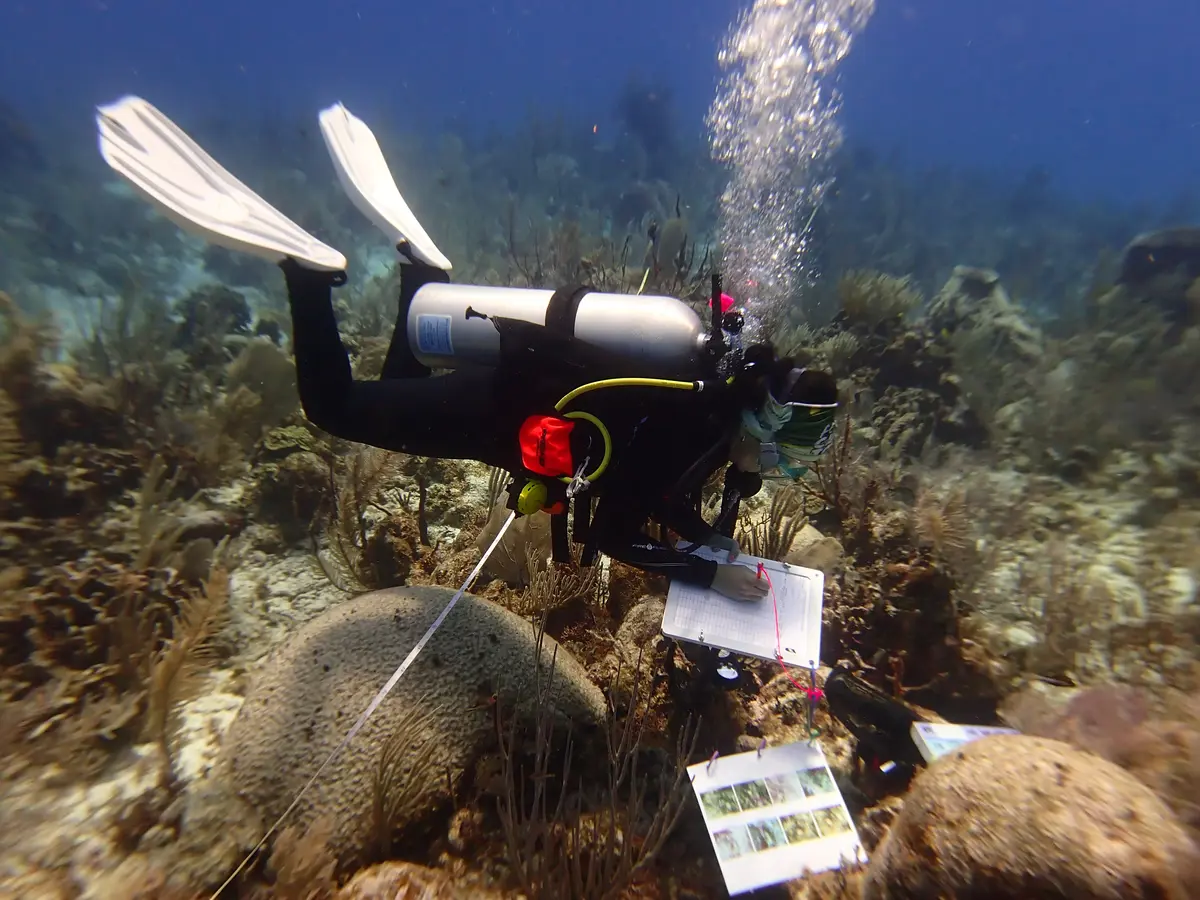 Image by Courtesy
 Caroline DeSouza '24, seen here on a research dive to study corals, will study fish in two Amazonian rivers in Brazil on her Fulbright.
Biology and economics double major Caroline DeSouza ’24, of Boxford, will spend nine months in Brazil researching how the microbiomes of a single fish species adapt to life in two very different rivers.
A third alum, Samantha Dress ’22, a teacher, was awarded a Fulbright English Teaching Assistant grant to teach English in South Korea for a year, but she was unable to accept it.
Rae Mansfield, associate director of scholarship and curriculum for the Honors College, who shepherds students and young alumni through the process of applying for national scholarships, is celebrating the end of a long Fulbright U.S. Student Award drought.
“We’ve had finalists year after year, but this year, everyone who became a finalist became a grantee,” Mansfield says. “I’m so proud of everybody.”
Mansfield encourages graduating seniors and young alumni who are interested in a student Fulbright award to start working on their applications for the 2027 cycle now, as they must find sponsors abroad.
Applications are due to the university’s recently established faculty Fulbright committee, which interviews and recommends candidates, in mid-September and to the national Fulbright program in early October.
DeSouza says she began reaching out to potential sponsors for her research last June, while Soun, who applied unsuccessfully for a student Fulbright as a senior five years ago, says potential applicants should get to work early so they can take full advantage of the feedback and support that Mansfield provides.
“It was so pivotal to have Rae in this whole process,” he says. “Before, we didn’t have a national scholarships advisor; we didn’t have a Fulbright committee.”
The faculty Fulbright committee includes World Languages and Cultures Chair Maria Matz, History Professor Christopher Carlsmith and Philosophy Assistant Teaching Professor Aaron Shepherd.
Preservation and Innovation in Cambodian Dance
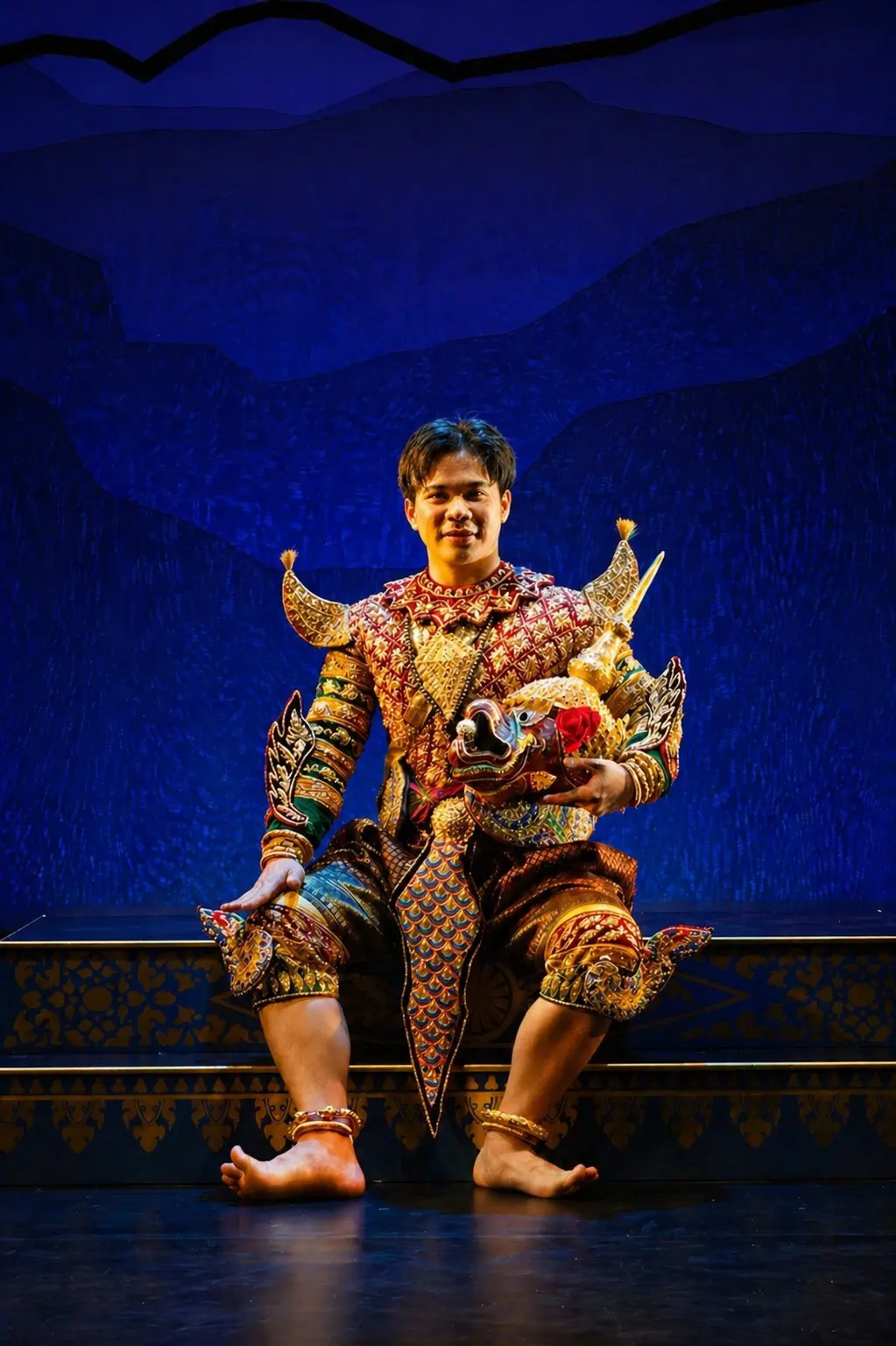 Image by Theresa Tha
 Soun danced the part of the evil sorcerer Krut Sampali for Angkor Dance Troupe's production of "A Khmer Swan Lake" at Merrimack Repertory Theatre.
He will also study Cambodians’ efforts to preserve traditional Khmer dance at a time when fewer and fewer students are willing to undergo years of rigorous classical training – with the result that traditional dance is in danger of transforming from an integral part of the culture to mere entertainment for tourists.
“Its interpretation and integrity have been challenged by modernity” and commercialization, he says.
At the same time, Soun says, Cambodian dancers who fled to other countries have too often been rigid in their attempts to preserve the classical dance forms without allowing room for innovation.
He wants to start building a bridge between the diaspora and Cambodian dancers, collaborating with them on a public performance there.
“I’m going to see if we can find ways to push dance beyond this idea of ‘contemporary’ versus ‘preservation,’” he says.
Soun found out he had received the fellowship last month during a 20-show run at the Merrimack Repertory Theatre of Angkor Dance Troupe’s “A Khmer Swan Lake.” The performance merged classical Cambodian dance, music and mythology with Tchaikovsky’s score and the Western ballet’s plot.
That production took two years to realize, with Soun playing a key role in recruiting dancers and musicians from across the U.S. diaspora.
Soun, who danced the part of the evil sorcerer, says the production is one model for how Khmer classical dance can innovate and evolve organically while still preserving its place at the center of Cambodian culture.
“‘A Khmer Swan Lake’ is … not just a reflection of our history, but a radical creation that lives in its time,” Soun says.
His sponsors in Cambodia are the Royal University of Art’s Department of Choreographic Arts and the Bophana Center, a digital archive. Both are in Phnom Peng, the capital.
Adaptation in Fish Microbiomes
DeSouza, left, with Biology Assistant Professor Sarah Gignoux-Wolfsohn and other members of her lab on a dive boat. DeSouza, who as a student studied changes to the microbiomes – colonies of bacteria that live on or inside their host organisms – of coral under different environmental stressors, has continued that work as a full-time technician in Biology Assistant Professor Sarah Gignoux-Wolfsohn’s lab for the past two years. 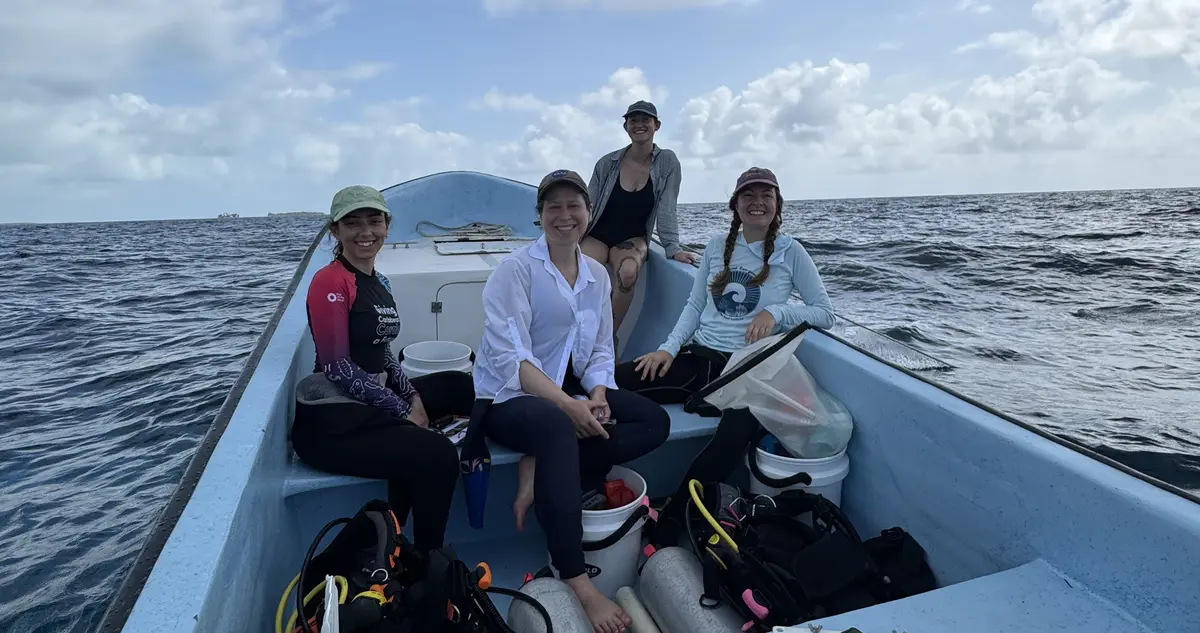 Image by Courtesy
“We’re trying to figure out what different microbes help corals accomplish,” says DeSouza, who obtained her research scuba diving license through UMass Lowell. “We sample corals pre-disease, post-disease and through marine heat waves … to see how they adapt to be more resilient.”
For her Fulbright, under the sponsorship of researchers at the Laboratory for Ecophysiology and Molecular Evolution at the Brazilian National Institute for Amazonian Research in Manaus, DeSouza will compare the microbiomes of a freshwater fish species, the dwarf cichlid, in two different rivers that feed into the Amazon.
Some dwarf cichlids live in the Solimões River, which is shallow and muddy. Others live in the Rio Negro, a “black water” river that is deeper, clearer and more acidic, she says. She hopes to learn how their microbiomes differ and help them adapt to such dissimilar environments.
Since submitting her Fulbright application last October, DeSouza has learned that weather experts are predicting a major El Niño event – higher than average ocean temperatures in the Pacific near the equator – that could lead to a heat wave, drought and low river levels in Brazil.
If DeSouza can sample the dwarf cichlids’ microbiomes both before and after the El Niño event, that could add another layer to her research project, she says.
The research is important because, like humans, fish have microbiomes both on their skin and in their digestive tracts, she says.
“It’s a good time to learn how marine and aquatic organisms use their microbiomes to adapt to changes,” she says. “We can use that knowledge to support wildlife in the face of environmental stressors.”
Related Stories