
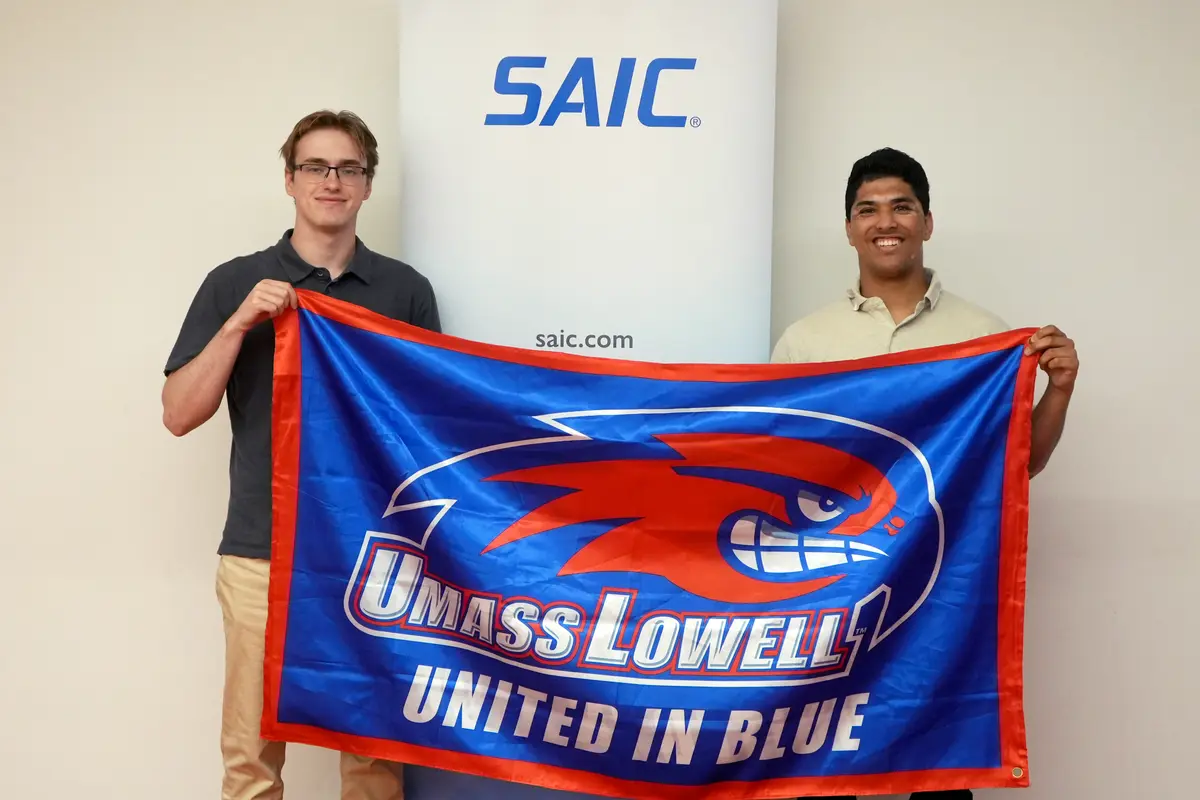

Miner School of Computer and Information Sciences faculty are advancing the field of cyberscience through research, while students gain career-connected experiences.
Imagine that amid a heat wave in the middle of August, you walk into your office building, expecting to feel a rush of cool air. Instead, you are hit by an oppressive wall of heat and humidity.
You soon discover that your organization is the victim of a cyberattack, with hackers gaining access to the building management system. Work grinds to a halt as the cybercriminals threaten to keep the system offline until ransom is paid.
This scenario may seem like a stretch, but the reality is that three out of four companies have building management systems with known vulnerabilities that cyberattackers can exploit, according to a 2025 report by Claroty, a cyber-physical systems protection company.
Xinwen Fu, a professor in the Miner School of Computer and Information Sciences, is working to prevent attacks like this from happening. His research focuses on developing automated methods for detecting and addressing vulnerabilities in building management systems before they can be exploited.
“We are pioneers in this field,” says Fu, who is working with global technology leaders, including Siemens and Johnson Controls, to analyze real-world systems.
Fu’s work is part of a broader effort within the Miner School, where faculty are advancing the field of cyberscience through research ranging from securing sensitive data to optimizing wireless networks using artificial intelligence (AI). Students are also gaining career-connected experiences in cyberscience by working in labs, participating in cyberdefense competitions and interning with cutting-edge companies.
“UMass Lowell has established itself as a leader in cyberscience by combining impactful research with real-world learning opportunities,” says Cindy Chen, chair of the Miner School.
Research Shaping Cyberscience
When the Federal Bureau of Investigation (FBI) launched the Internet Crime Complaint Center in May 2000, it received about 2,000 cybercrime complaints every month. Now, it averages more than 2,000 complaints a day.
And the economic cost of these crimes has exploded. In 2024, cybercrimes, including phishing and data breaches, resulted in a loss of $16.6 billion, a 33% increase over the year before, the FBI reported.
“People often mistakenly feel that hackers will have no interest in them,” says Fu. “Every company, every institute, everyone needs cybersecurity.”
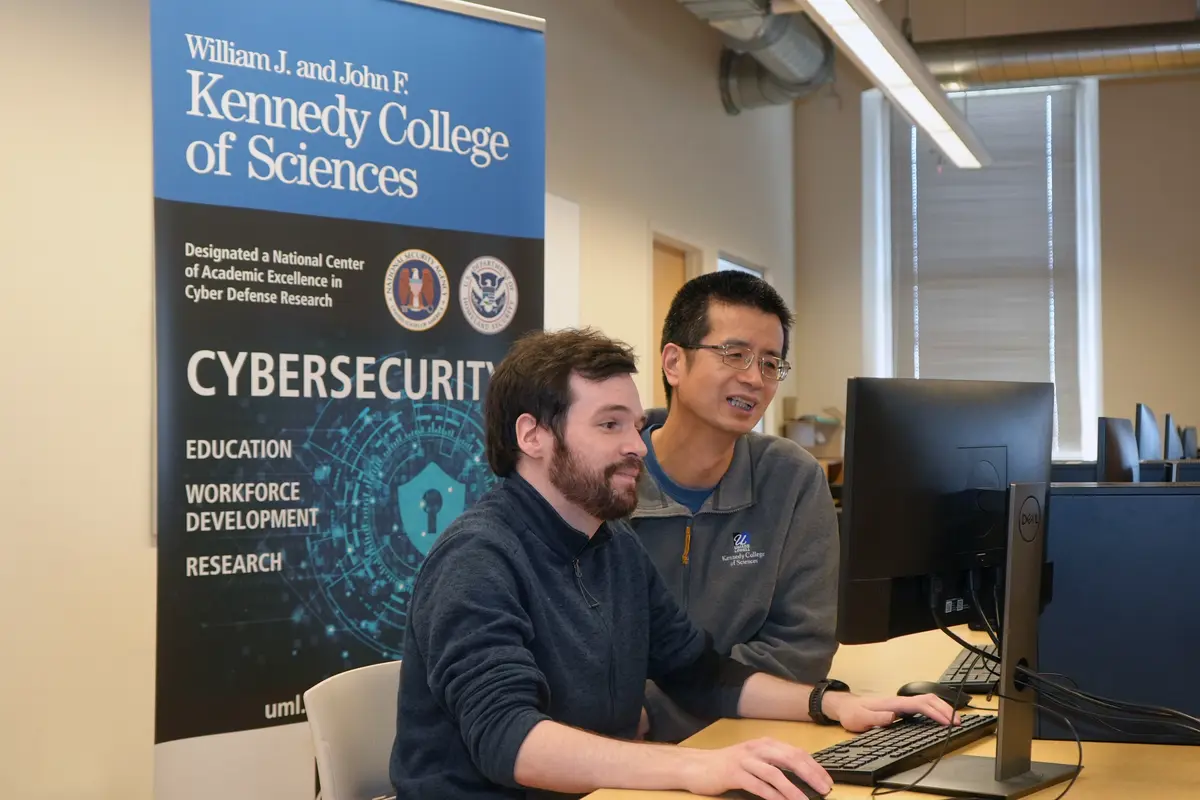 Image by Brooke Coupal
 Computer science Ph.D. student Matthew Harper ’23, left, and Miner School Professor Xinwen Fu, right, are developing automated methods for detecting and addressing vulnerabilities in building management systems before they can be exploited.
In addition to developing automated ways to secure building management systems, Fu is researching how cyberattacks operate across complex networks and how they can be detected more efficiently. One such network that Fu has focused on is Tor, an open-source software used to enable anonymous communication.
“Tor is good for anti-censorship. In some countries, you don’t have free speech, but you can use Tor to post about anything, and nobody can find you,” he says. “However, we found it’s also abused by hackers.”
By analyzing Tor traffic, Fu and his research team found dozens of active cyberattacks, including ones targeting cloud storage systems. They are now exploring how large language models — AI tools like ChatGPT that can analyze and generate human-like text — can be used to quickly identify malicious activity.
Anitha Gollamudi, an assistant professor in the Miner School, is focused on keeping sensitive data secure.
Funded by an Office of Naval Research grant worth nearly $800,000, Gollamudi and her lab group are developing a novel framework that automatically places sensitive data into a highly secure area within a computer’s hardware, known as an enclave. This ensures that the information remains protected even if other parts of the system are compromised.
“Our research is building additional defenses against cyberattacks,” Gollamudi says.
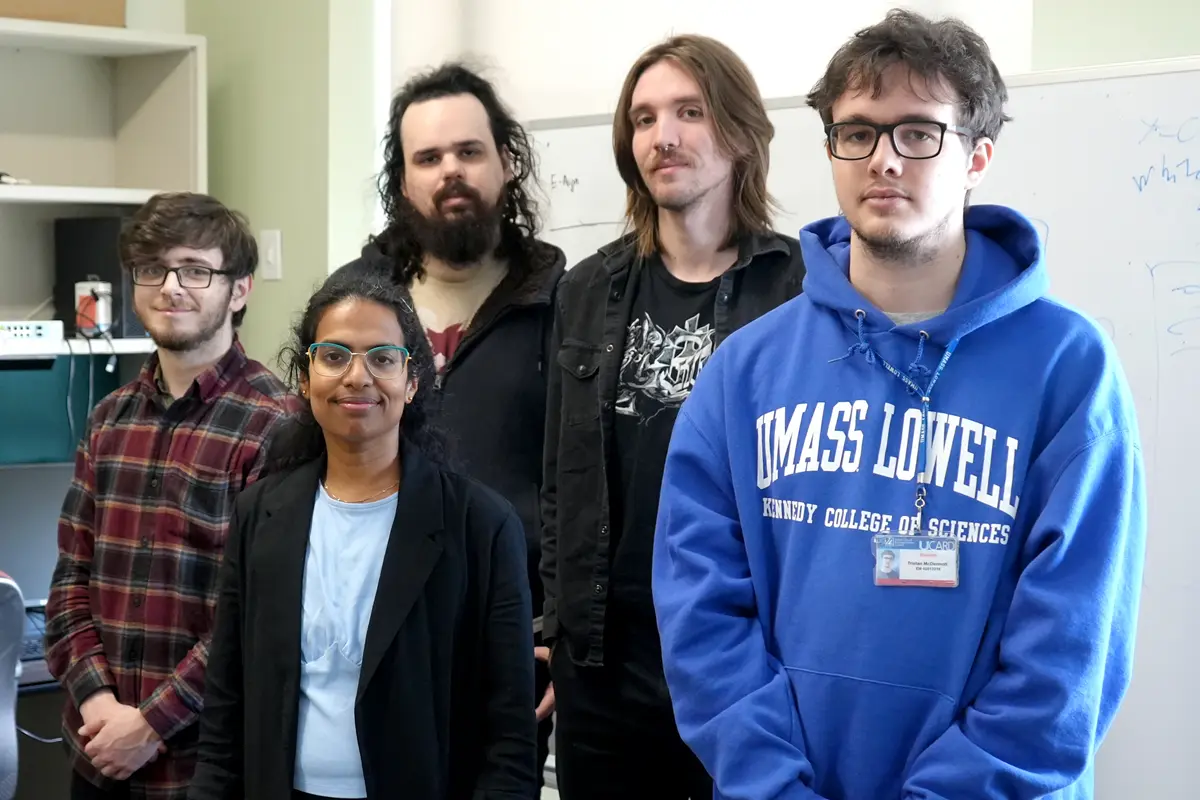 Image by Brooke Coupal
 Miner School Assistant Professor Anitha Gollamudi, front, works with student researchers, including, back row, from left, Benjamin Houle, Wesley Nuzzo, Samuel Dodson and Tristan McDermott.
Currently, software developers must identify which parts of a computer application should be placed in an enclave, a process that Gollamudi calls “tedious, error-prone and largely repetitive.”
Her framework addresses these issues by automatically identifying sensitive parts of the software and placing them inside the enclave, which tightly controls what can interact with the sensitive data.
Draper, a nonprofit research and development company and an anchor tenant in the Lowell Innovation Network Corridor (LINC), has taken an active interest in Gollamudi’s research because it aligns with the company’s mission to “ensure our nation’s security and prosperity by delivering transformative solutions.”
Gollamudi and Draper are collaborating on a separate project, which also aims to enforce security using enclaves. Through that partnership, Gollamudi recommended computer science Ph.D. student Samuel Dodson ’21 for the Draper Scholars Program, which funds his studies and connects him with the company’s experienced engineers and scientists.
“The professional connections are really valuable,” Dodson says. “I meet monthly with researchers at Draper, and they ask questions and share their ideas about our research.”
Preparing the Next Generation of Cyberscientists
According to the U.S. Bureau of Labor Statistics, overall employment in computer and information technology (IT) occupations is expected to grow by more than 8%, “much faster” than the average for all occupations over the next decade. About 317,700 computer and IT job openings are projected each year.
Miner School faculty are making sure that UMass Lowell students are prepared for those jobs, which span from information security analysts and software developers to computer programmers and research scientists.
“Through hands-on research opportunities, collaborations with industry partners and a curriculum that is evolving with the threat landscape, UML is training students not just to respond to today's threats, but to anticipate and prevent tomorrow's,” says Sashank Narain, an assistant professor in the Miner School. “The focus on practical, interdisciplinary problem-solving ensures that graduates leave with both technical depth and the adaptability needed in a field where the rules are constantly being rewritten.”
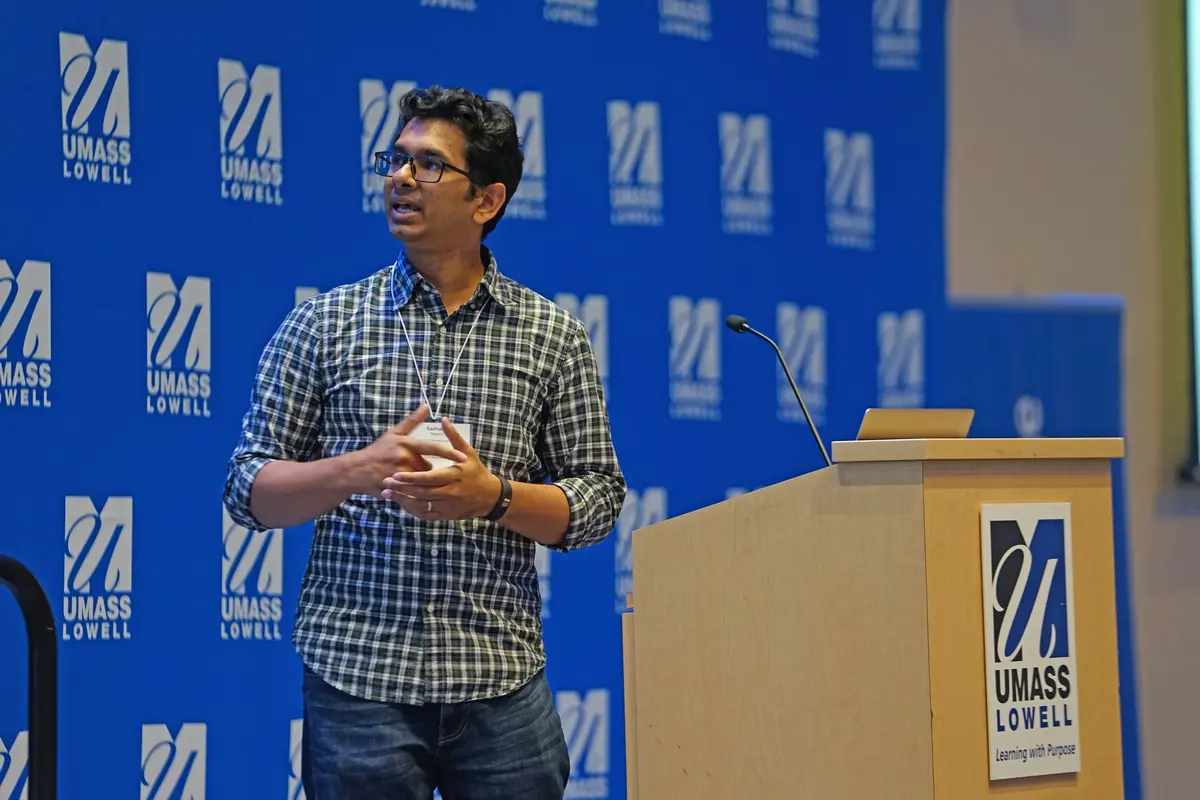 Image by Brooke Coupal
 Miner School Assistant Professor Sashank Narain is working to personalize how students learn about computer science by developing a large language model tool.
The National Science Foundation awarded Narain a three-year grant worth nearly $400,000 to develop a large language model tool that personalizes how students learn about computer science. The tool will use course materials and student notes to give relevant and tailored support to students, as opposed to generic answers that tools like ChatGPT provide.
“We want to build a tool that understands how a student learns and what a student already knows, so if the student is a beginner, they will get responses that are more focused on the basics of computer science, but if the student is advanced, then the large language model will adapt itself and start going deeper into certain topics,” says Narain, who is working on the project with Miner School Assistant Professor Samantha Reig and Criminology and Justice Studies Associate Professor Claire Lee. “We see the tool as a support system that helps students when they can’t immediately reach an instructor.”
In addition to building an educational tool, Narain is working on a research project that uses machine learning and AI to make wireless networks, such as 5G, more secure and efficient. He is also researching ways to improve on cyberattack detection tools by integrating AI. Narain is a member of the newly formed Center for AI Computing Research (AICORE), an interdisciplinary hub for advancing AI research from foundational models to real-world deployment in defense, health care, robotics and beyond.
When Narain isn’t busy with his research and teaching cybersecurity-related courses, he’s coaching a team of UMass Lowell students who compete in the Northeast Collegiate Cyber Defense Competition (CCDC), an annual contest designed to give college students experience defending a corporate network against cybercriminals. In March, the UMass Lowell team placed first in the Northeast CCDC for the second year in a row. They competed against teams including the University of Virginia and Stanford University in the National CCDC at the end of April.
“We have so many new people on our team this year, and they’re insanely talented,” says Rohan Paranjape, who recently graduated with a bachelor’s degree in computer science. He served as co-captain of UMass Lowell’s cyberdefense team. “They put in the work to go into these competitions as prepared as possible.”
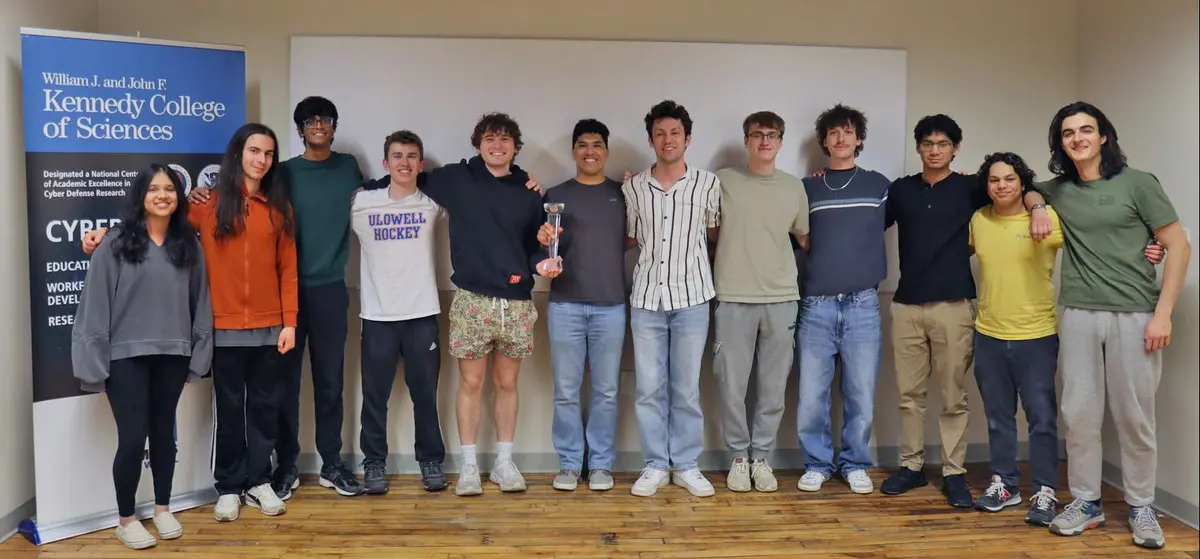 Image by Courtesy
 The UMass Lowell team, consisting of 12 computer science students, placed first in the Northeast Collegiate Cyber Defense Competition for the second year in a row. From left are Priyanshi Vyas, Ofir van Creveld, Sanjeev Shankar Vijaya Sankar, Michael Leahy, John Baker, Rohan Paranjape, Declan Battell, Viktor Akhonen, Seamus Brennan, Jibran Ahmad, Samuel Dasilva and Irakli Dzaganishvili.
The team credits their success in part to the Cyber Range, which is located on East Campus and serves as the university’s center for cybersecurity education, research and workforce development. Leading up to the competitions, the students were in the Cyber Range three times a week to run simulations on its servers.
“The Cyber Range gives students a hands-on environment where they can build the practical skills needed to succeed in the cybersecurity field,” says Fu, who is the director of the Cyber Range.
Like Narain, Fu is working to advance cybersecurity education. Funded by a three-year National Science Foundation grant totaling $330,000, Fu is developing educational modules that teach students about software security on the latest Microsoft Windows operating systems.
Partnerships Provide Opportunities
Science Applications International Corporation (SAIC), a global leader in technology integration, is collaborating with the university on several cybersecurity projects.
A key partner in LINC, a growing innovation ecosystem located on East Campus and stretching into downtown Lowell, SAIC awarded UMass Lowell $1.3 million toward the development of a state-of-the-art cybercenter. Located within LINC, the cybercenter will strengthen the resilience of the defense industrial base and expand a pipeline of skilled cyberprofessionals across the region.
The cybercenter includes a new security operations center (SOC), which, in addition to SAIC’s ongoing support, was established through a $300,000 grant from a joint effort between the Massachusetts Technology Collaborative’s MassCyberCenter and the Center for Advanced Manufacturing. The SOC, which will be located next to the Cyber Range, will provide area governments, nonprofits and businesses with expert guidance to address their cybersecurity needs, while giving UMass Lowell students opportunities for paid career-connected experiences.
The SOC will be managed by CyberTrust Massachusetts, a statewide nonprofit focused on growing the skilled workforce and strengthening the cybersecurity of local organizations. Asmaa Amiar, who recently graduated with a bachelor’s degree in information technology, completed a six-month internship with CyberTrust Massachusetts, in which she received hands-on training at SOCs located in Springfield, Boston and Bridgewater.
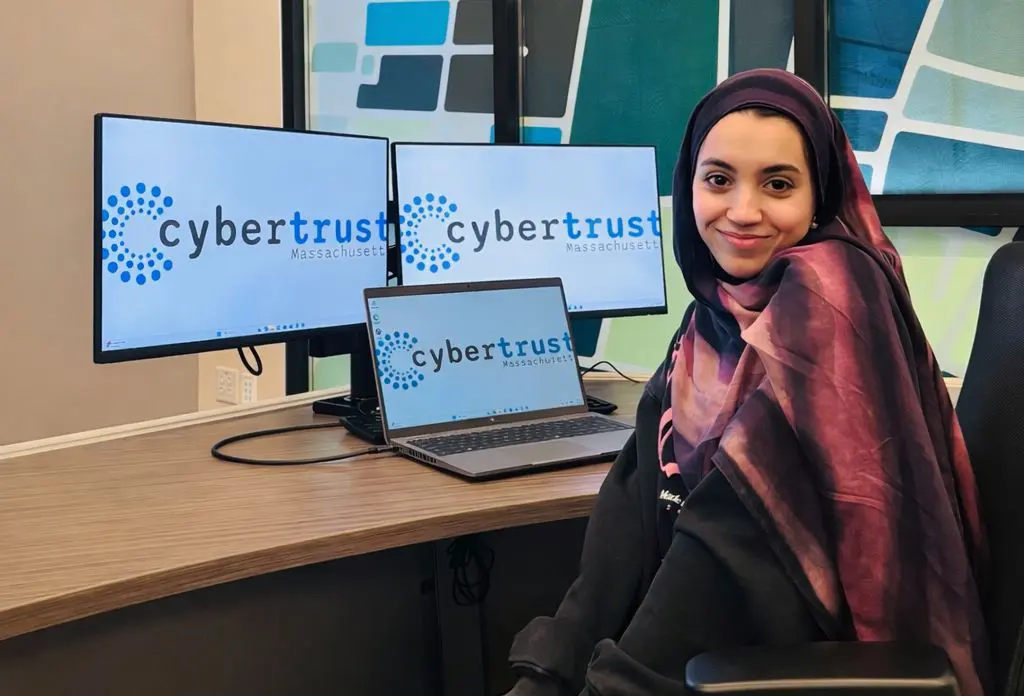 Image by Courtesy
 Information technology major Asmaa Amiar is interning with CyberTrust Massachusetts, a statewide nonprofit focused on growing the skilled workforce and strengthening the cybersecurity of local organizations.
“This experience has been very beneficial for me, because it is giving me direct exposure to the cybersecurity field and helping me build the technical and analytical skills needed to succeed in a SOC environment,” says Amiar. “UMass Lowell is helping to set me up for success by giving me a strong foundation in information technology, problem-solving and hands-on technical skills that I can apply directly in my internship and future career.”
Fu is excited for the future of cyberscience at UMass Lowell as facilities like the new SOC come online, industry partnerships expand to create more career-connected experiences for students, and faculty research continues to push the field forward.
“Cyberscience will continue to be essential across every industry,” he says. “As technology and AI evolve, there will always be a strong need for professionals who can secure and verify these systems.”
Related Stories