
 Image by Ed Brennen
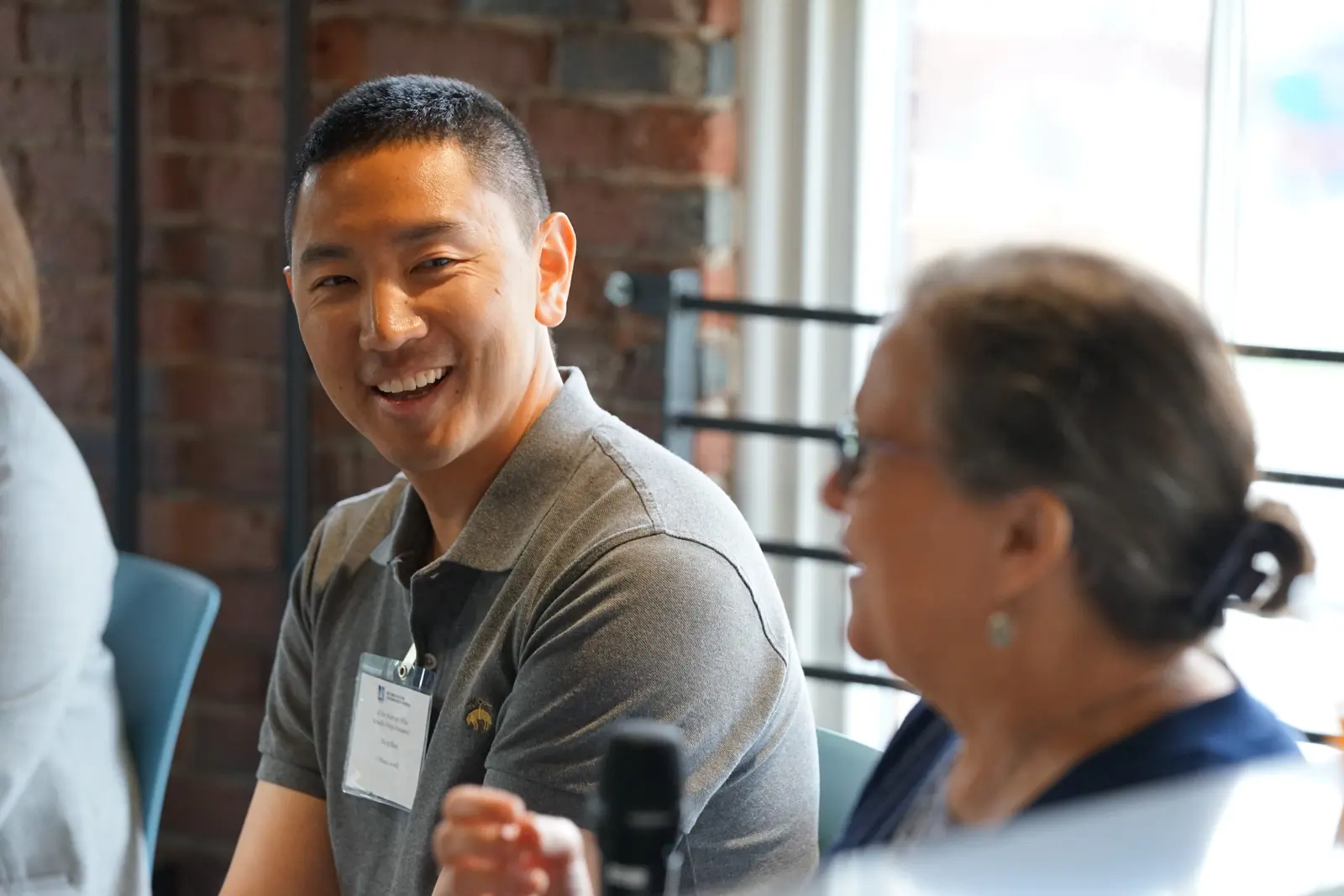
 Associate Professor of Computer Science Ming Shao smiles while Environmental, Earth and Atmospheric Sciences Teaching Professor Lori Weeden makes a point during the recent "AI for Startups" panel discussion, hosted by the Rist Institute for Sustainability and Energy and the Rist DifferenceMaker Institute.
Artificial intelligence is rapidly changing how businesses operate. But for startups with limited time and resources, determining where the technology creates real value — and where it introduces new risks — remains a challenge.
That topic drew entrepreneurs, students, faculty and industry professionals to a recent panel discussion hosted by the Rist Institute for Sustainability and Energy and the Rist DifferenceMaker Institute, “AI for Startups: What Actually Helps Founders?”
Moderated by DifferenceMaker Director Richard Juknavorian, the event brought together experts in business, banking, computer science, marketing and environmental science to discuss how startups can use AI strategically while navigating questions of ethics, privacy, sustainability and workforce development.
Panelists included Susu Wong, founder and CEO of Lowell-based digital marketing agency Tomo360; Hicham Naciri, senior vice president and director of digital innovation at Rockland Trust; Elissa Magnant, associate teaching professor of management and faculty director of the Donahue Center for Business Ethics and Corporate Social Responsibility; Ming Shao, associate professor in the Kennedy College of Sciences’ Miner School of Computer and Information Science; and Lori Weeden, teaching professor and associate chair of undergraduate programs in the Department of Environmental, Earth and Atmospheric Sciences.
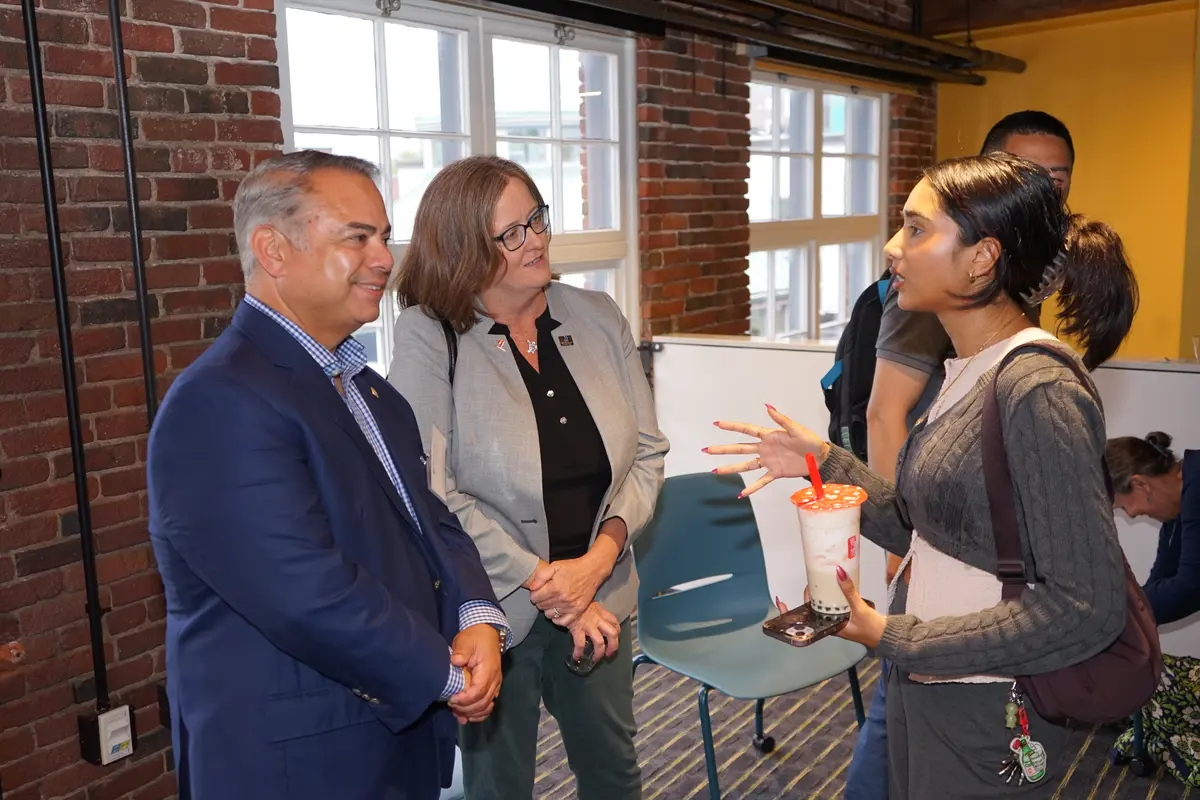 Image by Ed Brennen
 Senior business major Iniya Poovanen, right, chats with "AI for Startups" panelists Hicham Naciri, left, senior vice president at Rockland Trust, and Elissa Magnant, associate teaching professor of management.
Wong encouraged founders to think of AI as a “junior assistant” capable of handling repetitive and time-consuming tasks. She described using AI to review lengthy proposals, generate questions for prospective clients and summarize meetings — tasks that can save valuable hours for entrepreneurs who often wear multiple hats while building a business.
“If I were a founder that started today, I would ask AI, ‘Should I start this company based on this landscape, this industry? Who are the competitors out there?’” Wong said. “But you still have to use your judgment. That's the important part.”
Naciri encouraged entrepreneurs to think carefully about governance, privacy and intellectual property protections before integrating AI into their businesses. Information entered into some AI platforms could potentially be used to train future models, making it important for founders to understand how their data is being handled.
“You have to ensure that you protect your most valuable information, which is your intellectual property, your creativity,” he said. “You have to think about AI as an amplifier; it amplifies existing threats and risks.”
Among the attendees was Mike Gilmore of Andover-based Digital Health Solutions, which works with medical device startups. Gilmore said many early-stage companies are still trying to determine where AI fits into their business models and how they can use it effectively.
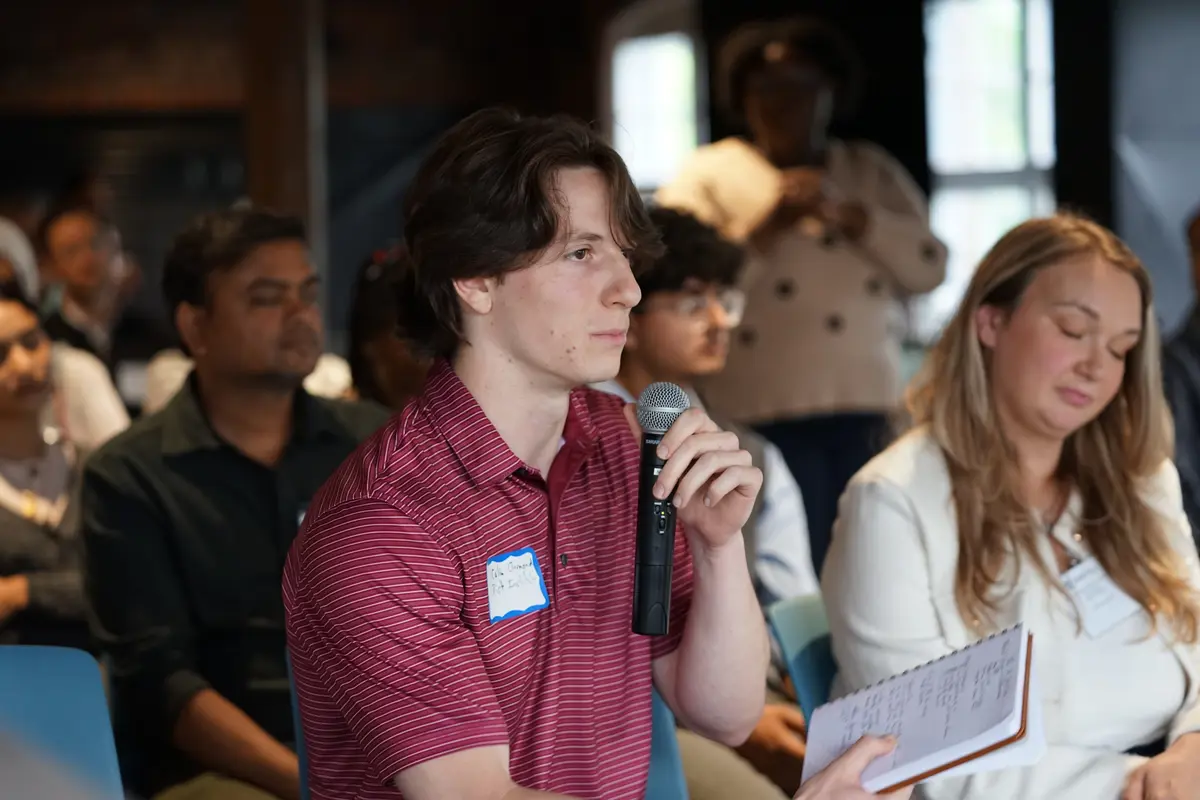 Image by Ed Brennen
 Colin Ormond '26 asks a question during the recent "AI for Startups" panel discussion.
Shao noted that advances in open-source AI models and cloud computing have made the technology far more accessible and affordable for startups. While many users are familiar with commercial platforms such as ChatGPT, Claude and Gemini, he said entrepreneurs can also take advantage of open-source alternatives, including Meta’s Llama models, DeepSeek and Qwen from Alibaba.
“They have maybe 80, 90% of the performance of the closed-source models, and they’re free,” Shao said.
As AI becomes increasingly integrated into workplaces, Shao said universities have an important role to play in preparing students to use the technology effectively. He highlighted UMass Lowell’s recently approved applied artificial intelligence and data science major, which combines foundational AI concepts with hands-on experience using emerging tools and technologies.
Magnant encouraged entrepreneurs to establish clear goals and ethical guardrails before rushing to adopt new technologies.
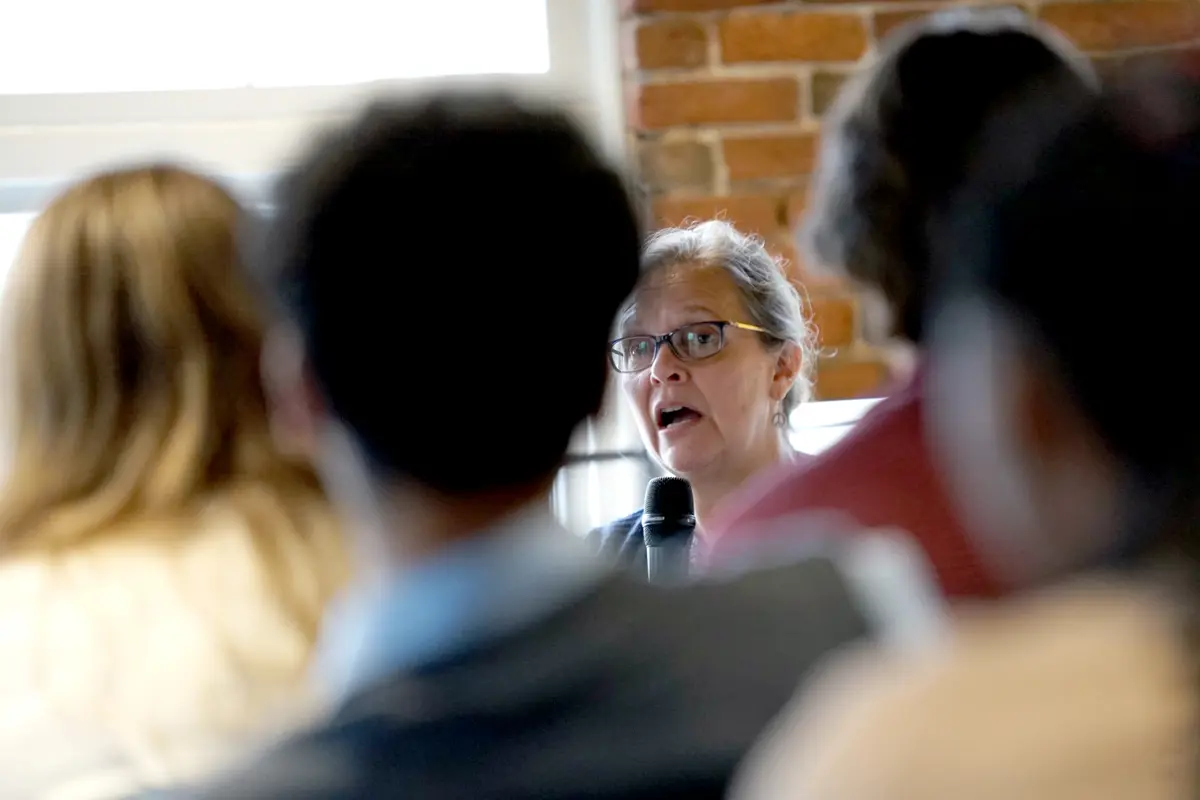 Image by Ed Brennen
 Environmental, Earth and Atmospheric Sciences Teaching Professor Lori Weeden cautioned startup founders to be wary of the growing public concern around AI's environmental impact.
The panel also examined an issue of growing concern to the public: sustainability.
Weeden challenged attendees to consider the environmental costs associated with large-scale AI systems, including the energy and water demands of data centers that support increasingly powerful models.
“AI is not harmless,” said Weeden, who encouraged entrepreneurs and researchers to think about how AI could help solve major challenges such as climate change and the transition to renewable energy.
Weeden said many of her Gen Z students are quick to spot “AI slop” — content that is obviously generated by artificial intelligence. For startups eager to embrace the technology, she said, understanding the audience is just as important as understanding the tool.
“If you are making a brochure that is obviously AI, you have alienated that entire group,” Weeden said. “Know your audience.”
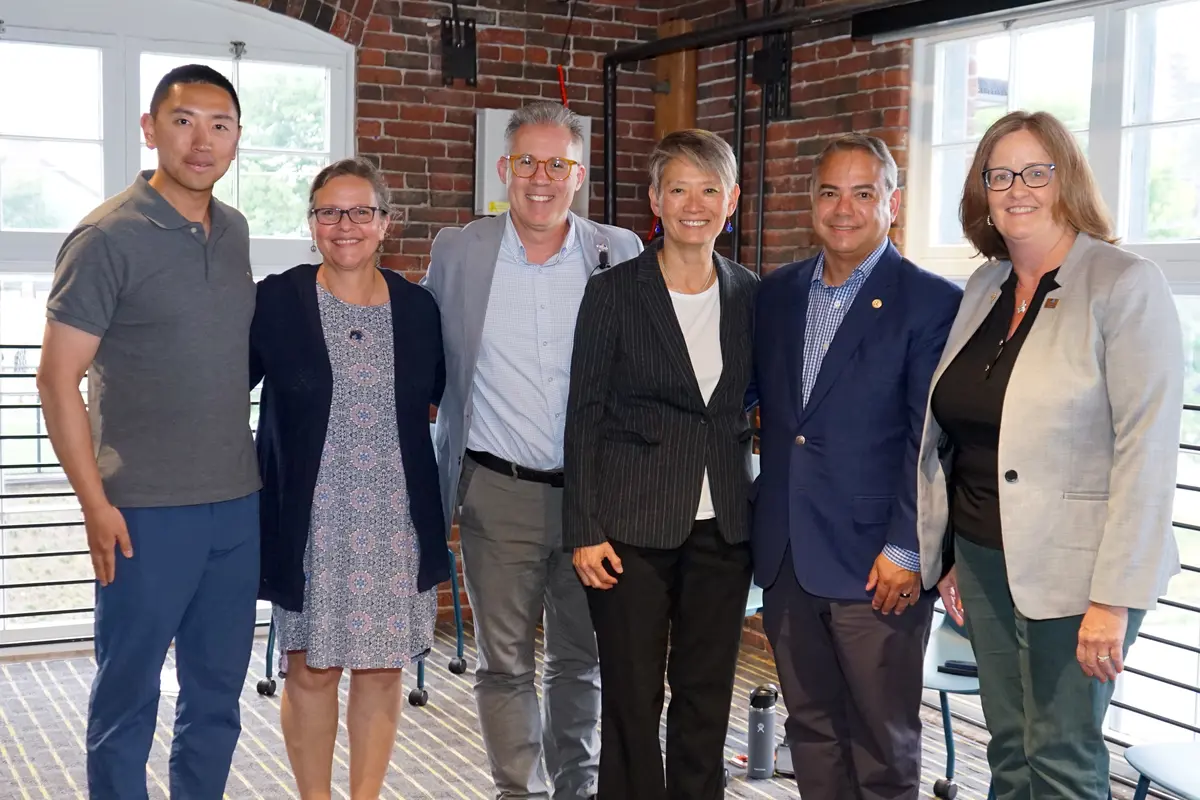 Image by Ed Brennen
 DifferenceMaker Director Richard Juknavorian, third from left, moderated the "AI for Startups" panel that included, from left, Ming Shao, Lori Weeden, Susu Wong, Hicham Naciri and Elissa Magnant.
“I always use it as a tool, and I always think about my vision and how I want to represent it,” Poovanen told the panelists.
Rising junior computer science major Harry Joshi, however, questioned whether some people dismiss AI-generated work simply because they know AI was involved.
“If something’s good and it works, it’s good,” said Joshi, who is spending the summer as an AI engineering intern at MITRE, a nonprofit research and engineering organization.
Colin Ormond ’26, a recent political science graduate who now works with the Rist Institute’s Clean Energy and Environment Legacy Transition Fellowship Program, said that exchange reflected what made the event valuable.
“It's important to come together with people who have different opinions and talk about the benefits of it as well as the potential harms,” Ormond said.