
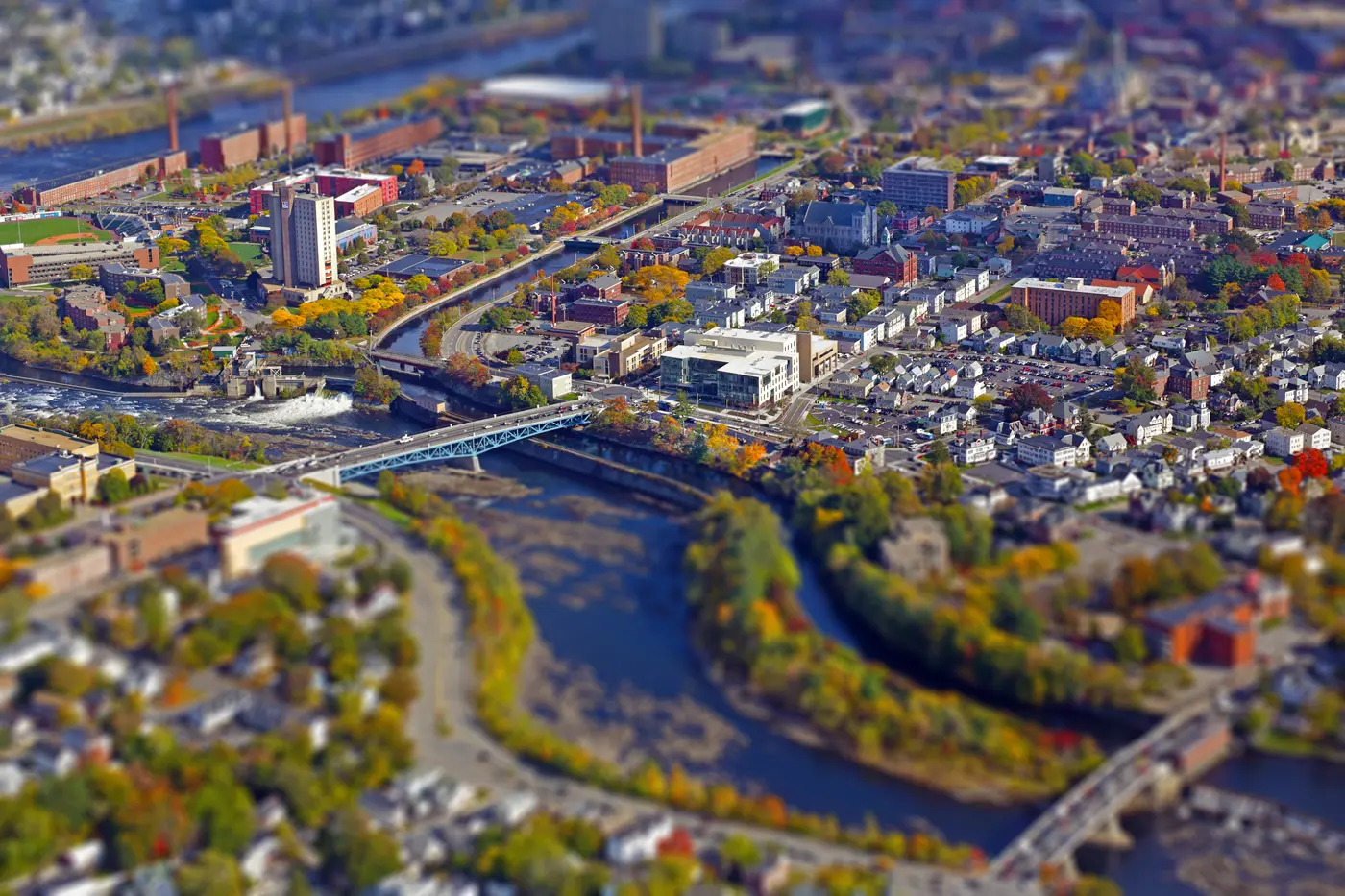
The new Real Estate, Placemaking, Geography of Work (REPGOW) collaborative brings together faculty from across the UMass Lowell campus to better understand the social and economic forces transforming communities.
Where people live, how they work and what makes a community feel like home are questions many cities are grappling with. A new UMass Lowell initiative aims to provide some answers.
The Real Estate, Placemaking, Geography of Work (REPGOW) collaboration is an interdisciplinary research working group that studies everything from housing and neighborhood design to entrepreneurship, public space and economic mobility. The group’s goal is to spark new research and funding opportunities that help communities adapt to rapid social and economic change.
“We want to bring people together who study, design, build and live in the spaces that shape how we work,” says Kimberly Merriman, a management professor in the Manning School of Business who is coordinating REPGOW. “By connecting research, we can better understand and influence the social and economic forces transforming our communities.”
The initiative grew out of research that Merriman and Marketing, Entrepreneurship and Innovation Professor Michael Obal published earlier this year in the Journal of Business Ethics on how remote work and corporate relocation are reshaping housing affordability nationwide. Their collaboration sparked broader conversations across campus about how work patterns, migration trends and local amenities intersect, and how UMass Lowell could help shed light on these shifts.
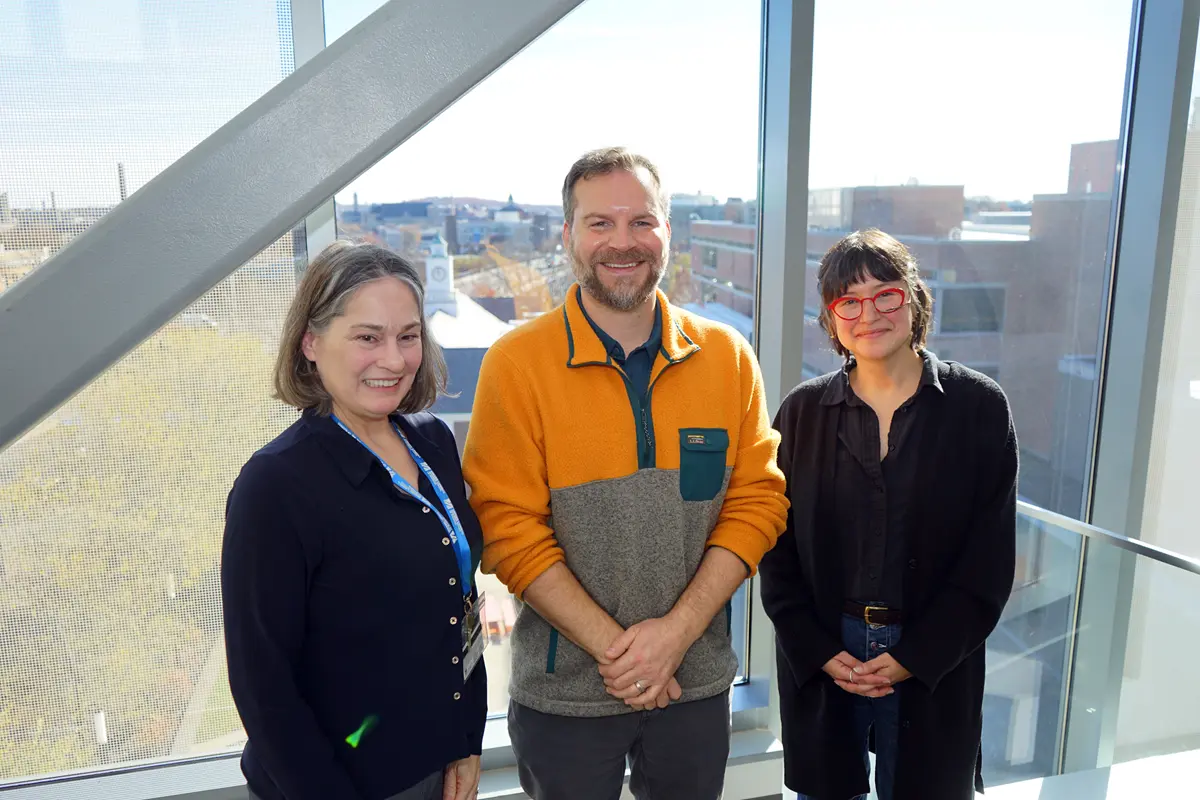 Image by Ed Brennen
 The REPGOW collaborative includes, from left, Management Professor Kimberly Merriman, Marketing, Entrepreneurship and Innovation Professor Michael Obal and former UML faculty member Teresa Gonzales, now an assistant professor of sociology at Loyola University Chicago.
- Associate Professor Marie Frank, director of the Architectural Studies program, contributes research on Lowell’s built environment, including a digital humanities project that traces how architecture in the Back Central neighborhood reflects waves of immigration and industry.
- Theatre Arts Professor Shelley Barish brings expertise in spatial design, noting that set design, interior design and placemaking all rely on storytelling and visualization — tools that help communities understand and experience the spaces around them.
- English Professor Jonathan Silverman, co-editor of the essay collection “Remaking the American College Campus,” examines the cultural meanings embedded in buildings, landscapes and public places.
“There’s so much overlap in what we’re all studying,” Obal says. “When you start connecting the dots across disciplines, you realize we’re looking at the same problems from different angles.”
Former UML faculty member Teresa Gonzales, now an assistant professor of sociology at Loyola University Chicago, is helping to guide qualitative research. Her “Grounds for Play” project, which began in Lawrence, studies how residents use parks and public spaces to build belonging and community identity. She says REPGOW’s collaborative approach drew her to the group.
“I am an interdisciplinary scholar by training, and I think that’s the only way we’re going to be able to solve some of these problems,” she says, referring to the intertwined challenges of housing, belonging, economic opportunity and the built environment.
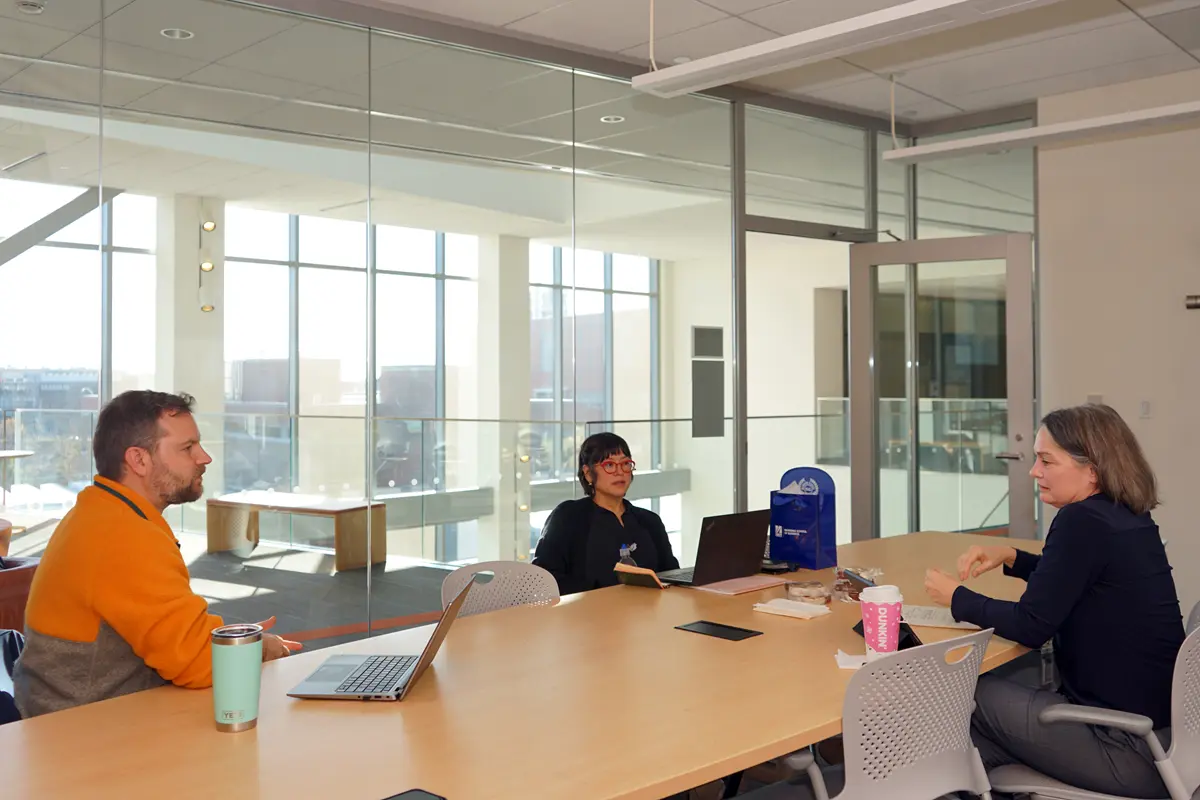 Image by Ed Brennen
 REPGOW members, from left, Michael Obal, Teresa Gonzales and Kimberly Merriman hold the group's first in-person meeting this fall at the Pulichino Tong Business Center.
The FGCU partnership gives UMass Lowell access to proprietary data on labor markets, real estate trends and entrepreneurial activity, along with support for interview-based fieldwork in comparison cities such as Miami, Dallas and New York. The goal is to understand why some metro areas are becoming magnets for finance workers and new business creation while others are losing ground.
Merriman’s current research explores the finance industry’s shifting geography, analyzing why firms and employees are leaving traditional hubs like New York and Chicago for emerging centers in the South. Obal’s work examines whether remote work has encouraged new business formation, especially in midsized cities investing in amenities that appeal to mobile workers.
The next steps for REPGOW include advancing the FGCU seed proposals, gathering fieldwork in comparison cities, and involving students in digital mapping and zoning analysis projects. The group is also exploring opportunities to align its work with the university’s Lowell Innovation Network Corridor (LINC) project, which will usher in a wave of development of business, housing and research space and other amenities.
“The more we talk across fields, the more connections we find,” Merriman says.