
 Image by Celia Hoffman
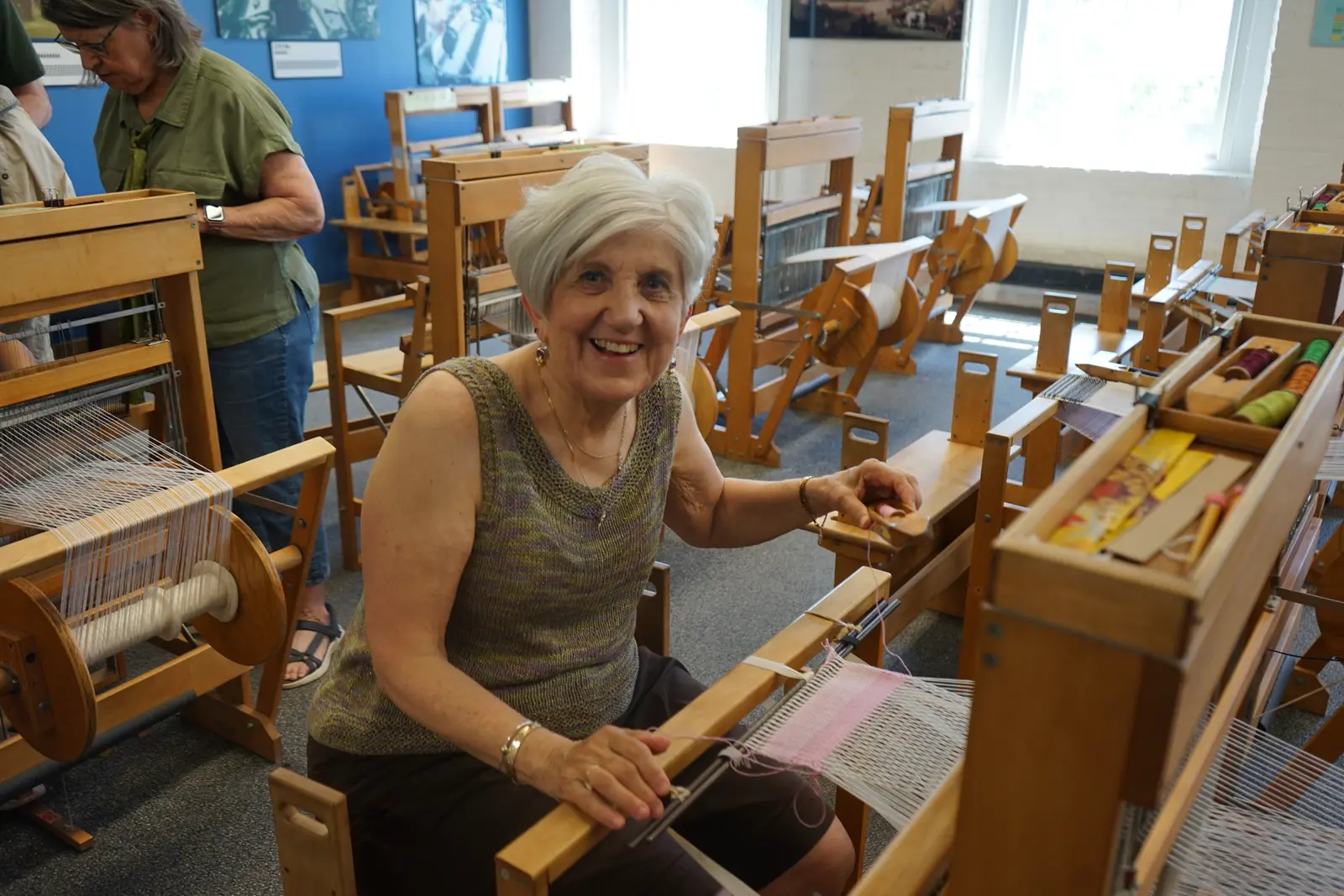
 Elaine Cabucci, a Salem, NH native, traveled to Lowell to experience handloom weaving with the Tsongas Industrial History Center's Weaving Workshop, run through their Hands-On History program.
The Tsongas Industrial History Center (TIHC) has been a welcoming place for Becky Cox and her family for decades. A former middle school teacher who started working at the center as a museum teacher in 2023, Cox says her three adult sons have fond memories of visiting the center to learn about the American Industrial Revolution when they attended Lowell’s Morey Elementary School. Now, Cox is bringing her grandchildren there to experience Lowell’s history through hands-on activities and exhibits.
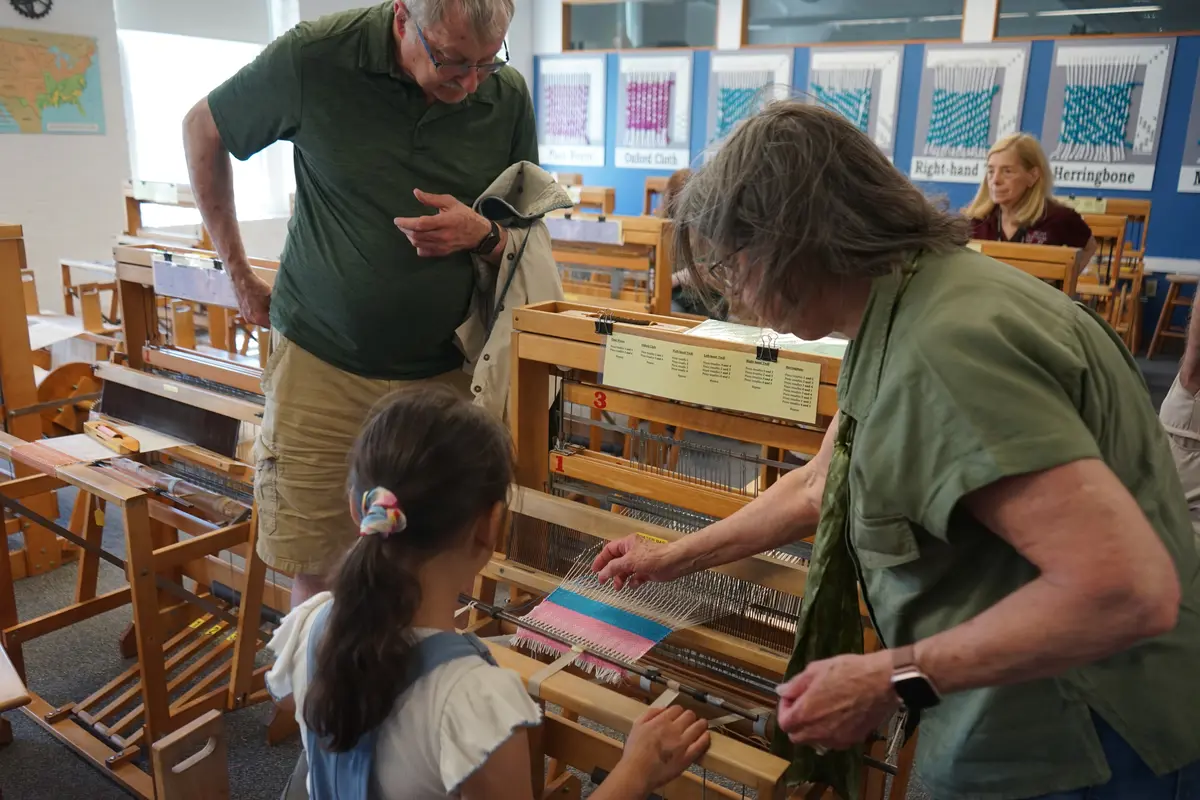 Image by Celia Hoffman
 Becky Cox, a museum teacher at the Tsongas Industrial History Center, shows her granddaughter how to use the handloom during the Weaving Workshop.
“Ever since the Tsongas Industrial History Center opened, children have had the opportunity to learn about the history of their city,” says Cox. “My granddaughter loves how interactive it is.”
Marking its 35th anniversary this year, the Tsongas Industrial History Center is a unique educational partnership between UMass Lowell’s School of Education and Lowell National Historical Park. The center hosts field trips for students from second grade through high school, leads educational and team-building experiences for college students and adults, and offers professional development opportunities to teachers.
As part of its anniversary celebration, TIHC is exploring different ways of engaging with the broader community. This includes the Hands-on History series, supported by the City of Lowell as part of its bicentennial celebration. Depending on the month, visitors are able to participate in different hands-on workshops. The workshops feature loom weaving, an assembly line that showcases fast-paced factory work, canal building with water power engineering, and a chance to explore cultural artifacts such as musical instruments, clothing, maps and other objects specific to Lowell’s history. These workshops are being held every second Saturday of the month and are free and open to the public.
Paul Kuttner, who began as the center’s director last July, says the Hands-On History events are drawing people in.
“We’ve seen great engagement with these events, including young people who came here on field trips and want to share the experience with their families,” he says.
On a recent Saturday, visitors started at the Weaving Workshop, where they explored how to use hand looms to make and design their own patterned cloth.
Elaine Cabucci, from Salem, New Hampshire, came to the center with her husband. She enjoys creative endeavors like the Weaving Workshop.
“I really love this weaving, and I do a lot of it at home,” Cabucci said. “It’s fun to be able to learn about the history as well.”
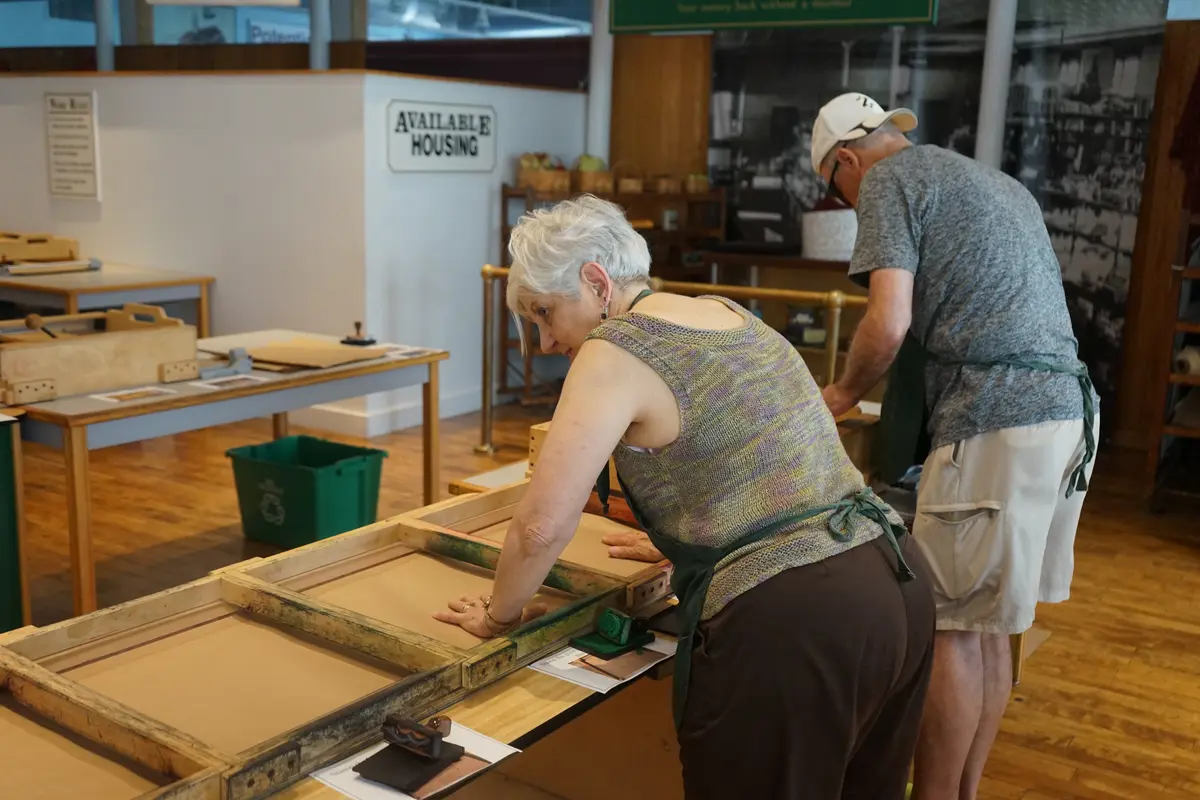 Image by Celia Hoffman
 Cabucci and her husband experience assembly-line printmaking through the Workers On the Line workshop.
Next, the group moved to Workers on the Line, an activity in which they worked on an assembly line to print cloth and experience factory conditions.
These events are targeted at both students and adults as part of the effort to engage broadly with the community, Kuttner says.
The TIHC also partners with UML faculty and graduate students on research projects, especially when it comes to educational community engagement, Kuttner notes. One example of this is the SWIMMER initiative, a National Science Foundation Research Traineeship program at UMass Lowell that aims to train graduate students from multiple disciplines to develop sustainable materials and chemicals that won’t harm water resources over their entire life cycle. And most recently, the TIHC was awarded a grant from the Massachusetts Life Sciences Center to support the development of a weeklong biomedical summer program for high school students. To be developed in partnership with Assistant Professor of Biomedical Engineering Yanfen Li, the program will provide participants with the opportunity to explore historical innovations in combatting disease and to work alongside UMass Lowell researchers, scientists and graduate students in the lab to learn about the biomedical engineering skills needed to continue that legacy today.
What's next for the TIHC? Kuttner says the center is in the process of planning for the future. That effort is getting an assist from Manning School of Business master’s degree student Farida Sadozai, who is interning at the center. In her role, she is helping to gather data and inform the center’s strategic planning process.
By participating in events like Open Doors Lowell and the Lowell Folk Festival that are popular in the community, the TIHC hopes to showcase all that it has to offer. This year, staff members visited the Cambodia Mutual Assistance Association afterschool program, where they brought looms and other portable activities.
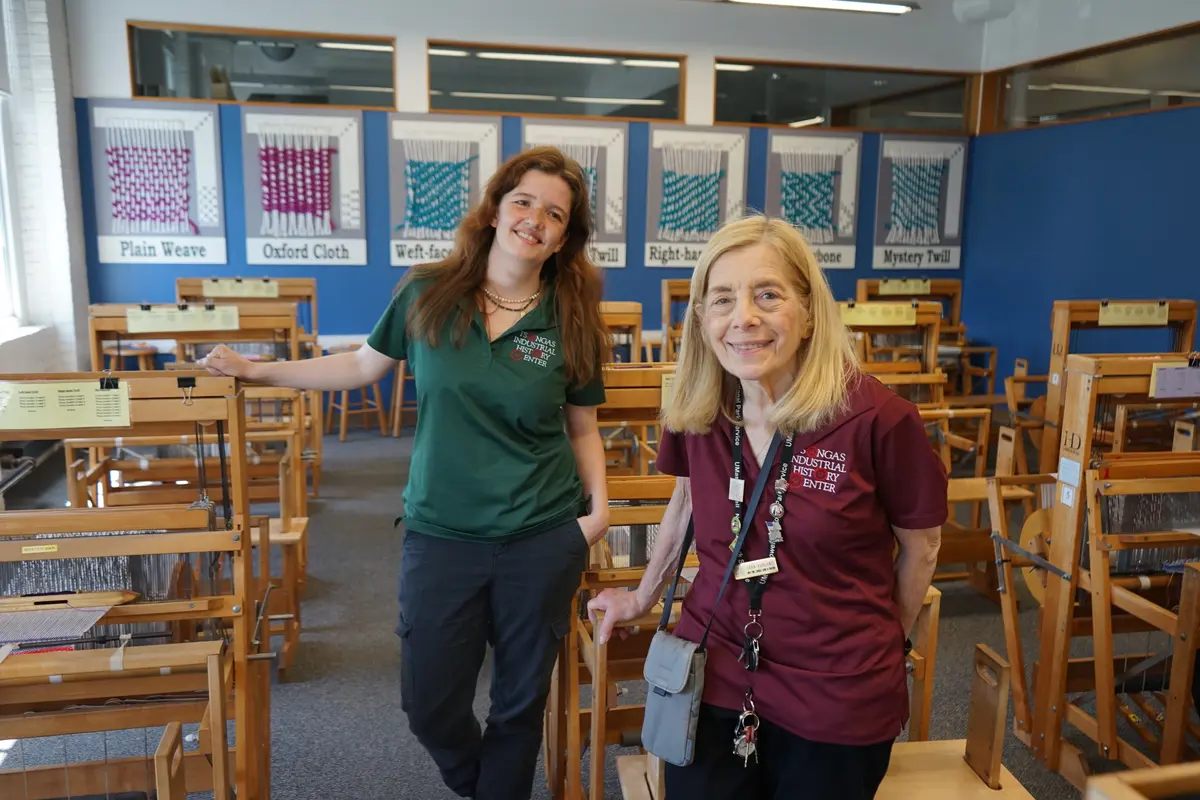 Image by Celia Hoffman
 Betsy Walsh, left, and fellow museum teacher Sara Kurland are proud to be part of a program that provides students with hands-on, interactive education about Lowell.
“We are trying to be more connected and really asking the question, ‘How can we support and contribute to bigger efforts in the city?’” says Kuttner.
Betsy Walsh, a museum teacher who originally connected with the center as a ranger with Lowell National Historical Park, values what the center brings to the community.
“Helping people understand the history around them helps them to be better citizens,” says Walsh.