
 Image by Ed Brennen
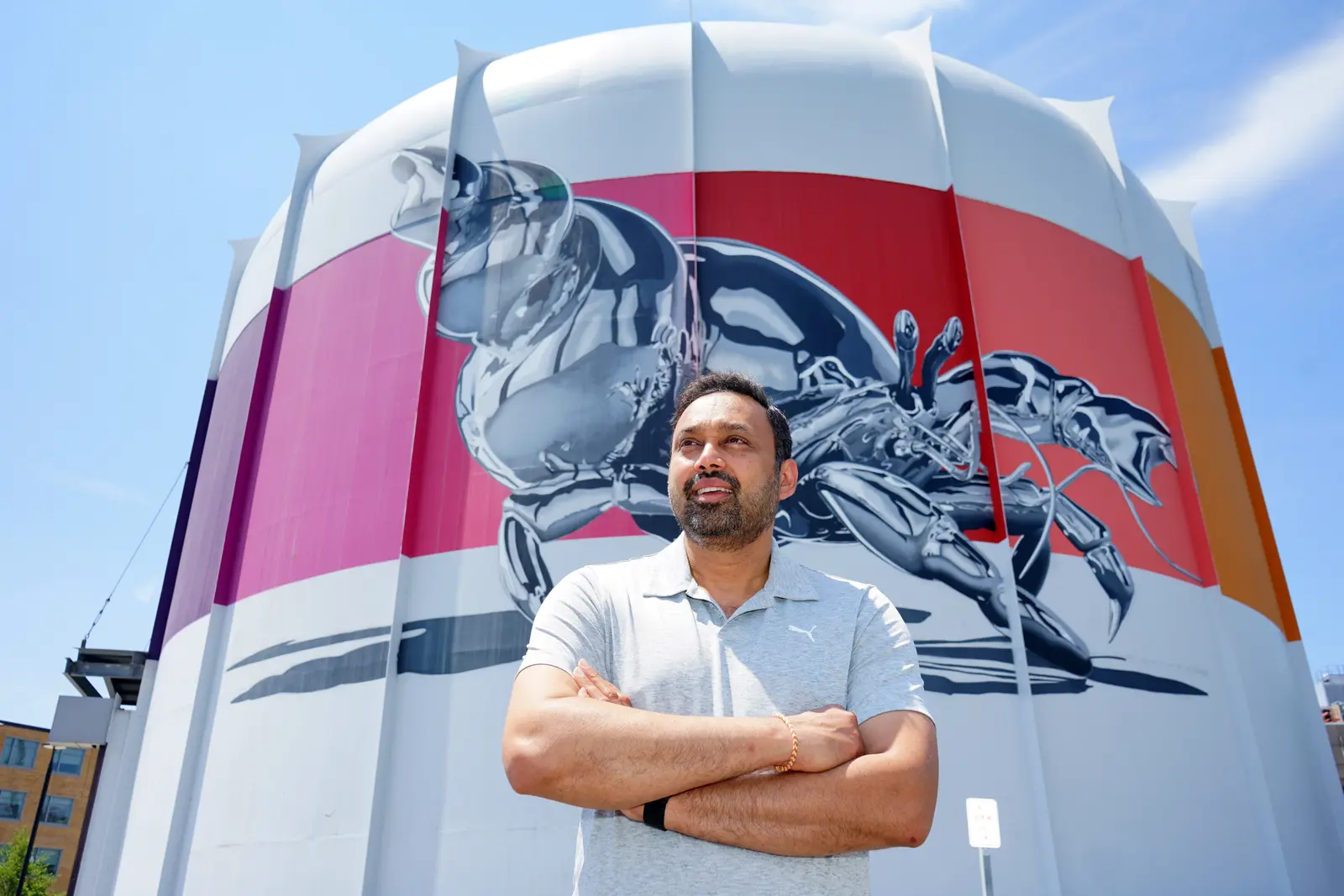
 Nuclear Engineering Professor Sukesh Aghara, who is leading the development of the Massachusetts Roadmap for Advanced Nuclear and Fusion Energy, says UMass Lowell's research reactor could play a key role in the state's energy future.
As Massachusetts explores how to meet growing electricity demand while achieving its climate goals, nuclear energy is receiving renewed attention from policymakers, industry leaders and researchers.
At the center of that conversation is Nuclear Engineering Professor Sukesh Aghara, who was tapped by Gov. Maura Healey last fall to help lead the development of the Massachusetts Roadmap for Advanced Nuclear and Fusion Energy.
Since then, Aghara and a team that includes students and staff from UMass Lowell’s Rist Institute for Sustainability and Energy have brought together utilities, regulators, environmental organizations, businesses, labor groups and community stakeholders to examine how emerging nuclear technologies could fit into the commonwealth's long-term energy strategy.
Preliminary findings released in February identified strong interest in workforce development and regional collaboration, while more than 90% of surveyed stakeholders said communities need more information about nuclear energy and its potential role in the state’s clean-energy future.
“Our role is to help people understand the facts and participate in the conversation,” says Aghara, associate dean of graduate studies and research in the Francis College of Engineering. “Universities are generally considered to be a trusted source. We don’t have economic agendas or technologies we're trying to sell.”
After releasing its preliminary findings, the team launched a three-part public discussion series, with events in Boston, Worcester and Lowell. The final discussion is scheduled for July 15 at UMass Lowell. Aghara says the team expects to complete the roadmap by the end of the summer, with recommendations on workforce development, regional coordination, research capacity and other issues identified during the stakeholder engagement process.
The work comes at a pivotal moment. Growing electricity demand is prompting policymakers across New England to reconsider how nuclear energy could complement renewable sources as part of a cleaner, more reliable energy grid.
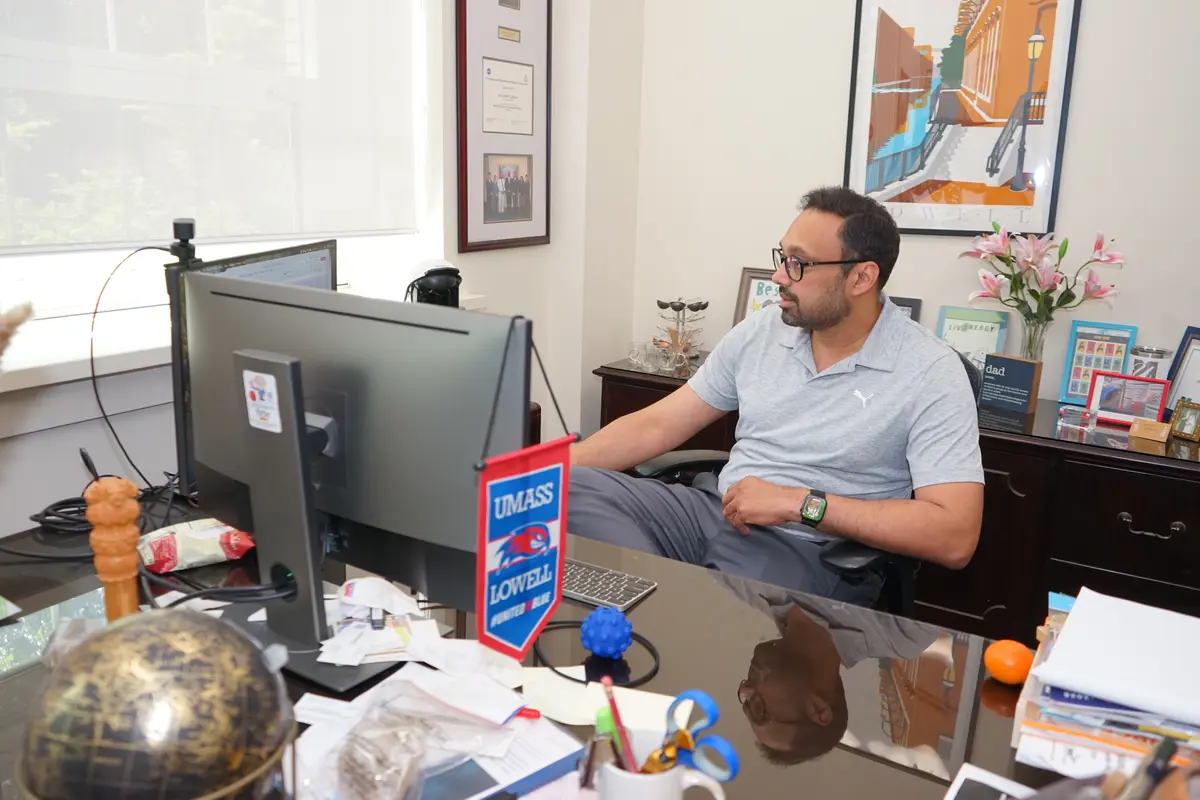 Image by Ed Brennen
 Nuclear Engineering Professor Sukesh Aghara says growing electrical demand, along with the state's ambitious climate goals, have stoked interest in advanced nuclear and fusion energy.
Nuclear energy already plays a significant role in the region’s power supply, Aghara notes. New England's two nuclear power stations — Seabrook Station in New Hampshire and Millstone Power Station in Connecticut — generate roughly one-quarter of the electricity consumed across the six-state grid.
The roadmap examines advanced nuclear technologies, including next-generation reactor designs that use modern computing, manufacturing and safety systems, as well as fusion technologies that remain under development. Fission, which powers today’s nuclear plants, generates electricity by splitting atoms, but also produces radioactive waste that must be carefully managed. Fusion combines lighter atoms together — the same process that powers the sun — and has long been viewed as a potential source of abundant carbon-free energy, though scientists are still working to make it commercially viable and energy-efficient.
Aghara, who directs the Integrated Nuclear Security and Safeguards Laboratory at UMass Lowell, sat down to discuss the state of nuclear energy and how UMass Lowell could help shape the industry’s future.
Why is nuclear energy receiving so much attention from the state right now?
Several factors are coming together at the same time. Massachusetts has ambitious climate goals and a legal requirement to achieve net-zero emissions by 2050. At the same time, we’re seeing growing demand for electricity as more people adopt electric vehicles and electric heating systems. There are also new economic drivers emerging. Artificial intelligence, data centers and advanced computing all require significant amounts of electricity. As policymakers and utilities look at future energy needs, they’re asking whether we have enough reliable, clean energy resources to meet that demand. Those conversations have led people to take another look at nuclear energy as part of the broader energy portfolio.
What is the roadmap trying to accomplish?
The roadmap is intended to help Massachusetts better understand the opportunities, challenges and considerations associated with advanced nuclear and fusion technologies. We’re bringing together a wide range of stakeholders. We want to understand their perspectives, identify areas of agreement and concern, and provide information that can help inform future decisions.
What has surprised you most during the stakeholder engagement process?
I expected to encounter more resistance than we did. What has been encouraging is that there is more curiosity and willingness to have a conversation than I anticipated. People certainly have questions and concerns, particularly around safety, waste management and cost, but they’re willing to engage in the discussion. I think that’s important. As a society, we're increasingly interested in collaborative decision-making. People want access to information, they want their questions answered, and they want to be part of the conversation. For me, that’s been one of the most encouraging findings of this entire process.
Do people still associate nuclear energy with safety concerns and radioactive waste?
I think public attitudes are changing. People still have concerns about safety and spent fuel management. We heard those concerns repeatedly throughout the stakeholder engagement process, which is one reason the final public discussion is focused on safety, spent fuel and public trust. What has changed is that we now have decades of operating experience. We have stronger regulatory frameworks, better technology and more transparency than we did when nuclear power was first introduced. There will always be people who remain skeptical, and that’s OK. The goal isn’t to convince everyone; the goal is to make sure people have access to facts, understand the risks and benefits, and can make informed decisions. That’s one reason public engagement is such an important part of this process. We heard repeatedly from stakeholders that people want opportunities to ask questions about radiation safety, waste management and how decisions are made. Building trust requires transparency, accessibility and honest conversations.
How can UMass Lowell contribute to this effort?
 Image by Brooke Coupal
 Graduate student Benjamin Edwards participates in a Radiation Safety and Control practicum at the research reactor in 2024. Nuclear Engineering Professor Sukesh Aghara says UML is uniquely positioned to train students for careers in nuclear energy.
UMass Lowell has an extraordinary asset that many states would love to have: a research reactor that has been operating safely for decades. Many universities and states chose to shut down their research reactors over the years. UMass Lowell made the decision to maintain and invest in this facility, and I think we’re seeing the value of that decision today. We’ve spent more than 50 years using ours to educate students, conduct research and support industry partners. If Massachusetts chooses to further explore advanced nuclear and fusion technologies, we already have infrastructure and expertise in place that can help support that work. We’re not starting from scratch. We have a foundation that can be expanded to support research, workforce development, testing and public engagement for years to come.
What opportunities could this create for students?
The opportunities go well beyond nuclear engineering. The industry will need engineers, technicians, computer scientists, cybersecurity specialists, manufacturing experts, environmental professionals and policy leaders. National projections show significant workforce demand in the coming decades. One of the things that excites me most is that UMass Lowell is uniquely positioned to prepare students for those careers. We already have students earning Nuclear Regulatory Commission operator licenses while they’re still undergraduates. We have facilities where students can gain hands-on experience and participate in meaningful research. Those experiences can open doors to careers in energy, advanced manufacturing, research and many other fields.
What should Massachusetts residents watch for over the next decade when it comes to nuclear energy?
We’re entering a period of significant innovation. Advanced nuclear technologies still have to demonstrate that they can be deployed safely and cost-effectively, but there is tremendous work happening right now in both the public and private sectors. For Massachusetts, the bigger question is how these technologies fit into the state’s long-term energy strategy. That’s ultimately what the roadmap is trying to help answer. The next decade will be an exciting period as we see how these technologies evolve and what role they may ultimately play in our energy future.