
 Image by Kate Ford
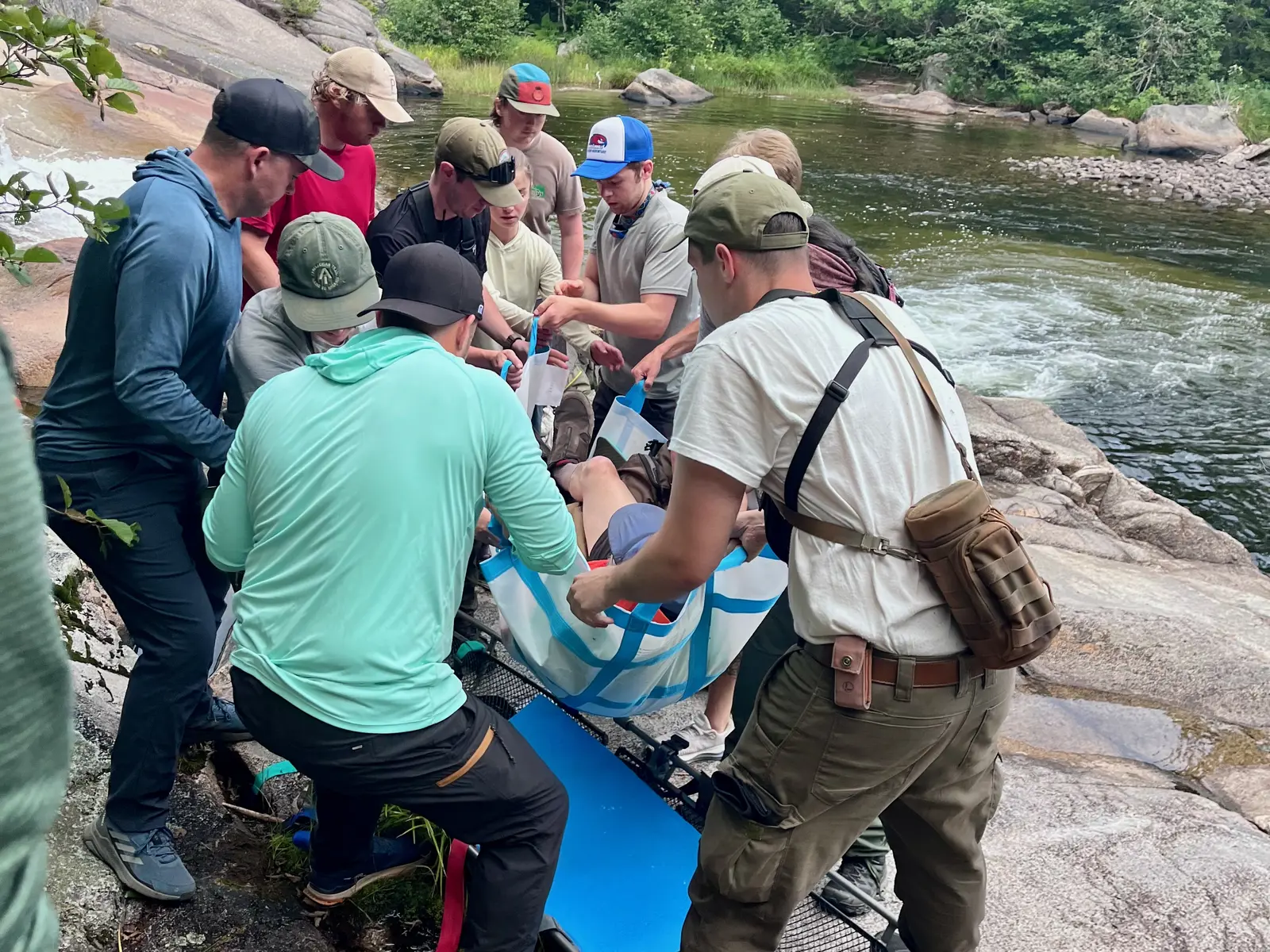
 Student trip leaders from the Outdoor Adventure Program help Baxter State Park rangers load an injured man onto a litter as they begin a five-hour evacuation in late August in northern Maine.
After a 12-hour round-trip hike to the summit of Mount Katahdin, Maine’s highest peak, student trip leaders from UMass Lowell’s Outdoor Adventure Program were taking it easy during the final day of their annual weeklong staff training trip.
They had just taken a short walk around a pond and were planning to rent some canoes and perhaps go for a late-afternoon swim. Instead, a Baxter State Park ranger approached them at around 4:30 p.m. with an unexpected request: Would they help evacuate an injured hiker?
The seven students, led by Assistant Director of Outdoor Programs Kate Ford, unanimously agreed to help. What followed was a five-hour wilderness rescue that tested their preparation, patience, communication and problem-solving skills as they transported a man with a dislocated hip through the Maine woods and across several ponds.
“It was an incredible opportunity for us, because we’re training to be wilderness leaders,” says Julia Boucher ’24, a third-year doctor of physical therapy student from Arlington. “You don’t get this experience every day.”
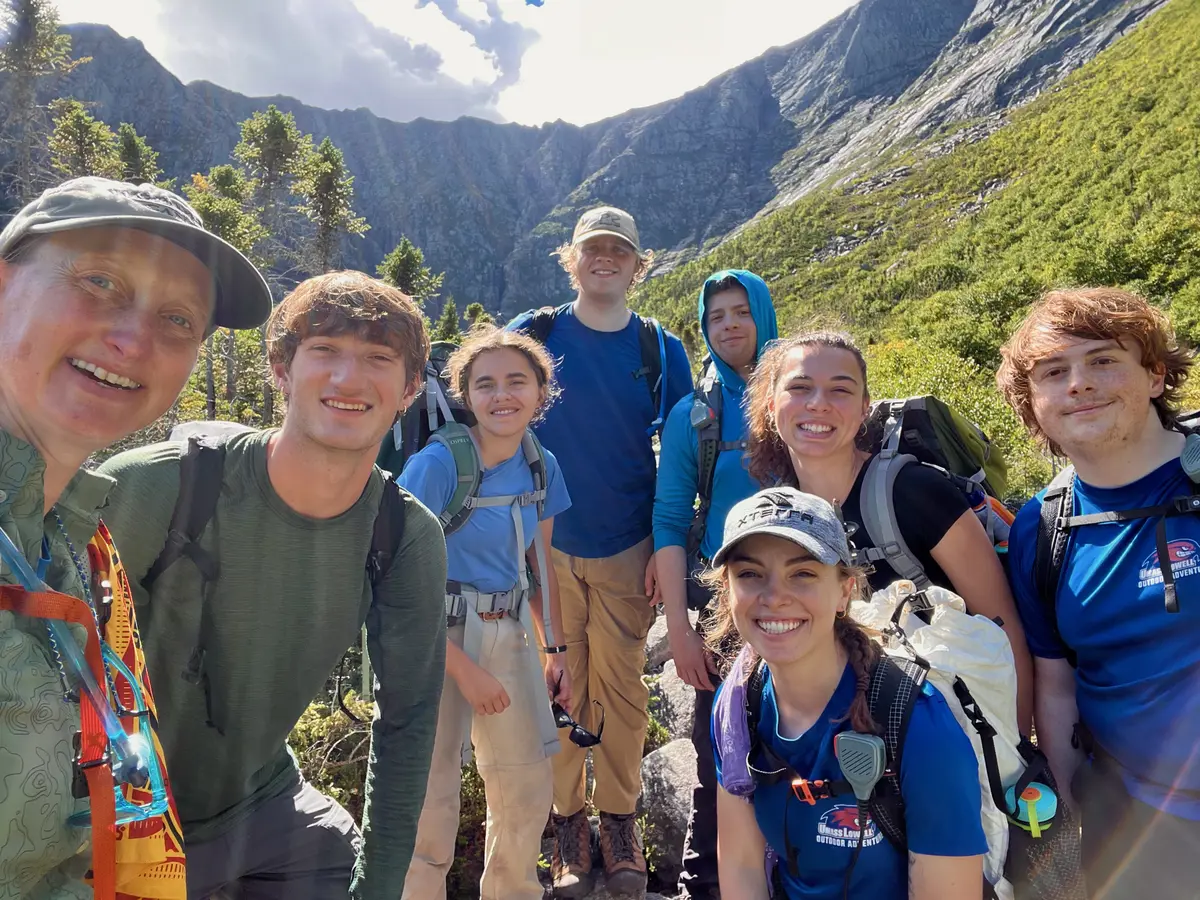 Image by Kate Ford
 Student trip leaders from the Outdoor Adventure Program were on a weeklong staff training trip in Maine's Baxter State Park with Assistant Director of Outdoor Programs Kate Ford, left, when they were asked to help evacuate an injured hiker.
The injured man had fallen around 1:30 p.m. By the time the students and park rangers reached him at 5:30 p.m., the challenge was determining how to get him out safely. He was on the other side of a moving stream near a waterfall, and carrying him across would require six people to balance a litter — a specialized rescue stretcher — while walking on slippery rocks and navigating the current.
“It didn’t really seem feasible to do that,” says Boucher, who worked as an emergency medical technician for six years.
Tyler Beyna, a junior chemical engineering major from Norton, helped scout for a safer crossing.
“We ended up kind of bushwhacking, just hiking through the woods,” Beyna says. “We went upstream and were looking for a river crossing.”
Although the group found a place to cross with the necessary equipment, the students and rangers decided it was still too dangerous to bring the injured man back that way. They opted instead for a longer route involving two portage trails and a series of ponds.
“It was very methodical,” Boucher says. “There was a lot of communication, but there was no super-easy way to do it.”
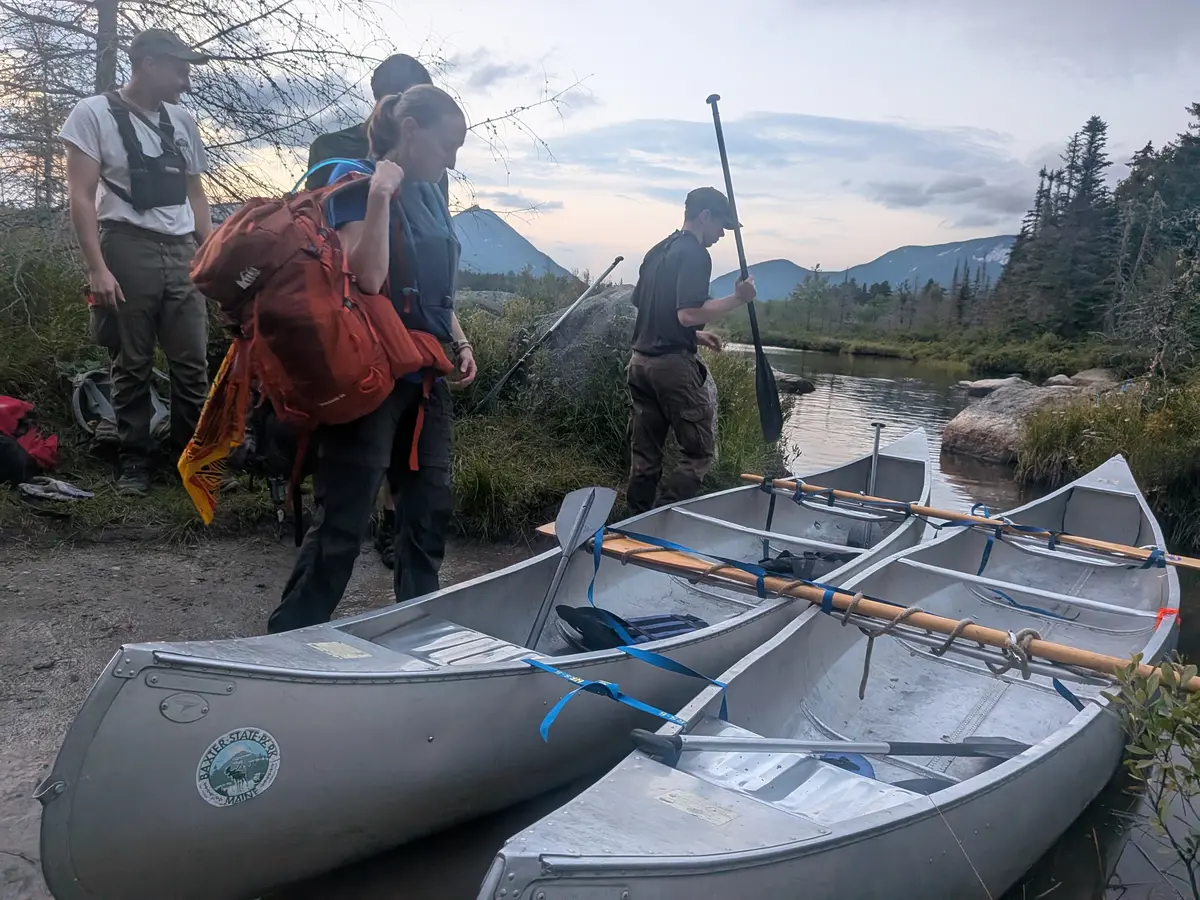 Image by courtesy
 To get the injured hiker across a pond, Kate Ford suggested lashing together two canoes to create a more stable raft.
Two students helped paddle the raft, while rangers and the man’s wife sat alongside him. Other students and rangers paddled nearby or moved ahead to prepare for the next stage.
“When he got to the landing, we were there and ready to carry him out,” Beyna says.
By then, darkness had fallen. The group continued under the moonlight and the glow of headlamps.
The next stretch included a long, narrow boardwalk. The litter had to remain centered on the walkway while the people carrying it walked through deep mud on either side. Vegetation whipped at their faces, and one person lost a shoe in the muck.
“We did it slowly and safely,” Boucher says.
The students used their own gear to help keep the man comfortable, giving him water, food and extra layers, including rain jackets, as the weather deteriorated.
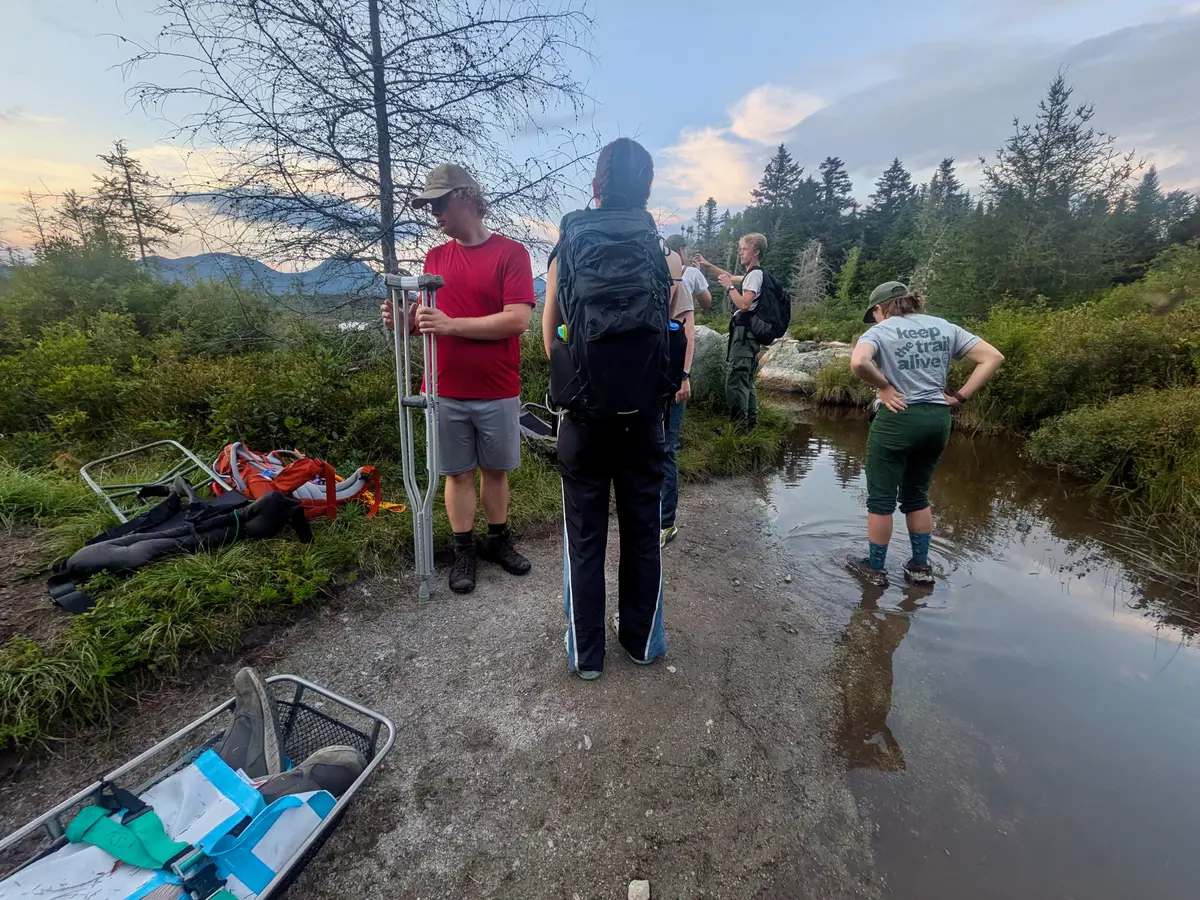 Image by Kate Ford
 "It was eye-opening to see how long a rescue like this can take," says Outdoor Adventure Program student trip leader Tyler Beyna.
David Silvia ’25, a second-year doctor of physical therapy student from Westford, helped carry the litter and walked ahead to call out obstacles.
After carrying the man another half-mile, the group reached a second pond, where a motorboat was waiting. The rangers transported the man across the pond in the boat, then transferred him to a ranger truck, which took him to an ambulance.
“It was very satisfying to see him being taken away and to know that we had helped,” Silvia says. “I hope he’s doing OK.”
Once the evacuation was complete, the students still had to collect their gear and return the canoes. A bystander gave them a ride back to their van, where they began an hourlong drive to their campsite. They arrived around midnight and had to be up early the next morning to pack up and return to campus.
“The adrenaline had started to wear off, and a couple people were sleeping in the van,” Beyna says. “When we got to the campsite, we just went right to bed.”
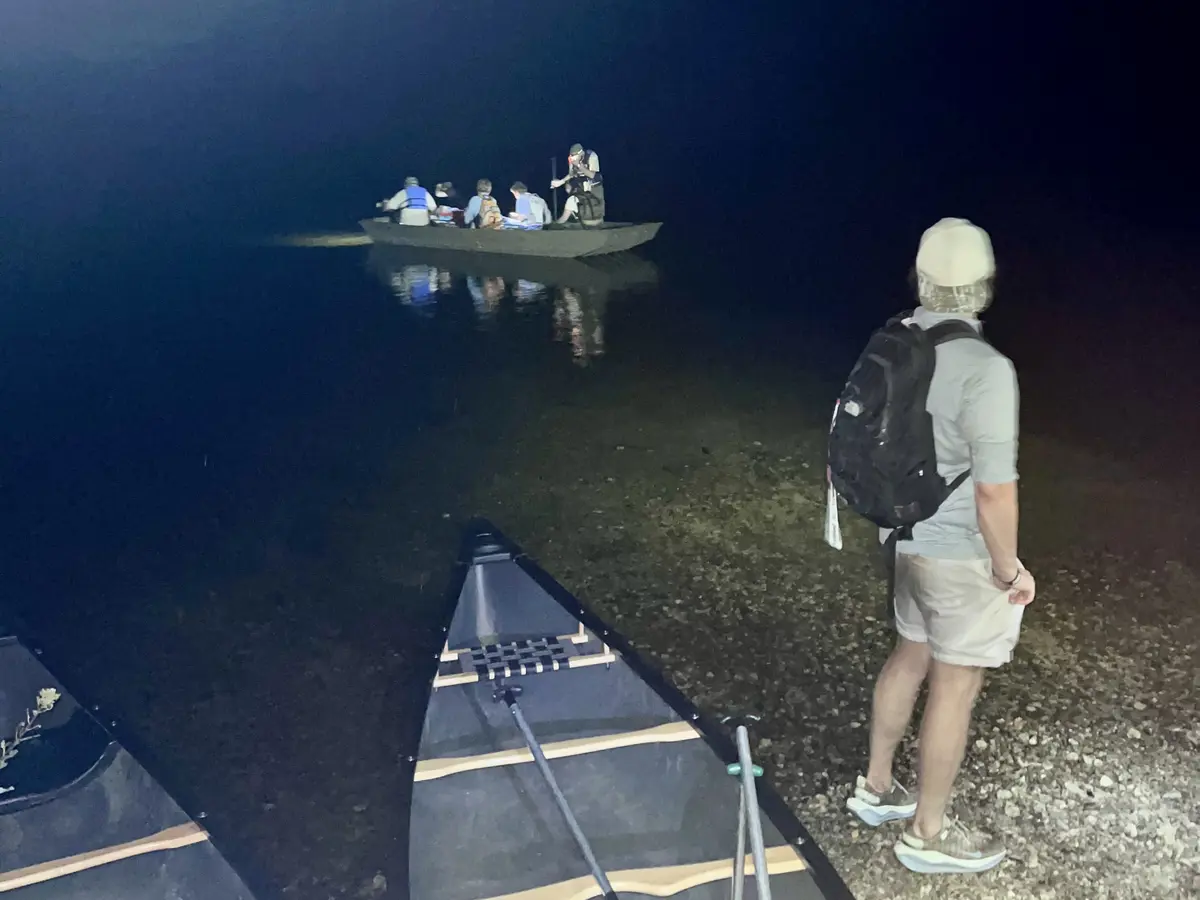 Image by Kate Ford
 It was after nightfall when the injured hiker was taken across a second pond by rangers in a motorboat.
“Your willingness to help ensured the injured individual was able to be safely evacuated to the ambulance,” McGuire wrote.
The experience drew on the OAP trip leaders’ required wilderness first-aid training, along with the more advanced wilderness first responder certification that many pursue.
“It’s not a great situation to be in, but we’re trained to think on our feet and give a patient the best help we can,” Beyna says.
The rescue also reinforced for him the importance of carrying equipment that may not seem necessary at the start of a trip.
“The wilderness isn’t inherently dangerous, but your actions can make it less or more dangerous,” Beyna says. “That’s why we’re always told to plan ahead.”
Ford says the experience offered the students a lesson that could not be replicated in a classroom.
“You can’t ask for this kind of training opportunity,” she says. “The students got to see that rescues take a long time and that the best thing you can do is stay calm, think through the options, work together and talk through things.”
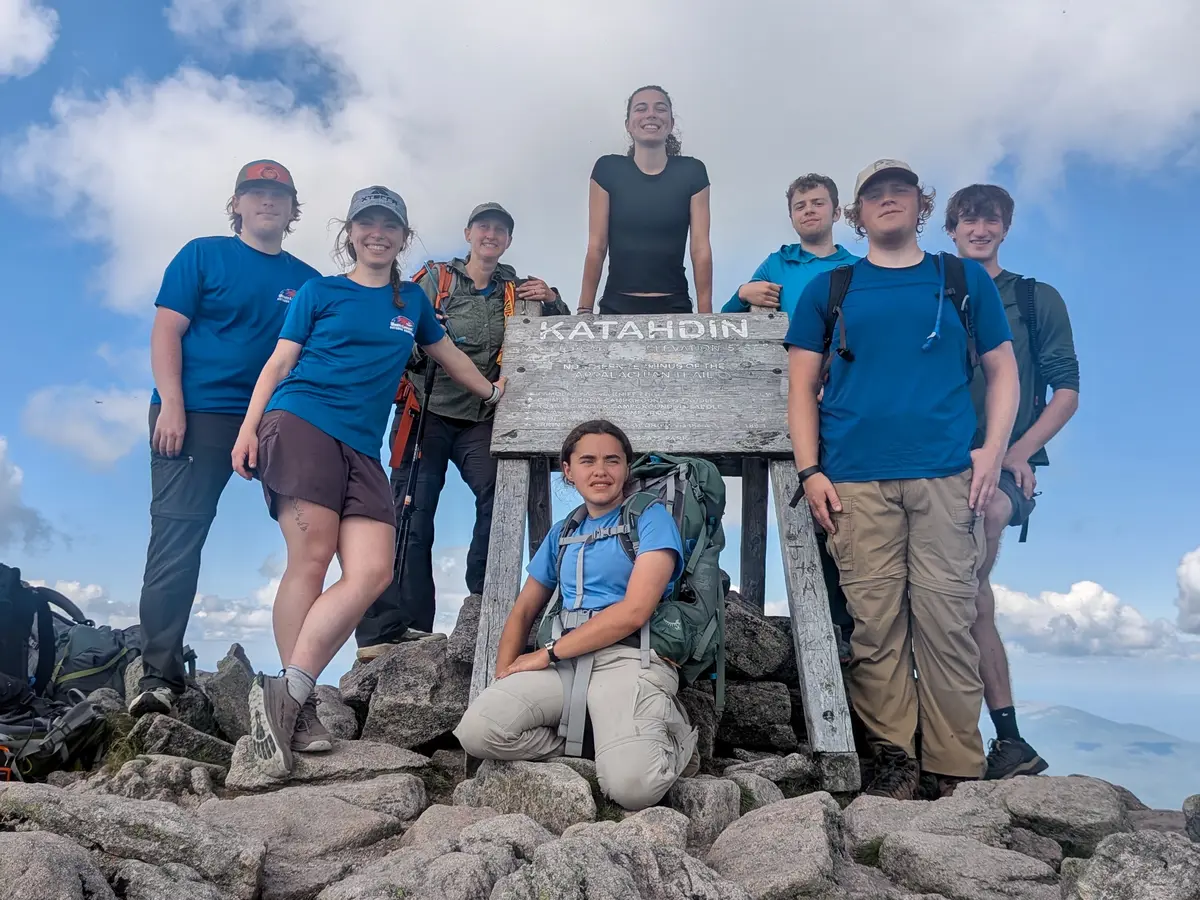 Image by courtesy
 The day before helping the injured hiker, Outdoor Adventure Program student trip leaders conquered Maine's highest peak, Mount Katahdin.