
 Image by Ed Brennen
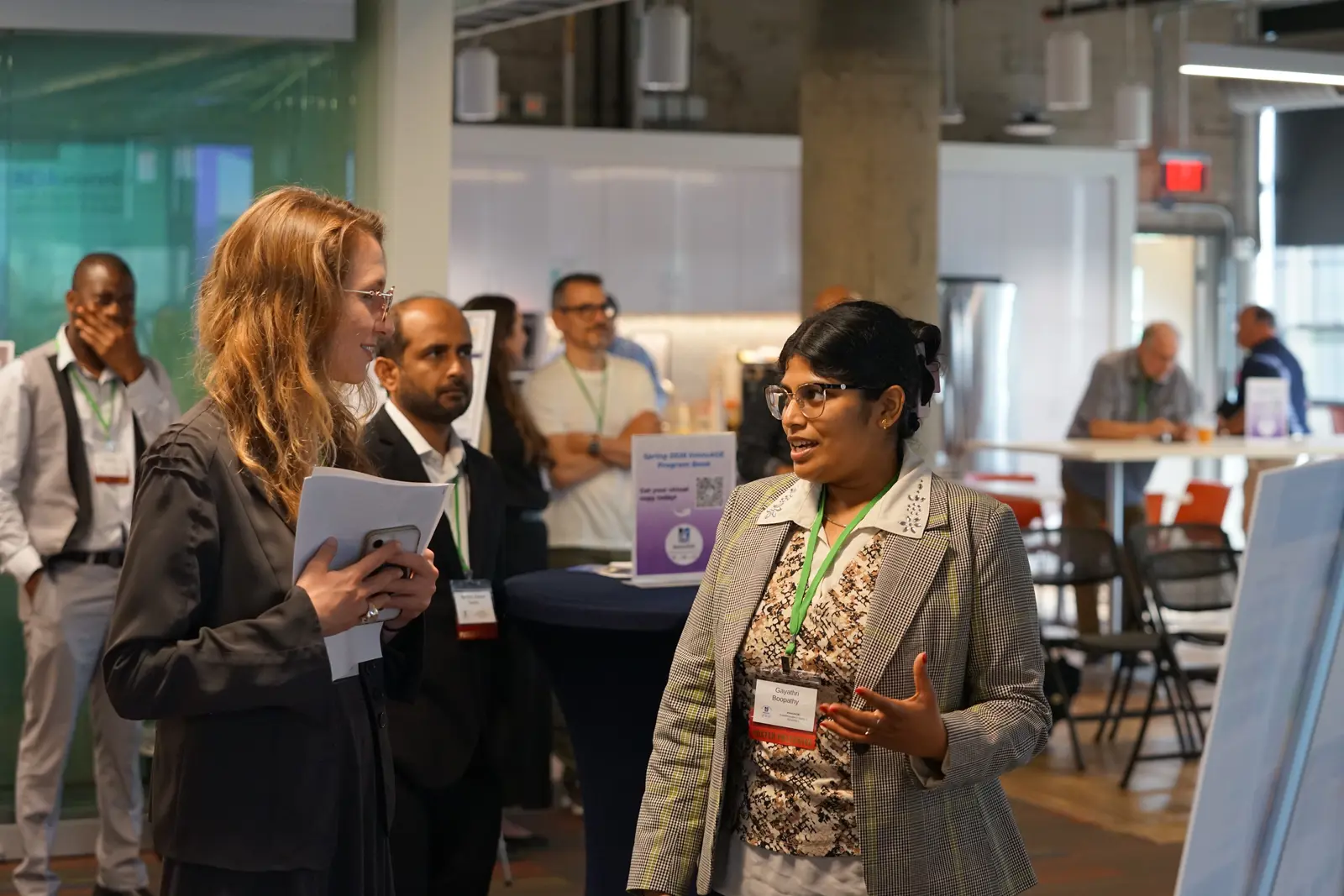
 Computer engineering doctoral student Gayathri Boopathy '25, right, discusses TheraXP, her AI-powered platform that gamifies physical therapy for older adults, during the InnovAGE Spring 2026 Showcase at 110 Canal St. in Lowell.
Gayathri Boopathy ’25 wants to make rehabilitation feel less like therapy and more like play.
The computer engineering doctoral student is developing TheraXP, an AI-powered platform that uses games, computer vision and immersive technologies to help patients recover at home.
To learn how to take TheraXP from the lab to the marketplace, Boopathy participated in UMass Lowell’s InnovAGE, a fellowship that provides entrepreneurship training, commercialization education and mentorship for researchers developing technologies to address aging- and Alzheimer’s-related challenges.
Boopathy and fellow UMass Lowell doctoral student Henriette Flore Kenne were among 12 graduate students and postdoctoral researchers selected this spring for the fifth cohort of InnovAGE, which launched in 2023 with support from a five-year, $1.2 million grant from the National Institute on Aging.
“Many doctoral and graduate students don’t end up working in academia,” says InnovAGE principal investigator Bryan Buchholz, professor emeritus of biomedical engineering. “This program teaches them about entrepreneurship and innovation.”
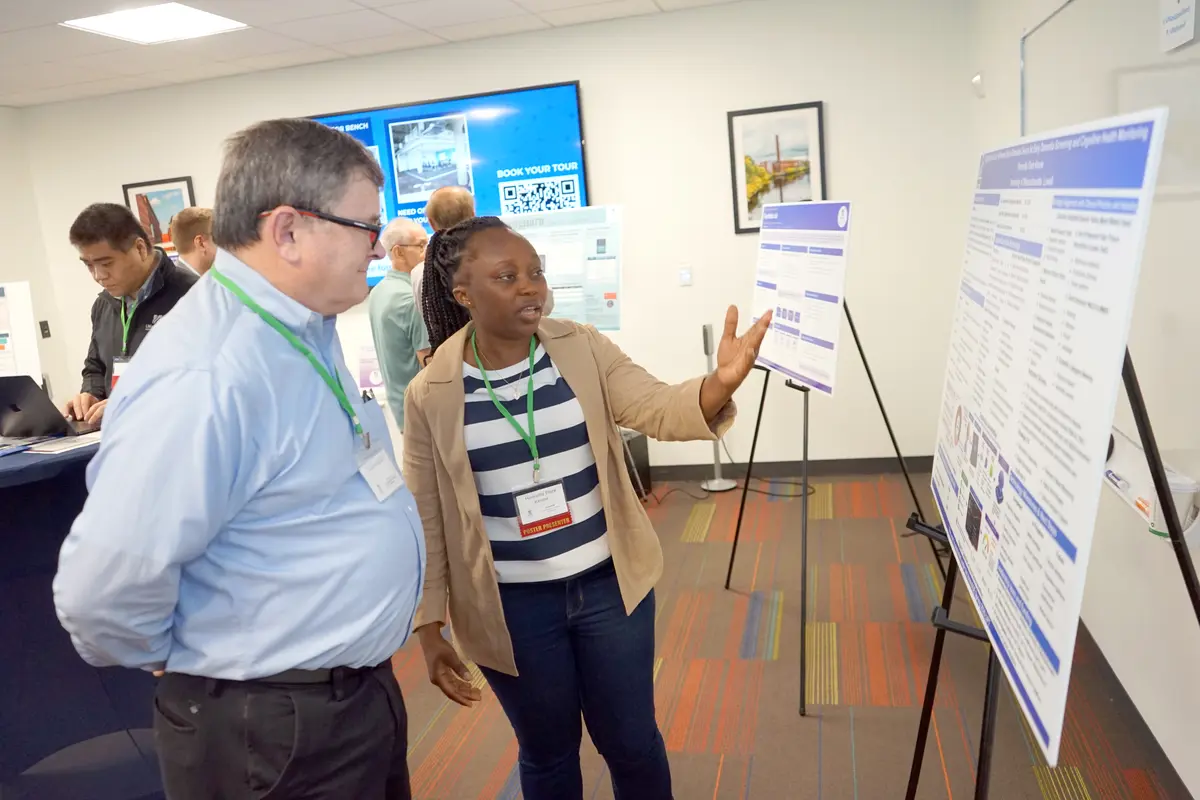 Image by Ed Brennen
 Computer science doctoral student Henriette Flore Kenne, right, explains CognitiveCare Voice, which analyzes speech patters to assess cognitive decline, during the InnovAGE showcase.
For 12 weeks, fellows attended virtual sessions on topics ranging from customer discovery and market analysis to intellectual property, regulatory strategy and venture financing. They also worked closely with mentors from industry and the startup community to refine their ideas and learn how to pitch them to potential customers, partners and investors.
The fellowship culminated with the InnovAGE Spring 2026 Showcase, hosted by the Massachusetts Medical Device Development Center (M2D2) at 110 Canal St., where fellows presented their projects to entrepreneurs, investors, health care leaders and aging-services professionals.
Kenne, a fourth-year computer science Ph.D. student from Cameroon, presented CognitiveCare Voice, a tablet-based system that uses AI to analyze speech patterns and assess a person’s risk of cognitive decline. The technology is designed to help identify potential warning signs of dementia while protecting patient data.
“I want to show the innovation that we have achieved on dementia detection and privacy preservation for patients,” says Kenne, who was mentored by entrepreneur Chesley Chen, an adjunct faculty member in the Manning School.
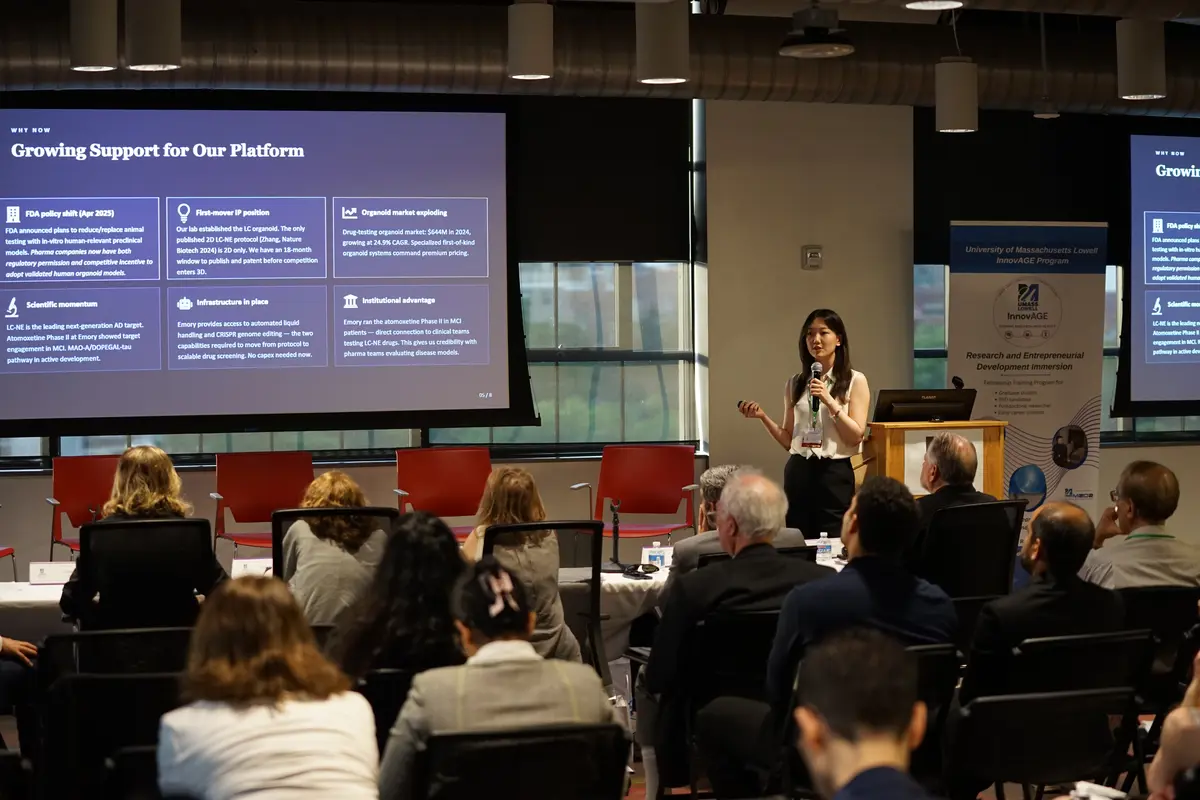 Image by Ed Brennen
 Yuhao Gao, an InnovAGE Fellow from Emory University in Atlanta, presents her work to review panelists.
“The business and marketing perspective is completely different from the engineering and developer perspective. Now I can incorporate both,” says Boopathy, an international student from India who earned a master’s degree in computer engineering from UML.
Boopathy says older adults often struggle to attend frequent in-person physical therapy appointments, making it difficult to stay on track with rehabilitation programs. By bringing therapy into the home and presenting exercises as games, she hopes to improve patient engagement and recovery.
During early testing, about a dozen patients tried some of the platform's game-based exercises.
“They didn’t know this is therapy. They played it as a game,” says Boopathy, who was mentored by Maria Shepherd, president of medtech advisory firm Medi-Vantage.
The showcase featured a fireside chat moderated by AgeTech Connect Boston CEO Danielle Duplin. Panelists discussed opportunities and challenges facing entrepreneurs who develop technologies for older adults and emphasized the importance of innovation in improving quality of life for aging populations.
 Image by Ed Brennen
 Duncan Pettigrew, chief operating officer of Kinto Care, shares his thoughts during the showcase's fireside chat.
Nayid Jana, an M.D.-Ph.D. student at Washington University in St. Louis, says the mentorship he received gave him resources and connections he can draw on as he continues developing AI-augmented radiology tools for Alzheimer’s disease treatment monitoring.
“I have them whenever I want to learn more about this or take this idea and actually make it concrete,” he says.
Boston University researcher Brenna Hagan says the fellowship helped demystify the business side of innovation.
“Everything when it came to business and market development really scared me,” Hagan says. “The program really was insightful.”
The InnovAGE fellowship, which includes a $2,016 stipend, has grown steadily since launching in 2023 as the UMass Lowell Innovative Fellows Training (LIFT) program. According to Buchholz, InnovAGE now attracts roughly three times as many applicants as available fellowship spots. Applications are currently open for the next cohort, which begins in September.
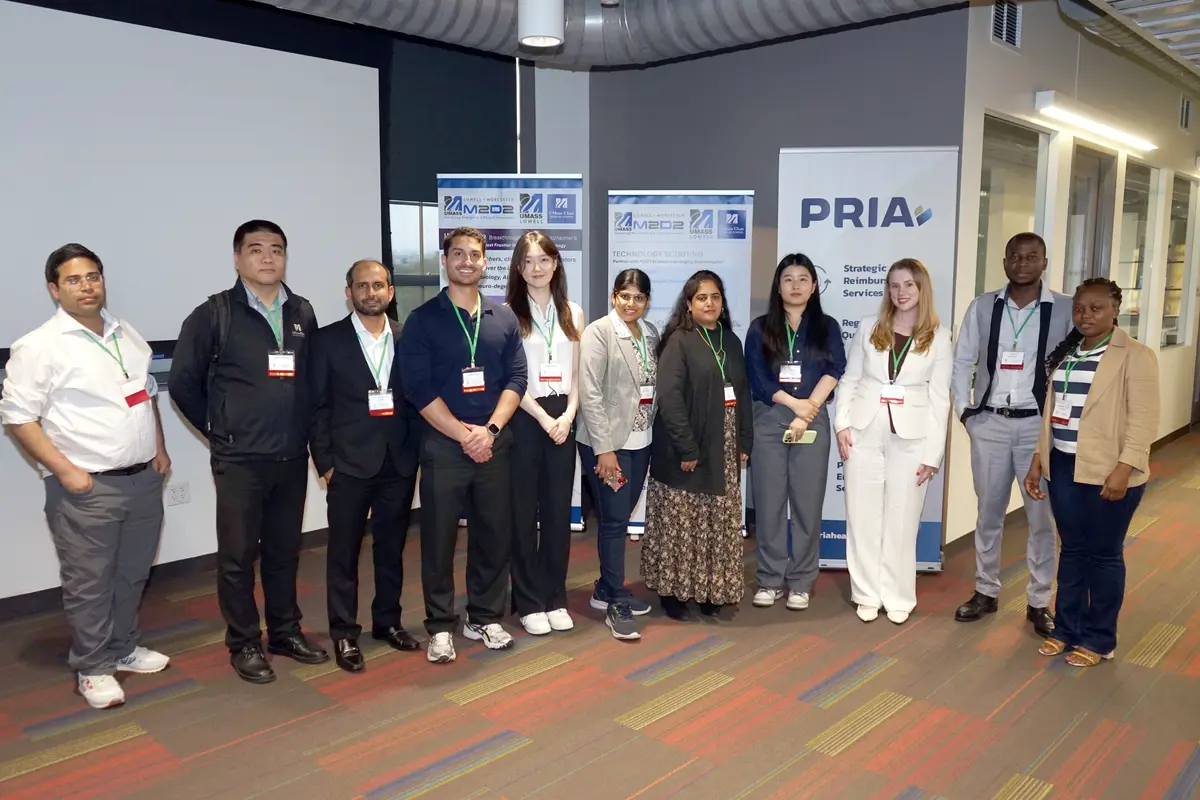 Image by Ed Brennen
 The fifth InnovAGE cohort spent 12 weeks this spring learning about entrepreneurship and innovation.