
 Image by Ed Brennen
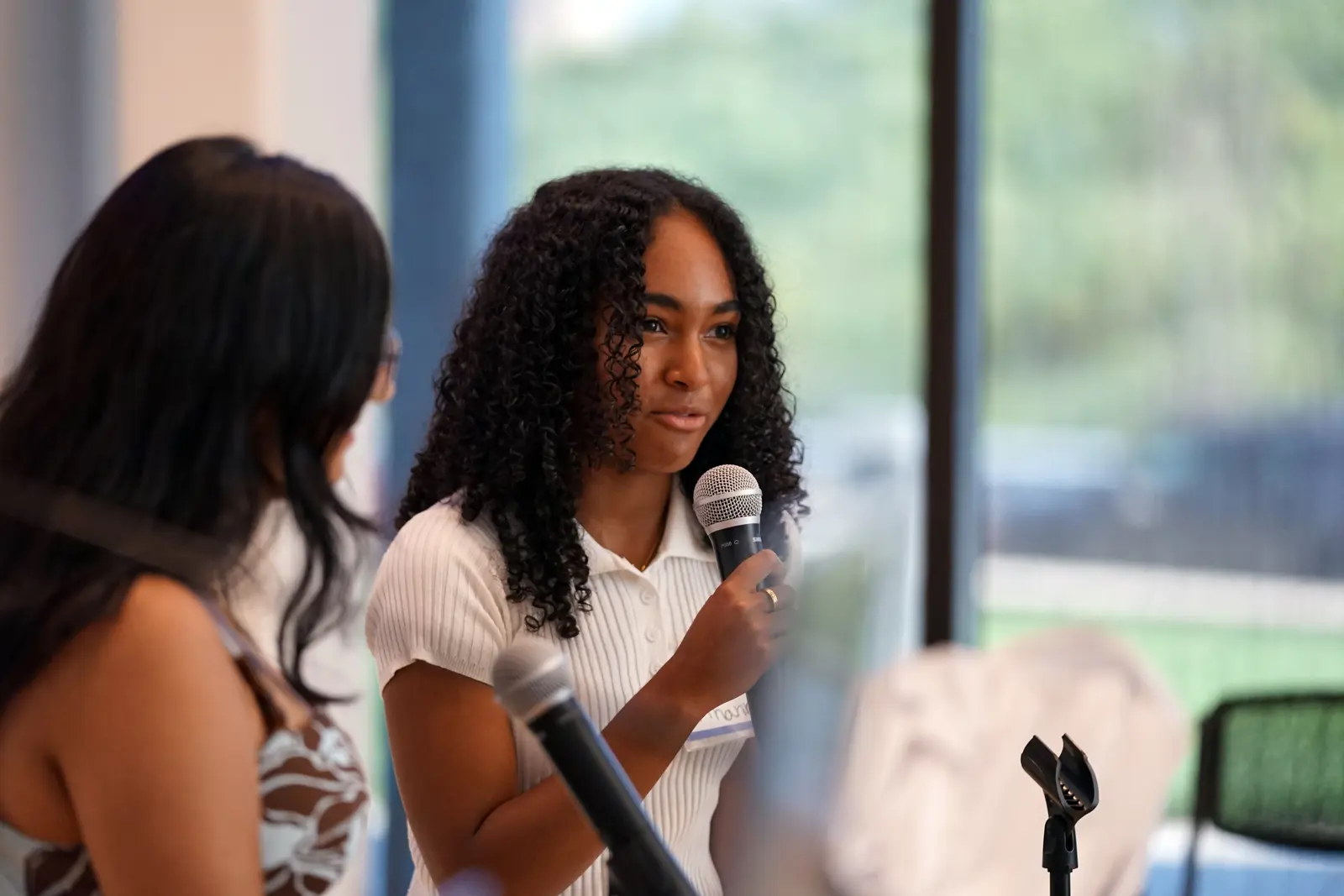
 Incoming Francis College of Engineering student Arihanna Pena presents her group's project on the global supply of semiconductors during the finale of this summer's RAMP program at the Saab Emerging Technologies and Innovation Center.
Before starting her first semester at UMass Lowell, incoming electrical engineering student Adia Tang wanted to get a feel for campus, make some friends and meet professors.
This summer’s Research, Academics and Mentoring Pathways program, known as RAMP, gave her all three.
“I saw a post about RAMP and thought it would be a great way to get a step ahead,” the Salisbury native says. “Now I feel more prepared.”
Tang was one of 12 students in this summer’s RAMP cohort, a six-week program that gives incoming Francis College of Engineering students a jump-start on college.
The students spent their mornings taking Calculus or Pre-Calculus, earning their first credits toward graduation. In the afternoons, they worked on research projects, visited labs, met with industry mentors and developed skills in communication, teamwork and problem-solving.
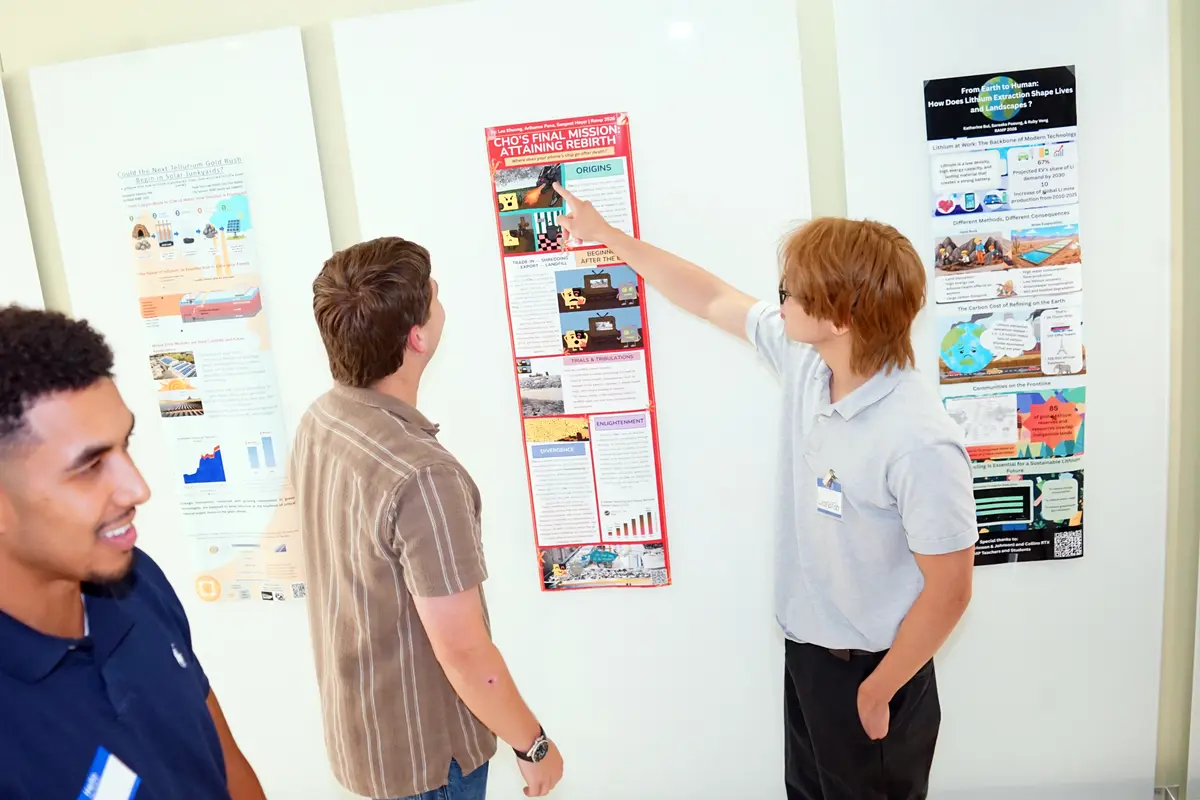 Image by Ed Brennen
 Incoming electrical engineering major Leo Khuong, right, shares his RAMP poster presentation.
RAMP Director Kavitha Chandra, a professor of electrical and computer engineering, launched the program in 2018 while serving as associate dean of undergraduate affairs. It began as a way to help young women entering engineering build community across majors, particularly in fields where women remain underrepresented.
Over time, Chandra says, it became clear that the model could benefit all incoming engineering students.
“The main thing about it is, they’re now connected,” Chandra says. “They know the school, and they know about the jobs.”
 Image by Ed Brennen
 Students created RAMP 2026 keychains at the Lawrence Lin MakerSpace.
Students also met weekly with industry mentors from companies including Analog Devices, Brooks Automation and BAE Systems. The mentors helped students think through their research projects while also answering questions about engineering careers.
Electrical engineering alum Steve Reine ’87, a field applications engineer at Analog Devices, has served as a RAMP mentor for three years. He helps students understand the range of career paths available in engineering by talking with them about his day-to-day work and the kinds of roles they might pursue.
“We give them a broad view of the positions that are available within the industry,” Reine says. “Hopefully, sometime down the road, we can say that we gave them a leg up.”
For incoming electrical engineering student Leo Khuong, RAMP helped confirm that he had chosen the right path coming out of Lowell High School.
“I wanted to participate in RAMP to see if my major was really for me, because I wasn’t really sure of it in high school,” says Khuong, who had considered studying business. “But now I’m more confident in it.”
Khuong says RAMP helped him learn to communicate better, manage his time and see how different engineering fields connect.
The transition from high school to college still feels big, he says, but now it feels manageable.
“I learned to stay on top of my classes and not really take advantage of that freedom,” Khuong says. “I learned to really use all that time.”
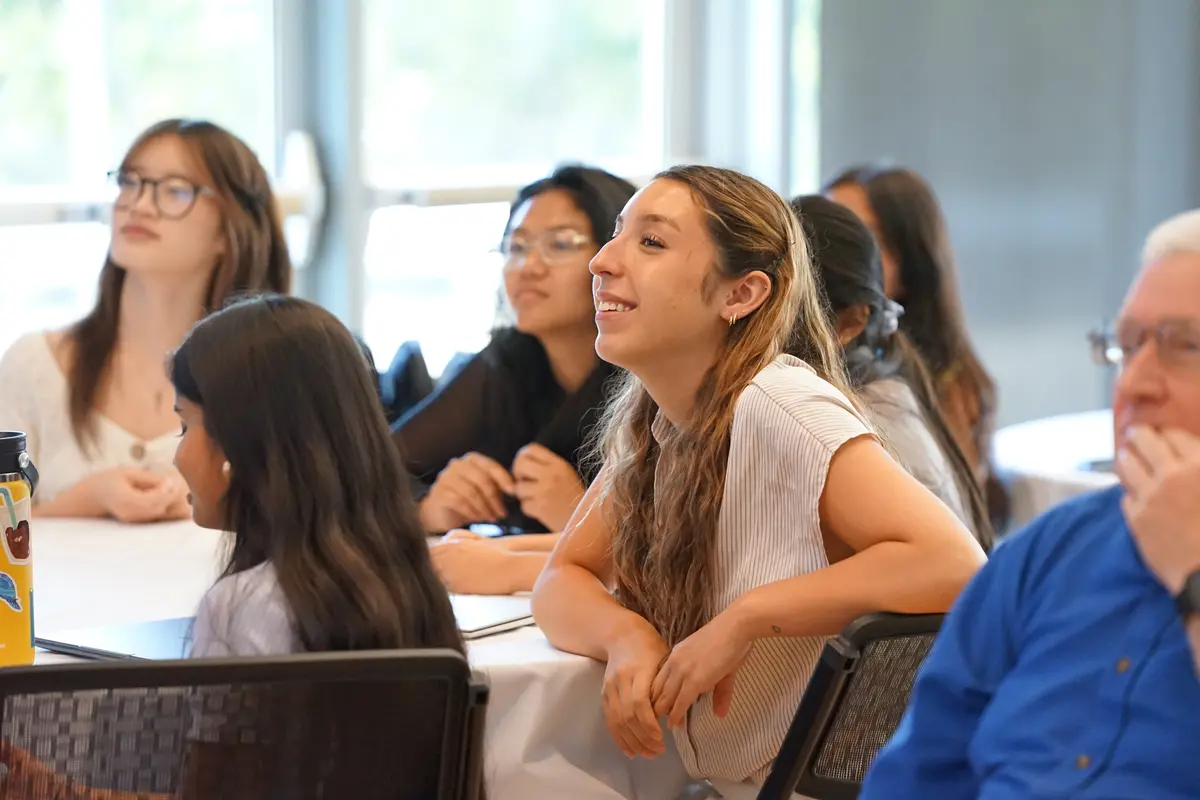 Image by Ed Brennen
 RAMP participant Valentina Quiroa listens to a final presentation at the Saab Emerging Technologies and Innovation Center.