 Image by Ed Brennen
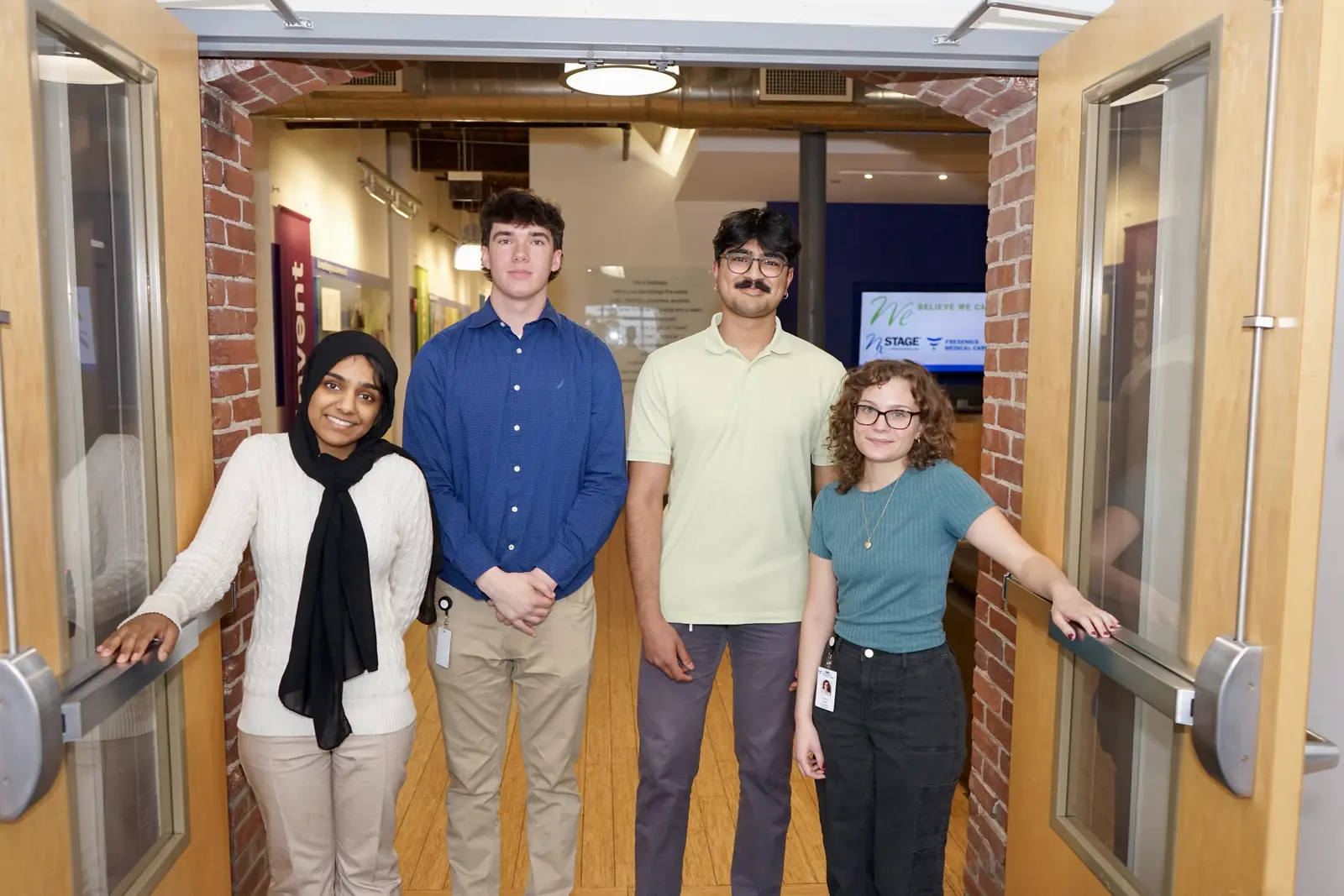
 Among the UMass Lowell students on co-op this spring at Fresenius Medical Care in Lawrence are, from left, electrical engineering major Ifrah Ahmed, quantitative economics major James Lenza, business major Ayush Rajeshwar and biomedical engineering major Lauren Caizzi.
Each morning at Fresenius Medical Care in Lawrence, embedded software engineering intern Nick Milas reviews overnight software tests for a home dialysis device used by patients with kidney disease.
If there are issues, the UMass Lowell computer science major helps engineers identify and fix them before development work continues for the day.
“Working in the medical device field, risk must always be at the forefront of your mind while writing code,” Milas says. “It’s made me a more diligent programmer.”
Milas is one of five UML juniors completing six-month professional co-ops this spring at Fresenius’ research and development site, alongside quantitative economics major James Lenza, biomedical engineering major Lauren Caizzi, business major Ayush Rajeshwar and electrical engineering major Ifrah Ahmed.
Together, they are contributing to projects involving embedded software, supply chain logistics, data analytics and product testing for Fresenius’ home hemodialysis systems, which help filter waste and excess fluid from the blood of patients with kidney disease.
“The co-ops are a huge part of what we do here,” says Ciro de la Vega, senior director of engineering at Fresenius. “They move the needle.”
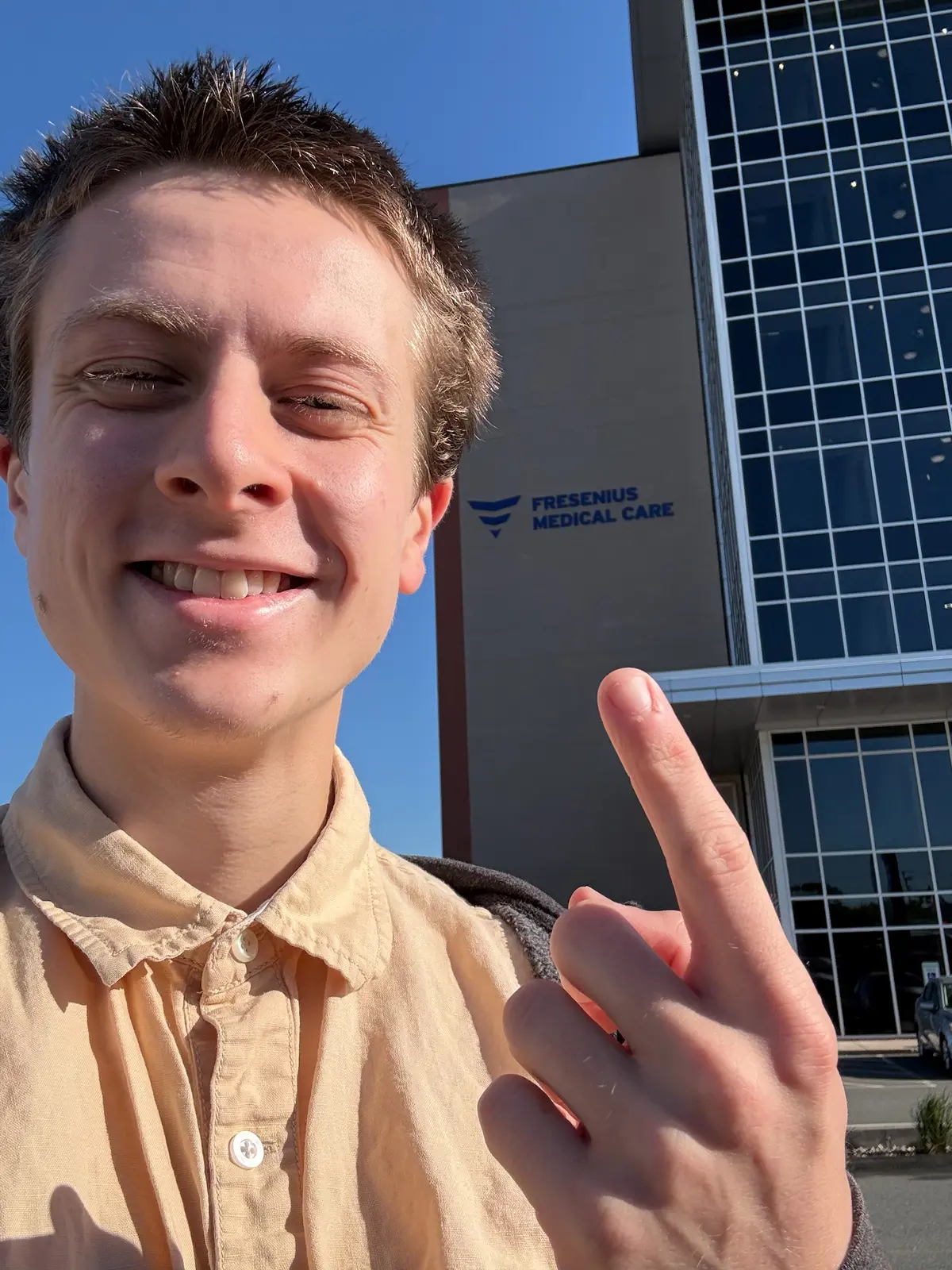 Image by Nick Milas
 Computer science major Nick Milas is working as embedded software engineering intern at Fresenius.
“UMass Lowell is great at putting up strong candidates across all the different specializations,” Dingle says. “Some of the newer areas we’re recruiting for, like generative AI and machine learning analytics, are areas where UMass Lowell students have hit the ground running.”
Fresenius is one of nearly 900 employers that have partnered with UML’s Professional Co-op Program since its launch in 2009. During that time, nearly 3,800 UML students have completed more than 4,800 co-op experiences, earning an estimated $87 million for their work.
This academic year, 304 students secured co-op positions, while nearly 1,200 students participated in some phase of the program, including preparation courses, co-op placements and reflection seminars.
For Lenza, a supply chain intern from Lakeville, that work includes helping manage the flow of products across multiple locations. He tracks inventory, processes shipment data and helps resolve discrepancies using Excel and the company’s enterprise systems.
“I look at inventory at the warehouse in Texas, and it’s all just supply and demand,” Lenza says. “Even though it’s not exactly what we do in class, the concepts definitely carry over.”
Rajeshwar, who works in supply chain analytics, focuses on capacity modeling and large-scale data analysis using tools like Python, SQL and Excel. He says the experience has pushed him to apply his classroom lessons in analytics and finance in new ways while motivating him to strengthen his programming skills.
“I was comfortable with Excel, but I hadn’t applied it at this scale — spreadsheets with 100,000 rows,” the Westford native says. “It’s been a great experience to work with that much data and really understand what’s going on.”
Milas says the co-op has taught him how to collaborate better with teammates on software development and changed how he approaches coding assignments.
“The most important thing I learned was how to receive feedback on code changes and apply it effectively moving forward,” the Medford native says.
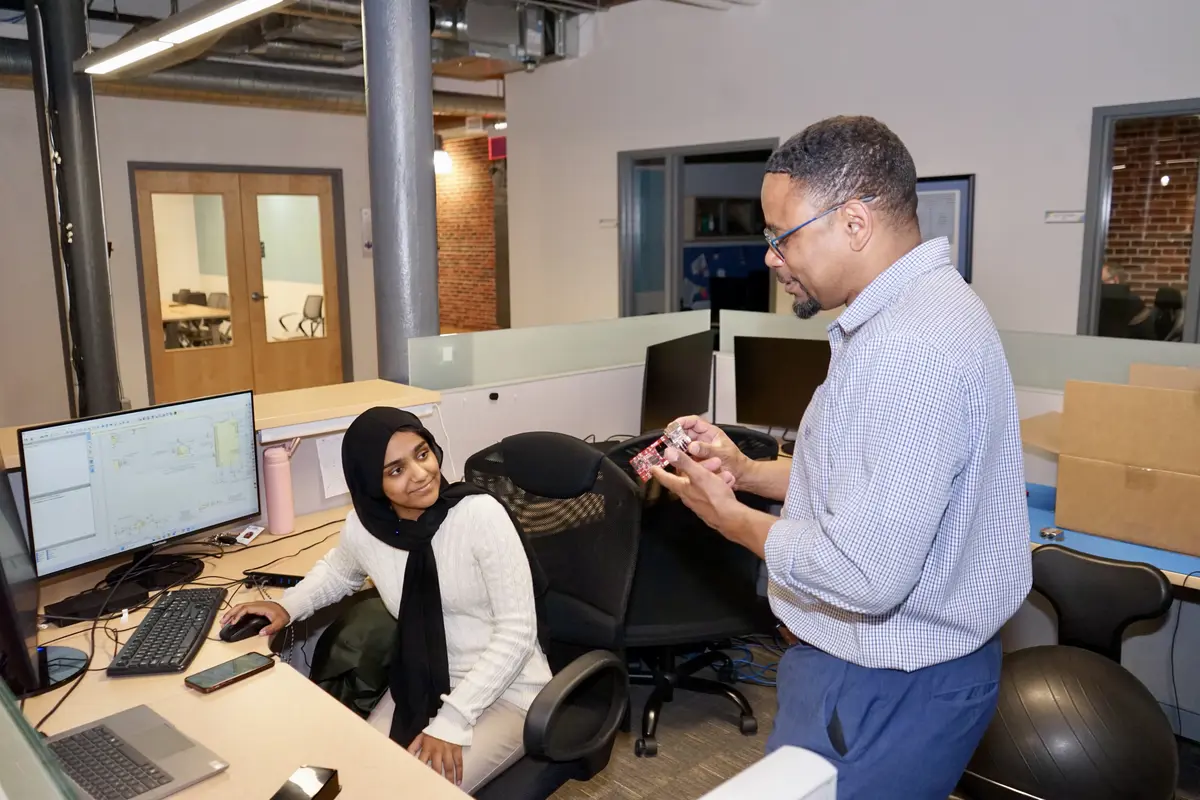 Image by Ed Brennen
 As an electrical engineering co-op at Fresenius Medical Care in Lawrence, Ifrah Ahmed, left, works on team with UMass Lowell alum Rob Thurman '06, a staff electrical engineer at the company.
“The first month is a lot of learning and figuring out who to go to,” the Dracut native says. “By March, I felt like I could go in, run tests and not need someone guiding me through everything.”
Ahmed, an electrical engineering co-op from Shrewsbury, contributes to a range of projects, collaborating with different teams across the organization.
“I feel like I was at zero, and now I’ve improved so much,” she says. “You get experience in class, but seeing it in person is completely different.”
Ahmed says the co-op has also given her a clearer sense of direction.
“I was kind of winging college before,” she says. “Now I know where I want to go from here.”
Fresenius, formerly known as NxStage, has partnered with UML’s co-op program for more than a decade, hiring more than 75 students since 2015 across disciplines including marketing, human resources, supply chain, finance, technology, sciences and engineering. At the end of their co-ops, the students present their projects and findings to engineers and executives, giving them experience communicating technical work in a professional setting.
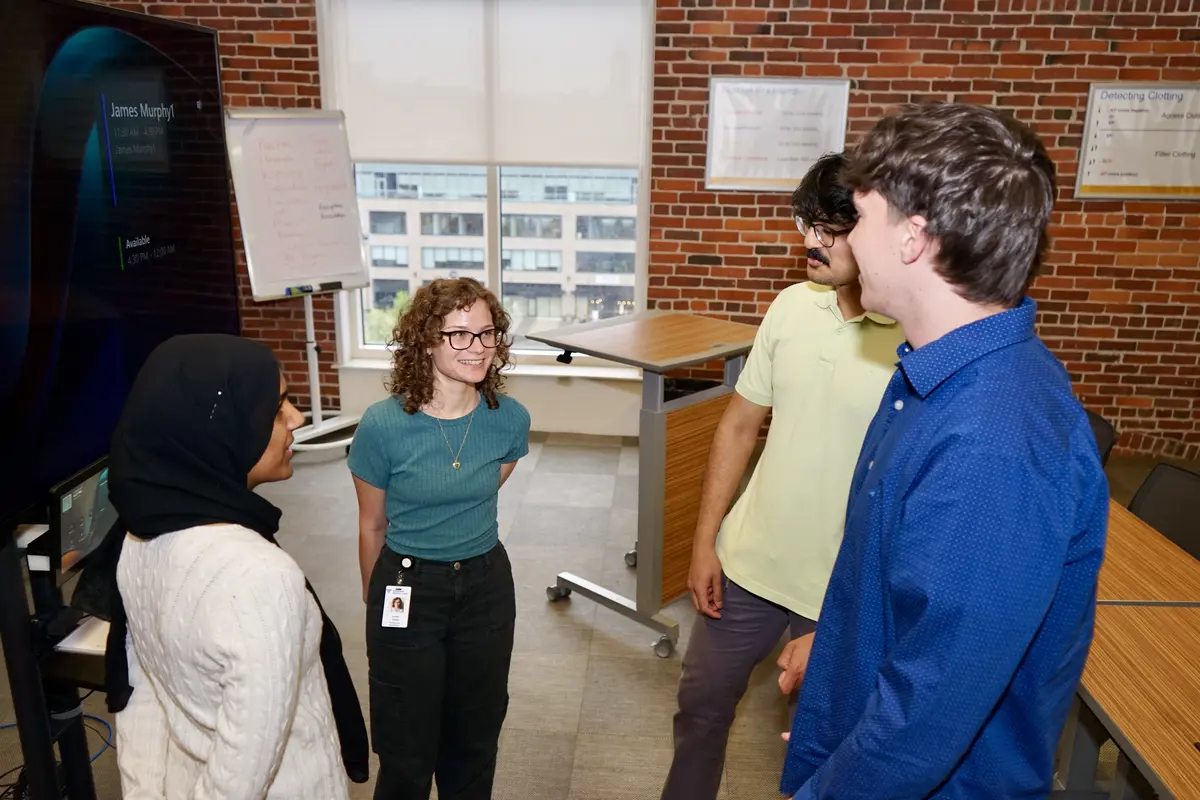 Image by Ed Brennen
 Fresenius co-ops, from left, Ifrah Ahmed, Lauren Caizzi, Ayush Rajeshwar and James Lenza are among more than 300 UMass Lowell students who secured co-op positions with companies this year.
Company leaders say UMass Lowell students consistently stand out for their preparation and curiosity. Many go on to full-time roles; in some teams, former co-ops make up the majority of recent hires.
“It’s a great starting point,” says Kahley Apostolou, manager of talent acquisition at Fresenius. “They’re familiar with how things work here, and they’re ready to contribute.”
That pipeline is something that UML alum Rob Thurman ’06, a staff electrical engineer at Fresenius, sees firsthand as he mentors co-ops such as Ahmed.
“They don’t know everything yet, and that’s OK,” Thurman says. “Our job is to show them what the work can be and get them excited about it.”
For the students, the advice to peers considering a co-op is simple.
“Just do it,” Lenza says.
“Don’t be afraid to apply, even if you don’t feel ready,” Ahmed adds. “You’ll learn so much once you’re here.”