
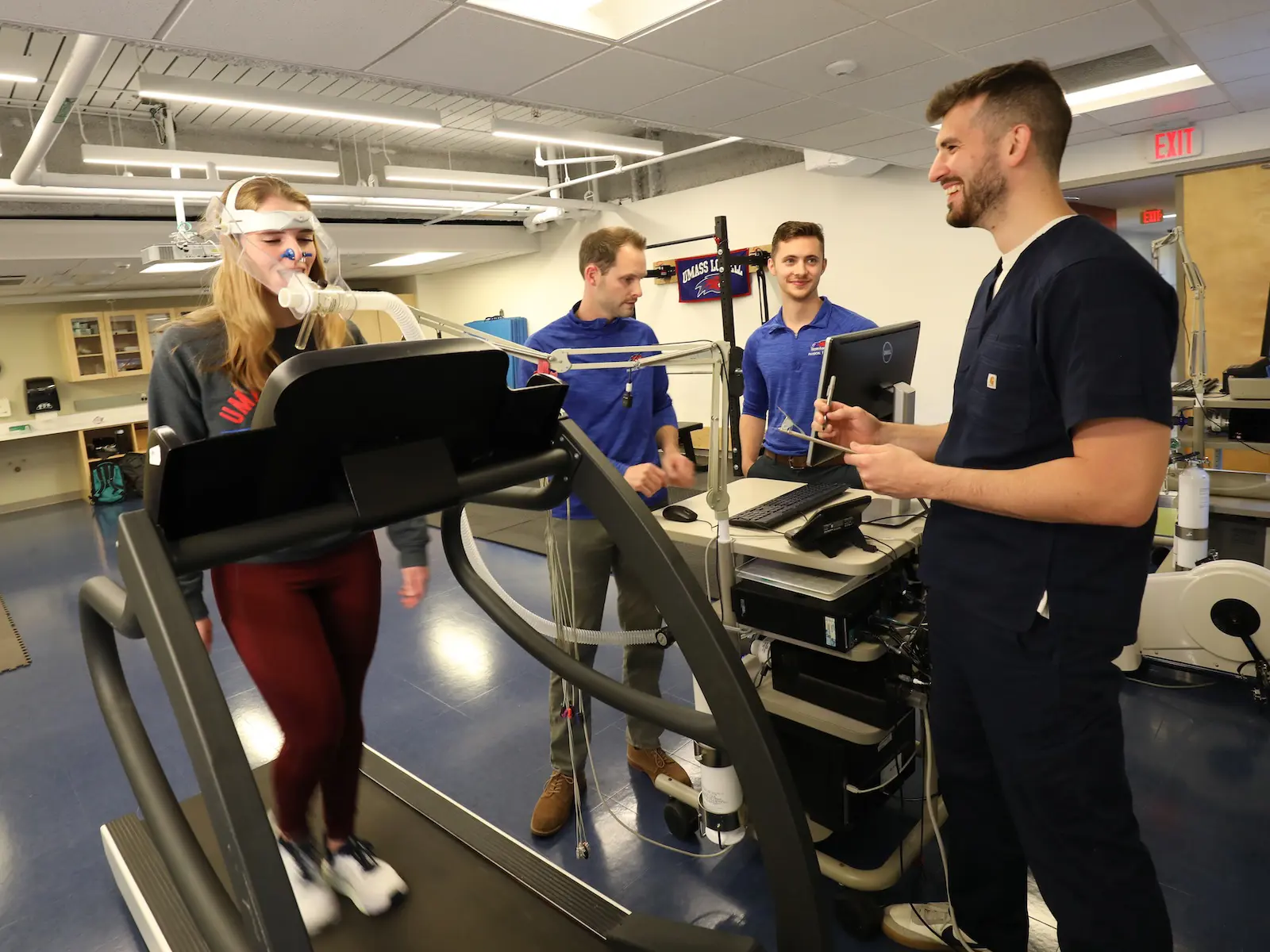
As consumers seek more personalized and evidence-based fitness and health solutions, demand is growing for exercise science professionals who understand the science behind exercise and human performance.
From smartwatches that track our every step to customized exercise programs, fitness is becoming more data-driven and personalized.
According to the American College of Sports Medicine's (ACSM) recent fitness trends survey, wearable technology, exercise-based weight management and fitness programs for older adults rank as leading developments that influence today’s health and wellness industry.
Associate Teaching Professor Kyle Coffey ’07, ’10 of the Department of Physical Therapy and Kinesiology, who serves as the program director of the Exercise Science Bachelor of Science program, sat down to talk about how these latest trends impact health and wellness. He also provided perspective on the future of exercise science careers, which are expected to grow at a clip of nearly 20% over 10 years in the New England area, according to Lightcast, a labor analytics organization.
What are some of the biggest fitness trends right now?
One of the most significant trends is the continued growth of wearable technology. Smartwatches, fitness trackers, heart rate monitors and other devices are helping people monitor their activity levels, sleep patterns, recovery and overall health. We're also seeing increased interest in exercise for weight management, fitness programs for older adults, personalized exercise programming and using exercise to support mental health. What ties many of these trends together is a growing desire for evidence-based strategies that help people improve their quality of life.
Why are wearable devices so popular?
Wearable technology gives people immediate feedback about their health behaviors. Years ago, many people exercised without knowing how active they were throughout the day. Now they can track steps, monitor heart rate, estimate energy expenditure and even receive reminders to move. The technology can be motivating, because it helps people set goals and measure progress.
If consumers have all of this data on an app, what’s the added value of exercise professionals?

Program Director of the Exercise Science Bachelor of Science program Kyle Coffey.
Exercise for weight management remains a major trend. Why is that important?
Many people think of exercise primarily as a way to lose weight, but its benefits extend far beyond the number on a scale. Regular physical activity can improve cardiovascular health, blood sugar regulation, strength, mobility, mental health and overall quality of life. Exercise also plays an important role in maintaining weight loss and reducing the risk of chronic diseases such as heart disease, diabetes and certain types of cancer. That's why health care providers view physical activity as a critical component of long-term health.
How are these trends creating opportunities for exercise science professionals?
As consumers seek more personalized and evidence-based fitness and health solutions, demand is growing for professionals who understand the science behind exercise and human performance. Our exercise science graduates work in a variety of settings, including hospitals, rehabilitation centers, fitness and wellness facilities, sports performance programs, corporate wellness initiatives and community health organizations. They help individuals improve health, manage chronic conditions, enhance athletic performance and maintain active lifestyles throughout their lives.
How has the Exercise Science Bachelor of Science program adapted to prepare students for emerging career opportunities?
The exercise science field is expanding in multiple directions, and our curriculum, hands-on teaching labs and specialized concentrations are designed to reflect those changes. Students gain experience with the latest technologies and evidence-based practices while building the skills needed for careers in health care, wellness, sports performance and human performance.
Our students have a strong foundation in exercise physiology, anatomy, biomechanics and nutrition. Employers are also looking for communication skills, critical thinking, data analysis and the ability to work with diverse populations.
The Exercise Science bachelor’s program recently was accredited by the Commission on Accreditation of Allied Health Education Programs (CAAHEP). Why is this important to students?
Accreditation through CAAHEP is important because it validates that UMass Lowell’s Exercise Science program meets rigorous, profession-wide standards for curriculum, faculty qualifications, student learning outcomes and hands-on training. For students, that means they are receiving an education that has been independently reviewed and recognized as preparing them for professional practice in the field.
By graduating from our accredited program, students qualify to take the Certified Exercise Physiologist certification exam (ACSM-EP) from the American College of Sports Medicine (ACSM), a gold standard certification for the field.