
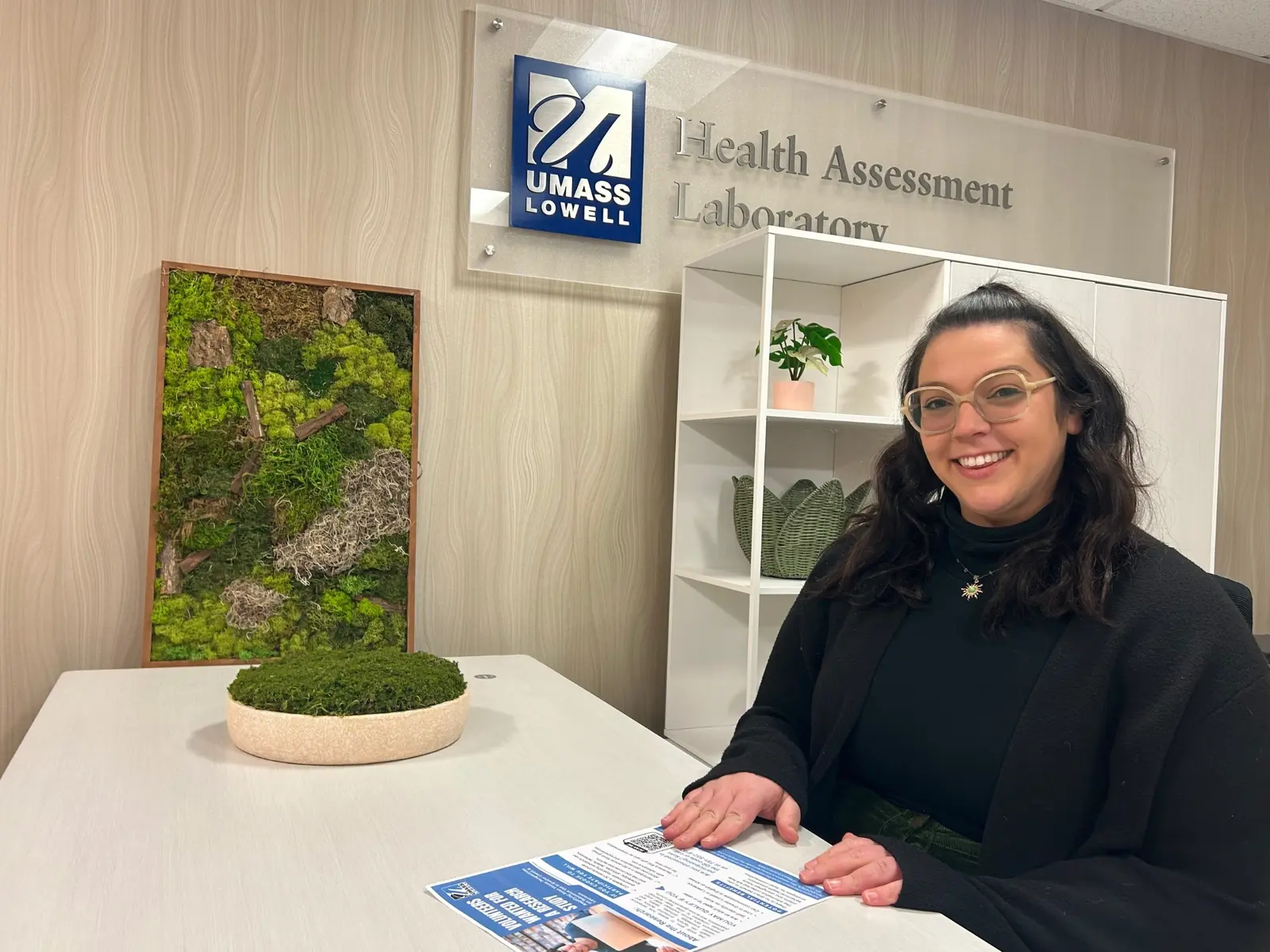
Research Assistant Angela Consentino ’17 of the Center for Population Health is examining how substance use risk factors vary across specific Asian American communities and generations in the Greater Lowell area.
Asian Americans have lower reported rates of substance use disorder, according to studies from the Massachusetts Public Health Data Warehouse. However, the use of broad, aggregate statistics for this group can obscure important differences within this diverse population, which includes Cambodian, Vietnamese and Laotian Americans.
A doctoral student-led research project is taking a closer look, examining how substance use risk and protective factors vary across specific Asian American communities and generations in the Greater Lowell area. Research Assistant Angela Consentino ’17 of the Center for Population Health at UMass Lowell is partnering with the Greater Lowell Health Alliance and the Cambodian Mutual Assistance Association to better understand how cultural background, migration history, age and socioeconomic factors shape substance use attitudes, beliefs and behaviors.
“When diverse communities are grouped together, those most at risk can be overlooked,” says Consentino, a graduate of the Master of Public Health program and doctoral candidate in public health. “Our goal is to address gaps in data so that culturally relevant and effective prevention methods can be developed that will help Cambodian, Vietnamese and Laotian Americans live healthier lives.”
Funded by a $10,000 UML Community-Engaged Research and Scholarship grant, the project combines surveys with small group discussions, allowing participants to share their behaviors, beliefs, attitudes and experiences. This approach helps the team of researchers and community partners connect data to real-life contexts, offering insight into how substance use risk develops and how it might be prevented.
Nearly half of Lowell’s foreign-born residents are Asian, and the city is home to the second-largest Cambodian population in the United States, along with significant Vietnamese and Laotian communities. Many residents have refugee backgrounds or multigenerational migration histories that impact their experiences with health care, trauma, economic opportunity and community support.
Sabrina Noel, associate professor and director of the Center for Population Health, and Associate Professor David Cornell of the Department of Physical Therapy and Kinesiology are overseeing the research and mentoring Consentino.
“Angela is an exceptional, forward-thinking doctoral trainee whose work is evidence-based and reflects a deep commitment to community-engaged research,” says Noel. “Now is the time to support student-driven research that is responsive to community priorities. Together, we can turn this work into meaningful, actionable recommendations for substance use prevention that truly serve Cambodian, Vietnamese and Laotian communities.”
By grouping participants by age and refugee background, the study is designed to tease apart the influence of generational experience and migration history. This makes it easier to understand whether differences in substance use attitudes and behaviors are driven by age, refugee experience or a combination of both.
“We’re looking forward to the findings from Angela’s research and using them to inform our health equity and disparities work in the community,” says Cornell. “It's exciting to help open doors and see what Angela’s research uncovers as she builds this work."