
Peter Aucella, Assistant Superintendent for Development, Lowell National Historical Park
Peter Aucella came to Lowell from Malden, Massachusetts in 1984 and has been a pivotal figure in its urban revitalization ever since. He served on the staff of Senator Paul Tsongas from 1980-1984; then as director of the City’s Division of Planning and Development through 1986; then as the executive director of the federal Lowell Historic Preservation Commission through 1995; and from 1995 to 2018 as the assistant superintendent for Development, Lowell National Historical Park. He has served on the Lowell Historic Board and the Lowell Development and Financial Corporation for over thirty years. Not only has he overseen the transformation of numerous individual buildings and sites throughout the downtown historic district, he has served as the lead on federal legislation and spearheaded the development of cultural events within the city. He is a founding organizer of the Lowell Folk Festival and oversaw the planning and development of Boarding House Park and created the Lowell Summer Music series which presents outdoor concerts throughout the summer. He supervised the development of the Tsongas Arena, the Lelacheur Park baseball stadium, and the Merrimack Riverwalk.
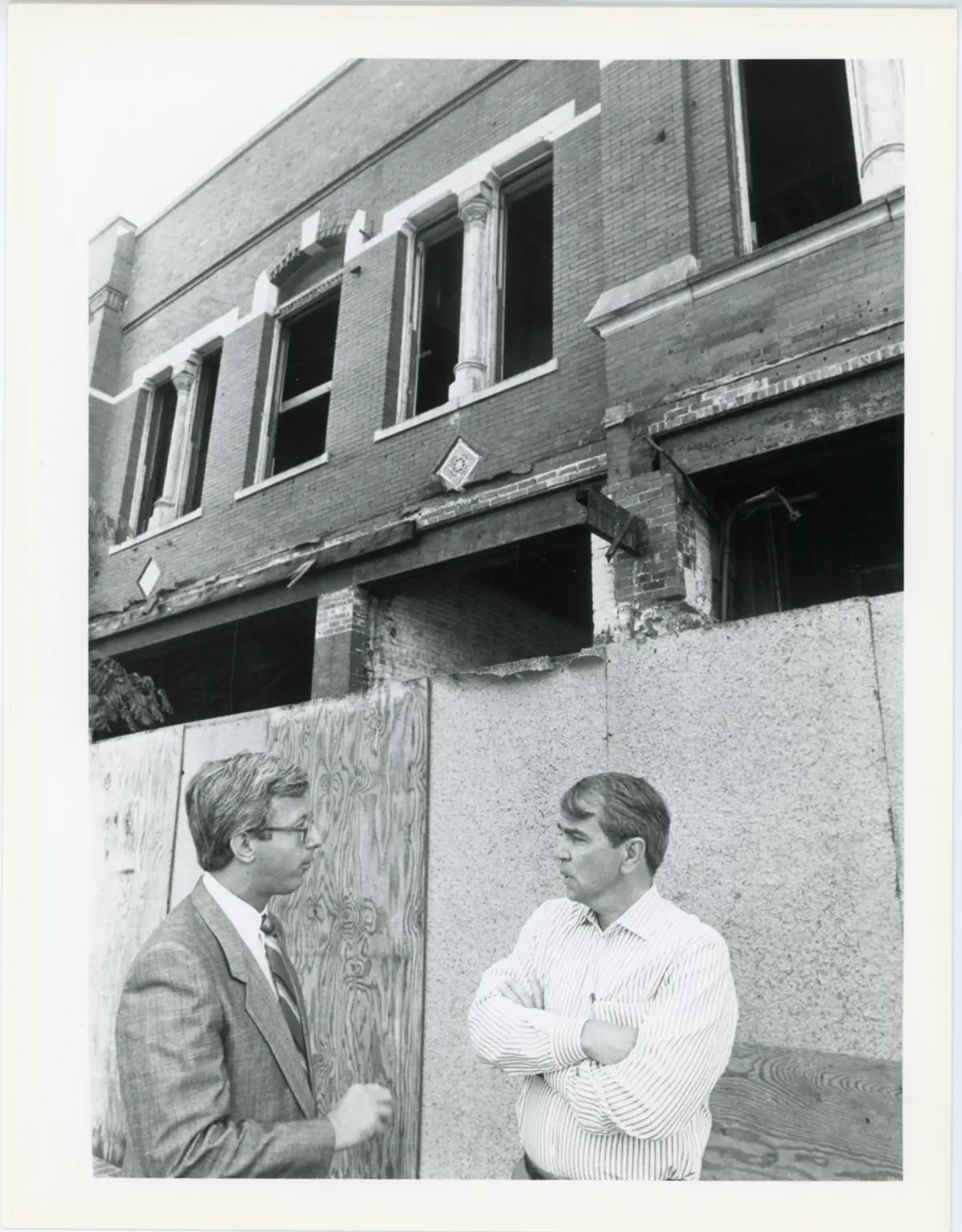
In the interview, Aucella provides a first-hand account of the complexities that any effort at urban revitalization involves. The need for collaboration and partnerships, and the need for the parties involved to have a willingness to work together, all stand behind the examples he shares. Viewers will hear the story behind the rehabilitation of the Boston and Maine Depot on Central Street into the Richard and Nancy Donahue Family Academic Arts Center for Middlesex Community College. Not only did it involve numerous entities to manage the transition and construction, it also underscored the commitment to a long-term vision for the city. Aucella also discusses the creation of Boarding House Park, a well-known cultural venue, and how the initial conversations all centered on a parking lot. He recalls the public art initiatives, such as the creation of Kerouac Park, that transformed the city; and concludes with his role in the completion of the Tsongas Arena. Throughout his interview he provides valuable insights into the people he worked with such as Paul Tsongas, Joe Tully, and Charles Parrott. As he so clearly demonstrates, the willingness to collaborate brings results: over 400 buildings in the city, and over 97 percent of the downtown mills, have been renovated.