
Carole Cowan, President, Middlesex Community College
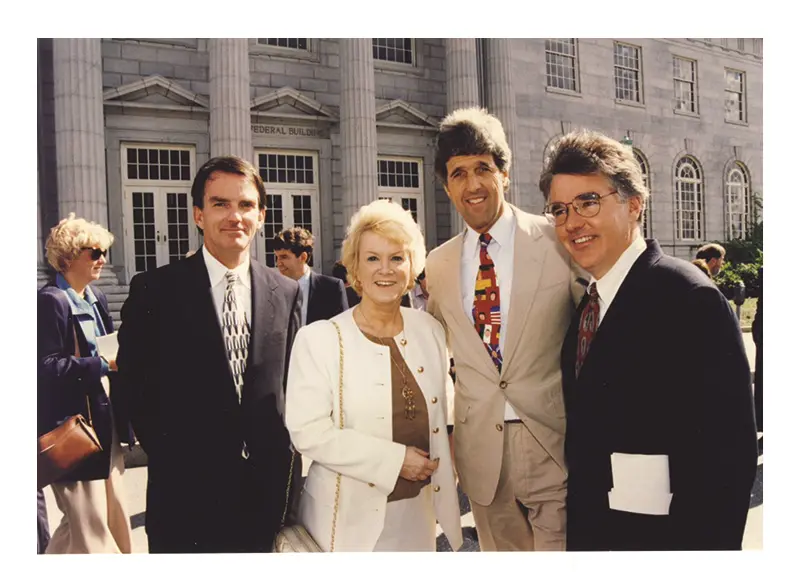
Through her impressive tenure as the president of Middlesex Community College (MCC), Carole Cowan oversaw the creation of a campus for the college in downtown Lowell. The main campus of the college is in the more suburban setting of Bedford, Massachusetts. As MCC grew in numbers, state officials, such as Governor Michael Dukakis, pushed for expansion into urban areas such as Lowell. The transition began in 1987 with a move into space at the Wannalancit Mills on Suffolk Street and when Carole became president in 1990 it picked up momentum. MCC moved into the former Wang Training Center on Merrimack Street and buildings on Middle Street. Then they acquired and restored the historic Nesmith House on Andover Street and rehabilitated the abandoned Federal Building on Merrimack Street into the college’s library. Most recently MCC purchased and restored the former Boston & Maine Railway Depot on Central Street and transformed it into the Richard and Nancy Donahue Family Academic Arts Center.
The Interview
In her interview, Carole relates how these projects came about and the impetus behind them. For state and federal officials, such as Dukakis or Paul Tsongas, education was a critical part of urban revitalization. Carole shared that vision and implemented it in Lowell. She had a background in building and real estate and used those abilities to create a campus that supported MCC’s educational goals. She is quick to point out that the success of MCC’s Lowell campus relied on multiple public/private partnerships and on building good relationships with city officials, the state’s Division of Capital Asset Management and Maintenance (DCAMM) office, and Lowell National Historical Park. The partnerships succeeded because of a shared sense of social responsibility. The city may have suffered a severe economic downturn by the 1970s but she believes that Lowell is a “noble city” and that each generation can add to its legacy.