
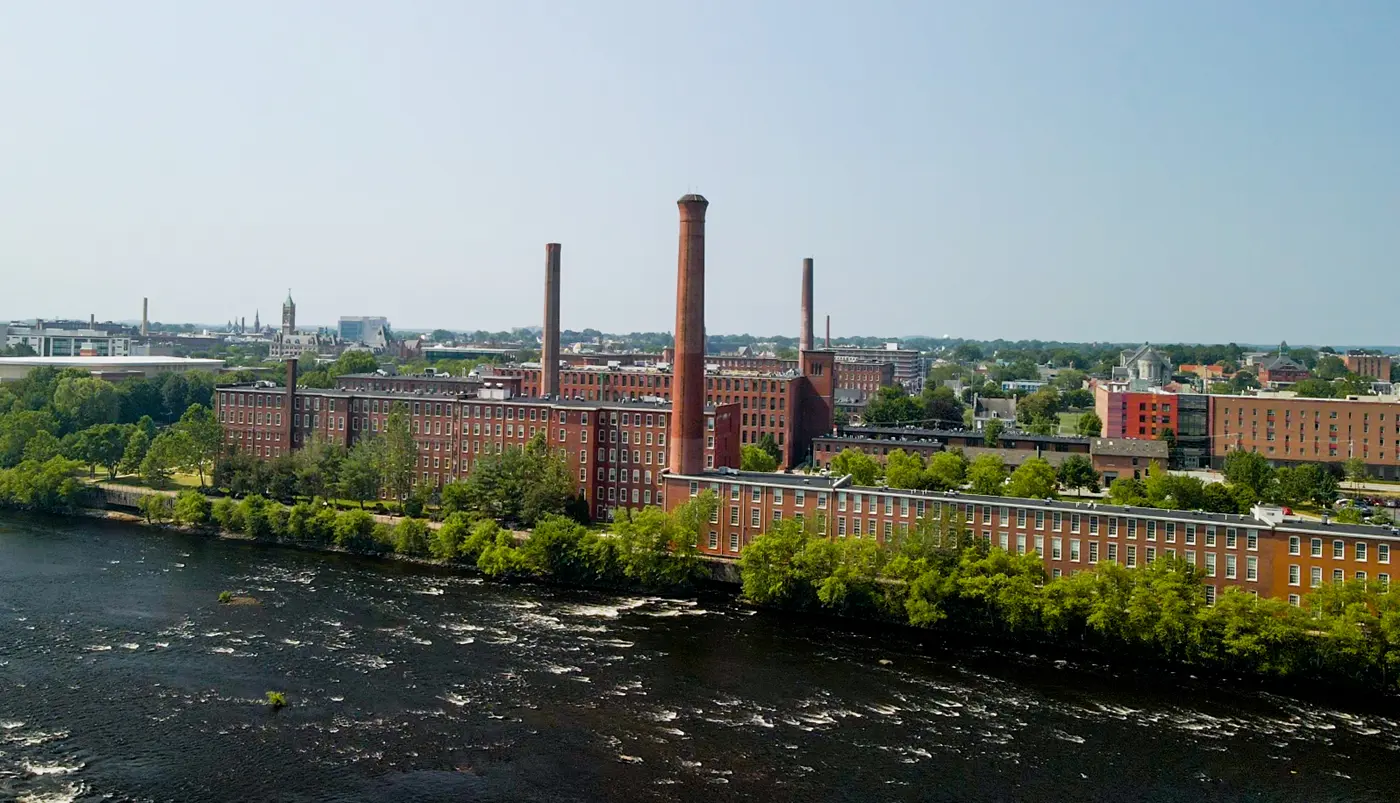
A Digital Archive of Urban Revitalization
This digital archive consists of fifteen interviews with individuals who contributed to the urban revitalization of the city of Lowell from the 1970s to the present. The project was initiated through the Donahue Center for Business Ethics and Social Responsibility and the interviews have been cataloged in the digital archives collection at the University of Massachusetts Lowell Library’s Center for Lowell History.
Background
By the 1970s, the economy of the former powerhouse of America’s Industrial Revolution had all but stuttered to a stop. Unemployment rates soared higher in Lowell than the national average and over six million square feet of mill space stood vacant. As noted by Lowell historian Richard Howe Jr., “It has been said that the Great Depression arrived early in Lowell and stayed late. Certainly the period between World War II and the 1970s was a bleak time for the city, with Lowell’s leaders grasping at every opportunity to drag the city out of its economic malaise.” (Images of Modern America.)
Much attention has rightly been paid to the creation of Lowell National Historical Park in 1978 and its reviving impact. But there is an equally important history of business and community leaders who stepped forward to ensure the well-being of the city and its citizens. Together they founded and nurtured non-profits, businesses, and cultural organizations to anchor and stabilize a gateway city in decline.
In the interviews we hear directly from individuals who were instrumental in creating innovative solutions for the rehabilitation of the city. These solutions included financial entities such as the Lowell Development and Financial Corporation (LDFC) or the Greater Lowell Community Foundation, cultural opportunities such as the Merrimack Repertory Theatre, educational improvements such as the construction of new schools and summer educational programs, and partnerships with the university. Regular reference is made to the contributions of Paul Tsongas, Patrick Mogan, and Richard Donahue and the high standards they set for making change. The interviewees contribute personal recollections of working with these three individuals and their shared vision for the future of the city.
When asked what advice they might give to the next generation about the importance of social responsibility, business ethics, and civic engagement, all replied in their own way that it begins by getting involved. Building a stronger community benefits everyone in the community. In a very concrete way, the individuals interviewed here embody the motto of Lowell: “Art is the Handmaid of Human Good.” Each has used their particular “art” or skill to work collaboratively with one another to make the city a better place.
A rare photo of a Lowell Development and Financial Corporation meeting from September 18,1989:
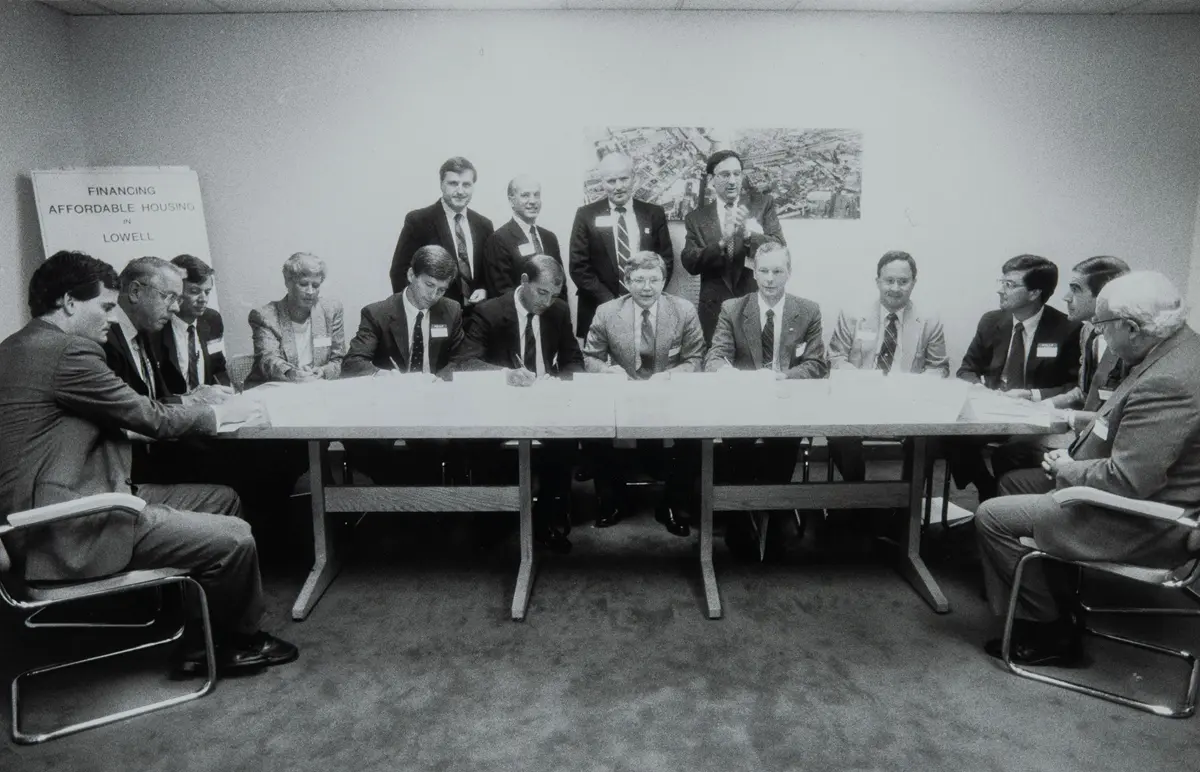
Seated left to right around the table: 1. Michael Prakken, Senior Vice President - Bank of New England North, 2. Frank Callahan, Senior Vice President – Central Savings Bank, 3. John Pearson, President – Butler Cooperative Bank, 4. Unidentified – likely a representative of BayBank Middlesex, 5. Jack Zoeller, Executive Vice President – ComFed Savings Bank, 6. Everett Olsen, President – Commercial Bank & Trust, 7. George Duncan, Chairman – Enterprise Bank, 8. Unidentified– likely a representative of Lowell Five, 9. Jack Perry, President – Lowell Cooperative Bank, 10. Frank McDougal, President – Lowell Institution for Savings, 11. John Di Gaetano, Executive Vice President – Shawmut Arlington Trust, and 12. John Hogan, President – Washington Savings Bank.
Standing left to right: 1. Chet Atkins - congressman, 2. Wally Marcella – President of the LDFC at the time, 3. Jim Campbell – City Manager, and 4. Jim Milinazzo – LDFC Executive Director.
Image courtesy of George Duncan.