 Image by Brendon Messier
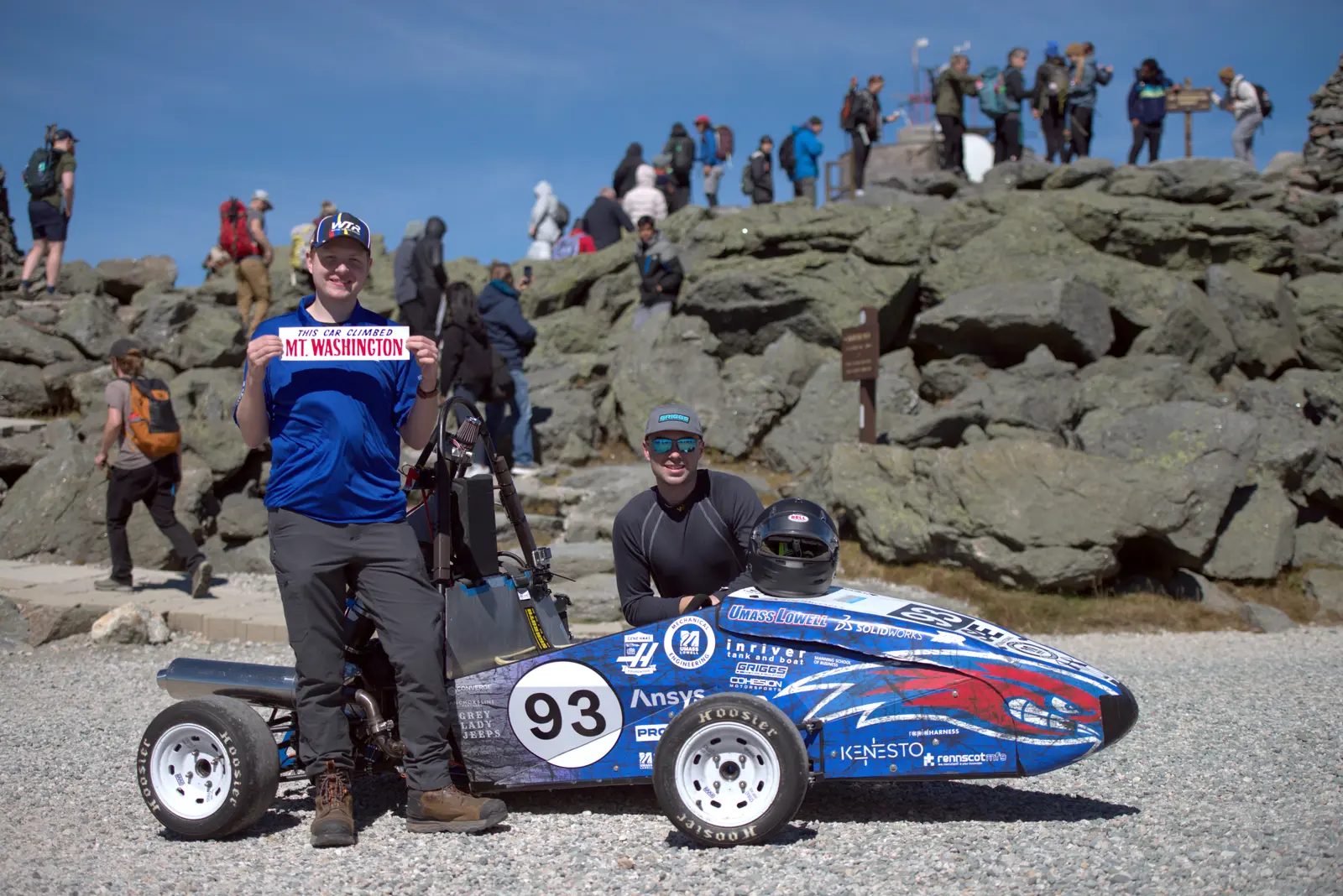
 River Hawk Racing President Ken Hawkey holds the iconic "This Car Climbed Mt. Washington" bumper sticker that the club received after junior mechanical engineering major Garrett Marquis, right, drove their car up New England's highest peak.
The River Hawk Racing team’s formula-style race car is covered in decals for sponsors such as SolidWorks, Ansys and Griggs Motion Simulators.
But the car’s newest sticker, displayed prominently across its nose, is one that no other collegiate Formula SAE team has: “This Car Climbed Mt. Washington.”
On Sept. 12, the UMass Lowell students drove their car up the 7.6-mile Auto Road to the 6,288-foot summit of New Hampshire’s Mount Washington. In doing so, they became the first student Formula SAE team to complete the climb up New England’s highest peak.
“This is a great achievement for us,” says River Hawk Racing President Ken Hawkey, a senior mechanical engineering major from Lincoln. “It shows what we as students are able to do.”
Formula SAE is an international collegiate engineering competition in which university students design, build and race small, open-wheel, formula-style cars. The teams also manage the business, marketing and financial sides of their projects, gaining experience that extends well beyond the racetrack.
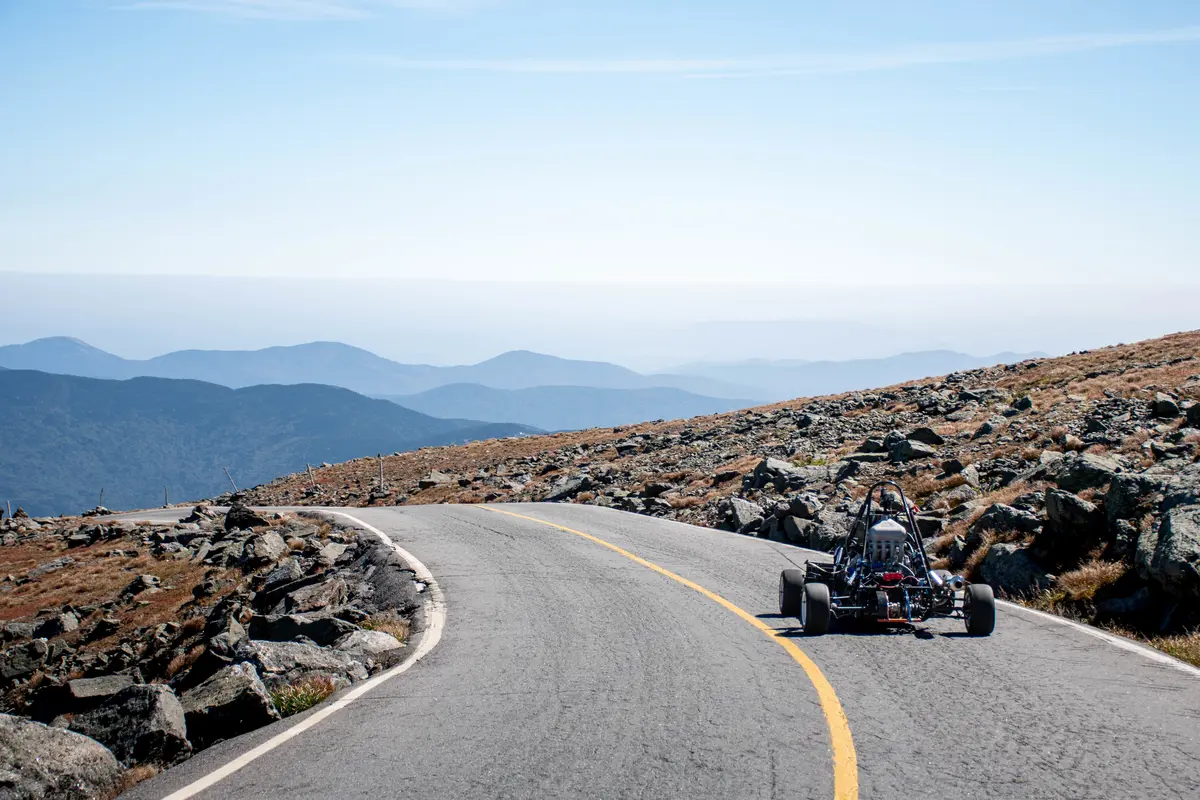 Image by Brendon Messier
 Junior Garrett Marquis drives the River Hawk Racing car along the 7.6-mile Auto Road on Mount Washington in New Hampshire.
The team initially brought its car to the August running of the Mt. Washington Hillclimb, also known as Climb to the Clouds. One of the oldest auto races in the country, the event draws professional racing teams from around the world.
River Hawk Racing could not officially enter the competition because its car did not have the fuel-tank system required by the event. Instead, the students attended with Griggs Motion Simulators, one of the team’s sponsors, and displayed their car at the company’s booth.
While there, they began talking with the event organizers, who invited them to attempt the climb after the official race ended.
With Garrett Marquis, a junior mechanical engineering major from Weston, behind the wheel, the car had traveled a short distance up the mountain when a half shaft, which transfers power from the engine to the wheels, failed.
The students turned the car around and rolled it back down the mountain.
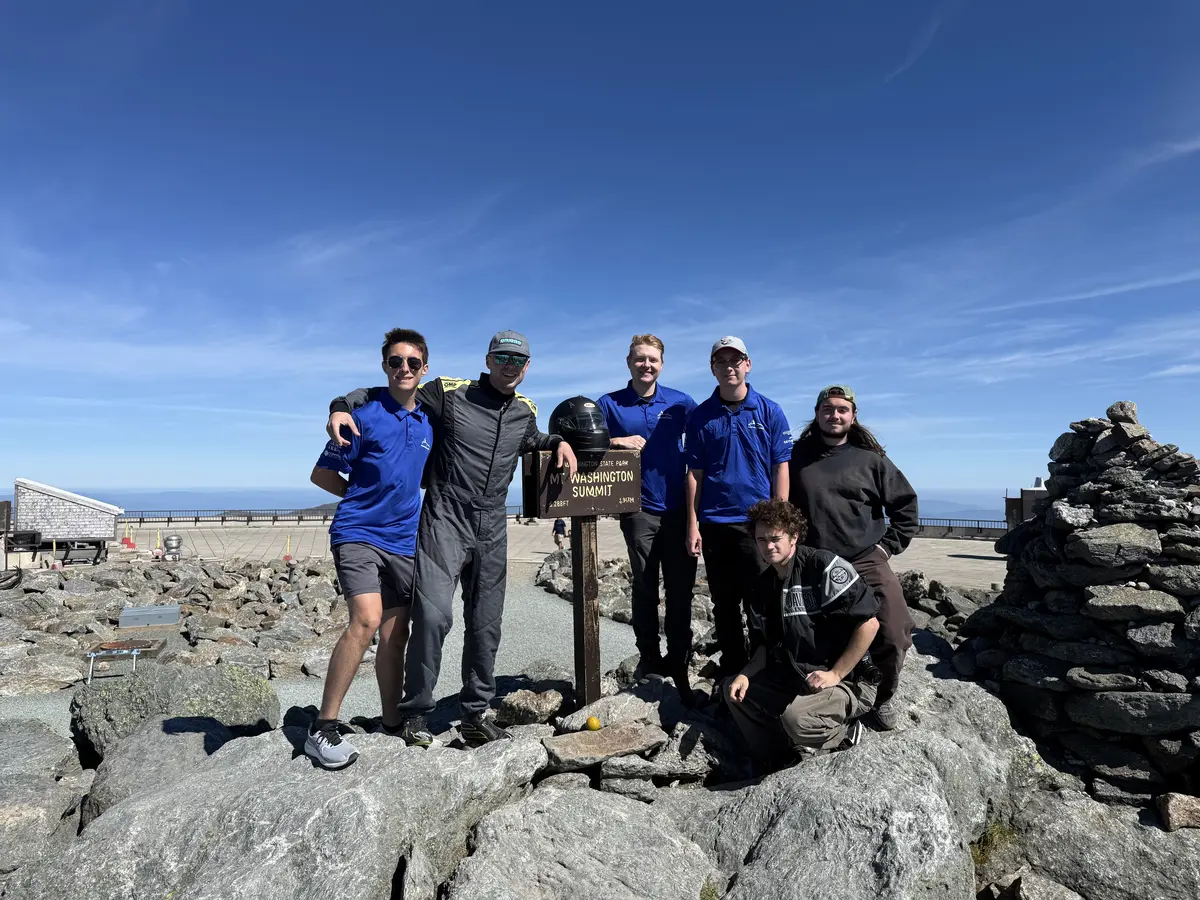 Image by River Hawk Racing
 River Hawk Racing members, from left, Aaron Berube, Garrett Marquis, Ken Hawkey, Carson Faucon, Owen Laubner (kneeling) and Brendon Messier commemorate their moment atop Mount Washington.
“We thought that it was pretty inevitable,” says program manager Rok Gundaker, a junior mechanical engineering major from Needham. “The way the stress was loading on it while going up … it just went.”
The organizers, however, encouraged the students to try again.
The team replaced the half shaft and returned to Mount Washington in September. Marquis drove, with a half dozen team members following in a chase vehicle to provide support and help protect the car from traffic.
Because the Auto Road remained open to regular vehicles, the students spent roughly half the climb following traffic. They also had to observe the road’s 20- to 35-mph speed limit, which was a challenge for the car’s motorcycle engine.
“It bogs down when you’re in low RPMs,” Gundaker says. “The way we designed it, we’re trying to optimize it in the high rev range, high RPM, right where our power is.”
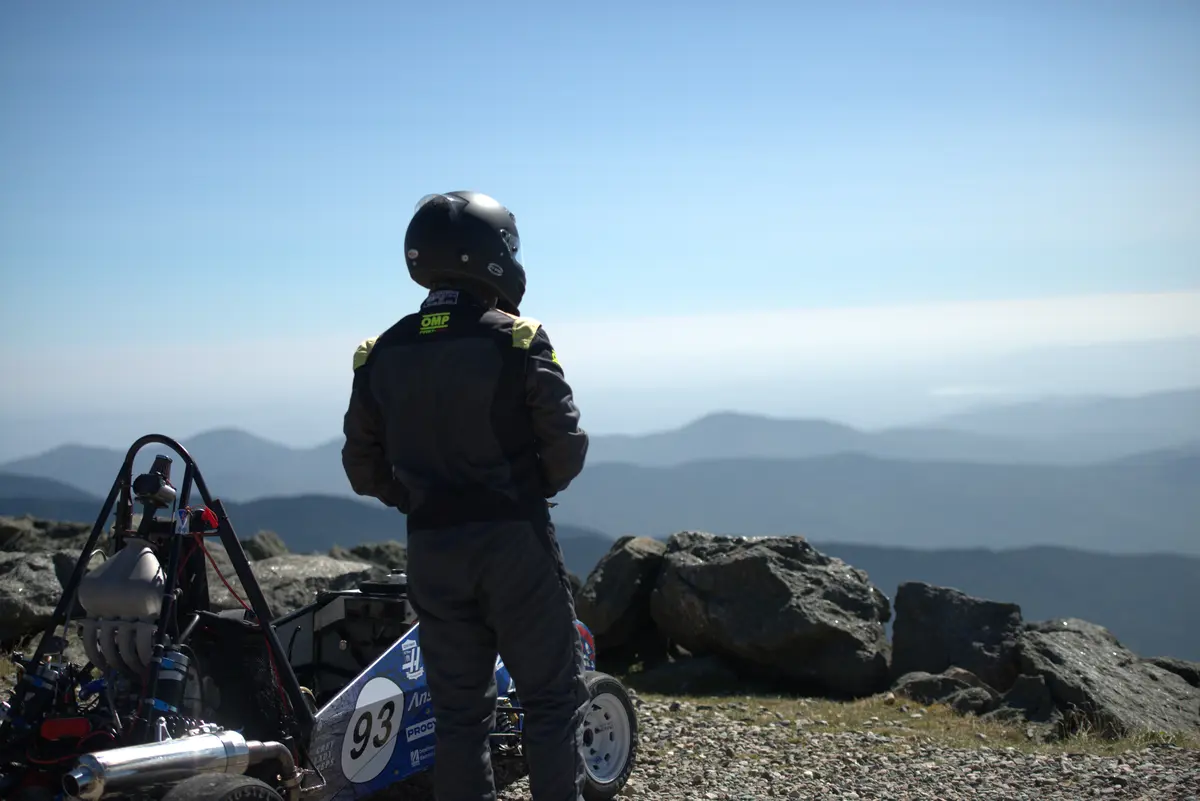 Image by Brendon Messier
 Junior Garrett Marquis admires the view from atop Mount Washington after driving the River Hawk Racing car to the summit.
“By the end, you can kind of hear the car gasping for air,” he says.
Marquis also had to remain focused on the Auto Road, which includes sharp turns and sections without guardrails. Although Marquis had ridden up Mount Washington before, he had never driven the road.
“You don’t want to look down,” he says.
Other drivers, motorcyclists and hikers took notice of the unusual vehicle during its 25-minute journey up the mountain. Marquis says many people gave the team thumbs-up, while hikers at the summit gathered around the car to take a closer look.
For the students, reaching the summit meant more than a memorable road trip.
“We took what limited budget we had and tried to do something this crazy,” Marquis says.
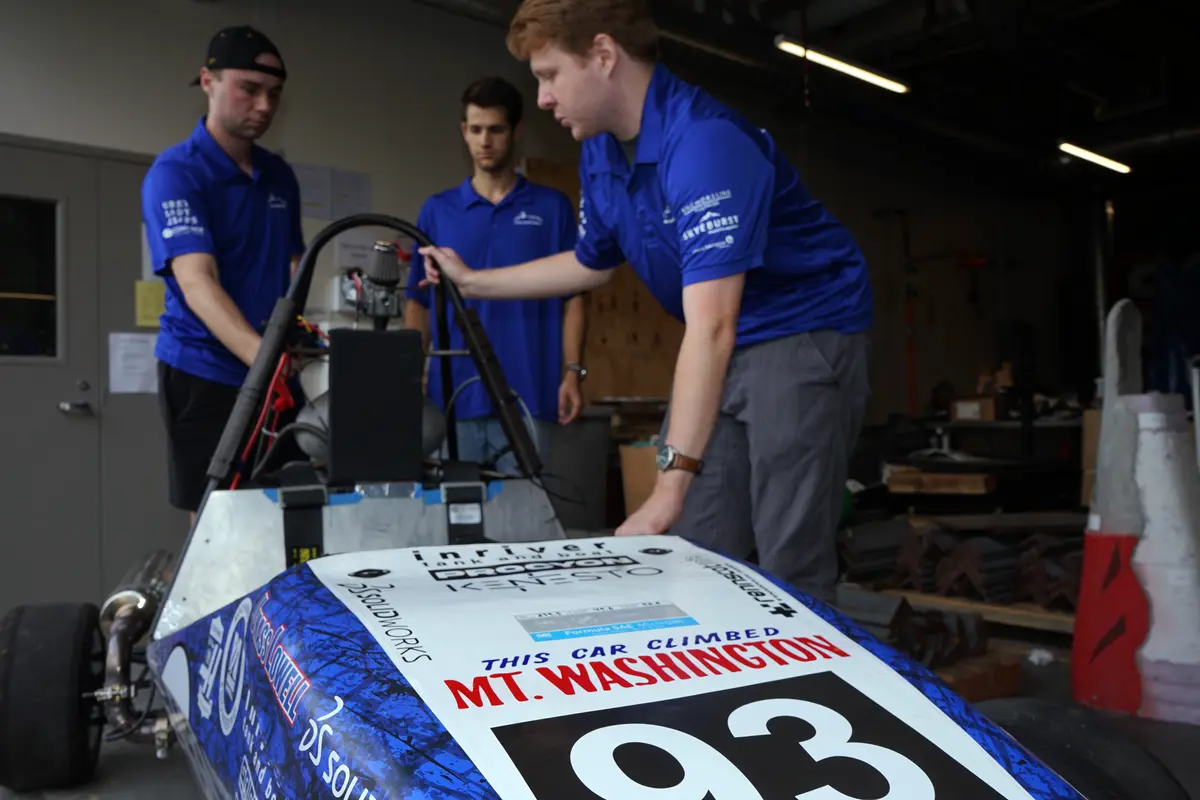 Image by Ed Brennen
 Back at the North Campus garage, River Hawk Racing members, from left, Garrett Marquis, Rok Gundaker and Ken Hawkey discuss the car, which has its new Mount Washington sticker prominently displayed on its nose.
“A lot of racing is a game of how much money you can throw at problems,” Hawkey says. “This gives us an opportunity to show, ‘Hey, this is what we can do with not the largest budget in the world.’”
With additional funding, members say they could eventually return with the equipment needed to compete in the Hillclimb rather than make a demonstration run.
For now, the students are turning their attention to the next challenge: designing and building a new car for the 2027 Formula SAE competition in Michigan.
Unlike Mount Washington, that racetrack will be flat.