
 Image by Ed Brennen
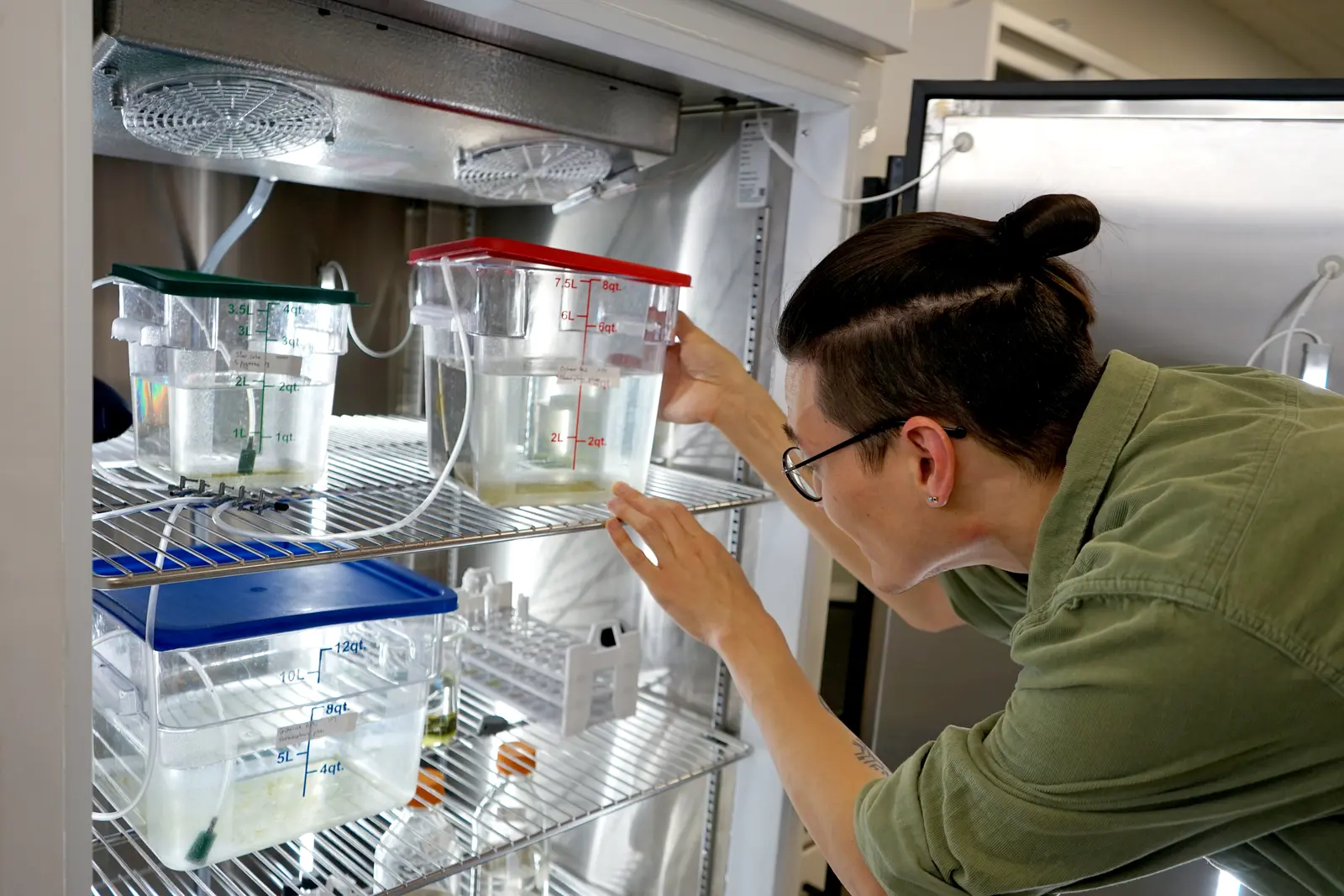
 Assistant Professor of Biological Sciences Matthew Sasaki, who along with Kennedy College of Sciences colleague Sarah Gignoux-Wolfsohn has received a state grant to study oyster reefs along the North Shore, looks at a bucket containing small crustaceans called copepods in his lab at Olsen Hall.
A new state grant is giving Kennedy College of Sciences researchers the opportunity to explore how oyster reefs support marine life — from microscopic plankton to fish — in the Plum Island Sound estuary.
Assistant Professors of Biological Sciences Matthew Sasaki and Sarah Gignoux-Wolfsohn have received $93,165 from the Massachusetts Department of Fish and Game through its Community Biodiversity Grant Program to study three oyster reefs along the North Shore. The project will examine how biodiversity differs between wild reefs and farmed oyster environments, while also expanding education and outreach efforts for local students.
For Sasaki, this is the first grant that his Zooplankton Ecology and Adaptation Lab has received since he joined UMass Lowell in January 2025.
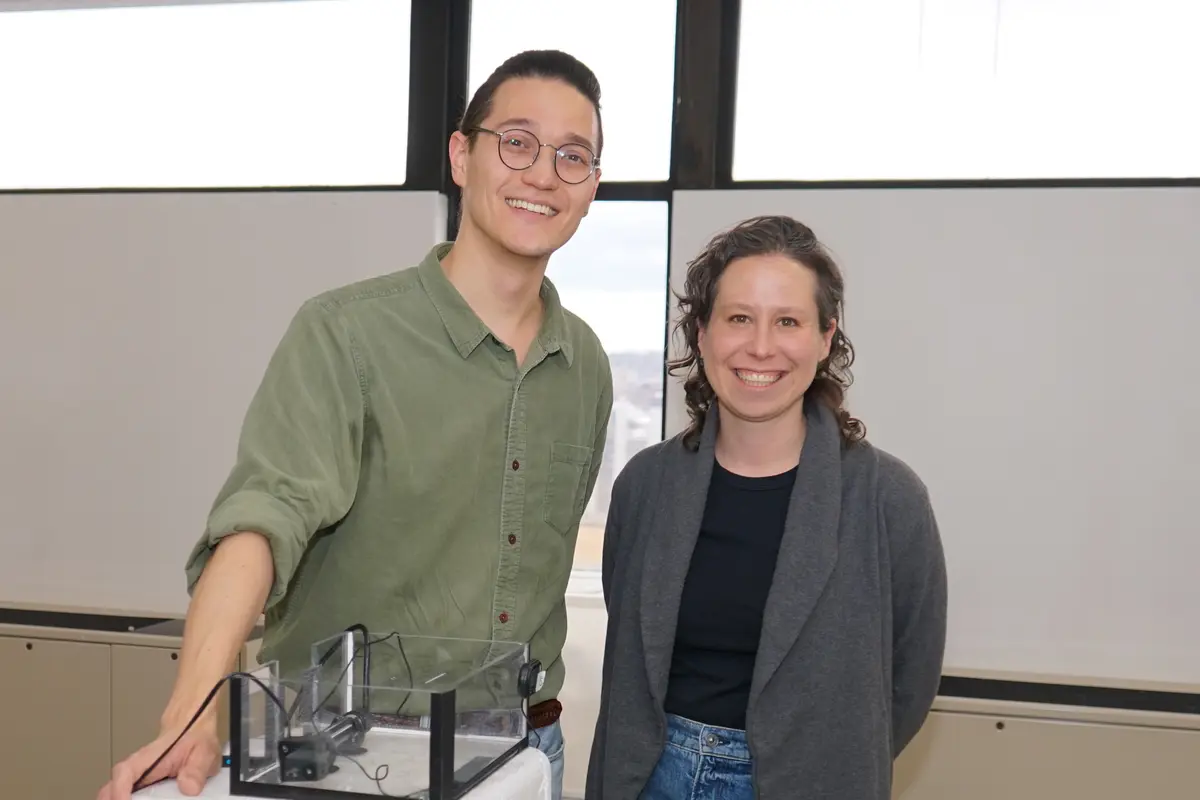 Image by Ed Brennen
 Assistant Professors of Biological Sciences Matthew Sasaki and Sarah Gignoux-Wolfsohn will examine how biodiversity differs between wild reefs and farmed oyster environments.
Often referred to as “ecosystem engineers,” oysters create complex structures that provide shelter for marine species, improve water quality through filtration and contribute to coastal resilience. Yet researchers say relatively little is known about the full range of biodiversity these reefs support — especially in Massachusetts.
“Oysters form these really unique habitats,” Sasaki says. “We are looking at what else is living on oyster reefs, and how that differs between wild reefs and farmed environments.”
While past studies have focused primarily on organisms living on the seafloor — such as fish, crabs and other invertebrates — Sasaki says this project adds a new dimension by examining plankton communities.
“We are asking how these reefs on the seafloor interact with all the biodiversity happening up in the water,” he says.
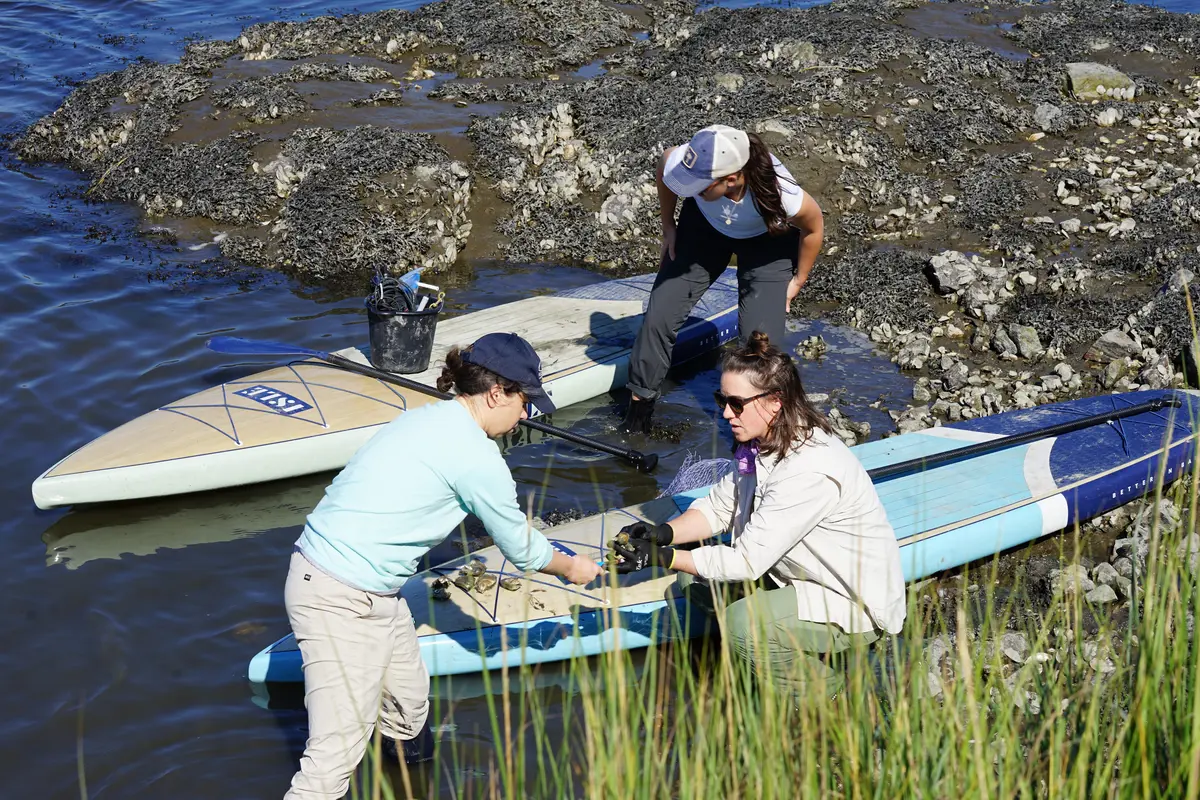 Image by Ed Brennen
 The state grant builds on research that Assistant Professor Sarah Gignoux-Wolfsohn, left, and her team have been conducting on oysters in Plum Island Sound.
Gignoux-Wolfsohn has been studying oyster populations in Plum Island Sound, including the health and genetics of wild and farmed oysters in the region. The new grant builds on that work while expanding its scope.
“Instead of just looking at the oysters or bigger things like fish and lobsters, we can now include the plankton,” Gignoux-Wolfsohn says. “Getting all those different trophic levels will be really cool.”
Gignoux-Wolfsohn has also recently received additional funding through the Woods Hole Oceanographic Institution Sea Grant program for related oyster and aquaculture research, part of a $1.6 million investment across four projects in Massachusetts. The two-year program supports projects aimed at strengthening shellfish management and coastal ecosystems across the state.
Together, Sasaki and Gignoux-Wolfsohn hope to better understand how oyster reefs influence entire food webs — and how those effects may extend beyond the reefs themselves.
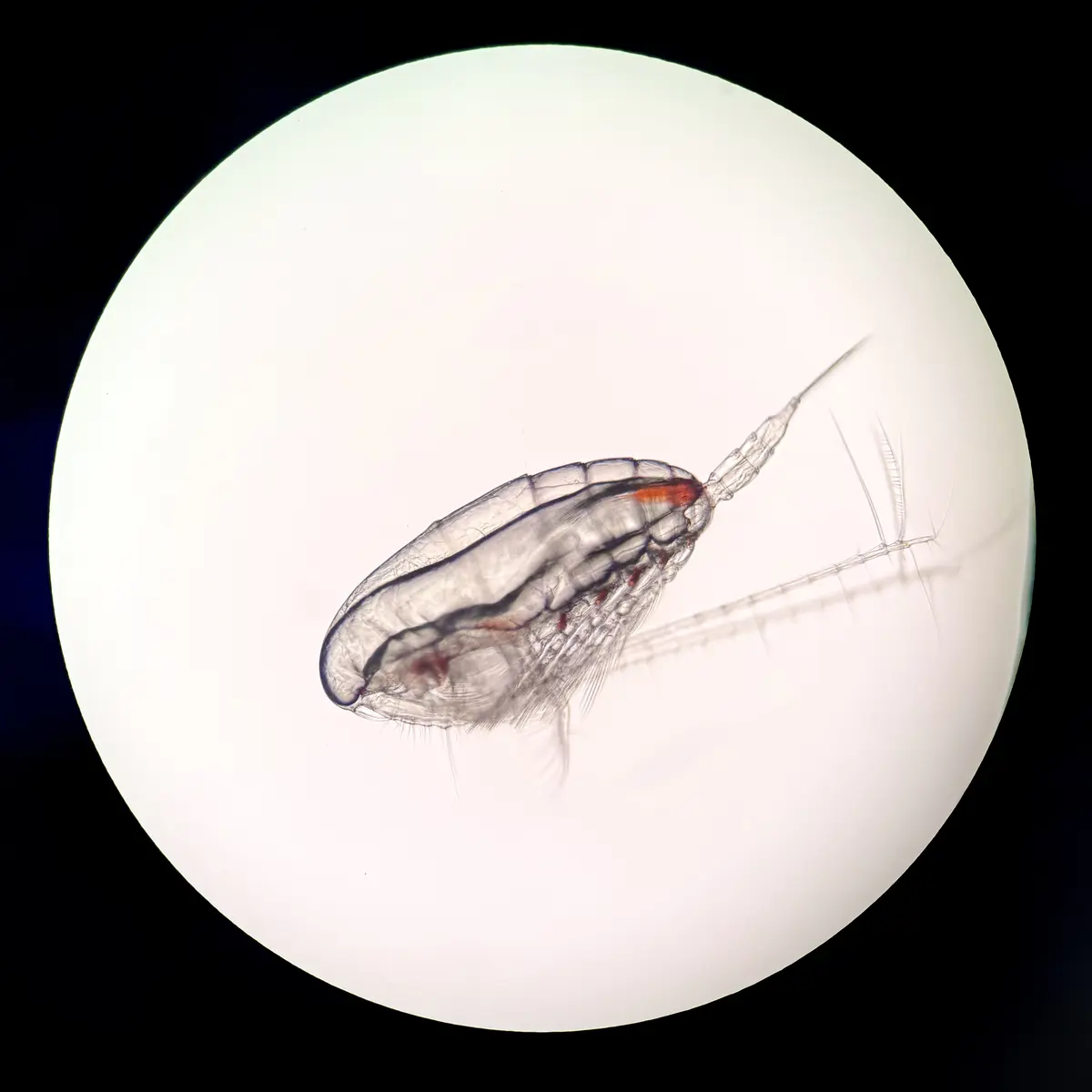 Image by Matthew Sasaki
 Assistant Professor of Biological Sciences Matthew Sasaki expects to find small crustaceans like this copepod, seen here under a microscope, at the oyster reefs.
Funding will support fieldwork beginning later this spring, along with the purchase of equipment that will enable future research.
The project also includes a community engagement component. Gignoux-Wolfsohn will build on her existing partnership with the Boys and Girls Club of Greater Lowell by bringing middle school students to the North Shore for hands-on learning experiences.
The students will visit oyster reefs and aquaculture sites, meet researchers and learn about marine ecosystems firsthand. The team is also developing educational materials — including illustrated guides to local marine species — to broaden public awareness.
“Oysters are such a great opportunity to engage the public, because everyone knows what an oyster is,” Sasaki says.