
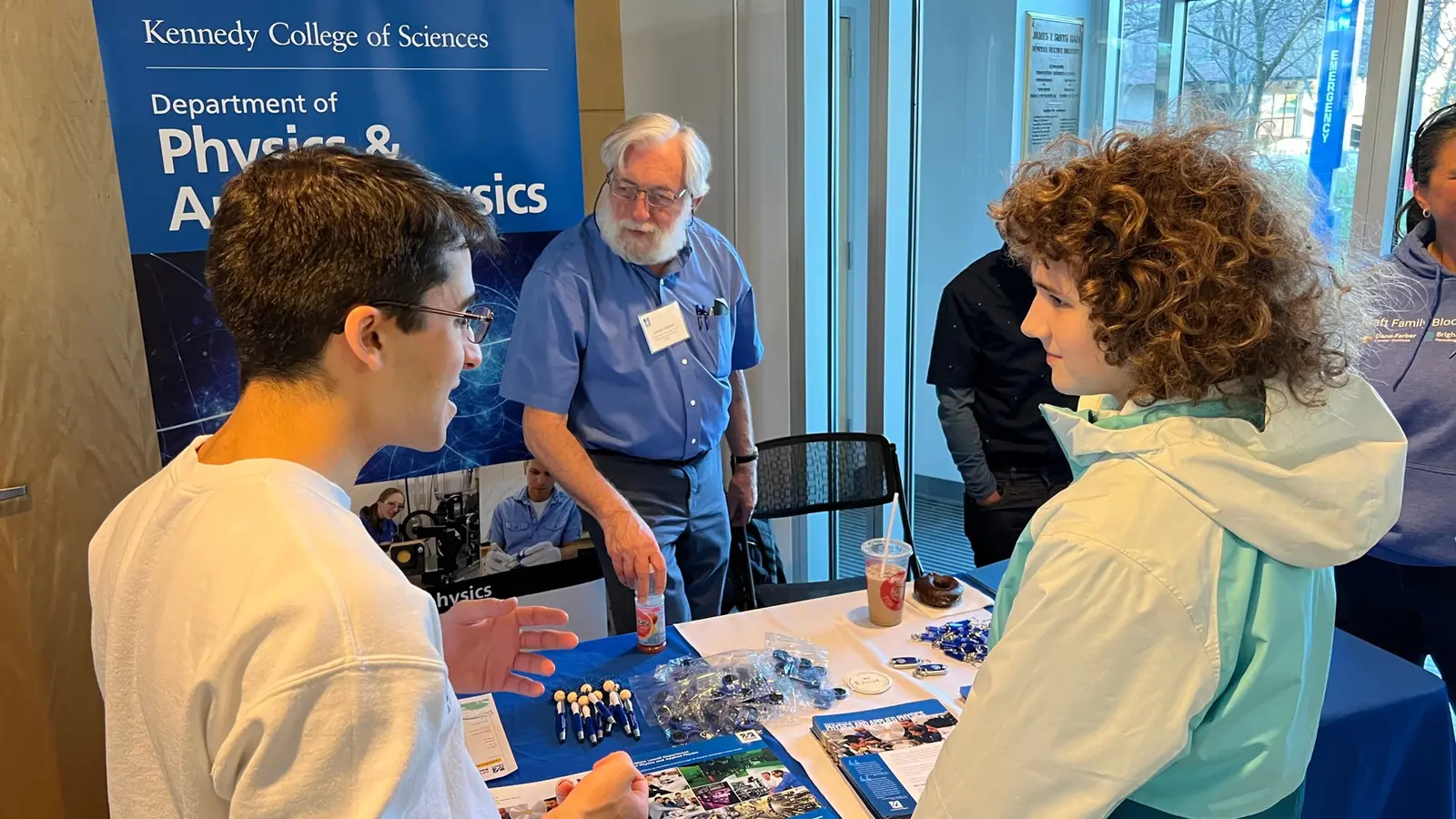
Physics is a field defined by constants — for energy, gravity, the speed of light and other universal properties. Until this year, the UMass Lowell Physics Department had a constant all its own. His name was Arthur Mittler.
Without fail, Professor Mittler turned on the department’s lights every morning. In the evening, he was typically among the last to leave. He spent weekends in the office, too.
Cecil Joseph, an associate teaching professor who earned his Ph.D. at UMass Lowell, said he was familiar with Mittler from his time as a graduate student and postdoc. But it was when he joined the faculty that he really got to know Mittler and his schedule.
One of Joseph’s first teaching assignments was an 8 a.m. lecture to a large class in Olney 150. He would arrive at 6:30 a.m. or 7 a.m. those mornings to make sure his demonstrations were prepped.
“No matter how early I came in, he was already here,” said Joseph.
For Erno Sajo, professor and director of the Medical Physics program, Mittler was such a part of his day-to-day life that they came to know each other’s routines, including at the end of the day.
For a while, Sajo was always forgetting his phone, having to trek back from his car to retrieve it. Eventually, he started getting reminders as he was packing up his things.
“As I’m leaving my office, he would shout out to me: ‘Your phone! Did you get your phone?’” Sajo said.
Mittler died unexpectedly at 82 on Jan. 15. He’d “retired” from a 56-year career in the university’s Department of Physics & Applied Physics, most recently as its chair, four months earlier. He is survived by his wife, Marcia L. Burns-Mittler, his son Kevin Mittler, daughter-in-law Robin (Strout) Mittler, his extended family and a legion of colleagues and former students.
Colleagues who remembered Mittler say that, true to form, he hadn’t actually retired. He continued to teach and was covering as the department’s interim chair until a new one, Christopher Groppi, arrived at UMass Lowell and got settled. The transition lasted four days.
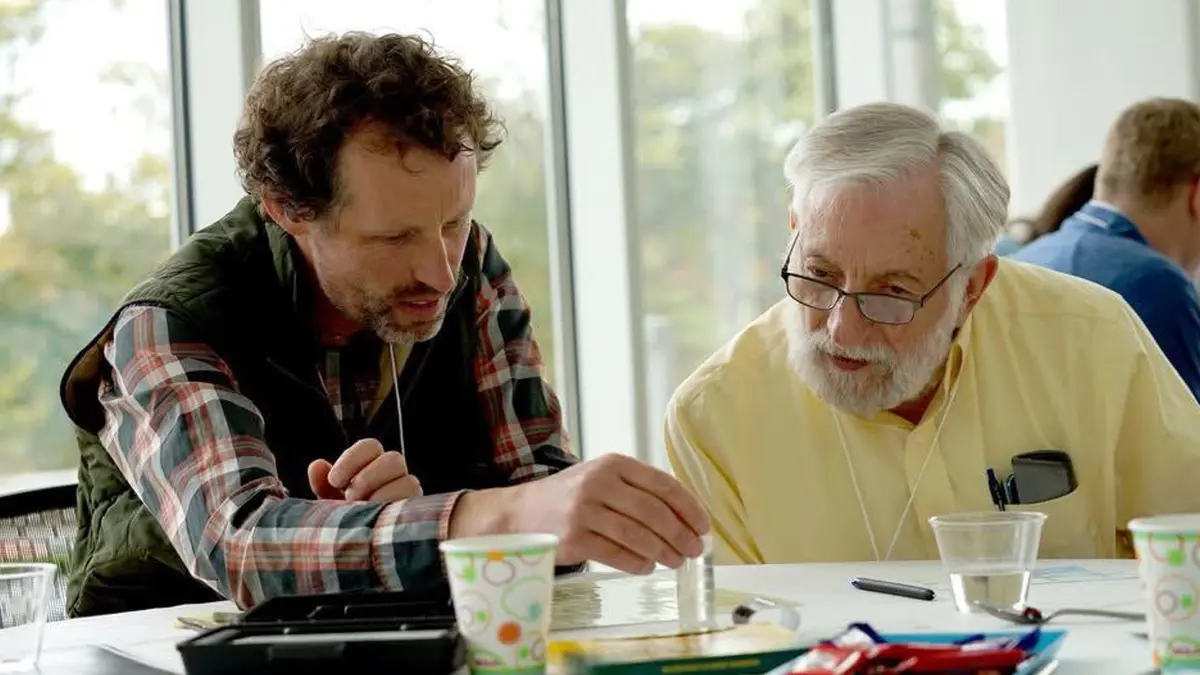
“After I became chair, Art was one of those people that you feel good about having in your department,” said Partha Chowdhury, professor of physics and applied physics and now dean of the School of Graduate Studies. “Anything that you needed and he had—including time, he always had time—he would do what was good for the department.”
Sajo said he relied on Mittler’s inside knowledge and support as he built out the Medical Physics program. “He knew what would work; he knew what wouldn’t work,” he said.
Though always good-natured, Mittler wasn’t someone to be sold on something that wasn’t true. At the same time, he always showed integrity.
“He came close to epitomizing the ideal university professor—as close as a human can get to that,” said Sajo.
After joining the department in 2010, Professor Viktor Podolskiy said he learned to count on Mittler’s presence in the department, his chats in the lunchroom and his long view of the department’s and university’s histories.
With changes in administration, said Podolskiy, “He was able to put it in perspective, because he saw way more administrations than we did.”
When Joseph became a full-time faculty member in 2017, he went to Mittler with questions.
“There’s a wealth of experience and a wealth of institutional knowledge that Art has that I don’t think anyone else does. Just the sheer breadth of his experience at UML — every department, he would know someone,” he said.
The best thing about Mittler as a resource was that he was ready and reliable — and always willing to share.
He was also a trusted source for the dean. Interim Provost Noureddine Melikechi recalled meetings he led as dean of the Kennedy College of Sciences. Mittler always sat in the same seat, a little to Melikechi’s left.
“I often glanced over to read his reaction to an idea. His expression said it all,” said Melikechi. “A smile or a tightening of the lips did not mean the same thing. Thoughtful, candid and quietly insightful: Art had a way of grounding the conversation without saying a word.”
Professor Emeritus Jim Egan had a lot of conversations with Mittler — a colleague, friend and traveling companion for five and a half decades.
Both were at the end of their Ph.D. programs in nuclear physics at the University of Kentucky when they piled their families and belongings into two cars and a box truck to make the drive to Lowell in the fall of 1969.
They spent the next 45 years working together in the Physics Department. Through the years, Mittler became interested in physics education, especially in the introductory sequence taught to freshmen, as well as at area high schools.
He launched the Lowell Regional Physics Alliance, at which high school teachers were invited to come to campus after school to listen to a presentation and share demonstrations they used in their classes.
He was also a master of the lab. He coordinated teaching assistants and lab sections, and he co-authored a lab manual with retired Professor Walter A. Schier based on experiments they’d developed.
Away from campus, Egan and Mittler talked about their kids. They traded stories about youth baseball, hockey and soccer, as well as the Boston Bruins and Red Sox.
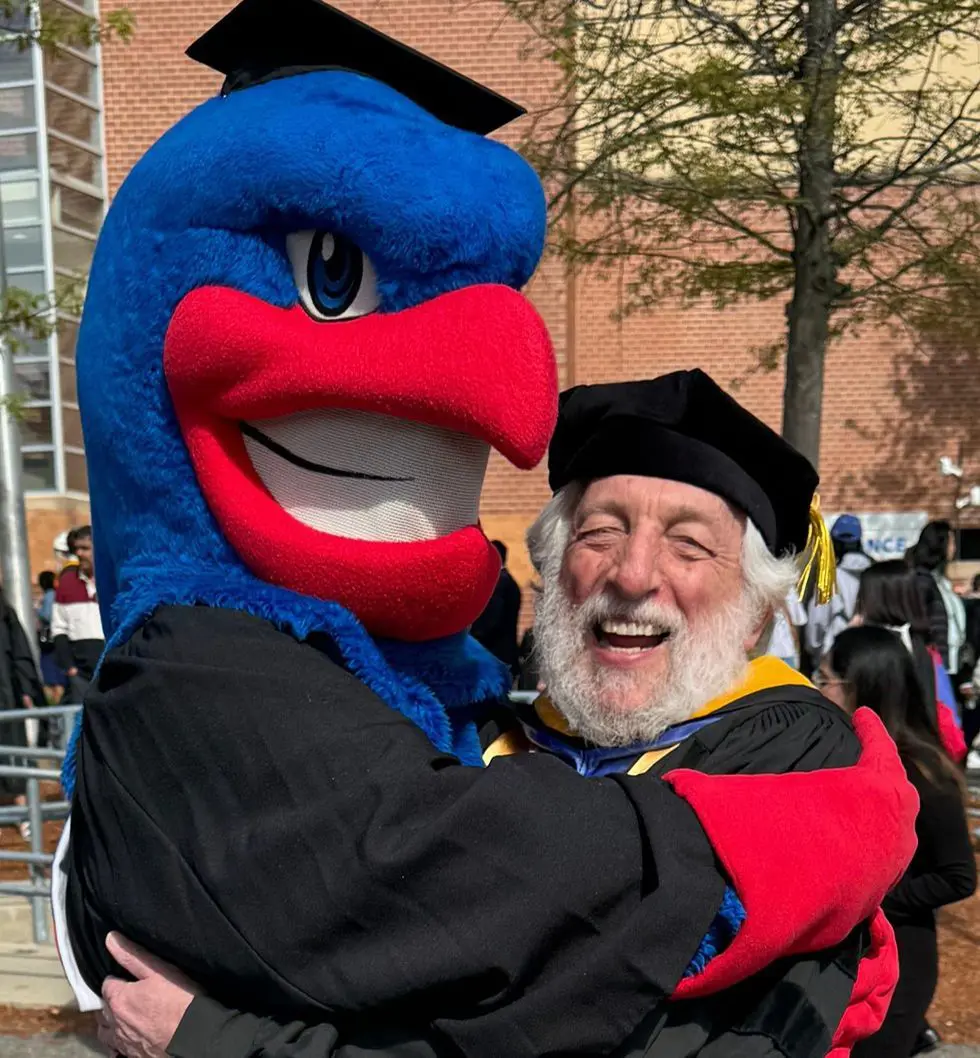
Egan retired in 2014, after a career that included two stints as graduate coordinator and a 15-year stretch as department chair. He taught for a few years after that.
Mittler, on the other hand, “wasn’t about to retire.”
His students and colleagues in the Physics Department were the beneficiaries.
Teaching Professor Nikolay Lepeshkin recalled his first teaching assignment at UMass Lowell, which involved coordinating a large course with multiple sections. Mittler was one of his instructors.
Though he knew the material inside and out, Mittler attended all of Lepeshkin’s lectures, carefully taking notes. He wanted to be sure he was in step with Lepeshkin.
“I jokingly called him my best student,” he said.
Lepeshkin said the nature of their relationship didn’t seem to change when Mittler was department chair. “He was a good team player, and he was an excellent boss,” he said.
They, too, spent time together outside of the department. Mittler and his wife, Marcia, visited Lepeshkin and his family, and vice versa.
Mittler also invited his colleague driving. Once, he asked Lepeshkin and his daughter to test-drive his dream car at a Tesla dealership. He eventually bought the car, and Lepeshkin remembered following him down Interstate 495 — or, at least, trying to.
“We could not keep up,” he said. “He knew how to lose a tail.”
Like his colleagues, Lepeshkin said he’d never pictured a Physics Department without Mittler.
“I could never imagine him being in retirement,” he said. “For better or worse, he never retired in my mind.”