
 Image by Ed Brennen
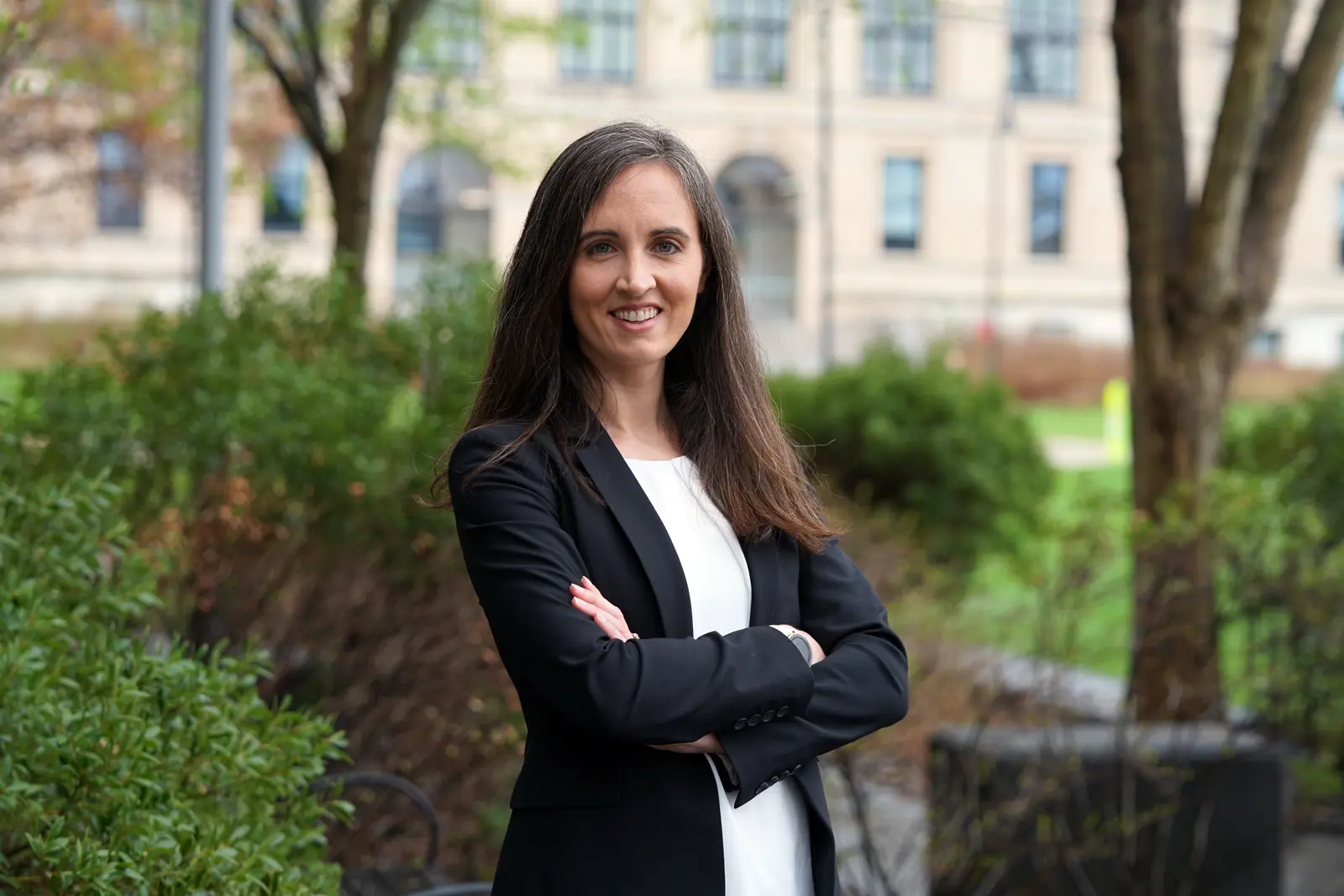
 Criminal Justice Assistant Professor Rebecca Dunlea recently published two papers looking at case outcomes that are alternatives to plea deals.
Growing up, Rebecca Dunlea was fascinated by the legal system and wanted to become a judge. A college course in criminology during an undergraduate study abroad program changed everything: She scrapped plans for law school and instead pursued a Ph.D. in criminology. Now an assistant professor in the School of Criminology and Justice Studies, she is a prosecution expert, studying how criminal cases make their way through the justice system.
Dunlea came to UMass Lowell in 2022 after four years at Florida International University as a postdoctoral researcher and an assistant professor. She was drawn to the strong reputation of the university’s Criminology and Justice Studies program. “When I saw a job opening here, I seized the opportunity,” she says.
As a researcher, Dunlea has partnered with prosecutors from around the country to study various aspects of their work. Her research comes against the backdrop of significant shifts in the justice system, including the proliferation of prosecutorial data that has become publicly available in recent years and the expansion of reform efforts aimed at reducing mass incarceration.
She recently had two papers published in leading journals. One study, funded by the MacArthur Foundation and co-written with Assistant Professor Miranda Galvin of Penn State, focused on how defendants’ prior experience in the justice system shapes the likelihood of prosecutorial dismissal of their cases. It was published in “Criminology.”
The other, which was published in “Criminology & Public Policy” and co-authored with Professor Don Stemen of Loyola University Chicago, looked at the impact of prosecutors’ office workloads on the outcomes of cases. The study was supported by the Microsoft Justice Reform Initiative.
Dunlea sat down to discuss her work and how the criminal justice system is evolving.
Can you tell us about your research?
I do applied research with prosecutors. I partner with them and help them answer questions about how they are doing and how their performance has changed over time. I get to answer research questions that I come up with as well. My data comes directly from prosecutors’ offices, and that has fashioned me into an expert on case processing, which is, when a defendant is charged with a crime, how their case moves through the legal system all the way through to punishment, if it's going to make it that far.
We talk a lot about the legal system being a system of pleas. And that's still true. The majority of cases that get filed usually end up resulting in a plea deal. Most defendants will accept guilt and punishment without going forward to trial. But there's a fair — and — in some places — a growing number of cases that actually don't end in pleas. They get dismissed, for example, or they get a deferral where the defendant avoids a conviction as long as they don't show back up in the system for a new crime. I'm most interested in those kinds of cases, the ones that don't result in a conviction and a punishment.
What was the focus of the two papers that you recently had published?
They are both related to outcomes that are alternatives to plea deals.
Both of these papers touch on factors that impact whether or not defendants end up avoiding a conviction. The first paper looks at how a defendant’s prior experience in the criminal justice system shapes their ability to make agentic decisions, or to be strategic. We provide some evidence that their experience in prior cases can actually help them avoid a conviction in their current case.
This paper was inspired by a conversation I had with a former public defender. She told me a story about a client of hers who came in and at their very first meeting said to her, “I'm not taking any plea deals.” He was confident that if he waited long enough, the prosecutor would dismiss his case. Through his prior experiences, that defendant had learned how the system worked. He knew that prosecutors are overwhelmed, and if he just waited long enough, there would be newer, stronger, more serious cases coming through, and his case would probably get kicked to the curb. And he was right — his case was eventually dismissed!
The other paper suggests that prosecutors obtain fewer plea deals in weeks when their caseloads are high. Feeling overloaded may contribute to them choosing to drop more cases in the interest of prioritizing the important ones.
The two papers together indicate that there are some alternative routes to pleas and convictions, and the more defendants know about that, the better their chance of getting access to one of those alternate routes.
What about prosecutors? How could what you have found impact how they might approach cases?
COVID really changed things in the legal system. As a result of COVID, there are still some significant backlogs in the courts. So, a lot of the prosecutors’ offices that I work with are very concerned about figuring out how to prioritize cases more efficiently. They want to be effective at identifying which cases should be pursued and which should be eliminated, so that they can focus on the ones that deserve and are likely to get a conviction. If prosecutors know that when their caseloads are high, they have a tendency to dismiss more cases, that's useful information for them. Being more selective up front, at initial screening, might ease the pressure without actually reducing the number of convictions they get.
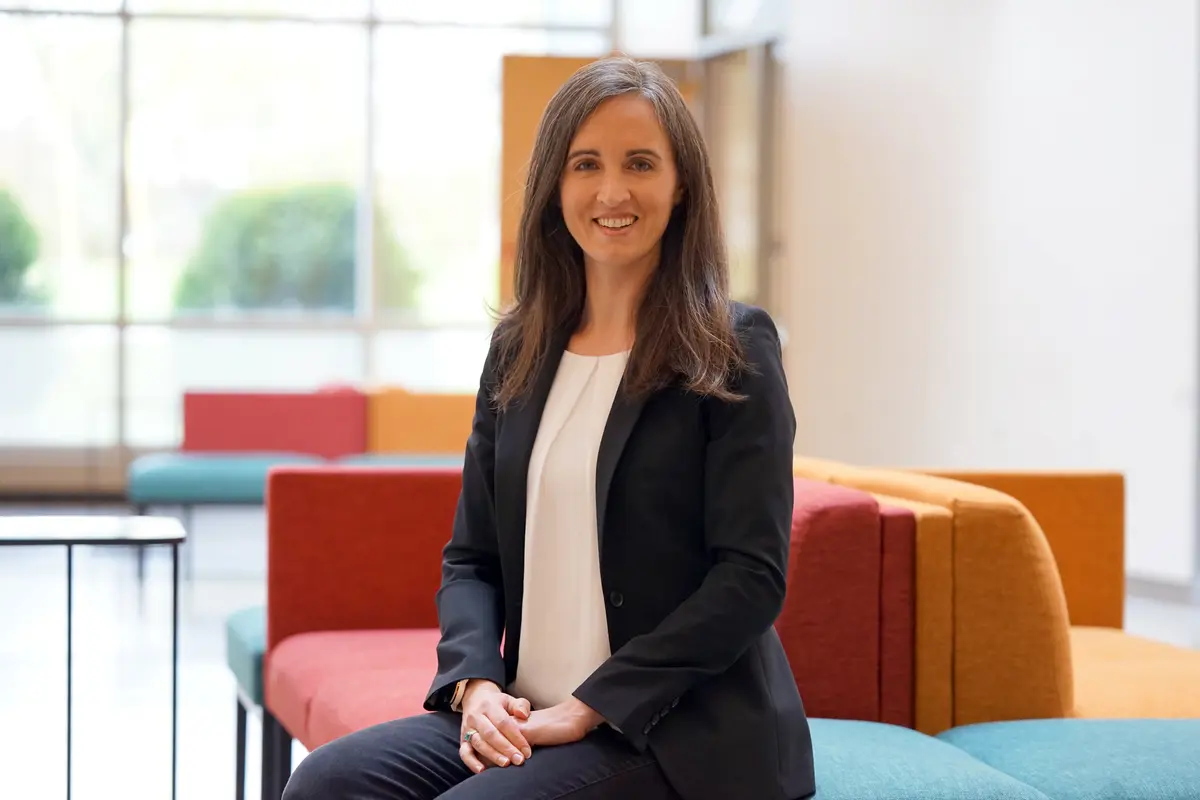 Image by Ed Brennen
 "This is a really terrific environment for doing creative, policy-relevant research," says Rebecca Dunlea, an assistant professor in the School of Criminology and Justice Studies.
There's historically not been much research on prosecution, because there has not been much access to data. It's a very new area. But there's been a massive shift in the last decade or two, and prosecutors are becoming much more transparent. So now there are opportunities to investigate all kinds of fascinating questions about prosecution.
Is that something you're seeing nationwide in terms of access to data and its use by prosecutors?
Yes. The amount of prosecutorial data available in the last 10 to 15 years has gone way up. I'm finishing up a project with the College of Fine Arts, Humanities and Social Sciences Emerging Scholars program, and my two undergraduates have been collecting data from public-facing prosecutor dashboards. They found 65 data dashboards. So, there are 65 prosecutors’ offices, within the last couple of years, that have started posting information about their work and case outcomes online. Before that, this number was probably in the single digits. It represents a massive change. And I hope that more prosecutors will make their data available moving forward.
This means that the public has more insight into what’s happening. They understand more about what prosecutors are doing. They're learning about the different types of prosecution. Are their local prosecutors all about law and order, or more progressive? Are they trying to help rehabilitate defendants? Are they trying to work with public defenders’ offices?
It's a really exciting time to be doing this research. And I came in at the right moment. I joined a research team called the Prosecutorial Performance Indicators project, and we have done an awesome job rolling up our sleeves and working with prosecutors, helping them understand what they're doing at the office level and how they can improve their work.
We help prosecutors’ offices use data and statistics to engage with their local communities about the work they are doing and trying to do. And knowing things about their office-wide case trends, like how many cases are getting dismissed, can help them make data-informed decisions. For the most part, that's new for prosecutors.
How do you like it here at UMass Lowell?
I love it. This is a really terrific environment for doing creative, policy-relevant research. There are a number of other amazing scholars in my department and elsewhere here who don't do exactly what I do, but their work is adjacent. We can always find commonalities, whether they work with police or study judges, or even if they research what's happening in prisons and jails. I have made great connections at UMass Lowell already, and I’m excited to build new ones moving forward.