
 Image by Ed Brennen
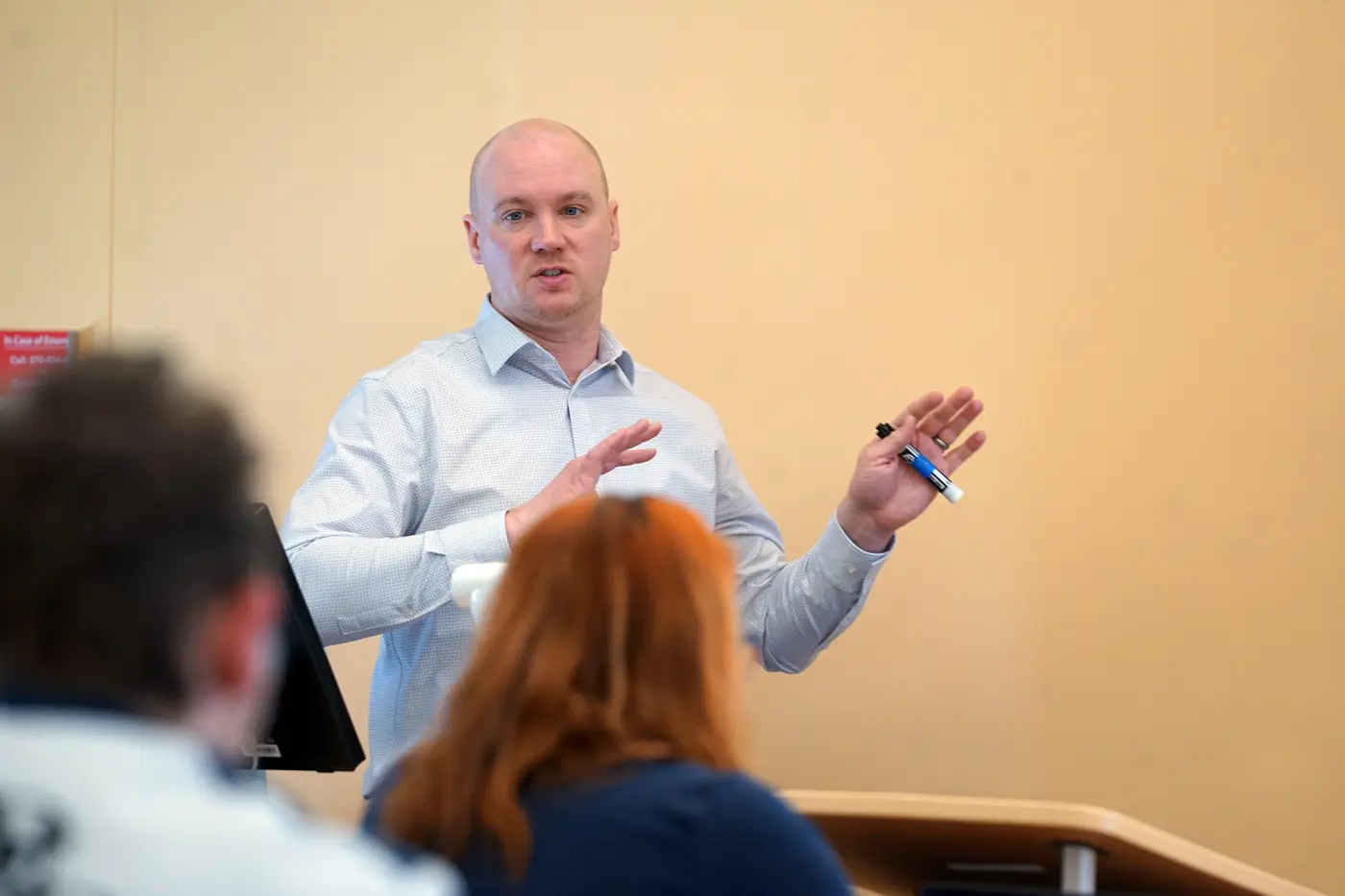
 Visiting Instructor of Accounting Clint Carney '08 says recent legislation touting "no tax" on tips and overtime are "a bit of a misnomer."
Headlines promising “no tax on tips” and “no tax on overtime” have grabbed attention this filing season. But according to Clint Carney ’08, a visiting instructor of accounting in the Manning School of Business and a certified public accountant (CPA), taxpayers should look beyond the slogans.
“If you hear the ‘no tax on tips’ or ‘no tax on overtime,’ I think that’s a little bit of a misnomer,” says Carney, an accounting alum who recently helped co-found Regal Accounting Solutions, a CPA firm in Reading. “You’re still getting taxed for Social Security and Medicare on those things.”
This is the first filing season under the One, Big, Beautiful Bill Act, signed into law last July. The legislation expanded several deductions, extended portions of earlier tax reforms and phased out certain credits. While many of the changes could benefit taxpayers, Carney says understanding the details is critical.
Under the new law, workers may deduct up to $25,000 in qualified tip income and up to $12,500 in eligible overtime pay, or $25,000 for married couples filing jointly. These deductions may also phase out based on your income, and they do not eliminate taxes entirely. Tip income, for example, is still reported on W-2 forms.
“Employers are allowed to estimate” their employees’ tip income, Carney says. “Where there’s any ambiguity — like tip sharing or something like that — taxpayers are probably going to want to make sure that they’re not getting allocated more income than they need to.”
Overtime deductions may prove even more complicated. Only overtime that qualifies under federal labor law is eligible, and the deduction applies only to the premium portion of overtime — the “half” in time-and-a-half pay — not the full amount earned.
In some cases, the eligible overtime appears clearly on a W-2 form. In others, it may require additional documentation.
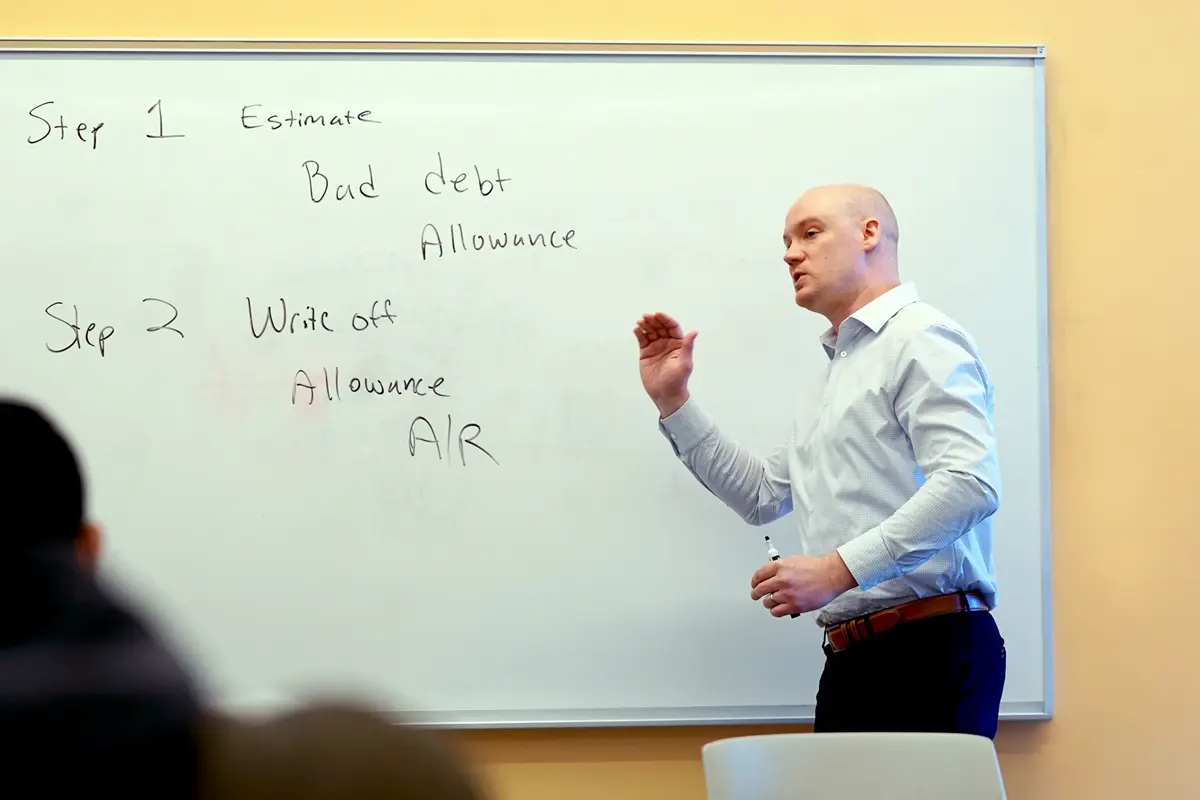 Image by Ed Brennen
 Visiting Instructor of Accounting Clint Carney '08 leads a recent section of Corporate Financial Reporting I at the Pulichino Tong Business Center.
Another significant change likely to affect Massachusetts homeowners is the expansion of the state and local tax (SALT) deduction. Previously capped at $10,000, the SALT deduction limit has increased to $40,000 for many taxpayers, while higher-income earners may see a reduced deduction, if eligible.
With the higher threshold, more homeowners may find it beneficial to itemize deductions rather than take the standard deduction, particularly as housing costs and property taxes remain elevated, he says.
The law also introduced a temporary deduction for interest paid on loans for qualifying new vehicles assembled in the United States. Taxpayers may deduct up to $10,000 in interest on personal-use vehicles, provided the loan originated after Dec. 31, 2024. Like the tips and overtime provisions, the car loan interest deduction is scheduled to sunset after 2028.
At the same time, several clean energy incentives have been phased out. Credits for new and used electric vehicles ended for cars acquired after Sept. 30, 2025, and some federal home energy tax credits have expired.
For taxpayers with side jobs or freelance income, Carney says the fundamentals remain unchanged. Income must still be reported, even if no tax form is issued.
“If you had side income, you’d most likely be getting paid on a 1099 basis,” he says. “And that is just your standard Schedule C income. Taxpayers should also be aware that even if you don’t get a 1099 for any side income, the IRS still requires you to report that income.”
While tax season keeps him busy with clients, Carney is also on campus five days a week as a full-time visiting instructor. He has taught in the Manning School since 2014, and this semester, he is teaching Financial Accounting, Managerial Accounting and two sections of Corporate Financial Reporting I.
“I enjoy the students’ energy and have loved seeing my colleagues,” he says. “Everyone has been a big help in shifting to teaching full time.”