
Renamed building honors Meehan’s legacy of public service, leadership and philanthropy
05/05/2026
Media contacts: David Joyner, executive director of communications and digital media (email: David_Joyner@uml.edu), and Nancy Cicco, associate director of media relations (email: Nancy_Cicco@uml.edu).
LOWELL, Mass. — The journey of a Lowell native, who served in the halls of Congress and as president of the University of Massachusetts system while championing the virtues of public service and public higher education, was celebrated this past weekend as UMass Lowell renamed its hub of campus activity and programs the Martin T. Meehan Student Center.
A two-part event that focused on Meehan’s legacy featured tributes and reminiscences from figures including Lt. Gov. Kim Driscoll, U.S. Sen. Ed Markey, former U.S. Rep. Niki Tsongas and Meehan’s English teacher at Lowell High School, Marie Sweeney.
A former UMass Lowell chancellor and current president of the UMass System since 2015, Meehan reflected on his own life’s trajectory, the successes of UMass and the future of higher education in conversation with CNN anchor and correspondent John Berman. Before starting his career, Berman served as a congressional intern for Meehan and led one of his reelection campaigns — an experience that Berman quipped helped him settle on a career in journalism and not politics.
“I think, no matter what you do in life, if you have a passion for what you’re doing, that’s really what it’s all about,” Meehan told Berman during an informal panel Friday evening, as an audience of several hundred people sat in rapt attention. Among those listening were U.S. Rep. Richard Neal, who currently represents Massachusetts’ 2nd District and once shared a Washington, D.C., apartment with Meehan, as well as former U.S. Rep. Chris Shays, of Connecticut, with whom Meehan collaborated as champions of a landmark 2002 campaign finance reform law.
The next day featured a more formal program that culminated in the official rededication of the 230,000-square-foot building formerly called University Crossing. Meehan oversaw purchase and renovation of the building, which had been St. Joseph’s Hospital, in a period of campus growth during his service as UMass Lowell’s chancellor.
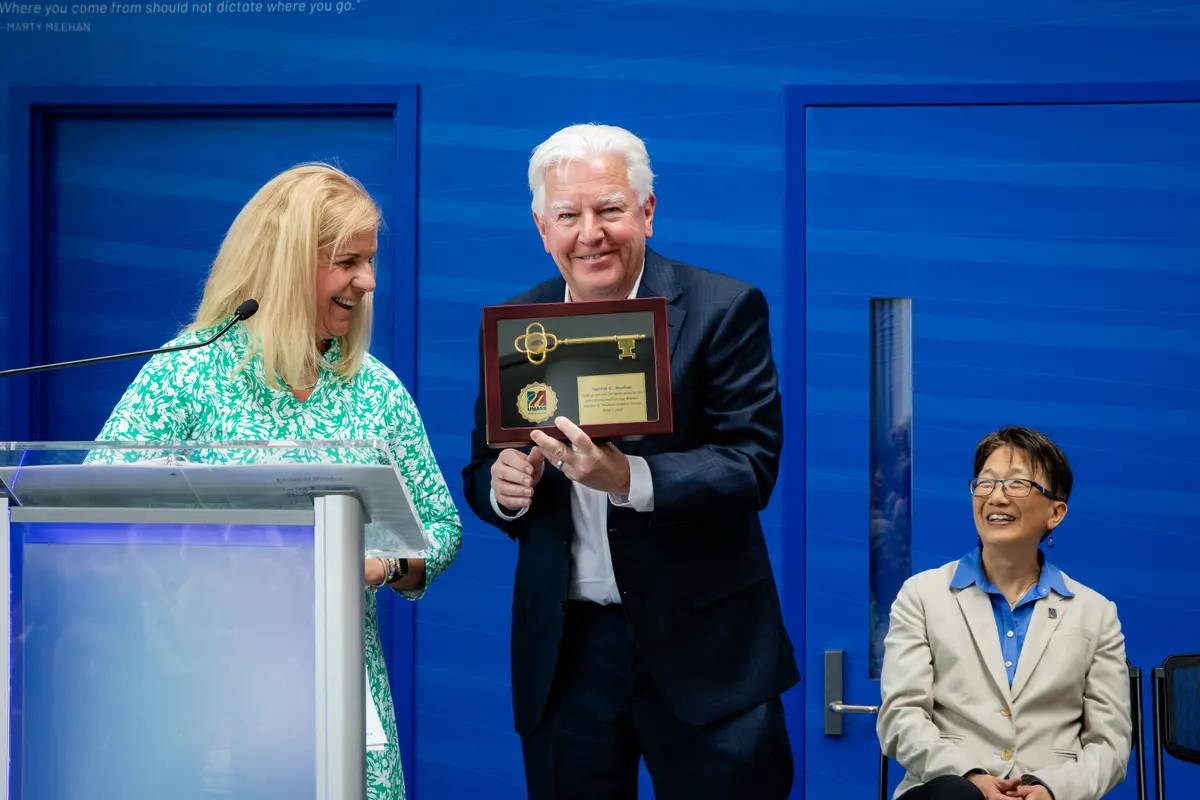
“The fact that this building, the site of the former St. Joseph’s Hospital, where generations of Lowellians were born and cared for, now bears Marty’s name, feels exactly right,” said UMass Board of Trustees Vice Chair Mary Burns ’84, a fellow Lowellian and UMass Lowell alumna. “Because Marty Meehan has never forgotten where he came from. From London Street to the halls of Congress to the president of the UMass system, Lowell has always been with him.”
Added UMass Lowell student Abby Cooper, a member of the UMass Board of Trustees: “This building really is the beating heart of UMass Lowell — and now it will also stand as a lasting symbol of Marty Meehan’s commitment to students.”
The building’s renaming comes in conjunction with Meehan’s new charitable commitment of $1.5 million to support internships and career-connected experiences for students in the College of Fine Arts, Humanities and Social Sciences at UMass Lowell. The contribution increases Meehan’s lifetime giving to the university to more than $2.6 million. Through the years his total giving to the UMass system is approximately $3.7 million.
In addition, Chancellor Julie Chen announced Saturday that the university raised more than $300,000 from sponsors and attendees of the weekend program to support scholarships and programs for students.
Last month, the Lowell City Council also voted to recognize Meehan’s legacy and achievements by renaming a portion of Pawtucket Street that crosses the UMass Lowell campus as Meehan Way. As a result, the new street address of the Meehan Student center is 100 Meehan Way.
In comments Friday evening, Lt. Gov. Driscoll said Meehan’s stewardship as a member of Congress, UMass Lowell chancellor and UMass president will be symbolized by the building and street named for him.
“A student center and a street that will bear his name stand as a lasting tribute to someone who's believed deeply in this place and its people,” Driscoll said. “You know, years from now, when students walk through the door, they may not know every detail of Marty's career, but they will know that this place stands for something. They'll understand that the building is here because someone believed in the power of community, and the promise of public education, and the potential of every student who walks onto campus.”
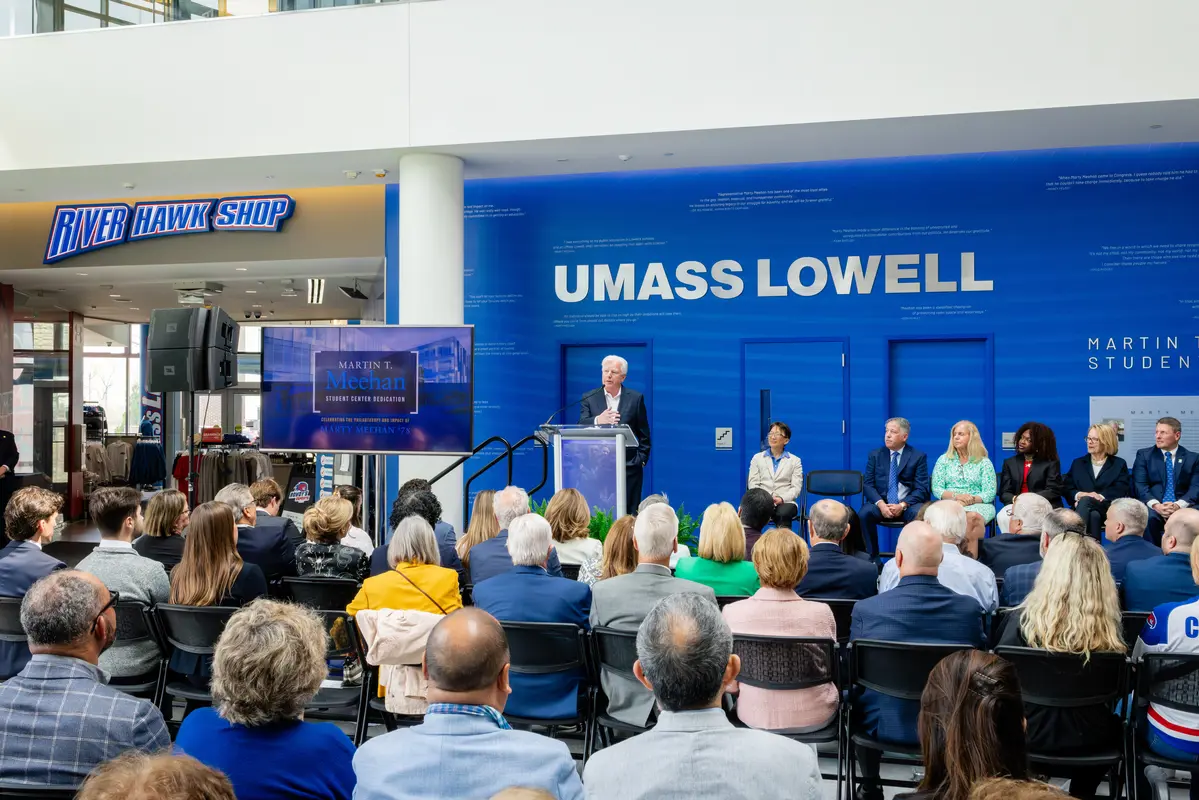
Sen. Markey, a former colleague of Meehan’s in the Massachusetts congressional delegation, described how similar upbringings shaped their values, and fixed in Meehan the belief in education as a gateway of opportunity leading to a better life.
“Under Marty’s leadership, he grew a university system that gives all its students the opportunity to maximize their God-given talents and their abilities,” said Markey. “He has fought consistently, persistently and insistently to build and extend the ladder of success to the next generation. As a son of Lowell and a UMass system graduate, Marty Meehan is the embodiment of all that the UMass system strives to be for the children of the state of Massachusetts.”
Meehan is the first UMass Lowell alumnus to lead the university as chancellor and the first undergraduate alumnus to lead the UMass system. UMass Board of Trustees Chairman Stephen Karam noted that Meehan has drawn upon that perspective and his experience as UMass Lowell’s chancellor in leading the system. “He knew what the students needed. He knew what the faculty needed. He knew what it took to move a five-campus, complex system forward,” he said.
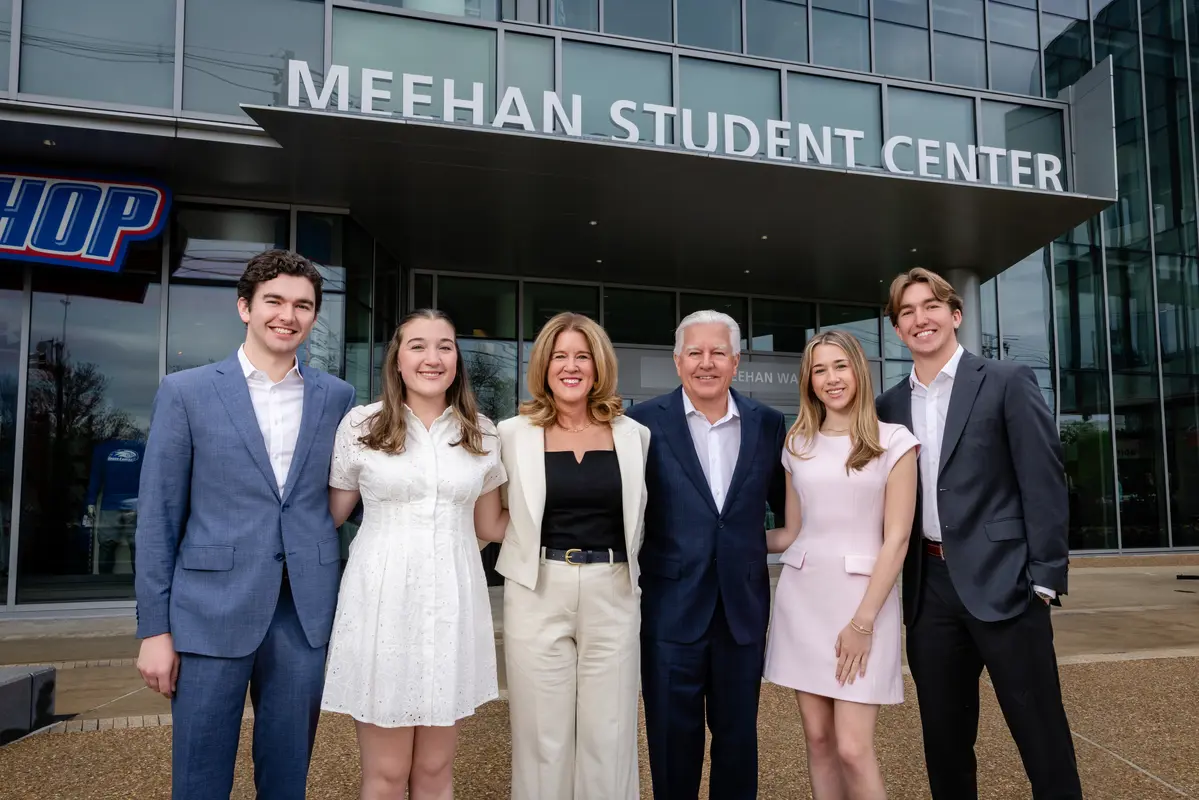
Daniel Meehan, who introduced his father Saturday as his siblings, Bobby, Caroline and Ella, stood with him, described growing up and absorbing the vocabulary and vision of a university leader for whom UMass Lowell was always a catalyst of career and opportunity.
“My dad’s impact reflects a deep commitment for paying those opportunities forward,” he said. “The university has thrived under his leadership because of his belief and passion for public higher education.”