Course Outline
Monday, June 15 (Morning) - Novel Properties and Applications (Vaia)
Monday, June 15 (Afternoon) - Nanoparticle Engineering and Nanocomposite Formation (Rubner)
Tuesday, June 16 (Morning) - Micromechanics and Physics of (Visco) Elastic Reinforcement (Sternstein)
Tuesday, June 16 (Afternoon) - Nanocomposite Mechanics Beyond the Elastic Limit (Lesser)
Wednesday, June 17 (Morning) - Characterization of Nanoparticles and Nanocomposites (Schaefer)
Wednesday, June 17 (Afternoon) - Assessing and Controlling Nanoparticle Exposure (Brouwer)
Thursday, June 18 - Hands-on demonstrations and facilities tours
Course Description
While nanofillers like carbon black and fumed silica have been used for decades, the field of polymer nanocomposites came into its own when Toyota engineers demonstrated nanoclay hybrids in the early 1990s. Thanks to the interest their work generated, many products now incorporate nanoparticles, nanotubes, nanorods, or nanolayers into polymers, demonstrating the commercial viability of nanocomposites. Subsequent generations of nanocomposites promise additional functionality or multifunctionality – flexibility, toughness, and electrical properties, transparency, abrasion, and ballistic impact resistance, structural stiffness and vibration damping, fire retardance and environmental acceptability, etc.
In order to meet the technical challenges to realize this promise, the fundamentals that serve as the basis of such efforts must be addressed:
- How nanoparticles and polymers interact
- How such interfacial interactions may be controlled
- What is necessary to achieve dispersion using practical processing methods
- What properties may be obtained by tailoring the nanoparticle, matrix, and interface
- Effective approaches, common mistakes
- Novel techniques relevant to measuring structure and properties
- Hazard assessment and best practices when handling nanoparticles
![]() |
The Nanomanufacturing Center at UMass Lowell
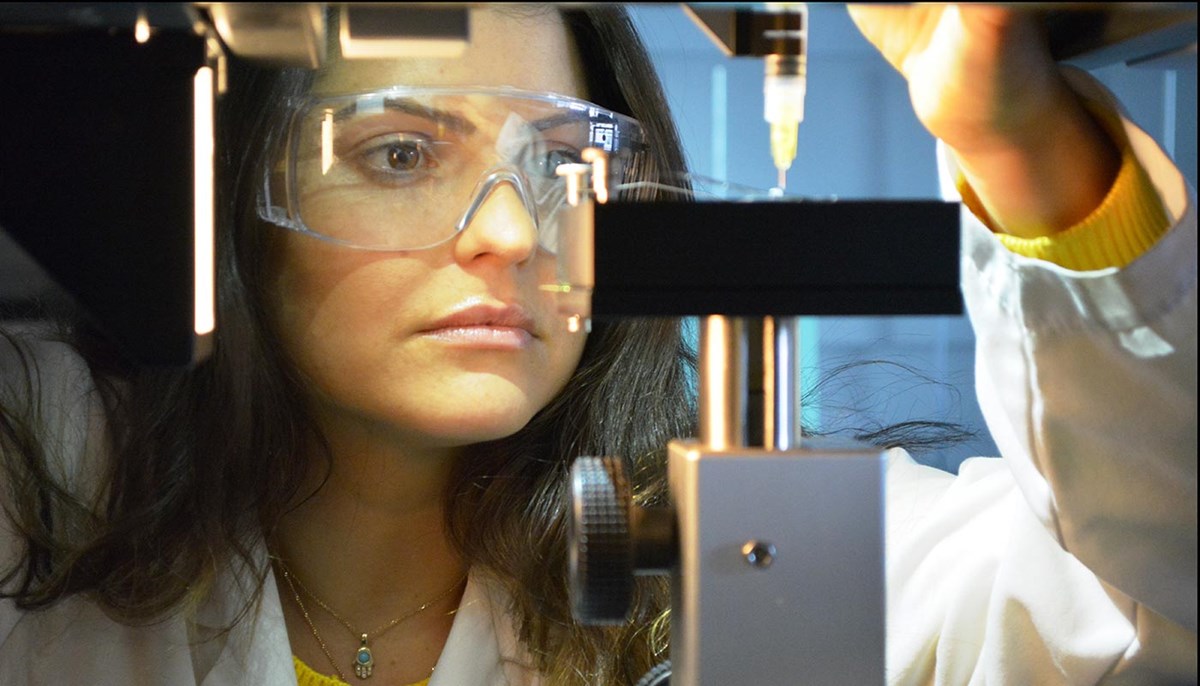
The Nanomanufacturing Center at UML is comprised of the NSF-funded Center for High-rate Nanomanufacturing (an equal partnership with Northeastern and the University of New Hampshire) and the MA Nanomanufacturing Center of Excellence. With strong core expertise in plastics, composites, and nanomaterials and an integrated cadre of EH&S researchers in the School of Health and Environment, UML provides a unique setting for this course. Along with invited lecturers, our expert faculty provide state-of-the-art research briefs and hands-on demonstrations of processing, characterization, and EH&S equipment and techniques.

Printer Friendly