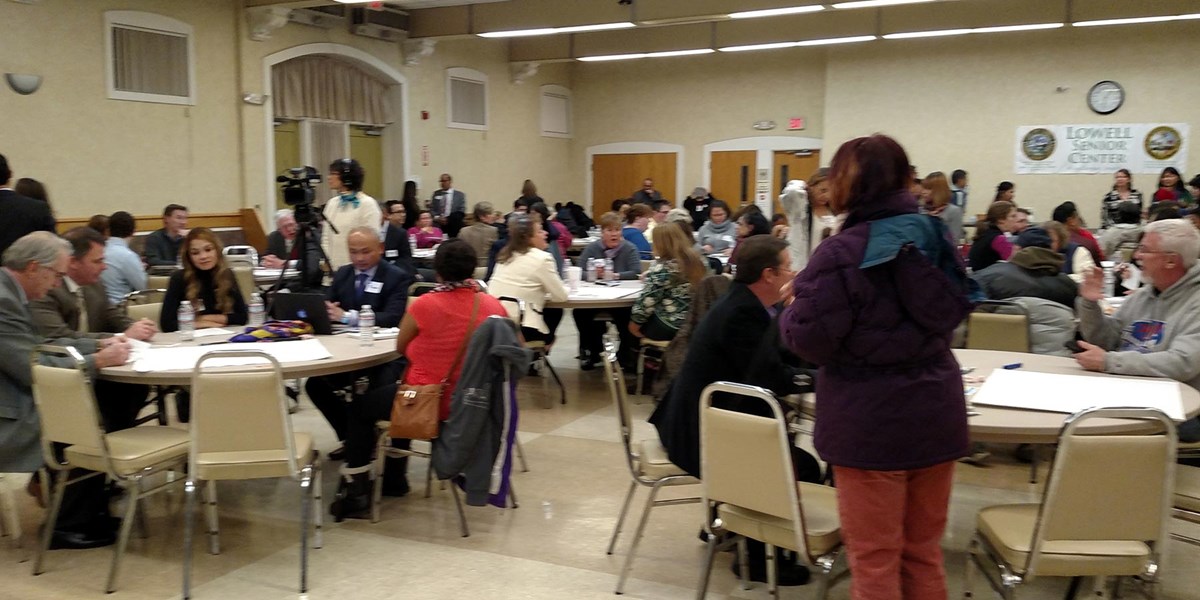
FacilitationCFWC also has extensive experience in facilitating planning efforts and partnerships that bring together diverse groups. Some of our efforts are described below.
Nonprofit Alliance of Greater Lowell
CFWC facilitates the Nonprofit Alliance, a group that focuses on expanding the capacity and resources of the over 70 nonprofit member groups and organizations. CFWC leads monthly meetings, facilitate retreats and carries out training to strengthen community programs.
top
Facilitation of Lawrence Youth Planning
Lawrence, Massachusetts is a largely Latino community. City representatives, recognizing the emerging challenges faced by Lawrence youth, have involved CFWC staff in assisting Lawrence leaders in community-wide planning for addressing youth needs. This work has included analyzing existing needs assessment data; gathering more information from youth and providers on current services, barriers and gaps; planning and implementing a youth service providers summit to determine most pressing needs and next steps for collaboration.
top
Facilitation of Ethical Research Partnerships: The Lawrence Research Initiative
CFWC is participating in the facilitation of the Lawrence Research Initiative, a collaborative project building a collaborative research infrastructure that involves the community in all phases of research. Begun in 2006, the Initiative includes representatives from the City of Lawrence, UML and other universities, and community organizations. The Initiative has developed a set of core principles for research partnerships, a list of criteria for agreements between partners, and a model to help guide researchers and community members toward an equitable and mutually-beneficial research process and result.
top
Facilitation of Educational Partnerships
CFWC is the organizational arm that coordinates UML involvement in GEAR UP, Partnerships for College Success, the Science of Small Things, and other education partnerships. In these programs we facilitate bringing together educational leaders, industry partners, community partners, and university faculty, staff, and students to achieve educational aims.
top
Facilitation of Grant Development/Program Development
CFWC frequently facilitates the process by which groups come together to develop programs and grants. For example, we convened stakeholders in the city of Lowell interested in violence prevention in response to a request for proposals from a federal agency. The RFP required a collaborative citywide approach. As a university, we played a neutral intermediary role that brought agencies together on this topic of wide concern. As facilitators we engaged stakeholders in the discussion about how we could all approach the problem and how each entity could contribute to the ameliorating it using their unique strengths. The group delegated tasks and CFWC organized the final submission.
top
Team Building and Organizational Development Facilitation
CFWC’s facilitations have included half day to multi-day workshops for corporate, non-profit, college/university as well as youth and young adult work groups. The experiential training we have provided is geared towards client needs and includes topics such as: leadership, strategic planning, communication, new team development, program evaluation, conflict resolution and workplace diversity.
top
Facilitation of City/Neighborhood Planning
CFWC is frequently asked to facilitate regional planning processes and needs assessments. For example, CFWC was instrumental in developing Lowell’s application for the federal designation as an enterprise community and for involving residents in a strategic planning process to inform the city’s master plan. Both processes involved planning and facilitating neighborhood focus groups about the direction the city should take to improve quality of life. CFWC also facilitated the NSF-funded Scenario Workshops in which European Community approaches to planning were tested for the first time in the U.S. as a way to involve diverse community residents in city planning processes. We have also facilitated focus groups for the Lowell Police Dept with elders and youth to assess their concerns about safety.
top
Facilitation Aimed at Resolving Conflict
CFWC, as a neutral intermediary, is frequently called upon to facilitate contentious situations. The Police Department asked us to facilitate a neighborhood meeting where the PD wanted to gather feedback from residents on the potential location of a substation. Our role was to set the tone for collaborative discussion, present data on types of crime and location in the neighborhood in an understandable way and facilitate small group discussions on crime and safety in their neighborhood. Our presence as the facilitators from the university served to neutralize feelings that a decision was already made.
top
|