The People Chase: Networking for Grant Support
Printer Friendly
Suppose you have a great idea for a program and you would like to write a grant but you're not affiliated with any community organization that could implement the program. How do you find an organizational partner with which to negotiate a relationship so that the program could be offered? While networking for community and organizational support is one of the most difficult and time-consuming elements of writing your grant, it is possibly the most stimulating. It is certainly a lot of fun. Networking, after all, is salesmanship. Regardless of how powerful, utilitarian, beneficial, or life-saving your proposed program may be, you are its precursor. The reception of a new idea is dependent upon the manner in which it is presented, and, let's face it, the presenter.
Therefore, in order to convince others to partner or support your initiative, wanting to succeed is not enough. You must become passionate and knowledgeable concerning your subject.
Preparing for Proficiency
The people who will assist you in assisting others must be convinced of your credibility in areas for which you seek support. It is advisable to immerse yourself in current and pertinent data.
- Focus on the exact goal for your program based on needs-data collected from the community that your program intends to serve.
- Surf the internet for descriptions of existing programs that address those goals, and use those ideas to modify, improve, expand your plans if necessary or helpful. Please see the tipsheet on How to Search for a Grant on the Internet.
- Choose at least one funder that clearly states interest in such a program, i.e., the population, geographical area, central ideas, and become familiar with its expectations.
- Create a concept letter and/or program description which includes statistics, need, objectives and possible positive outcomes for the intended community. Please see tipsheets on How to Write a Great One Page Concept Paper and Succeeding at Grant Writing by Doing Thorough Background Research for more information.
- Develop the confidence and desire to implement positive change.
Preparing for Partnering
Funders seldom give to individuals. Funders often require that the grantee be a tax-exempt, non-profit organization. For this reason, it is advisable to affiliate with a non-profit community organization as soon as possible. What is the best way to do this?
- Attend any community meetings or functions related to your subject in order to meet volunteers, community leaders, organizational administrators, or public officials who might support your ideas or refer you to someone who might.
- Learn how the community organizations support/conflict/impede/depend upon one another.
- Introduce yourself to community leaders and profile yourself in terms of your program goals.
- Develop a comprehensive list of neighborhood organizations/directors.
- Prepare a list of candidates for possible partnership in administering your program.
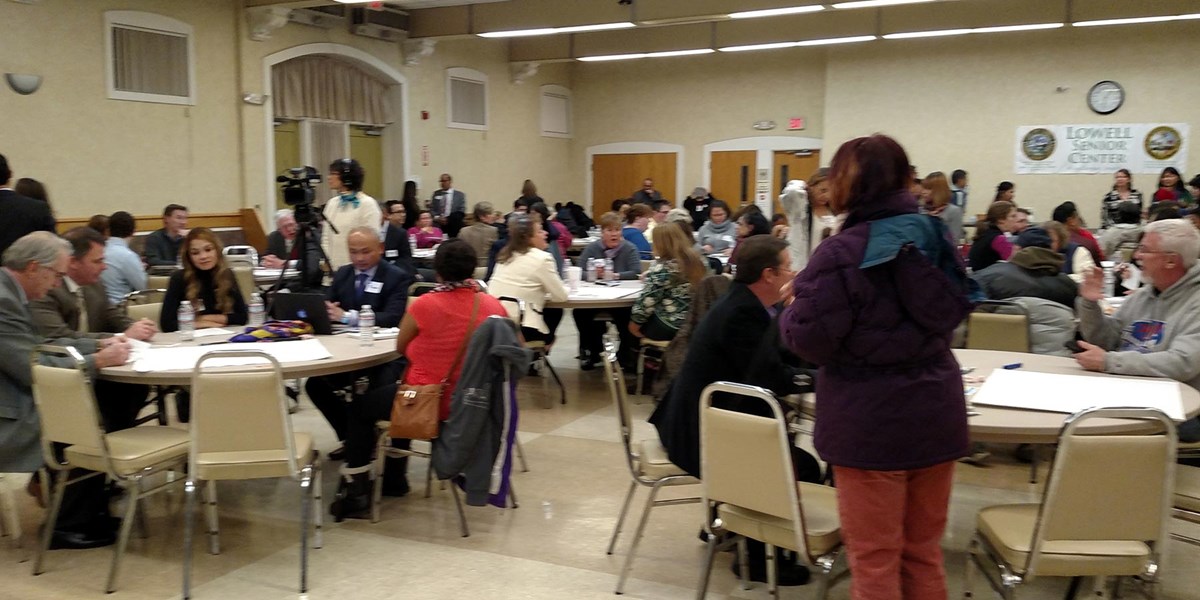
- Plan a meeting to introduce your initiative to possible partnering organizations.
- Reserve a meeting area for l to l ½ hours in a comfortable conference room.
- Prepare a packet with program-descriptive materials, and mail it with a letter of invitation and a meeting agenda to the candidates. Be specific and clear.
- If possible, call or e-mail to personally encourage participation.
- Be on time/ Be prepared/ Be informal.
- Have name tags, a printed agenda, some visual aid, light refreshment.
- Make an efficient, knowledgeable, brief presentation regarding grant proposal and the possible benefits to each represented organization.
- INCLUDE: Next Steps sheet for attendees to list ideas, level of interest, organizational qualifications, willingness to write letters of support, possible grassroots funding.
- Write short notes thanking the attendees for participating.
- Define and affiliate with willing partner.
- Obtain organizational credentials and staff profiles from partnering organization. Obtain partnering organization's guarantee of role in program.
- Obtain letters of support (#usually clarified by funder) from willing organizations, community leaders.
- Begin process of co-writing, project responsibility determination, staff assignments, etc.
Note: If you need more information regarding tools for working with diverse groups, please see tip-sheet entitled, "From Idea to Program: Strategic Planning."
by Carole MacDougal Perkins